
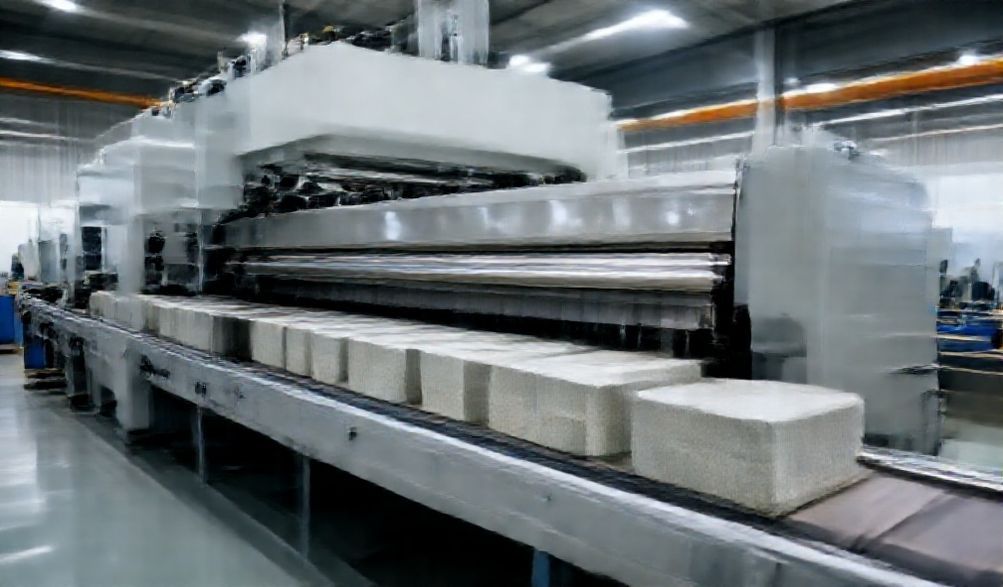
The Ultimate Guide to the China QT9-15 Fully Automatic Brick Making Machine | FUDA Factory
Giriş
The global construction industry is in a perpetual race against time and budget. At the heart of this race lies a fundamental need: a consistent, high-volume supply of quality building blocks. For business owners, project managers, and investors, the shift from manual or semi-automatic production to full automation is no longer a luxury—it’s a strategic imperative for scalability and competitiveness.
If you’re researching reliable, high-output brick making solutions, you’ve likely encountered the “QT9-15 Fully Automatic Brick Making Machine.” This model is a cornerstone of modern block yards and factories worldwide. But what makes it tick, and how does it perform in a real-world production environment like a FUDA brick making factory?
This comprehensive guide is built on a foundation of industry observation, technical analysis, and insights into manufacturing best practices. Our aim is not just to list specifications, but to provide you with the nuanced understanding necessary for an informed investment. We will dissect the QT9-15’s core features, translate them into tangible benefits, explore its role within a production ecosystem, and outline the critical due diligence required before purchase. Consider this your trusted roadmap to evaluating one of the most popular fully automatic brick making machines on the global market.
QT9-15 Tam Avtomatik Kiremit Ýasama Maşyny näme?
Esasy Funksiýa we Dizaýn Filosofiýasy
The QT9-15 is a stationary, high-production block making machine engineered for the mass manufacturing of a wide array of concrete products. Its design philosophy centers on achieving maximum output with minimal manual intervention, making it ideal for medium to large-scale operations aiming to supply housing projects, pavements, and infrastructure developments.
Unlike smaller table-top or mobile machines, the QT9-15 is a central component in a fixed production line, designed for continuous, shift-based operation.
Key Technical Specifications (QT9-15)
Understanding the numbers is crucial. Here are the typical core specifications for the QT9-15 model:
- Önümçilik Çykyşy: Approximately 15,000 – 25,000 standard blocks (200mm x 100mm x 60mm) per 8-hour shift. Output varies based on block type and design complexity.
- Паллетанын өлчеми: Standard pallet size is 1100mm x 540mm, accommodating multiple blocks per pressing cycle.
- Güýç talap edýän zatlar: A significant industrial power supply is needed, typically around 55-65 kW for the entire machine system.
- Forming Pressure: Operates with a high hydraulic pressure system, often in the range of 21-31 MPa, ensuring dense, strong bricks.
- Maşynyň ölçegleri we agramy: It is a substantial piece of equipment, often measuring around 9m (L) x 5.5m (W) x 4.5m (H) and weighing over 10 tons, requiring a solid concrete foundation.
The “Fully Automatic” Advantage
The term “fully automatic” defines its primary benefit. The machine automates the entire cycle:
1. Iýmitlendirmek we garyşdyrmak: Pre-mixed concrete is automatically fed into the machine’s hopper.
2. Galyplama: The material is distributed into the mold, subjected to simultaneous vibration and high-pressure compaction.
3. Gowramak we ýygnamak: The freshly formed blocks on their pallets are automatically conveyed to a stacker, which layers them onto curing racks.
4. Pallet Return: Empty pallets are automatically cleaned and returned to the start of the cycle.
This closed-loop process drastically reduces labor costs, enhances consistency, and boosts overall production efficiency.
In-Depth Features & Benefits of the QT9-15 Machine
High-Efficiency Vibration and Pressing System
The heart of any block machine is its forming action. The QT9-15 typically employs a dual-vibration system:
* Table Vibration: The entire mold table vibrates to distribute concrete evenly.
* Mold Vibration: Additional vibration is applied directly to the mold for optimal compaction in complex shapes.
* High-Pressure Hydraulic Pressing: Following vibration, a hydraulic press applies sustained, high pressure.
The Benefit: This combination ensures each block achieves superior density, compressive strength (often exceeding local building codes), and a smooth, uniform surface finish with sharp edges—critical for professional masonry work.
PLC Intelligent Control System
Operation is managed through a Programmable Logic Controller (PLC) panel, often with a touch-screen interface.
* Merkezi Ýönetim: Operators can start, stop, and monitor the entire production cycle from one station.
* Recipe Management: Different programs can be saved for various block types (e.g., solid block, hollow block, paver), allowing quick changeovers.
* Fault Diagnostics: The system monitors sensors and can display error codes, simplifying troubleshooting and minimizing downtime.
The Benefit: This translates to easy operation with minimal training, unwavering consistency in product quality, and reduced maintenance time. It puts intelligent control at the operator’s fingertips.
Robust Construction and Durability
A machine running 8-24 hours daily must be built to last. The QT9-15 is constructed from:
* High-strength steel for the main frame and core components.
* Precision-machined shafts and bearings.
* Wear-resistant liners in the hopper and mold areas.
The Benefit: This robust build quality results in remarkable durability, resilience under constant use, and lower long-term maintenance costs. It’s an investment designed for a decade or more of service, protecting your capital.
Versatility in Production
While high-output is key, flexibility adds value. The QT9-15 can produce a diverse product portfolio by simply changing the mold:
* Gurluşyk Bloklary: Solid blocks, hollow blocks (4-inch, 6-inch, 8-inch).
* Paving & Landscaping: Interlocking pavers, garden curbs, grass grid blocks.
* Specialty Products: Kerbstones, retaining wall blocks.
The Benefit: This versatility allows a single production line to service multiple market segments—from residential construction to municipal and landscaping projects—maximizing the return on your equipment investment.
Inside a FUDA Brick Making Factory: Production and Quality
FUDA’s Role in the Ecosystem
Factories like FUDA represent the practical application point for machines like the QT9-15. They are typically medium to large-scale production facilities that supply bricks to regional construction markets. Their success hinges on maximizing the efficiency and output of their machinery to meet contractual demands and maintain profitability. Analyzing their operation provides a real-world benchmark for potential buyers.
Quality Control Processes
In a professional setting like a FUDA-style factory, the machine is just one part of a quality chain. Rigorous processes are in place:
* Çyg malyň barlagy: Cement grade, aggregate size/shape, and pigment quality are checked to ensure they meet mix design specifications.
* Процесдеги тексермелер: Operators monitor block weight, height, and visual appearance directly from the production line.
* Final Product Testing: Samples are regularly taken to a lab (on-site or third-party) for compressive strength tests (e.g., at 7 days and 28 days) and dimensional accuracy checks against standards like ASTM or ISO.
Alýp barýan zat: The machine enables quality, but a factory’s disciplined QC protocol guarantees it. When evaluating a supplier, inquire deeply about their specific QC measures.
Production Line Integration
The QT9-15 does not operate in isolation. In an integrated factory, it is the core of a synchronized system:
1. Ýokarky akym: A batching plant and mixer prepare the precise concrete mix, which is conveyed to the machine hopper.
2. Esasy Proses: The QT9-15 forms and ejects blocks onto pallets.
3. Downstream: A conveyor transfers pallets to an automatic stacker, which places them onto curing racks. Forklifts then move racks to a controlled curing chamber (often steam-cured for accelerated strength gain).
This seamless integration is what transforms a machine into a true production line, multiplying output and efficiency.
Critical Considerations Before Purchasing
Assessing Your Project Needs
Before getting quoted, conduct an internal audit:
* Required Daily/Annual Output: Does the QT9-15’s capacity match your project pipeline or sales forecasts?
* Brick Types Needed: List the specific products you intend to sell. Confirm mold availability and changeover time.
* Available Space & Infrastructure: Do you have the factory space, a level concrete foundation, and the necessary 3-phase electrical power and water supply?
Total Cost of Ownership Analysis
Look beyond the machine’s FOB price. The true cost includes:
* Capital Expenses: Machine cost, shipping, insurance, import duties, and taxes.
* Installation Costs: Foundation construction, electrical hookup, installation supervision (often by the supplier’s engineer).
* Amalýat çykdajylary: Raw materials, energy consumption, routine maintenance parts, and labor.
* Training & Support: Budget for operator training and potential annual service contracts.
Supplier Verification and Due Diligence
This is the most critical step when sourcing from China. Your checklist must include:
* Factory Audit: Insist on a live video tour of the manufacturing workshop, not just a promotional video. See the assembly of machines.
* Client References: Ask for contact information for past international buyers of the QT9-15. Follow up with them.
* Certification Check: Verify valid certificates (CE, ISO 9001). Understand what they cover.
* After-Sales Package: Scrutinize the warranty (typically 12-18 months), terms for spare parts supply, and the availability of English-speaking technical support.
Logistics and After-Sales Support
Plan for the journey:
* Shipping: Will it be FOB, CIF, or DDP? Understand the incoterms. Ensure proper wooden crating for ocean freight.
* Customs Clearance: Engage a reliable customs broker in your country to handle declarations and standards compliance.
* Gurnama we ýerine ýetirme: Clarify if the price includes an engineer to supervise installation and commission the first production run.
* Technical Documentation: Ensure you receive comprehensive manuals, electrical diagrams, and PLC software backups in English.
Frequently Asked Questions (FAQ)
What is the typical production capacity of the QT9-15 per day?
The QT9-15 can produce approximately 15,000 to 25,000 standard hollow blocks (200x100x60mm) in an 8-hour shift. For solid blocks or more intricate pavers, the output will be lower. Actual yield depends on operator skill, raw material quality, and the efficiency of the upstream/downstream supporting equipment.
Can this machine use local raw materials like fly ash or slag?
Yes, absolutely. One of the advantages of such machines is their adaptability to local material mixes. Fly ash or slag can be incorporated into the concrete recipe, often improving workability and reducing material costs. However, it is crucial to conduct mix design and trial tests before full-scale production to ensure the final product meets strength requirements.
How does the price of a QT9-15 from China compare to other brands?
Chinese-manufactured machinery like the QT9-15 generally offers a significant initial cost advantage compared to European or American brands. This makes automation accessible to a wider range of businesses. However, the key is to compare value, not just price. Focus on the machine’s construction quality, the supplier’s reputation, and the comprehensiveness of after-sales support. The cheapest option can become the most expensive if it leads to frequent breakdowns and poor service.
What kind of training is provided for operators?
Reputable suppliers typically provide:
* Detailed operation and maintenance manuals (should be in your language).
* On-site training during commissioning, where their engineer trains your staff on operation, daily maintenance, and basic troubleshooting.
* Video training materials for future reference.
Insist on clarifying the duration and depth of on-site training included in your contract.
How do I ensure I’m dealing with a reputable manufacturer and not a trading company?
- Request Specifics: Ask for videos of the CNC machining process, welding workshops, and assembly lines for the QT9-15.
- Talk to Engineers: During video calls, request to speak directly with a technical engineer to discuss machine details. Trading agents often cannot answer deep technical questions.
- Verify Business License: Ask for their business license and check if their registered scope includes “manufacturing” or is solely “trading.”
- Visit if Possible: For a large investment, a pre-purchase factory visit is the most reliable verification method.
Netije
The China QT9-15 Fully Automatic Brick Making Machine stands as a proven, high-capacity solution for businesses ready to scale their concrete product production. As evidenced by its use in operational factories like FUDA, its combination of automation, robust construction, and versatility makes it a powerful engine for growth.
Ultimately, a successful investment hinges on a two-part strategy: selecting capable machinery and partnering with a trustworthy, experienced supplier. This guide has provided the framework for both. Use it to ask informed questions, demand transparency, and verify claims.
Your Next Step: Move from research to actionable dialogue. Contact shortlisted suppliers to request a detailed quotation, a live virtual factory tour focused on the QT9-15 assembly, and a list of international client references. Diligence today is the foundation of your production success tomorrow.
<