
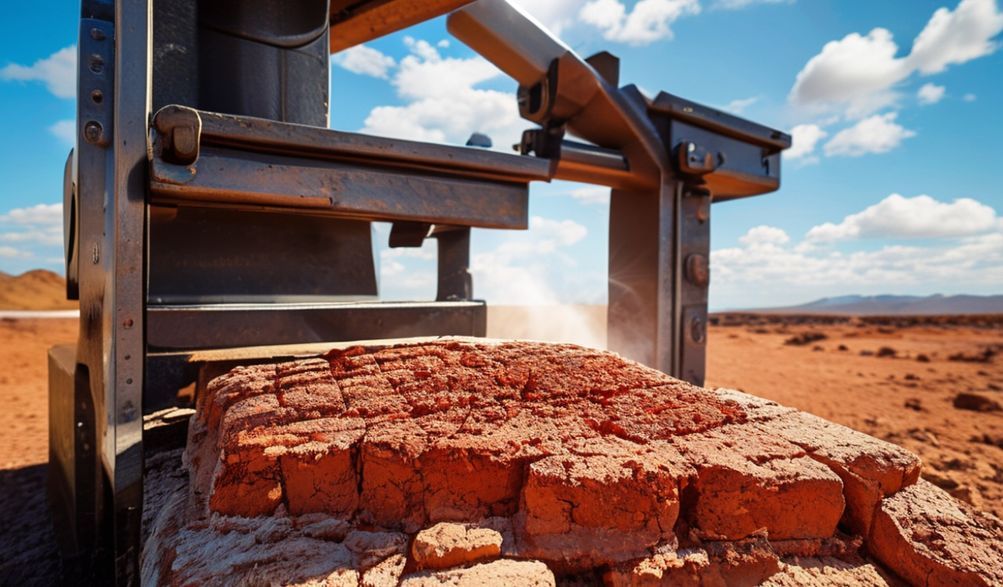
Намибияда Кирпич Ясаý Машинасы Сатып Алмак Учун Толук Голланма (2026)
Giriş
Namibia is building its future. Fueled by urbanization, government infrastructure projects, and a pressing need for affordable housing, the construction sector is experiencing significant growth. Yet, this boom presents a familiar challenge for builders, contractors, and entrepreneurs: how to source consistent, high-quality building materials at a cost that keeps projects viable. Reliance on imported or transported bricks drives up expenses, introduces logistical delays, and can lead to quality inconsistencies.
The solution lies not in the supply chain, but in local production. Investing in a brick making machine is a transformative step toward self-reliance, cost control, and quality assurance. For the Namibian professional, it’s more than a piece of equipment; it’s a strategic tool for business growth and project efficiency.
This comprehensive guide is built on technical expertise and a deep understanding of the Namibian context—from our unique soil compositions and climate to local market logistics and regulations. Our goal is to provide you with trustworthy, actionable information to navigate your purchase confidently, ensuring you select a machine that delivers real value for your specific needs.
Why Invest in a Brick Making Machine for Your Namibian Project or Business?
Moving from being a brick buyer to a brick producer offers a suite of compelling advantages tailored to the Namibian economic and construction landscape.
Economic Advantages in the Namibian Context
The financial case for local brick production is powerful, especially when considering Namibia’s vast geography and project locations.
- Uzak Möwletli Çykdajylary Azaltmak: The initial investment is offset by drastically reducing your per-brick cost over time. You eliminate the manufacturer’s and distributor’s margins built into purchased bricks.
- Dramatic Reduction in Transport Costs: Transporting heavy bricks over long distances, particularly to remote sites in regions like Kunene or Zambezi, is a major expense. On-site or local production can slash these logistics costs to near zero.
- High ROI Through Business Diversification: The machine isn’t just a cost center; it’s a revenue generator. You can produce surplus bricks to sell to other contractors or the local market, creating a profitable sideline or a standalone business that addresses local demand.
Unmatched Quality and Consistency Control
When you control production, you control the outcome.
- Meet Namibian Standards: You can engineer bricks to meet specific compressive strength requirements (referencing SANS standards) ensuring structural integrity for any project, from a homestead to a multi-story building.
- Uniformity for Efficiency: Machine-made bricks are identical in size and shape. This uniformity speeds up the laying process for masons, reduces mortar use, and results in a cleaner, stronger final structure.
Speed and Scalability for Growing Demand
Machines unlock productivity that manual methods cannot match.
- Экспоненциалдык Чыгыш Көбөйүшү: A single semi-automatic machine can produce hundreds more bricks per day than a team of manual laborers, accelerating project timelines.
- Scale on Demand: Your production can flex with your needs. Scale up for a large contract by increasing operational hours, or produce only what you need for a smaller project, reducing waste and tied-up capital.
Sustainability and Using Local Materials
This investment aligns with sustainable and pragmatic building practices.
- Utilize Local Resources: Most machines can produce high-quality bricks using locally available soil, sand, and aggregates. This not only cuts costs but also supports the local economy.
- Reduce Environmental Footprint: By eliminating long-haul transportation, you significantly cut the carbon emissions associated with your building materials. It’s a step toward more sustainable construction.
Key Considerations Before Buying a Brick Making Machine in Namibia
A successful purchase hinges on careful planning that accounts for your specific goals and Namibia’s unique conditions.
Assessing Your Production Needs and Scale
Begin by defining your “why.” Your required machine type and capacity flow directly from this.
- Project-Based vs. Commercial Business: Are you supplying bricks for your own construction projects, or are you launching a brick supply business? The latter requires higher capacity and more automation.
- Output Estimation: Calculate your average daily or weekly brick requirement. Be realistic about your growth projections. A machine operating at 80% capacity is better than one constantly maxed out or underutilized.
- Machine Category: This defines your investment level.
- Кол менен басуу: Low output (100-500 bricks/day), low cost, high labor. Suitable for very small, personal projects or micro-startups.
- Ýary-awtomatik maşynlar: The most popular choice for SMEs. They offer a great balance, producing 1,000-5,000 bricks per day with a small crew. They involve some manual feeding but mechanized compaction.
- Doly Awtomatik Ösümlikler: High-volume, high-investment systems with conveyor belts and automated material handling. Ideal for large-scale commercial production exceeding 10,000 bricks daily.
Understanding Soil and Raw Material Compatibility
Your soil is your primary raw material. Its suitability is non-negotiable.
- Soil Testing is Essential: Namibia has diverse soil types—from sandy soils in the coast to clay-rich soils inland. A simple, affordable soil test will determine its composition (clay, silt, sand content) and suitability for brick making.
- Soil Stabilization is Common: Many Namibian soils require a stabilizer like cement (5-10%) or lime to achieve the necessary strength and water resistance. Your machine must be compatible with these mixes.
- Sourcing Other Inputs: Ensure reliable access to clean water and a steady supply of cement or other stabilizers at a reasonable cost. Factor these into your operational budget.
Machine Types: From Manual to Fully Automatic
Beyond automation level, consider mobility.
- Ыйырылмалы Кирпич Ясагыш Машиналар: Mounted on a trailer, these units are perfect for contractors who move between sites. You can produce bricks directly at the construction location, eliminating double-handling and transport completely.
- Статик машиналар: These are set up at a fixed location, like a yard for a brick supply business. They are often more robust and can be part of a larger, fixed production line.
Power Source: Electric, Diesel, or Manual?
Your location’s infrastructure dictates the best choice.
- Electric Machines: Cleaner, quieter, and cheaper to run if you have a stable grid connection. Ideal for urban or peri-urban operations.
- Diesel-Powered Machines: Offer complete independence from the grid. Crucial for remote sites or areas with unreliable electricity. Factor in fuel costs and maintenance.
- Elderly Machines: As mentioned, these are entirely human-powered, making them the only option for sites with absolutely no power access.
Navigating the Namibian Market: Suppliers, Costs, and Logistics
Making a smart purchase decision involves looking beyond the brochure price.
Local Dealers vs. International Suppliers
This is a critical choice between upfront cost and long-term support.
- Local Dealers/Agents:
- Artalary: In-country after-sales support, faster access to spare parts, hands-on training, and understanding of local conditions. They handle import logistics.
- Kemçilikler: Potentially higher initial purchase price due to their overhead and value-added services.
- International Suppliers (Direct Import):
- Artalary: May offer a lower FOB (ex-works) price.
- Kemçilikler: You manage shipping, insurance, customs clearance, and duties. After-sales support can be slow, with long wait times for technicians or spare parts. The language barrier and time zone differences can complicate troubleshooting.
Verdict: For most buyers in Namibia, a reputable local dealer provides invaluable peace of mind and minimizes operational risk. The importance of readily available technical support cannot be overstated.
Understanding the Full Cost Breakdown
Avoid sticker shock by budgeting for the total landed and operational cost.
- Machine Purchase Price: The base cost from the supplier.
- Importation Costs (if applicable): Freight, insurance, port charges, customs duties, VAT (15%), and clearing agent fees. This can add 25-40%+ to the ex-works price.
- Inland Transportation: Cost to move the machine from Walvis Bay or Windhoek to your site.
- Foundation & Installation: Some machines require a concrete foundation. Factor in installation costs, which may be included by your dealer.
- Göwreler: The machine comes with standard molds. Additional molds for different brick types (interlocking, paving, hollow blocks) are an extra cost.
Essential Questions to Ask Your Supplier
Arm yourself with these questions before signing any contract.
- “What is included in the warranty, how long does it last, and what is the process for a claim?”
- “Do you provide comprehensive operator training on-site?”
- “What is your typical response time for technical support, and where are your technicians based?”
- “Can you provide a list of spare parts I should keep in stock, and what is their availability and cost in Namibia?”
- “May I speak to or visit one of your existing clients in Namibia or Southern Africa for a reference?”
Operating and Maintaining Your Brick Making Machine for Longevity
Your machine is a long-term asset. Proper care ensures it remains one.
Best Practices for Efficient Operation
Consistency starts with preparation.
- Material Prep: Sieve soil to remove stones and debris. Pre-mix dry materials (soil, sand, stabilizer) thoroughly before adding water. The moisture content is critical—aim for a “plasticy” mix that holds its shape when compressed.
- Operational Procedure: Follow the manufacturer’s cycle: fill the mold, compress, eject, and cure. Do not force the machine or overload the hopper.
- Safety First: Operators must wear safety glasses, gloves, and closed-toe shoes. Ensure all safety guards are in place and never bypass safety switches.
Routine Maintenance Checklist
Preventative maintenance is far cheaper than repairs.
- Daily: Clean the machine thoroughly at the end of each shift, especially the mold and mixing chamber. Check for loose bolts and nuts. Lubricate all moving parts as per the manual.
- Weekly: Inspect hydraulic hoses for leaks. Check the pressure settings. Inspect mold liners for wear.
- Monthly: Perform a more detailed inspection of electrical connections, the hydraulic oil level and quality, and the condition of major wear parts.
Troubleshooting Common Issues
- Cracked Bricks: Usually caused by too much water in the mix, overly rapid drying, or incorrect compression pressure. Adjust your mix ratio and curing process.
- Bricks Sticking in Mold: The mold may need lubrication or cleaning. The mix may be too wet.
- Poor Compaction/Weak Bricks: Often due to insufficient stabilizer (cement), incorrect moisture, or inadequate compression pressure. Re-check your formula and machine settings.
FAQ Section
Q1: What is the average price range for a brick making machine in Namibia?
A: Prices vary widely. A basic manual press can start from around NAD 15,000. A robust semi-automatic machine suitable for a small business typically ranges from NAD 150,000 to NAD 500,000. Large, fully automatic plants can cost NAD 1 million and above. The final cost depends entirely on type, capacity, brand, and the supplier’s service package.
Q2: Can I make bricks suitable for Namibia’s climate with these machines?
A: Absolutely. By controlling the compression force and using the correct ratio of cement stabilizer (usually 5-10%), you can produce compressed stabilized earth blocks (CSEBs) that are highly durable, weather-resistant, and thermally efficient—ideal for Namibia’s hot days and cool nights.
Q3: Are there any government regulations or standards for brick production in Namibia?
A: Yes. For structural bricks, you should adhere to the relevant South African National Standards (SANS), which are widely used in Namibia, particularly for compressive strength. The Namibian Standards Institution (NSI) is the governing body. It is crucial to produce bricks that meet these engineering standards for safety and compliance.
Q4: How profitable is a brick making business in Namibia?
A: It can be a very viable business model, given the consistent demand in construction. Profitability depends on your machine’s efficiency, your local market demand, your cost control on raw materials (especially cement), and your operational skill. A well-run semi-automatic operation can see a strong return on investment, but it requires diligent management.
Q5: What after-sales support should I expect from a reputable supplier?
A: Expect a comprehensive package: supervision of installation and commissioning, thorough hands-on training for your operators, a clear warranty (at least 12 months on major parts), a readily available inventory of common spare parts in-country, and access to prompt technical support via phone or site visits.
Netije
Investing in a brick making machine is a strategic decision that places control, quality, and profitability directly in your hands. For the Namibian builder or entrepreneur, it represents a powerful step toward greater independence and business resilience. We’ve explored the economic benefits, the critical local considerations like soil testing and supplier choice, and the operational knowledge needed for success.
Remember, the cheapest machine is rarely the best value. Prioritize total value—a combination of machine durability, supplier reputation, and the quality of after-sales support. Choose a partner with a proven track record of supporting clients in the Southern African region.
Your Next Steps:
* Act: Contact two or three reputable local suppliers for a detailed consultation and, if possible, a live demonstration.
* Plan: Get your soil tested and draft a simple business or project plan outlining your production goals and budget.
* Engage: Have more questions about a specific region or project type? Share your thoughts in the comments below—let’s continue the conversation to build a smarter, more self-sufficient Namibia.
This guide was created to empower you with reliable, expert information. By making an informed decision, you’re not just buying a machine; you’re investing in the foundation of your future projects and the growth of your business.
<