
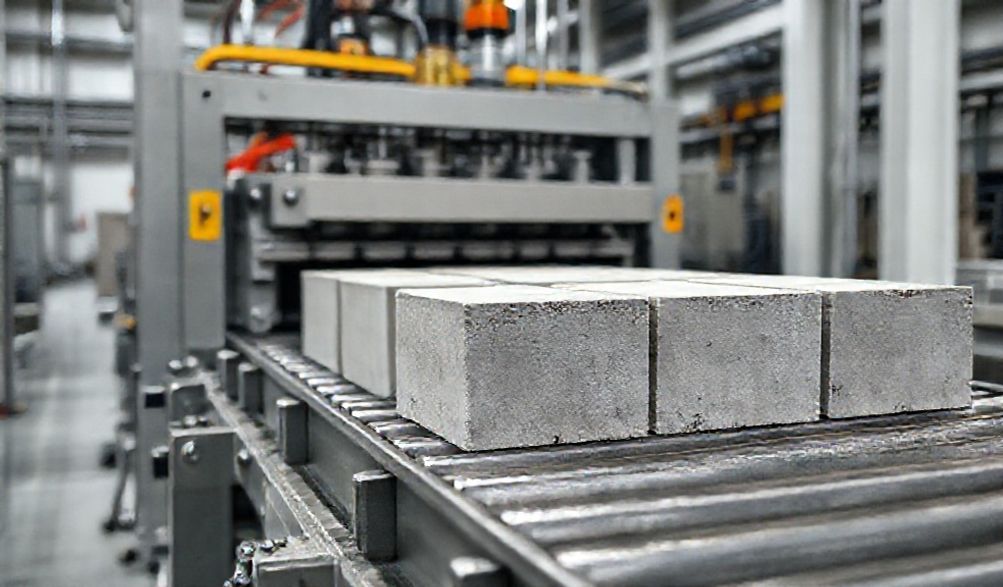
Your Ultimate Guide to Choosing a Reliable Block Brick Making Machine Supplier
Giriş
In the high-stakes world of construction and manufacturing, the quest for reliable, high-quality machinery is a universal challenge. The pressure to balance upfront cost with long-term efficiency, output, and durability can make or break a project’s budget and timeline. While much focus is rightly placed on the specifications of the block brick making machine itself, there is a critical, often underestimated, component to success: the supplier.
Choosing the right supplier is not a simple transaction; it’s the foundation of a long-term partnership. This partner will influence your total cost of ownership, daily productivity, and the very quality of the blocks that form your structures. A machine is a tool, but the supplier provides the expertise, support, and reliability that ensures that tool performs optimally for years to come.
This comprehensive guide leverages deep industry expertise to provide a clear, actionable framework for evaluating and selecting a trustworthy block brick making machine supplier. We will move beyond basic price comparisons to focus on the key factors that separate true partners from mere vendors. Our goal is to empower you to make an informed, confident investment that aligns perfectly with your specific production needs and growth ambitions. Drawing on decades of combined industry observation and technical analysis, the insights here are designed to help you navigate this crucial decision with clarity.
Tedarikçiňiziň Saýlamagyňyz Näme Üçin Görkezýänizden Has Köp Mätäç
Selecting a supplier based solely on the machine’s brochure or price tag is a common but risky shortcut. The supplier’s role extends far beyond the point of sale, deeply impacting your operational and financial outcomes.
Машинадан Дары: Тедергейлик Хамкор Хызыметдеши
A reputable supplier functions as an extension of your team. This partnership encompasses the entire machine lifecycle:
* Gurnama we ýerine ýetirme: Proper setup is non-negotiable for performance and safety.
* Doly Taýýarlyk: Your operators must be thoroughly trained on operation, safety, and basic maintenance.
* Ongoing Maintenance Support: Access to scheduled service and preventative maintenance plans maximizes uptime.
* Spare Parts Availability: A robust, accessible inventory of genuine parts is crucial for minimizing downtime during repairs.
This holistic support directly dictates your Jemi Eýeçilik Bahasy (JEB). A slightly higher initial investment with a full-service supplier often results in lower long-term costs through greater reliability, fewer breakdowns, and higher-quality output.
Quality Assurance and Technical Expertise
A credible supplier is your gatekeeper of quality. They ensure the machinery is built to last, complies with international safety and performance standards, and is suited to your raw materials—be it concrete, clay, or fly ash. Their technical team should offer genuine guidance, not just sales pitches, helping you select the right machine configuration (manual, semi-automatic, or fully automatic) for your required output and block types.
Risk Mitigation: Avoiding Costly Mistakes
The consequences of a poor supplier choice are severe and expensive. Real-world scenarios include:
* Project-Delaying Delivery: Unreliable logistics and poor planning can halt your entire operation.
* Inadequate or Non-Existent Support: Being left alone to troubleshoot complex mechanical and hydraulic issues.
* Counterfeit or Substandard Parts: Using inferior spares that cause premature failure and void warranties.
* Catastrophic Machine Failure: Due to poor manufacturing quality or incorrect application advice.
The right supplier acts as your primary shield against these operational and financial risks.
Key Criteria for Evaluating a Block Brick Making Machine Supplier
To systematically separate the best from the rest, evaluate potential partners against these core criteria.
Proven Industry Experience and Reputation
Longevity and a solid reputation are strong initial indicators of reliability.
* Assess Company History: How long have they been manufacturing or supplying in this specific field?
* Scrutinize Client Portfolio & Case Studies: Look for projects similar in scale and scope to yours.
* Seek Verifiable Testimonials: Genuine references from past clients, preferably those you can contact directly, are invaluable.
Product Range and Technical Specifications
A capable supplier offers solutions, not just a single product.
* Ölçegiňize Laýyk Gelýär: They should have options ranging from small manual machines to large, fully automated production lines.
* Evaluate for Your Needs: Can their machines produce the specific block types (solid, hollow, paving, interlocking) and sizes you require?
* Demand Detailed Specs: Clear data on cycle time, production capacity (blocks per hour/day), hydraulic pressure, vibration frequency, and power requirements are essential for comparison.
Manufacturing and Quality Control Processes
Düşünmeknähiliһәмnirede the machine is built is critical.
* In-House Manufacturing vs. Trading: Manufacturers typically have greater control over quality, lead times, and technical knowledge than pure trading companies.
* Key Quality Certifications: Look for:
* ISO 9001: Indicates a certified quality management system.
* CE Белгиси: A mandatory safety certification for machinery sold in the European Economic Area, signifying compliance with EU health and safety standards.
* Other relevant local or international standards.
After-Sales Service and Support Structure
This is where partnerships are truly defined. A detailed after-sales plan is non-negotiable.
* Gurnama Gözegçiligi: Will they send an engineer for on-site setup?
* Operator Training: Is comprehensive, hands-on training included?
* Warranty Terms: What is covered, for how long, and what are the response time guarantees?
* Maintenance Contracts: Are planned service visits available?
* Spare Parts Logistics: What is the guaranteed availability period for parts? How quickly can they be shipped?
Transparency and Communication
Gauge their professionalism from your first interaction.
* Responsiveness: Do they answer technical questions promptly and thoroughly?
* Clarity in Quotations: Is the quote itemized, with no hidden fees for shipping, installation, or duties?
* Contract Terms: Are the terms clear, fair, and focused on mutual success?
* Consultative Approach: Are they willing to discuss your project specifics and even offer a site assessment?
Red Flags to Identify an Unreliable Supplier
Being able to spot warning signs early can save immense future hardship.
Vague or Unverifiable Claims
- Evasive answers about company history or manufacturing location.
- Refusal to provide client references or specific case studies.
- A website with only stock photos and no verifiable physical address or contact details.
Pressure Tactics and Unrealistically Low Prices
- High-pressure sales tactics urging an immediate “today-only” deal.
- A price significantly (20-30%) below all other market quotes. This almost always indicates compromised quality, hidden costs, or a complete lack of after-sales service. Remember, quality components (hydraulic systems, motors, molds) have a real cost.
Poor Technical Communication and Lack of Customization
- Inability to answer detailed questions about machine specifications or suitability for your raw materials.
- A “one-size-fits-all” attitude with no willingness to discuss minor modifications or tailored solutions for your production line layout.
Weak or Non-Existent After-Sales Plan
- Ambiguous or very short (e.g., 3-month) warranty periods.
- Vague promises like “we’ll help if there’s a problem” with no formal structure.
- No mention of training or a clear policy on spare parts pricing and availability.
The Supplier Selection Process: A Step-by-Step Approach
Follow this structured process to make a confident, evidence-based decision.
Step 1: Define Your Precise Requirements
Create an internal checklist before speaking to any supplier:
* Önümçilik kuwwaty: Blocks needed per shift/day/month.
* Block Specifications: Type, size, thickness, desired finish.
* Çig mal. Primary material (concrete mix design, clay, etc.).
* Awtomatlaşdyryş derejesi: Manual, semi-automatic, or fully automatic.
* Budget Range: Include considerations for shipping, installation, and initial spare parts.
* Site Conditions: Available space, power supply, and raw material flow.
Step 2: Conduct Thorough Market Research
Cast a wide net to identify potential candidates:
* Industry Directories: Specialized construction machinery directories.
* Trade Shows: Events like BAUMA or local construction expos are ideal for seeing machines and meeting teams in person.
* Professional Associations: Relevant industry bodies often have member lists.
* Detailed Online Research: Use your target keyword variations, look for detailed content, and analyze supplier websites critically.
Step 3: Create a Shortlist and Request Detailed Proposals
Contact 3-5 promising suppliers with a formal Request for Quotation (RFQ). Your RFQ should demand:
* Complete technical specifications.
* Detailed commercial offer (FOB, CIF, etc.).
* Delivery and installation timeline.
* Comprehensive after-sales service outline.
* Warranty document and spare parts catalog.
Step 4: Due Diligence and Verification
This is the most critical step.
* Conduct Reference Checks: Actually call or email the provided references. Ask about machine performance, reliability, and quality of support.
* Verify Certifications: Request copies of ISO, CE, or other certificates.
* Facility Visit (If Possible): If feasible, visiting the manufacturing plant is the best way to assess capability and quality control firsthand. Alternatively, ask to visit an existing client site in your region.
Step 5: Final Evaluation and Negotiation
Compare the final shortlisted proposals on a Jemi Eýeçilik Bahasy (JEB) basis, not just initial price.
* Weigh the value of stronger warranties, better training, and guaranteed spare parts availability.
* Negotiate final terms, ensuring all verbal promises are documented in the contract.
* Ensure payment terms are secure and phased appropriately (e.g., deposit before production, balance before shipment or after installation).
Frequently Asked Questions (FAQ)
Q1: What is the typical lead time for delivery and installation from a reputable supplier?
A: Lead times vary based on machine complexity and customization. For standard models, expect 4-8 weeks for manufacturing plus shipping time. For large, custom automated lines, it can be 12-20 weeks. A reliable supplier will provide a clear, phased project schedule upfront.
Q2: How important are machine certifications like CE?
A: Extremely important. The CE mark is legally required for market access in Europe and indicates the machine meets stringent EU safety, health, and environmental standards. Even for other regions, it is a strong proxy for a manufacturer’s commitment to international quality and safety protocols.
Q3: Can a good supplier help with factory layout and production line design?
A: Yes, a full-service supplier with engineering expertise should offer consultation on optimal plant layout. This includes advice on raw material storage, mixing station placement, machine positioning, block curing area, and pallet flow to maximize efficiency and minimize handling.
Q4: What should a comprehensive operator training program include?
A: It must cover: 1) Safe machine operation and startup/shutdown procedures, 2) Daily and weekly maintenance routines, 3) Basic troubleshooting for common issues, 4) Mold changing and adjustment, and 5) Quality control checks for block dimensions and strength.
Q5: How do I ensure the availability of spare parts in the long run?
A: Choose a supplier who guarantees spare parts support for the operational life of the machine (e.g., 10+ years). They should provide a detailed parts catalog with codes and maintain a strategic inventory. Confirm their policy on parts shipment speed for critical breakdowns.
Netije
Selecting your block brick making machine supplier is one of the most strategic decisions you will make for your construction or manufacturing business. It has a direct, lasting impact on your productivity, product quality, and overall profitability for a decade or more.
The core message is clear: prioritize proven expertise, robust lifecycle support, and transparent communication over the allure of the lowest initial price. This approach fosters a sustainable partnership that drives success, rather than a transactional relationship that ends with delivery.
This guide, built on extensive industry knowledge and a commitment to accuracy, is designed to be your trusted resource. We believe an informed investment is a secure investment.
Ready to discuss your specific project needs with a focus on long-term value and partnership? Contact our team of specialists for a confidential consultation to explore solutions tailored to your unique production goals.
<