
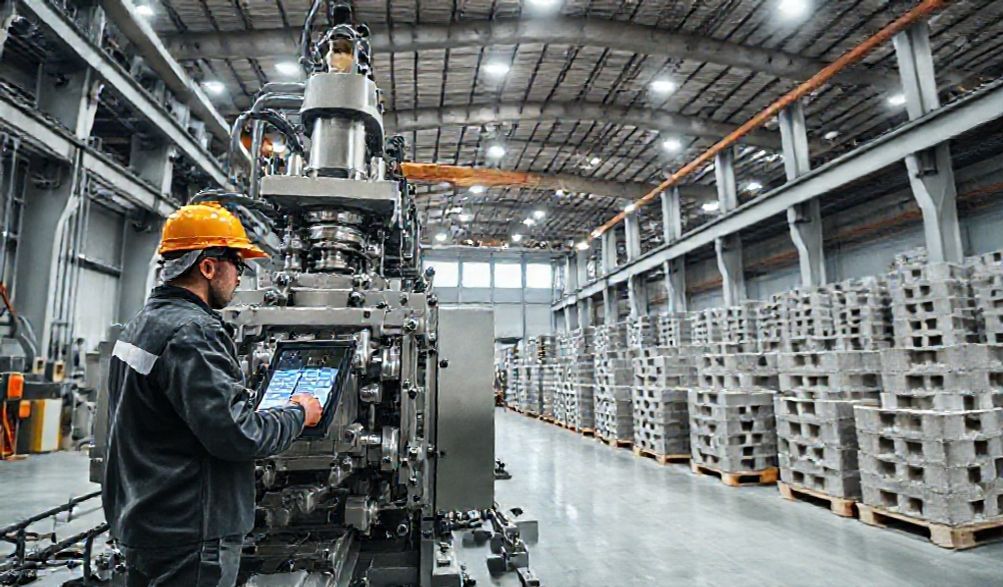
Your Ultimate Guide to Choosing a Reliable Concrete Block Making Machine Factory
Giriş
You’re ready to scale your construction business or launch a block manufacturing plant. The vision is clear: consistent quality, controlled costs, and reliable output. But then, reality hits. You hear stories of machines breaking down with no support in sight, of blocks failing to meet strength standards, and of projects stalled because a critical part is on a slow boat from overseas. The root of these nightmares often isn’t the machine itself—it’s the фабрика that built it.
Choosing where to buy your concrete block making machine is one of the most consequential decisions you’ll make. This isn’t a simple transaction; it’s the foundation of a long-term partnership that will directly dictate your productivity, product quality, and profitability for years to come. As industry veterans with decades of experience navigating this landscape, we’ve seen the soaring successes born from wise choices and the costly failures stemming from poor ones.
This guide is designed to be your insider’s manual. We’ll move beyond glossy brochures and sales pitches to give you a clear, step-by-step framework for evaluation. By the end, you’ll know exactly what questions to ask, which specifications matter most, and how to identify a true partner from a mere supplier. Let’s build your knowledge from the ground up.
What Defines a Top-Tier Concrete Block Machine Factory? (The Non-Negotiables)
Before you compare models or prices, you must assess the manufacturer. A reputable factory is the bedrock of a reliable machine. Here are the non-negotiable pillars to look for.
Sınaglanan Önümçilik Täjirýebesi we Senagat Uzagaýaklylygy
In an industry where machinery endures immense physical stress, experience isn’t just a number—it’s a proxy for evolved, battle-tested engineering.
- Näme üçin möhümdir: A factory with 20+ years of history has likely iterated on thousands of designs. They’ve solved problems you haven’t even encountered yet, from material wear in dusty environments to software glitches in humid climates. This longevity signals stability and a commitment to the industry.
- Näbelli: Don’t just take their word for it. Scrutinize their “About Us” timeline. Ask for a list of long-term clients. Reputable factories proudly showcase detailed case studies and project portfolios that demonstrate their machines operating in real-world conditions over time.
In-House R&D and Engineering Capabilities
The block manufacturing industry isn’t static. New block types (like interlocking, insulated, or permeable pavers) and efficiency demands require continuous innovation.
- The Importance of Innovation: A factory with a dedicated R&D team is investing in your future. They’re developing more energy-efficient vibration systems, smarter PLC controls, and adapting to new material mixes. This means the machine you buy today won’t be obsolete tomorrow.
- Signs of True R&D: Look for evidence of intellectual property, such as patents on machine components or block designs. The ability to offer genuine customizations for unique projects is a strong indicator. Do they publish technical papers or present at industry conferences? This shows thought leadership.
Comprehensive Quality Control Certifications
Certifications are your independent assurance that the factory adheres to internationally recognized standards of quality and safety.
- Key Standards to Look For:
- ISO 9001: This is the global benchmark for Quality Management Systems. It means the factory has documented, consistent processes for every stage of production, from sourcing raw steel to final testing.
- CE Белгиси: A mandatory mark for machinery sold in the European Economic Area. It indicates the machine meets the EU’s stringent health, safety, and environmental protection requirements.
- What It Means for You: These certifications translate to predictable quality, safer operation, and fewer defects. They are a baseline for a professional operation.
Transparent Manufacturing Process & Facility Tours
Would you buy a car without seeing it? A trustworthy factory has nothing to hide.
- The Value of Seeing Production: A physical or virtual tour lets you assess workmanship, material quality (e.g., thickness of steel plates, quality of hydraulics), and shop floor organization. A clean, orderly factory typically produces reliable machinery.
- Modern Trust-Building: While an in-person visit is ideal, many top factories now offer comprehensive high-definition video toursһәмlive video demonstrations. They can show you a machine being tested before shipment. This level of transparency is a major green flag.
A Deep Dive into Core Machine Types & Your Project Needs
Understanding your own production needs is half the battle. Here’s how to match those needs with the right machine type.
Стационар блок эдер машиналар: Ýokary çykdajyly önümçilik üçin
These are the workhorses of large-scale block yards and dedicated plants.
- Идеал Улanylýş Ýagdaýlary: Supplying a city or region, fulfilling large contractor orders, or running a commercial block-selling business. They require a fixed, prepared foundation.
- Key Subtypes:
- Doly Awtomatik: The pinnacle of efficiency. These systems integrate mixing, conveying, curing, and stacking/palletizing with minimal human intervention. Output can reach tens of thousands of blocks per shift.
- Ýary-awtomatik: More operator-dependent for feeding and palletizing, but often more affordable. Excellent for medium-scale production where labor costs are favorable.
- Çykaryş kuwwaty: Look beyond the “theoretical max” in the brochure. Ask for realistic, sustained output per 8-hour shift under normal conditions. Factors like block type, mix design, and operator skill affect this number.
Mobile Block Making Machines: For On-Site Flexibility
Also known as egg-layers or mobile block machines, these units produce blocks directly on the ground at the construction site.
- Идеал Улanylýş Ýagdaýlary: Large infrastructure projects (dams, roads), remote locations, or projects where transporting finished blocks is prohibitively expensive.
- Esasy Üstünlikler: They eliminate transport costs for finished products and allow production to move with the project. They generally have a lower initial investment.
- Çäklendirmeler: Output is significantly lower than stationary plants. The variety of block types may be limited, and block quality can be more susceptible to on-site conditions.
Key Specifications to Scrutinize: Beyond the Brochure
These technical details separate adequate machines from exceptional ones.
- Sikl wagty we Önümçilik kuwwaty: Cycle time is the time to complete one mold (fill, compact, vibrate, eject). A faster cycle time means higher potential output. Ask for a video of a full cycle in real-time.
- Mold Versatility & Changeover Time: Can the machine produce hollow blocks, solid blocks, pavers, and curbs? How long does it take to change the mold? A system that allows for quick (e.g., under 30-minute) changeovers gives you incredible market agility.
- Vibration System & Compression Force: This is the heart of block quality. A powerful, well-distributed vibration system ensures optimal compaction, leading to higher density, strength, and a better surface finish. Ask about the kN (kiloNewton) force of the vibration table and hydraulic compression.
- PLC Control Systems & Automation Level: A modern Programmable Logic Controller (PLC) with a user-friendly touchscreen ensures consistent operation, stores recipes for different block types, and provides diagnostic error messages. It reduces reliance on highly skilled operators.
The Critical Evaluation Checklist: Vetting Your Shortlist
Now, apply a systematic approach to your top factory choices.
Step 1: Analyzing Technical Support & Training Offerings
The service relationship begins the moment you sign the contract.
- Installation: Does the price include on-site installation and commissioning by a factory engineer, or is it “FOB” with only remote guidance? The former is vastly preferable for complex stationary plants.
- Training: Demand details on the training program. It should cover:
- Safe operation of the machine.
- Routine daily and weekly maintenance.
- Basic troubleshooting for common alarms.
- Documentation: Request sample pages from the manual. You should receive exhaustive documentation: a full parts list with item numbers, electrical and hydraulic schematics, and a recommended maintenance schedule.
Step 2: Understanding the After-Sales Service & Parts Ecosystem
This is where the true cost and value of your partnership are revealed.
- Warranty: A standard warranty is 12 months for parts. What is covered? (Typically, manufacturing defects). What is excluded? (Wear parts like mold liners, misuse). Clarity is key.
- Parts Supply: Does the factory have a global network of parts depots? How long is the guaranteed availability for spare parts? (Leading factories guarantee 10+ years). What is the typical shipping time for a critical part to your location?
- Technical Assistance: Is there a 24/7 technical support hotline? What are the average response times for email vs. phone inquiries? Will they provide remote diagnostics via the PLC?
Step 3: Assessing Real-World Performance: Client References & Case Studies
Past performance is the best predictor of future behavior.
- Client Testimonials: Ask the factory for 2-3 client references in a region with a similar climate or market to yours. Contact them directly. Ask about machine uptime, support responsiveness, and any surprises (good or bad).
- Ишлердеги мисаллар: A detailed case study showing a machine’s performance over 1-2 years, including output data and maintenance logs, is incredibly valuable.
- Site Visit: If geographically feasible, visiting an existing installation is the gold standard. You can speak to operators and see the machine’s condition firsthand.
Step 4: Total Cost of Ownership (TCO) Analysis
The purchase price is just the entry fee.
- Look Beyond the Quote: A machine with a 20% lower price tag might consume 30% more electricity, require expensive proprietary parts, and suffer frequent downtime.
- Factor In:
- Energiýa sarp edişi: Get spec sheets on motor power ratings.
- Wear Parts Cost: Price a set of standard wear parts (liners, seals, mixer blades).
- Potential Downtime: A machine from a factory with poor support can cost you hundreds per hour in lost production.
- The TCO Truth: Investing more upfront with a reputable, service-oriented factory almost always results in a lower Total Cost of Ownership over the machine’s 10-15 year lifespan.
Red Flags and Green Lights in Factory Communication
Your interactions during the sales process are a microcosm of the future support you’ll receive.
Common Red Flags to Avoid
- Vague or Evasive Technical Answers: If they can’t explain their vibration system or PLC logic clearly, be wary.
- “We’ll Figure Out Service Later”: No clear, written after-sales service plan is a deal-breaker.
- High-Pressure Tactics: “This price is only good for today!” is a classic sign of a supplier, not a partner.
- Lack of Verifiable Proof: No certifications you can check online, no client references they’re willing to share.
- Unrealistically Low Prices: If a quote is drastically below market rates, they are cutting corners on materials, engineering, or future support. You will pay the difference later.
Positive Signs (Green Lights) of a Trustworthy Partner
- Asks Detailed Questions: They probe about your local materials, target market, production goals, and site conditions. They want to ensure the machine is a fit.
- Provides Clear, Itemized Quotations: No hidden fees. The quote clearly separates machine cost, optional accessories, shipping, and installation.
- Proactively Offers References: They are proud of their work and eager for you to hear from their customers.
- Discusses Long-Term Plans: They talk about preventative maintenance schedules, parts inventory planning, and potential future upgrades.
- Professional Digital Presence: An informative website with detailed specs, downloadable manuals, and genuine contact information signals a modern, transparent business.
Frequently Asked Questions (FAQ)
Q1: What is the typical lead time for a machine from order to delivery?
A: Lead times vary based on machine complexity and customization. For a standard model, expect 30 to 90 days from confirmed order to shipment. A reputable factory will provide a detailed production and shipping schedule upfront.
Q2: Can a factory help with plant layout and foundation design?
A: Absolutely. Leading factories provide detailed foundation drawings (including load-bearing requirements and bolt patterns) as part of their pre-sales engineering support. Some even offer full plant layout consulting. This is a critical service that ensures your site is prepared correctly.
Q3: How do I ensure the machine is suitable for my local raw materials (cement, aggregate)?
A: A top-tier factory will request samples of your local sand, aggregate, and cement. They can test these materials in their lab to recommend the optimal mix design and, if necessary, adjust machine settings (like vibration frequency) to ensure you produce high-quality blocks from day one.
Q4: What is the most common mistake buyers make when choosing a factory?
A: The single biggest mistake is prioritizing the lowest initial price above all else. This almost always leads to higher long-term costs through poor reliability, expensive downtime, and lack of technical support. The factory partnership is more important than the price tag.
Q5: Are training programs for operators included in the purchase?
A: Comprehensive training should be a standard inclusion, not a costly add-on. It typically covers safe operation, daily maintenance procedures, basic troubleshooting, and mold changeover. Confirm the duration (e.g., 3-5 days) and whether it’s conducted at their facility, your site, or via video.
Netije
Selecting a concrete block making machine factory is a strategic decision that defines the future of your operation. It’s a choice between a transactional vendor and a strategic partner invested in your success. As we’ve outlined, your evaluation must rest on four pillars: the factory’s Täjribä (proven track record), Uzmanlyk (R&D and engineering depth), Awtoritarlık (adherence to global standards), and Ygtybarlylyk (transparent communication and robust after-sales support).
You are now equipped with a powerful framework. You can move beyond superficial features and ask the hard questions that reveal a factory’s true capabilities. This knowledge empowers you to make a confident, informed investment that will pay dividends in productivity and peace of mind for years to come.
Ready to take the next step with confidence? Download our comprehensive Factory Evaluation Worksheet to systematically compare your top contenders and ensure no critical question goes unanswered.
<