
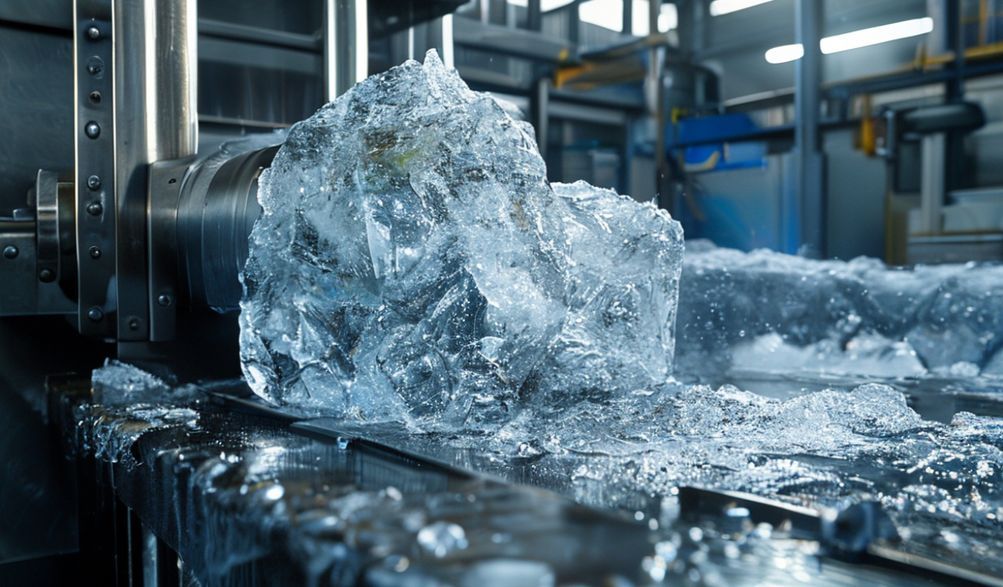
Presyo ng Custom Ice Block Making Machine: Isang Kumpletong Gabay para sa Mamimili sa 2026
Kung napadpad ka rito sa paghahanap ng "presyo ng custom ice block making machine," malamang ikaw ay isang negosyante, operations manager, o project planner na humaharap sa isang kritikal na desisyon sa pamumuhunan ng kapital. Kailangan mo ng malinaw na numero na maipapasok sa iyong badyet, at malamang ay nababagot ka sa mga malabo at pangkalahatang mga halaga na iyong nakita sa ngayon. Harapin natin ito nang diretso:Walang iisang presyo.Ang isang pasadyang makina ay eksakto iyon—pasadyang gawa. Ang panghuling halaga nito ay isang nagbabagong salik, hindi isang pirmang halaga, na lubusang hinuhubog ng iyong natatanging pangangailangang pang-operasyon.
Ang gabay na ito ay idinisenyo upang linawin ang kalabuan. Hindi lamang kami magbibigay ng listahan ng presyo; bibigyan ka namin ng balangkas upang maunawaan kung para saan ang iyong binabayaran. Batay sa ekspertiso ng industriya, ibababa namin ang mga pangunahing dahilan ng gastos, ilalantad ang mga kadalasang nakatagong bayarin, at magbibigay ng makatotohanang mga saklaw ng presyo para sa 2026 batay sa sukat at kakayahan ng makina. Ang aming layunin ay gawin kang isang maalam na mamimili mula sa isang pasibong tagasuri ng presyo, na may kakayahang suriin ang mga presyuhin, tasahin ang pangmatagalang halaga, at magsagawa ng tiwala nam pamumuhunan para sa kinabukasan ng iyong negosyo. Magsimula tayo sa paglilinaw ng mismong konsepto ng "pasadya" sa industriyang ito.
Pag-unawa sa "Pasadyang" sa Makinarya ng Bloke ng Yelo
Ang salitang "custom" ang pangunahing dahilan kung bakit kumplikado ang pagpepresyo. Hindi ito isang maliit na pagbabago sa karaniwang modelo; ito ay isang ininhinyerong solusyon na binuo mula sa simula—o malawakang binago—upang malutas ang isang tiyak na problemang pang-industriya. Ang pag-unawa sa saklaw ng pagpapasadya ang unang hakbang upang maunawaan ang presyo.
Ano ba Talaga ang Ibig Sabihin ng "Pagpapasadya" Dito?
Ang pagpapasadya ay maaaring sumaklaw sa bawat aspeto ng disenyo at tungkulin ng makina. Kabilang sa mga pangunahing baryable ang:
- Sukat at Timbang ng Bloke:Ito ang pinakapangunahing salik ng pasadyang pagsasaayos. Ang isang makina para sa maliit na bangkang pangingisda ay maaaring gumawa ng 5kg na bloke para sa madaling paghawak, samantalang ang isang pang-industriyang planta ng kongkreto ay nangangailangan ng buong-tipong 100kg+ na mga bloke para sa matagalang paglamig. Ang makinaryang kailangan para sa bawat isa ay lubhang magkaiba.
- Kapasidad sa Produksiyon:Sukat sa tonelada bawat 24 oras, ito ang nagtatakda ng laki at kapangyarihan ng makina. Maaaring mangailangan ng 500kg/araw ang isang boutique na katering, samantalang nangangailangan ng 10+ tonelada/araw ang isang pangunahing sentro ng pagpoproseso ng pagkaing-dagat sa isang daungan.
- Hugis at Kalinawan ng Bloke:Kailangan mo ba ng karaniwang hugis-parihaba na bloke, o partikular na mga hugis para sa packaging? Para ba ang yelo sa direktang pagdikit sa pagkain, na nangangailangan ng kristal na malinaw na yelo mula sa pinadalisay na pinagmumulan ng tubig, o ang maulap na pang-industriyang yelo para sa pagpapalamig ng kongkreto ay ganap na katanggap-tanggap?
- Espesyal na mga Tampok:Dito nagkakaiba talaga ang inhinyeriya. Maaaring kabilang sa mga pasadyang tampok ang:
- Pinagsamang mga tangke ng brine para sa mas mabilis na pagyeyelo.
- Ganap na awtomatikong mga sistema para sa pag-alis ng hulma at pagtatambak.
- Mga advanced na sistema ng pagpapalamig na walang CFC para sa kahusayan at pagsunod sa kapaligiran.
- Gawing ganap mula sa food-grade 304 o 316 stainless steel para sa mga aplikasyong kritikal sa kalinisan.
Mga Karaniwang Industriya na Nangangailangan ng Mga Pasadyang Makina
Ang mga pasadyang makina ay hindi luho; sila ay isang pangangailangan para sa mga sektor na may dalubhasang pangangailangan sa pamamahala ng init.
- Pangkomersiyong Pangingisda at Pagpoproseso ng Pagkaing-dagat: Requires ice that melts slowly, is often clear, and comes in sizes suitable for boxing fish. Hygiene is paramount.
- Concrete Production & Chemical Cooling: Needs large, dense blocks that provide sustained cooling to control the chemical reaction of curing concrete or industrial processes.
- Large-Scale Event & Hospitality Catering: Demands high-volume production of clear, clean ice for beverages and food display, often with specific size requirements for dispensers.
- Scientific & Laboratory Applications: May require ultra-pure ice from deionized water or precisely controlled freezing cycles for research and testing.
Key Factors Determining the Final Price
The price tag is a direct reflection of the engineering, materials, and capacity you select. Think of these factors as the building blocks of your final quote.
1. Core Machine Specifications & Technology
The heart of the machine dictates its performance, efficiency, and a significant portion of its cost.
- Refrigeration System: The compressor is the engine. Brands like BitzeroCopeland command a premium for proven reliability and efficiency. The type of refrigerant (e.g., R404a, R507, or natural options like Ammonia) also affects cost and compliance.
- Evaporator Design: This is where the ice forms. A direct-contact evaporator is common, but a custom immersion system for extra-large blocks is more complex and expensive. Material (copper, stainless steel) matters for durability and hygiene.
- Antas ng Automation: A manual machine requiring an operator to demold and store ice is the entry point. A semi-automatic system mechanizes part of the process. A fully automatic machine with a PLC (Programmable Logic Controller), robotic arms, and automated storage can run with minimal oversight but adds substantial cost.
- Enerhiyang Mabisâ: A machine with a higher initial price but a superior energy efficiency rating (measured in kW per ton of ice) can save tens of thousands of dollars in electricity over its lifespan. This is a critical TCO (Total Cost of Ownership) consideration.
2. Production Capacity & Output Scale
Capacity and cost have a non-linear relationship. Doubling the output often more than doubles the price due to the need for larger compressors, heavier-duty components, and more sophisticated controls.
- Conceptual Price Correlation:
- Small-Scale (<1 ton/day): Lower base cost, but higher cost per ton of capacity due to fixed engineering overheads.
- Medium-Scale (1-5 tons/day): The “sweet spot” for many commercial applications, offering a better balance of cost and output.
- Large-Scale (5+ tons/day): Highest absolute price, but often the lowest cost per ton of ice produced due to economies of scale in the design.
3. Material Quality & Build Construction
The machine’s skeleton determines its lifespan and operating environment suitability.
- Housing & Contact Surfaces: Food-grade 304 or 316 stainless steel is required for any food-contact application and is highly corrosion-resistant but costly. Powder-coated carbon steel is a budget option for industrial settings but won’t last as long in harsh, wet environments.
- Kalidad ng Komponente: The grade of insulation, the thickness of piping, and the brand of electrical panels (e.g., Siemens, Schneider) all contribute to reliability. Cutting corners here leads to higher maintenance costs and downtime.
- Compliance Impact: Using certified materials and processes is necessary for approvals like FDA, CE, or UL, which adds to the manufacturing cost but is non-negotiable for market access.
4. Supplier & Manufacturer Variables
Who builds your machine is as important as what they build.
- Brand Reputation & Expertise: Established manufacturers with decades of experience charge more, but you’re paying for proven designs, refined processes, and engineering support.
- Manufacturing Model: A supplier with in-house manufacturing control typically ensures better quality control and more flexible customization than one that outsources assembly.
- After-Sales Package: A comprehensive warranty (e.g., 5 years on the compressor vs. 1 year), access to a responsive technical support team, and a global network of service agents provide immense long-term value and peace of mind, which is reflected in the price.
Realistic Price Ranges for Custom Machines (2026)
Important Disclaimer: The figures below are mga pagtataya for 2026, based on current market trends and projected material/engineering costs. They are ballpark ranges for budgeting. A formal, detailed quote from a manufacturer based on your exact specifications is the only way to get an accurate price. All figures are in USD.
Entry-Level / Small-Scale Custom Machines
- Typical Specs: Capacity of 500kg to 1 ton per day. Semi-automatic operation (manual de-molding). Basic construction, often with coated carbon steel frames and standard compressors. Suitable for non-food industrial use or very small food operations with strict cleaning protocols.
- Price Range: $15,000 – $35,000
- Angkop Para Sa: Small, independent fishing operations, boutique event catering companies, or small laboratory startups.
Mid-Range / Commercial-Grade Custom Machines
- Typical Specs: Capacity of 1 to 5 tons per day. Mostly automatic operation. Built with food-grade stainless steel in critical areas. Features more reputable compressor brands and better energy efficiency. Often includes basic PLC controls.
- Price Range: $35,000 – $80,000
- Angkop Para Sa: Regional seafood processors, medium-sized concrete batch plants, large hotel chains, and substantial event venues.
High-Capacity / Industrial Custom Machines
- Typical Specs: Capacity of 5+ tons per day, often reaching 20-50 tons. Fully automated with advanced PLC systems, automated brine circulation, and robotic handling. Heavy-duty, all-stainless construction. Features top-tier, high-efficiency compressors and custom evaporator designs.
- Price Range: $80,000 – $200,000+
- Angkop Para Sa: Major port fishing cooperatives, large industrial chemical plants, national concrete producers, and mega-resorts or cruise ships.
Higit pa sa Presyo ng Tiket: Kabuuang Gastos ng Pagmamay-ari (TCO)
The purchase price is just the first chapter in your cost story. A savvy buyer evaluates the Total Cost of Ownership over a 10-15 year horizon.
Upfront & Installation Costs
These are one-time costs that can surprise the unprepared buyer.
* Site Preparation: Reinforced flooring, drainage, and ventilation.
* Electrical Work: Most industrial machines require 3-phase power installation, which can be a significant expense if not already available.
* Ancillary Systems: Water filtration/purification systems (essential for clear ice and machine longevity) and water chillers to improve efficiency.
* Logistics: Shipping, insurance, customs duties, and import taxes for internationally sourced machines.
Operational & Energy Costs
This is where efficiency pays dividends.
* A machine producing 1 ton of ice might consume 70 kWh or 100 kWh, depending on its technology. At an industrial electricity rate, that difference can amount to thousands of dollars per year. Over a decade, an efficient machine can save more than its initial price premium.
Maintenance, Repair, & Downtime Costs
- Preventative Maintenance: Scheduled servicing (like compressor check-ups) has a cost but prevents catastrophic failure.
- Piesa ng Ekstrang Bahagi: The price and availability of parts (e.g., a custom evaporator coil) matter. Cheaper machines often use proprietary or hard-to-find components.
- Pahinga: If your ice production stops, does your business stop? The reliability of your machine, backed by strong service support, is a direct financial safeguard.
How to Get an Accurate Quote & Evaluate Suppliers
Armed with knowledge, you can now engage suppliers effectively.
Information to Prepare for a Supplier
To get a meaningful quote, provide a detailed project specification sheet:
* Desired block dimensions (L x W x H) and weight.
* Required daily output in tons/24hrs.
* Available utilities: Water source/pressure, electrical voltage & phase, available space (L x W x H).
* Intended use (e.g., direct food contact, concrete cooling).
* Desired level of automation.
Red Flags vs. Green Flags in Suppliers
Red Flags:
* Providing a firm quote without asking detailed questions.
* Vague specifications on components (“high-quality compressor”).
* Pressure tactics to sign immediately.
* No verifiable customer references or case studies.
* Unwillingness to put warranty and service terms in clear writing.
Green Flags:
* Provides a detailed questionnaire or requests a site visit.
* Offers an engineering consultation to discuss your needs.
* Is transparent about the brands and models of key components.
* Provides a clear, comprehensive warranty document.
* Has a track record of installations in your industry or region.
The Value of After-Sales Support
The relationship doesn’t end at delivery. A supplier with a strong service network ensures:
* Faster response times if issues arise.
* Available spare parts inventory.
* Trained technicians who know your specific machine.
This support is a core part of the machine’s long-term value and should be a weighted factor in your decision, not an afterthought.
Frequently Asked Questions (FAQ)
Q: What is the cheapest custom ice block machine I can get?
A: While entry-level models may start around $15,000, the cheapest machine often carries the highest long-term cost through energy inefficiency, frequent repairs, and downtime. Focus on value and Total Cost of Ownership, not just the initial purchase price.
Q: How long does it take to get a custom machine built and delivered?
A: Lead times vary significantly based on complexity. Expect 8 to 20 weeks from order confirmation to delivery. This includes engineering, manufacturing, testing, and shipping. Always get a written timeline commitment.
Q: Can I modify a standard machine instead of buying fully custom?
A: Often, yes. Reputable manufacturers may have standard platforms that can be adapted (e.g., different mold sizes, added automation modules) at a lower cost than a ground-up custom design. Discuss your needs openly to explore this option.
Q: Are there financing options available for these machines?
A: Yes. Many manufacturers have partnerships with equipment financing firms. Options like leasing or equipment loans can help preserve capital and manage cash flow. Inquire with the supplier about available programs.
Q: What is the typical lifespan of a well-maintained custom ice block machine?
A: With proper preventative maintenance and quality components, a well-built custom machine can have an operational lifespan of 15 to 20 years. The investment in superior materials and construction directly translates to decades of service.
Conclusion
Navigating the “custom ice block making machine price” landscape is ultimately about understanding that you are investing in a core piece of your business’s operational infrastructure. The final number is a function of your specific requirements, the quality and technology you choose, and the long-term partnership you form with a supplier.
By moving beyond a simple price check to a thorough evaluation of your needs, the Total Cost of Ownership, and the credibility of your manufacturer, you transform this from a daunting purchase into a strategic investment. Use this guide as your framework. Define your specs meticulously, request detailed quotes from reputable suppliers, and weigh the complete value proposition—not just the sticker price.
Your goal isn’t just to buy a machine; it’s to secure a reliable, efficient solution that will support your business’s growth and productivity for years to come. Now, you have the knowledge to do just that.
<