
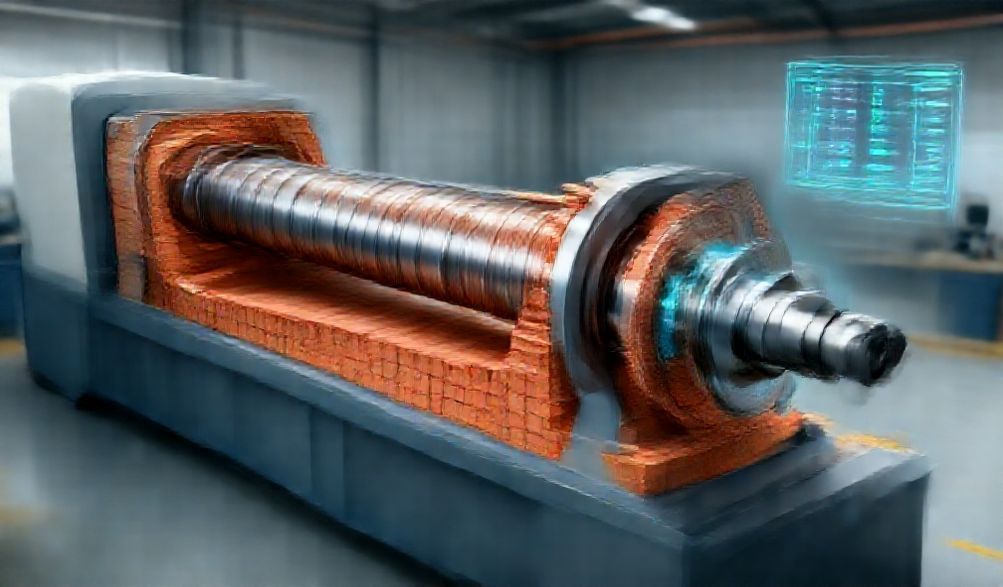
The Ultimate Guide to Clay Brick Making Machine Design: Principles, Types & Innovations
Panimula
If you’re delving into the world of clay brick production, you’ve likely realized that the heart of your operation isn’t just clay—it’s the machine that transforms it. Whether you’re an engineer refining a prototype, a manufacturer sourcing equipment, or an entrepreneur planning a venture, you’re not looking for a simple product list. You need a deep, reliable understanding of clay brick making machine design. This knowledge is the difference between a profitable, efficient plant and a costly, underperforming one.
Good design directly dictates final product quality, production throughput, operational safety, and ultimately, your bottom line. It’s a complex interplay of mechanical engineering, material science, and practical craftsmanship. This guide serves as your comprehensive resource, moving beyond sales brochures to demystify the core principles, compare machine philosophies, and explore the innovations shaping the future. Grounded in industry expertise, we’ll break down what makes an exceptional brick making machine, from the drawing board to the factory floor.
Foundational Principles of Clay Brick Machine Design
Before examining specific machines, one must understand the universal engineering truths that govern all successful designs. These principles ensure the machine works in harmony with the material it processes.
Understanding the Clay Preparation and Forming Process
The machine’s design is fundamentally a response to the behavior of clay. Ignoring this leads to chronic blockages, poor quality, and excessive wear.
- Moisture Content Management: The design must facilitate precise moisture control. This includes:
- Efficient mixing and kneading mechanisms to ensure uniform water distribution.
- Design of hoppers and feed systems that prevent drying or over-saturation.
- Integration of moisture sensors for automated feedback in advanced systems.
- Compaction and Extrusion Principles: Strength is imparted by removing air and aligning clay particles.
- Design must create progressive, controlled pressure—whether through a rotating auger or a hydraulic ram—to achieve optimal density without laminations or cracks.
- Designing for Plasticity: The machine must handle the clay’s “workability.” A design suited for highly plastic clay may jam with stiffer material, and vice versa. Adjustable compression ratios and auger pitches are key design features for adaptability.
Core Mechanical Design Considerations
This is where engineering rigor meets relentless cyclic loading. A brick machine operates in a punishing environment.
- Integridad ng Estruktura: The frame is the skeleton. Its design must resist constant vibration, shock loads from compaction, and the weight of heavy components. Robust welding, strategic gusseting, and high-grade steel are non-negotiable for longevity.
- Power Transmission: The choice between hydraulic and mechanical systems defines the machine’s character.
- Hydraulic Design: Offers superior, easily controllable force in any direction. Ideal for high-pressure pressing. Design complexity involves pump sizing, valve banks, cylinder design, and heat dissipation.
- Mechanical Design: Often more efficient for direct, repetitive motion (like extrusion). Involves designing gear trains, cams, and linkages for reliable, high-speed operation with less fluid maintenance.
- Tolerance and Precision: In mold and die design, microns matter. Precise machining ensures brick dimensional consistency, while proper tolerances prevent clay from sticking or flashing (excess material seeping out of seams).
Safety and Ergonomics in Design
A productive machine is a safe and operable one. Good design proactively addresses human interaction.
- Integrated Safety: Design must include fixed guards over moving parts, emergency stop circuits that cut all power, and lock-out/tag-out (LOTO) points for maintenance. These are not add-ons but core to the layout.
- Ergonomics: Considerations include the height of feed points, accessibility of grease nipples and wear parts, and clarity of control panels. This reduces operator fatigue and encourages proper maintenance.
- Standards Compliance: Adherence to international standards like ISO (International Organization for Standardization) or CE marking (for the European market) is a blueprint for safety, ensuring designs meet rigorous requirements for electrical safety, noise, and mechanical hazards.
Types of Clay Brick Making Machines & Their Design Philosophies
Different production goals and scales demand fundamentally different design approaches. Here’s how design philosophy diverges across the main machine types.
Manual & Semi-Automatic Machine Designs
These designs prioritize simplicity, low cost, and low energy consumption over output speed.
- Pilosopiya sa Disenyo: Leverage human operation to reduce mechanical complexity. The design focuses on a single, robust action.
- Mga Pangunahing Bahagi: A strong lever system or a small hydraulic jack provides the forming pressure. The design centers on a single, interchangeable mold station. Power systems, if any, are minimal (e.g., a small motor for a vibrator).
- Applications & Limitations: Perfect for small-scale, on-site production, or specialty artistic bricks. The design inherently limits output and places physical demands on the operator. Consistency relies heavily on the operator’s skill.
Fully Automatic Extrusion Machine Design
The workhorse of high-volume brick plants, designed for continuous, streamlined production.
- The Heart: The Extrusion System. This is where design shines.
- Auger Design: A tapered, flighted screw that conveys, compacts, and pressures the clay. Flight design, pitch, and wear coatings are critical.
- Vacuum Chamber: A key design feature. By de-airing the clay under vacuum before extrusion, the design dramatically increases brick strength and workability.
- Die & Extrusion Head: Shapes the continuous clay column. Internal design includes cores for perforations and careful streamlining to ensure uniform flow.
- Automated Ancillaries: The design integrates wire-cut or gang-cut systems for sizing, and conveyor systems with automatic stackers or cross-transfer cars, creating a seamless flow from raw material to palletized product.
Hydraulic Press Machine Design
Where extrusion machines push clay, press machines stamp it. Design focuses on immense, controlled force.
- High-Pressure Hydraulics: The design revolves around a powerful hydraulic system—pump, accumulator, and cylinders—capable of delivering consistent, multi-directional pressure (often from the top and sides simultaneously).
- Mold Design for Precision: Molds are designed as precise, sealed chambers. This allows for the production of very high-density bricks (like paving stones) with sharp edges, intricate textures, and consistent dimensions that are difficult to achieve with extrusion.
- Outcome Comparison: While extrusion is faster for standard shapes, hydraulic press design excels at premium, high-tolerance products and can handle a wider range of raw materials, including lower-plasticity soils and alternative aggregates.
Key Components: A Deep Dive into Design Specifications
Let’s zoom in on the subsystems where design decisions have the most profound impact on performance and lifespan.
The Mold and Die: Where Design Defines the Product
This is the interface between machine and product. Its design is paramount.
- Pagpili ng Materyal: Hardened tool steel or specialized alloys (like chromium carbide) are standard for wear plates and mold liners. The design must account for heat treatment to balance hardness and toughness.
- Form and Function: Design dictates brick size, texture (smooth, rustic, sanded), and perforation pattern. Computational Fluid Dynamics (CFD) can be used in die design to model clay flow and prevent dead zones.
- Ease of Release: Incorporating precise draft angles (slight tapers) and highly polished surfaces in the mold design is essential for the brick to eject cleanly without distortion.
Power Plant & Drive System Design
This is the engine room. Oversizing wastes capital and energy; undersizing causes failure.
- Motor & Pump Sizing: Design calculations must consider peak torque/force requirements, cycle times, and duty cycles to select optimally sized components, ensuring efficiency and longevity.
- Transmission Design: For mechanical machines, gearbox selection and shaft design must handle high torsional loads. Proper bearing selection and placement are critical to manage radial and axial forces.
- Enerhiyang Mabisâ: Modern design incorporates variable frequency drives (VFDs) on motors to match power to load, high-efficiency hydraulic pumps, and regenerative circuits that capture energy during deceleration.
Control Systems & Automation Logic
The “brain” of the machine has evolved dramatically, and its design dictates usability.
- Control Hardware Evolution: Design has moved from hard-wired relay panels (still valid for simple machines) to Programmable Logic Controllers (PLCs). PLC-based design offers flexibility, diagnostics, and easier integration.
- Human-Machine Interface (HMI) Design: A well-designed touchscreen interface, with intuitive menus and clear fault diagnostics, drastically reduces operator training time and downtime.
- Sensor Integration: Strategic design places sensors (for pressure, position, temperature, and count) to create closed-loop feedback systems, allowing the machine to auto-adjust for consistent output.
Modern Innovations in Machine Design
The frontier of brick machine design is being pushed by digitalization, sustainability, and advanced engineering tools.
Smart Manufacturing & IoT Integration
Machines are becoming data-generating nodes in a connected factory.
- Sensor-Rich Design: Beyond basic controls, designs now incorporate sensors to monitor component health (vibration on bearings), process stability (real-time extrusion pressure), and output quality.
- Connectivity for OTA & Predictive Maintenance: Machine designs with secure connectivity allow for Over-The-Air (OTA) software updates and enable predictive maintenance alerts, preventing unplanned stoppages.
- Production Analytics Dashboards: Data is aggregated into cloud-based dashboards, allowing managers to track Overall Equipment Effectiveness (OEE), energy consumption, and production trends from anywhere.
Sustainable and Energy-Efficient Design Trends
The drive for greener construction starts with the machinery.
- Design for Alternative Materials: Machines are being redesigned with stronger, more abrasive-resistant components to handle fly ash, slag, construction waste, and other alternative raw materials.
- Energy Recovery Systems: Advanced hydraulic system design uses regenerative circuits to capture energy from the descending press ram or braking motors, feeding it back into the system.
- Lightweighting and Lifecycle Analysis: Using FEA, designers can optimize frames to use less material without sacrificing strength. There’s also a focus on selecting materials and coatings for longer life, reducing the environmental footprint of replacement parts.
Advanced Material and Manufacturing Techniques
How machines are designed and built is also transforming.
- CAD/CAM & FEA: 3D Computer-Aided Design (CAD) allows for perfect digital prototyping and assembly checks. Finite Element Analysis (FEA) simulates stress, vibration, and thermal loads to validate designs before metal is ever cut.
- Additive Manufacturing (3D Printing): Used to rapidly prototype complex components like custom auger tips or to produce durable, end-use tooling with conformal cooling channels for molds.
- Advanced Surface Treatments: Techniques like laser cladding, PVD (Physical Vapor Deposition) coatings, and plasma nitriding are specified in the design phase to dramatically enhance the wear resistance and service life of critical components.
FAQ: Clay Brick Making Machine Design
Q1: What is the most critical factor in designing a durable brick machine?
A: The design of the main frame and critical wear components (like the auger, mixer blades, and mold liners) is paramount. This requires proper structural analysis using FEA and the specification of high-abrasion-resistant materials. Durability is designed in from the first sketch.
Q2: How does machine design affect the final brick quality?
A: Directly and profoundly. The precision of the mold cavity defines dimensional accuracy. The consistency of the compaction/extrusion pressure determines brick density and strength. The stability of the cutting mechanism affects the squareness of the cut. Every design element influences the end product.
Q3: Can one machine design handle different types of clay?
A: A versatile, well-designed machine will have adjustable parameters like moisture input, extrusion speed/rate, and compression pressure. However, a machine optimized for highly plastic shale may struggle with sandy, low-plasticity clay without design modifications, particularly in the preparation chamber and auger profile.
Q4: Is hydraulic design better than mechanical design for brick making?
A: “Better” depends on the product goal. Hydraulic press design is superior for producing very high-density, precision bricks (like pavers or facing bricks) with excellent surface finish. Mechanical extrusion designs are typically more energy-efficient and faster for high-volume production of standard hollow or solid building bricks.
Q5: What software tools do professionals use for designing these machines?
A: The industry relies on a suite of tools: AutoCAD for 2D layouts and schematics, SolidWorks, Autodesk Inventor, or Siemens NX for 3D modeling and assembly, and ANSYS or Abaqus for FEA stress and thermal analysis. Control logic is designed with PLC programming software like Siemens TIA PortaloRockwell Studio 5000.
Conclusion
Designing a clay brick making machine is a sophisticated engineering discipline that sits at the crossroads of robust mechanics, nuanced material science, and practical operational demands. From the foundational principles of handling clay to the cutting-edge integration of IoT and sustainable practices, every design choice cascades through the machine’s performance, output, and lifespan.
Whether your path leads you to evaluate a simple manual press for a community project or to specify a fully automated smart production line, the core tenets remain: design for the material, design for durability, and design for the people who will use and maintain it. Let this guide serve as your framework for informed decision-making.
The journey from a design concept to a reliable, profit-generating asset is complex. It requires not just knowledge, but experience.
<Ready to Move from Design to Specification? For over 25 years, our team of mechanical engineers has specialized in turning design principles into reliable, high-performance brick making machinery. Contact our engineering department for a confidential consultation on your project requirements or to access our detailed white papers on advanced extrusion system design and hydraulic press optimization.