
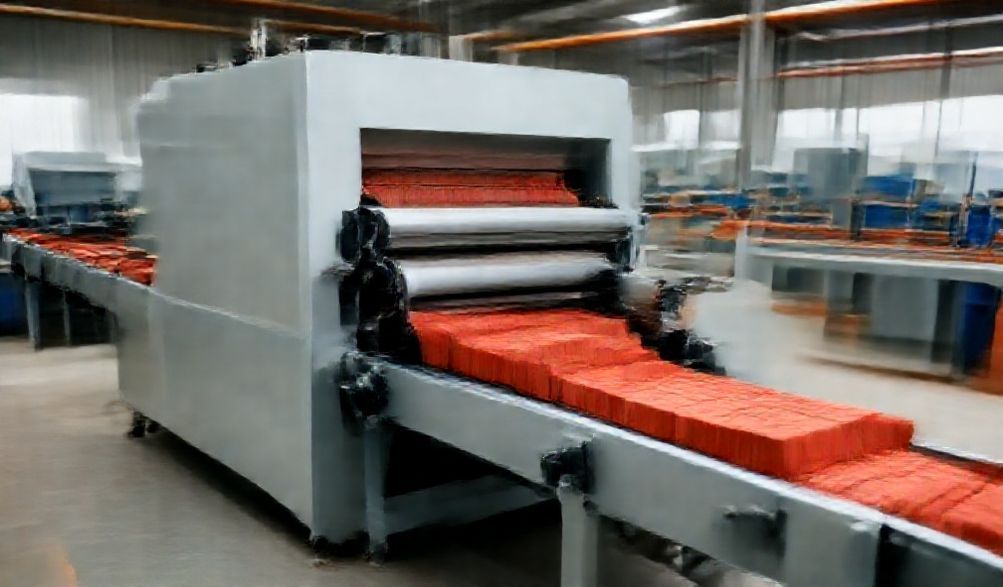
Ang Iyong Komprehensibong Gabay sa Nangungunang mga Tagagawa ng Makina sa Paggawa ng Clay Brick sa Coimbatore
Panimula
Nakatago sa pusod ng Tamil Nadu, ang Coimbatore ay hindi lamang isang lungsod—ito ay isang sentro ng de-kalidad na inhenyeriya. Kilala sa buong mundo bilang ang "Manchester ng Timog India," ang industriyal nitong diwa ay hinubog mula sa pamana ng mga tela, pagmamakinang, at walang humpay na pagbabago. Sa kasalukuyan, ang dalubhasang ito ay itinutok sa isang mahalagang sektor para sa modernong pag-unlad: ang paggawa ng mga makinaryang pang-industriya, kabilang ang mga makina ng paggawa ng ladrilyong putik.
Sa isang panahong nakatuon sa sustainable na konstruksiyon at episyenteng produksiyon, ang simpleng ladrilyo ay nananatiling isang pundamental na elemento. Gayunpaman, ang mga makina na gumagawa nito ay lubhang nagbago. Ang pagpili ng tamang makina ng paggawa ng ladrilyong luwad ay hindi lamang isang pagbili; ito ay isang estratehikong pamumuhunan na nagtatakda ng kalidad ng produkto, kahusayan sa operasyon, at sa huli, ang kita ng iyong negosyo.
Ang gabay na ito ay inilaan upang maging iyong tiyak na sanggunian. Maging ikaw ay isang kumpanya ng konstruksiyon na nagnanais na magsagawa ng vertical integration, isang negosyanteng papasok sa sektor ng mga materyales sa paggawa, o isang may-ari ng negosyo na naglalayong i-upgrade ang iyong linya ng produksyon, nagbibigay kami ng isang komprehensibo, eksperto-sinusuportahang pangkalahatang-ideya sa pag-navigate sa masiglang tanawin ng pagmamanupaktura ng Coimbatore. Ang aming layunin ay bigyan ka ng kaalaman upang makagawa ng isang maalam, mahalagang desisyon, tinitiyak na ang iyong pamumuhunan ay magtatayo ng mas matatag na pundasyon para sa iyong negosyo.
Bakit Sentro ng Paggawa ng Makinarya sa Paggawa ng Bato ang Coimbatore
Ang katanyagan ng Coimbatore sa partikular na larangang ito ay hindi aksidente. Ito ay resulta ng mga dekada ng ebolusyong pang-industriya, na lumikha ng isang perpektong ekosistema para umunlad ang mga tagagawa ng makinarya.
Ang "Manchester ng Timog India": Pamana ng Industriyalisasyon
Ang makasaysayang lakas ng Coimbatore sa paggawa ng tela ay nangangailangan ng masalimuot na mga habihan at makinarya, na nagpatibay sa isang malalim na kultura ng tumpak na inhenyeriya at paggawa ng kasangkapan. Ang pamana nito ay lumikha ng:
Isang lubos na sanay na manggagawa na bihasa sa pagmakinang, pagpabrikasyon, at pagbuo.
* A dense, robust network of ancillary industries supplying everything from castings and gears to hydraulic components and electrical panels.
* An inherent understanding of manufacturing processes and production line challenges, which directly translates to designing better brick-making equipment.
Kalapitan sa mga Hilaw na Materyales at Pamilihan
Location is a strategic advantage. Coimbatore sits in a region with strong metallurgical and engineering industries, ensuring easy access to high-quality raw materials like graded steel. Furthermore, its position in South India places it at the doorstep of a massive and ever-growing construction market across Tamil Nadu, Kerala, Karnataka, and beyond, allowing manufacturers to build machines attuned to regional clay profiles and construction demands.
A Culture of Innovation and Craftsmanship
The city’s manufacturers embody a unique blend. They possess traditional, hands-on craftsmanship—a meticulous attention to detail in welding, fitting, and finishing—while actively adopting modern technologies like CNC machining, PLC (Programmable Logic Controller) automation, and energy-efficient designs. This culture ensures machines are not only rugged and durable but also increasingly smart and efficient.
Key Factors to Evaluate When Choosing a Manufacturer
Selecting a manufacturer goes beyond comparing price tags. It’s about assessing capability, quality, and long-term partnership potential. Here are the critical pillars to evaluate.
Machine Types and Technological Capability
Understanding the spectrum of automation is crucial:
* Manual at Semi-Awtomatikong Makina: Ideal for small-scale operations or startups with lower initial investment. They require more manual labor for feeding and brick removal but are simpler to maintain.
* Ganap na Awtomatikong Makina: Designed for high-volume production (often 8,000 to 30,000+ bricks per shift). They feature automated material feeding, compression, ejection, and stacking, often controlled by PLC systems for consistent quality and minimal labor.
* Key Technological Questions to Ask:
* What is the output capacity (bricks per hour) under standard conditions?
* Is the machine equipped with a PLC system for easy operation and troubleshooting?
* What are the energy consumption metrics? Look for features like variable frequency drives (VFDs) on motors.
* What is the mixing and compaction technology? A homogeneous mix and high compression force (measured in tons) are vital for brick strength.
Build Quality and Material Durability
This is where the machine’s lifespan is determined. A cheaper machine with subpar components will cost more in downtime and repairs.
* Balangkas at Estruktura: Look for frames fabricated from heavy-duty structural steel (like IS 2062) to withstand constant vibration and load without deformation.
* Critical Components: The heart of the machine. Inquire about the brand and specifications of the hydraulic pump, cylinders, and valves. Reputed brands ensure reliability. Similarly, the molds should be made from high-chrome, hardened steel for extended life and consistent brick dimensions.
* Construction Finish: Quality welding, proper surface treatment (like sandblasting and painting), and neat cable management are indicators of a manufacturer’s attention to detail.
Customization and After-Sales Support
Your needs are unique. A good manufacturer acts as a solutions partner.
* Pagpapasadya: Can they provide molds for custom brick sizes, shapes (interlocking, paving, hollow blocks), or textures? Do they offer auxiliary equipment like clay crushers, pan mixers, and brick stacking systems for a complete line?
* Suporta Pagkatapos ng Benta: This is non-negotiable. Probe into:
* Garantiya period and terms.
* Availability of a comprehensive spare parts kit and ongoing parts supply.
* Installation, commissioning, and on-site operator training services.
* The responsiveness and reach of their service technician network.
Compliance and Certifications
Certifications are a baseline indicator of a manufacturer’s commitment to systematic quality and safety processes.
* Look for manufacturers with ISO 9001:2015 certification, which signifies a quality management system.
* Machines should be built in compliance with relevant Indian Standards and incorporate essential safety features like emergency stop buttons, mechanical guards, and pressure relief valves.
* While not always mandatory, certifications demonstrate a professional, process-oriented approach to manufacturing.
Profiles of Leading Clay Brick Machine Manufacturers in Coimbatore
Based on industry presence, verifiable specializations, and product range, here is an overview of notable manufacturers in the region. This information is presented for comparative analysis to aid your research.
Everon Impex – An Overview
- Espesyalisasyon: Known for a wide range covering from manual to fully automatic fly ash and clay brick making machines, often emphasizing cost-effective solutions for growing businesses.
- Key Product Range: Includes stationary type brick machines, mobile brick machines, and concrete block making machines, with varying levels of automation.
- Notable Client Base/Projects: Serves a diverse clientele across India, including small and medium-scale brick manufacturers.
- USP: Positions itself with a strong focus on providing affordable machinery and has developed a distribution network for wider reach.
Global Impex – An Overview
- Espesyalisasyon: Focuses on robust, heavy-duty brick and block making machines, including hydraulic press models designed for high compression and consistent brick density.
- Key Product Range: Offers hydraulic press machines, egg laying mobile machines, and stationary automatic machines with capacities suited for medium to large-scale production.
- Notable Client Base/Projects: Their machinery is used in various construction material production units, with an emphasis on durability for long-term operation.
- USP: Often highlighted for the sturdy construction of their machines and the use of reliable hydraulic components, aiming for low maintenance and high uptime.
Lakshmi & Co. – An Overview
- Espesyalisasyon: A well-established name with a long history in Coimbatore’s engineering sector, producing a variety of industrial processing machines, including clay brick making equipment.
- Key Product Range: Manufactures clay brick machines, mixers, and crushers, providing options for setting up a complete production line from a single source.
- Notable Client Base/Projects: Has a presence across South India, supplying machinery to the brick and tile manufacturing industry for decades.
- USP: Leverages extensive experience and traditional engineering prowess, often associated with mechanically strong and reliable machines backed by local service expertise.
The Business Case: ROI and Operational Considerations
Viewing your machine as a capital asset is key to understanding its true value.
Calculating Your Investment and Payback Period
A simple ROI framework considers:
* Paunang Puhunan: Machine cost, auxiliary equipment, installation, and setup.
* Mga Gastos sa Pagpapatakbo: Labor, power, raw material (clay), maintenance, and space rental.
* Revenue Factors: Output capacity (bricks/day), market price per brick, and seasonal demand.
* Payback Estimate: While highly variable, a well-run, automated plant targeting local demand can often see a payback period of 1.5 to 3 years. High utilization and efficient operation are critical drivers.
Operational Workflow and Space Requirements
A functional brick yard requires more than just the pressing machine:
1. Clay Preparation Area: Space for raw clay storage, a crusher to break down lumps, and a mixer (like a pan mixer) to homogenize clay with water.
2. Production Line: The brick making machine, with space for material feeding and green brick output.
3. Drying Area: A covered, ventilated space where green bricks are stacked to air-dry for 2-3 days before firing. This area is often the most space-intensive.
4. Curing/Firing: Depending on the process (sun-dried, kiln-fired), appropriate space or infrastructure is needed.
A small-scale unit may require 5,000 to 10,000 sq. ft., while an automated plant needs significantly more.
Maintenance Schedules for Longevity
Proactive maintenance prevents costly breakdowns:
* Daily: Clean the machine, especially the mold area. Check hydraulic oil levels and for any leaks. Lubricate moving parts as per manual.
* Weekly: Inspect all nuts and bolts for tightness. Check wear parts like mold liners and feeder scrappers.
* Monthly: Clean or replace hydraulic oil filters. Check electrical connections and pressure settings. Conduct a thorough inspection of all major components.
* Annually: Consider changing the hydraulic oil entirely and getting a comprehensive service check from the manufacturer.
Beyond the Purchase: Trends and Sustainable Practices
The industry is evolving, and forward-thinking manufacturers are leading the charge.
Embracing Automation and Industry 4.0
The future is connected and data-driven. Trends include:
* IoT Sensors: Machines equipped with sensors to monitor pressure, temperature, vibration, and production count in real-time.
* Predictive Maintenance: Data analytics can forecast when a component might fail, allowing for scheduled replacement before a breakdown occurs.
* Remote Monitoring: Manufacturers can sometimes diagnose issues remotely, guiding on-site technicians for faster resolution.
Sustainable Brick Production
Modern machinery is pivotal to greener construction:
* Kahusayan sa Paggamit ng Yaman Advanced mixing and compaction ensure minimal clay waste. Water recycling systems in the production line are becoming more common.
* Alternative Materials: Many machines from Coimbatore are adept at producing fly ash bricks, utilizing a thermal power plant by-product, reducing clay consumption, and creating a lighter, stronger brick.
* Enerhiyang Mabisâ: Newer drives and optimized hydraulic systems reduce the overall carbon footprint of the production process itself.
Mga Madalas Itanong (FAQ)
Q1: What is the approximate price range for a clay brick making machine in Coimbatore?
Isalin ang teksto sa Filipino. I-output LAMANG ang isinalin na teksto. Prices vary dramatically based on automation and capacity. A basic manual or small semi-automatic machine can start from ₹ 3-5 lakhs. A mid-range semi-automatic system may cost ₹ 10-20 lakhs. Large, fully automatic production plants with auxiliary equipment can range from ₹ 50 lakhs to several crores. Always request a detailed quotation for your specific output requirements.
Q2: Can manufacturers provide guidance on setting up the entire brick production unit?
Isalin ang teksto sa Filipino. I-output LAMANG ang isinalin na teksto. Yes, most established manufacturers offer comprehensive consultancy. This can include plant layout design, recommendations for auxiliary machinery (crushers, mixers, material handling), and even assistance with initial production trials to optimize the clay mix. Clarify the scope of this support during your discussions.
Q3: How important is it to visit the manufacturer’s factory before buying?
Isalin ang teksto sa Filipino. I-output LAMANG ang isinalin na teksto. It is highly recommended. A factory visit allows you to inspect the build quality firsthand, see machines under operation, assess the organization and capability of their workshop, and have face-to-face technical discussions. It’s the best way to build trust and ensure there are no gaps in expectation.
Q4: What is the typical lead time for machine delivery and installation?
Isalin ang teksto sa Filipino. I-output LAMANG ang isinalin na teksto. Lead times depend on the machine’s complexity and the manufacturer’s order book. Standard models might be delivered in 4-8 weeks. Customized or large-capacity fully automatic plants may have a lead time of 3-6 months. Always get a written delivery timeline in your order agreement.
Q5: Are there government subsidies or schemes for setting up a brick manufacturing unit?
Isalin ang teksto sa Filipino. I-output LAMANG ang isinalin na teksto. Schemes can change. It is advisable to consult with the District Industries Centre (DIC) in Coimbatore or the Tamil Nadu Industrial Investment Corporation (TIIC). Additionally, check with the Khadi and Village Industries Commission (KVIC)oMSME development institutes, as they sometimes offer support for rural and small-scale industries, including those in construction materials.
Konklusyon
Coimbatore stands as a testament to India’s engineering capabilities, offering a concentrated hub of expertise for clay brick making machinery. Your journey to finding the right partner hinges on a diligent evaluation of technological capability, uncompromising build quality, and the promise of steadfast after-sales support. Remember, you’re not just buying a machine; you’re forming a partnership that will underpin your production for years to come.
Use the factors outlined in this guide as your checklist. Conduct thorough due diligence, prioritize factory visits, and engage in detailed technical discussions with shortlisted manufacturers. By investing time in this selection process, you invest in the reliability, efficiency, and profitability of your brick manufacturing venture. In the evolving landscape of construction, powered by efficiency and sustainability, the right machine from the right manufacturer in Coimbatore is your cornerstone for success.
<