
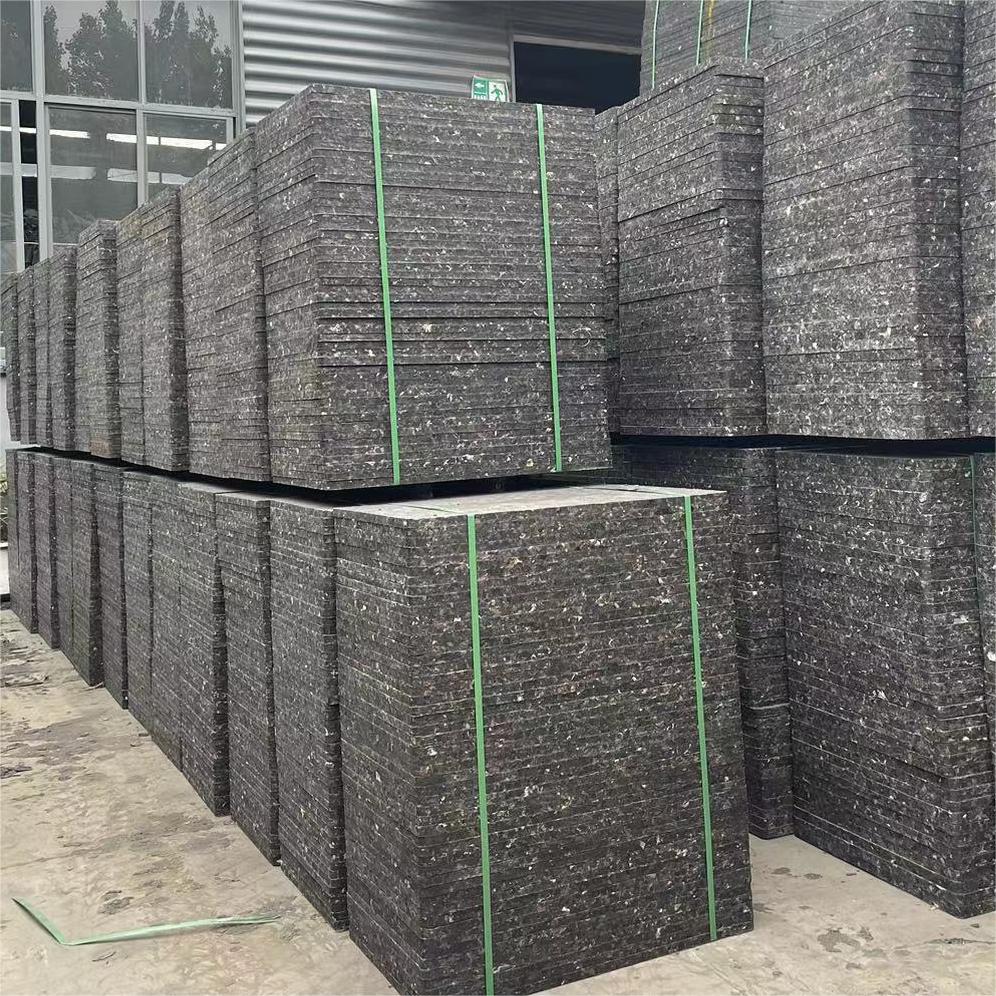
Ang Mga Inhinyeriya at Operasyonal na Dinamika ng mga Paleta sa Produksyon
Pangunahing Tungkulin at Integrasyon ng Sistema
Sa isang awtomatikong planta ng paggawa ng bloke, ang paleta ay gumaganap ng serye ng mga mahahalaga at kritikal na tungkulin. Ang pangunahing papel nito ay bumuo ng ilalim na ibabaw ng kahon ng hulma. Dapat itong lumikha ng perpektong selyo sa mga dingding ng hulma upang maiwasan ang pagtagas ng pinaghalong kongkreto sa yugto ng mataas na dalas ng panginginig at pagkakatig. Pagkatapos ng pagkakatig, ang paleta, na ngayon ay may hawak na bagong nabuong at napakalutong na "berde" na mga bloke, ay inililipat sa sistema ng conveyor ng planta. Pagkatapos, ito ay dumadaan sa isang silid ng pagpapapirmi o isang natural na lugar ng pagpapapirmi, kung saan ang kongkreto ay nakakakuha ng paunang lakas. Ang buong ritmo ng produksyon ng planta ay nakaayon sa paggalaw ng mga paletang ito. Ang isang baluktot, nasira, o hindi sumusunod sa takdang sukat na paleta ay maaaring maging sanha ng pagkaipit sa sistema ng paglilipat, patigilin ang buong linya ng produksyon, o magdulot ng paggawa ng isang buong batch ng mga depektibong bloke, na nagreresulta sa malaking pinsalang pampinansya.
Komposisyon ng Materyal at Mga Pagsulong sa Teknolohiya
Ang ebolusyon ng mga materyales ng pallet ay isang tuwirang tugon sa mga mahigpit na kondisyon ng produksyon ng bloke: matinding pagkasira, patuloy na pagkalampas mula sa mga mekanismo ng paglilipat, pagkakalantad sa halumigmig at alkalay na kimika ng kongkreto, at makabuluhang pag-ikot ng init.
- Mataas na Karbon, Pinainitang Bakal na Paleta:Ito ang tradisyonal at pinakamatibay na opsyon. Gawa sa makapal na mga plato ng high-carbon steel, ang mga pallet na ito ay dinadaan sa heat treatment (pinapatigas at pinapabisa) upang makamit ang pinakamainam na balanse ng tigas sa ibabaw at katatagan sa loob. Ang pangunahing bentahe nito ay ang pambihirang tibay at pagiging resistente sa pagdeform sa ilalim ng mabibigat na karga. Angkop ito para sa mga kapaligiran ng mataas na produksyon na gumagawa ng mga siksik at mabibigat na produkto tulad ng solidong bloke o mga paver. Ang pangunahing disbentahe nito ay ang mas mataas na paunang gastos at malaking timbang, na nangangailangan ng mas malakas na kapangyarihan mula sa sistema ng paghahatid.
- Mga Pallet na Polymer-Composite at Plastik na Pang-inhinyeriya:Ang isang mas modernong inobasyon, ang mga pallet na ito ay gawa sa mga advanced na polimer, kadalasang pinalakas ng mga hibla o iba pang kompositong materyales. Ang kanilang pangunahing benepisyo ay ang malaking pagbawas sa timbang (nagpapababa ng konsumo ng enerhiya sa pagdadala) at likas na pagtutol sa kalawang. Gumagawa rin sila ng mas kaunting ingay sa mga operasyon ng paglilipat. Gayunpaman, maaaring mas mababa ang kanilang pagtutol sa matinding impak at maaaring madaling magkaroon ng permanenteng pagpapapangit kung malantad sa mga temperatura na lampas sa kanilang punto ng thermal stability, lalo na sa mga pinabilis na kapaligiran ng steam-curing.
- Hybrid at Pinahiran na mga Solusyon sa Bakal:Upang mapakinabangan ang mga benepisyo ng dalawang mundo, ang ilang paleta ay may steel core para sa tibay ng istruktura na may nakadikit na polymer o espesyal na coating na lumalaban sa paggasgas sa ibabaw. Ang coating na ito ay nagpapabawas ng alitan sa paglabas ng bloke, nagpapaliit ng mga isyu sa pagkapit sa ilang mga timpla ng kongkreto, at nagbibigay ng karagdagang proteksyon laban sa kalawang. Ang pagganap at habang-buhay ng mga paleta na ito ay lubos na nakadepende sa kalidad at proseso ng aplikasyon ng coating.
Ang Estratehikong Epekto sa Kahusayan sa Produksyon at Kabuuang Halaga ng Pagmamay-ari
Kalidad ng Pallet Bilang Determinante ng Kalidad ng Produkto at Uptime ng Halaman
Hindi maikakaila ang direktang ugnayan sa pagitan ng kalagayan ng pallet at kalidad ng bloke. Ang isang pallet na hindi ganap na patag ay magbubunga ng mga bloke na may hindi pantay na kapal, na magiging sanhi ng hindi pagsunod sa mga istruktural na pamantayan at hindi na maipagbibili. Ang pagkasira ng ibabaw, mga lubog, o kalawang sa itaas na bahagi ng pallet ay maglilipat ng mga depekto sa ilalim na ibabaw ng bawat blokeng nagawa, na nakakaapekto sa estetika at, sa kaso ng mga paving stone, sa kanilang mga katangian sa paglalagay. Bukod dito, ang kawalan ng katatagan sa sukat—tulad ng pagkabaluktot o pagbabago sa kapal—ay pangunahing sanhi ng paghinto ng makina. Ang isang pallet na lumampas sa pinapayagang sukat ay maaaring magkabara sa istasyon ng hulma, magkamali ng pagkakahanay sa conveyor, o hindi mahawakan nang tama ng mga stacker at destacker, na magdudulot ng ganap na paghinto sa isang linya ng produksyon na nagkakahalaga ng daan-daang libong dolyar. Kaya naman, ang pagtukoy ng mga de-kalidad na pallet ay hindi isang lugar para magtipid; ito ay isang direktang pamumuhunan sa pagiging maaasahan ng produksyon at kalidad ng output.
Pagsusuri sa Kabuuang Gastos sa Pagmamay-ari ng Pallet
Para sa isang tagagawa ng bloke, ang tunay na halaga ng mga pallet ay lumalampas sa simpleng presyo ng bawat yunit. Ang isang masusing pagsusuri sa Kabuuang Gastos sa Pagmamay-ari (TCO) ay nagbibigay ng mas tumpak na larawan ng pananalapi at isang mahalagang kasangkapan para gamitin ng mga distributor sa kanilang mga kliyente.
- Paunang Halaga ng Pagbili: The upfront cost of the pallet batch.
- Mga Gastos sa Pagpapatakbo: This includes the energy consumption for moving the pallets (heavier steel pallets cost more to convey) and the labor for routine inspection and handling.
- Impact on Production Losses: This is the most significant variable. A low-quality pallet with a short lifespan necessitates more frequent shutdowns for replacement. More critically, pallet-induced jams and product rejections lead to massive production losses that can dwarf any savings from a cheaper initial purchase.
- Replacement Interval and Lifespan: A premium heat-treated steel pallet might last for 500,000 cycles or more, while an inferior alternative may wear out after 150,000 cycles. Calculating the cost per production cycle provides a clear comparison and almost always favors the higher-quality, longer-lasting option.
- Compatibility and Standardization: For a plant running multiple products, using standardized, interchangeable pallets simplifies operations and reduces the spare parts inventory required. A distributor who can provide a universal pallet design that works across a client’s various mold sets adds tremendous operational value.
Procurement and Supply Chain Strategy for Distributors
Technical Specifications and Quality Assurance Benchmarks
When sourcing pallets, either as standalone consumables or as part of a machine supply package, distributors must enforce rigorous technical standards.
- Material Certification: Suppliers should provide mill certificates for steel, verifying its grade and composition. For polymer pallets, data sheets specifying the polymer type, filler materials, and reinforcement percentages are essential.
- Mga Toleransya sa Dimensiyon: Specifications must dictate strict tolerances for length, width, thickness, and, most critically, flatness. Flatness should be measured over the entire surface and held to a tolerance of within fractions of a millimeter.
- Hardness and Surface Treatment: For steel pallets, a minimum surface hardness, measured on the Rockwell scale (e.g., HRC 40+), should be required to ensure abrasion resistance. Documentation of the heat-treatment process is necessary. For coated pallets, the coating thickness and bond strength should be specified.
- Sample Testing and Validation: Before placing a bulk order, it is prudent to procure a small sample batch for real-world testing in a client’s plant. This provides invaluable data on actual wear rates, compatibility with the specific block machine, and resistance to the client’s unique concrete mix design.
Building a Resilient and Responsive Supply Program
The pallet is a consumable, and its supply must be managed with the urgency that a production-stopping shortage demands.
- Strategic Inventory Management: Distributors should maintain a calculated inventory of the most common pallet sizes to serve their client base. This allows for rapid response to emergency replacement needs, building immense customer loyalty.
- Reliable Manufacturing Partnerships: The pallet supplier must be a specialized manufacturer with proven expertise in metal fabrication or precision polymer molding. They must have the capacity for consistent quality and the ability to fulfill large and rush orders without compromising on specifications.
- Logistics and Lead Time Management: Given the weight and size of pallet shipments, efficient logistics planning is crucial. Distributors must have clear visibility into production and shipping lead times from their supplier to provide accurate delivery commitments to their end clients, ensuring the continuous operation of block manufacturing plants.
Konklusyon
In the high-stakes environment of automated block production, the pallet is a component that demands strategic focus from equipment distributors and suppliers. Its role is pivotal, acting as the critical interface between the machine’s dynamic mechanics and the final product’s quality. Viewing pallets as simple, low-value consumables is a profound miscalculation that can jeopardize client relationships and the performance reputation of the entire machinery line. By developing deep expertise in pallet materials, engineering specifications, and lifecycle economics, B2B professionals can transition from being mere parts suppliers to becoming indispensable partners in productivity. Offering a premium, well-specified pallet, backed by a reliable and responsive supply chain, is a powerful strategy for reducing client downtime, enhancing their product quality, and securing a durable and profitable position in the competitive masonry equipment market.
Mga Madalas Itanong (FAQ)
Q1: How often should a block manufacturing plant inspect and replace its pallets?
Isalin ang teksto sa Filipino. I-output LAMANG ang isinalin na teksto. Inspection should be a daily routine. Operators should visually check for obvious damage and use a straightedge to periodically verify flatness. The replacement interval is not time-based but cycle-based. Premium pallets can last for several years under continuous use. Replacement should occur when consistent wear leads to product quality issues (e.g., thickness variation, poor bottom surface finish) or when dimensional changes cause persistent transfer or jamming problems.
Q2: What are the primary causes of premature pallet failure?
Isalin ang teksto sa Filipino. I-output LAMANG ang isinalin na teksto. The most common causes are:
- Abrasive Concrete Mix: Using aggregates with high abrasive qualities (like some river gravels) without adjusting the mix design will accelerate wear.
- Improper Machine Adjustment: Incorrect vibration settings or a misaligned mold can cause excessive impact and stress on the pallet.
- Handling Damage: Dropping pallets during manual handling or cleaning can cause warping or edge damage.
- Chemical Attack: Highly alkaline cement or aggressive curing agents can corrode steel or degrade certain polymers over time.
Q3: Can warped or slightly damaged pallets be repaired or reconditioned?
Isalin ang teksto sa Filipino. I-output LAMANG ang isinalin na teksto. In some cases, yes. Specialized workshops can re-mill the surface of a steel pallet to restore flatness, but this is only feasible if the pallet has sufficient original thickness to maintain its structural integrity after material removal. Severely warped or cracked pallets cannot be economically repaired and must be replaced for the safety and reliability of the production line.
Q4: Are there different pallet specifications for different block products?
Isalin ang teksto sa Filipino. I-output LAMANG ang isinalin na teksto. Absolutely. While the base material may be the same, the specifications vary. Heavy-duty products like retaining walls require thick, high-strength pallets. For thin, lightweight products, a lighter pallet might be acceptable. The surface finish requirement is also higher for products like exposed aggregate pavers where the bottom face becomes the visible top face.
Q5: What is the typical lead time for a custom-sized or non-standard pallet order?
Isalin ang teksto sa Filipino. I-output LAMANG ang isinalin na teksto. Lead times for custom pallets depend on the manufacturer’s workload and the complexity of the order. For a standard material and a common size, lead time might be 4-6 weeks. For a completely new size requiring new fabrication jigs or a special material treatment, the lead time could extend to 8-12 weeks. It is critical to plan for pallet inventory and replacement well in advance of anticipated needs.

