Ang Agham ng Pagpapatuyo: Higit pa sa Simpleng Pagpapatuyo
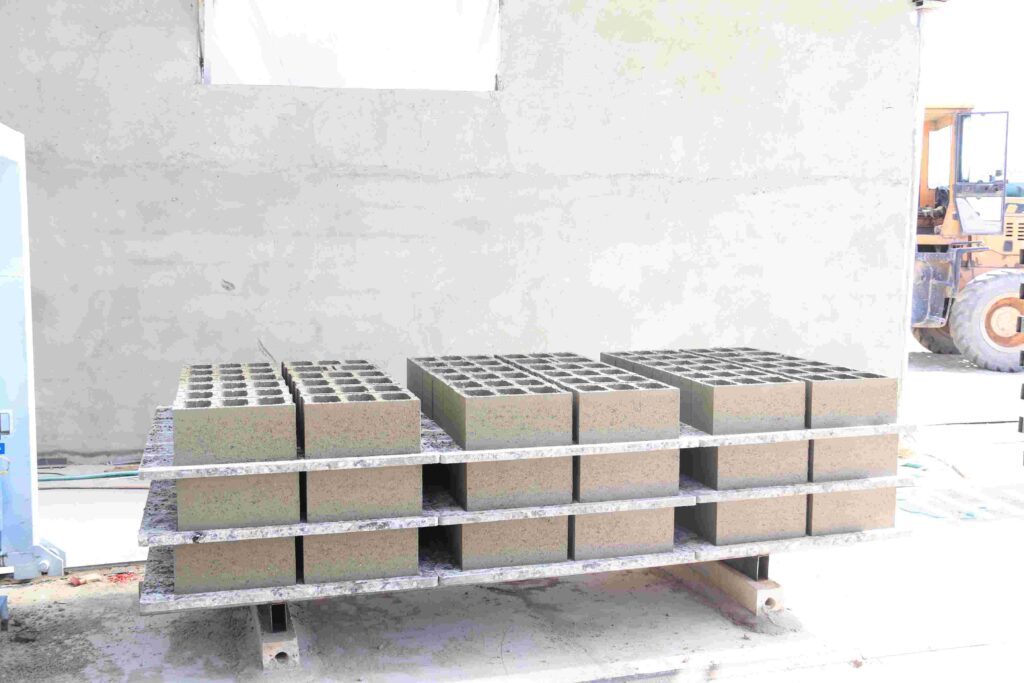
Mahalagang makilala ang pagkakaiba sa pagitan ng "pag-set" at ganap na "pagpapagaling." Ang unang panahon ng pag-set ay tumutukoy sa oras na kinakailangan para sa bloke upang makamit ang sapat na lakas at katatagan upang mahawakan nang walang pinsala—partikular, upang mai-palletize, ma-wrap, at maihatid sa loob ng planta o patungo sa bakuran ng imbakan. Ito ay pangunahing bunga ng pagkawala ng libreng tubig at mga unang reaksyon ng hydration ng binder (hal., semento).
- 1.1. Mga Pangunahing Prosesong Kemikal at Pisikal
Sa paggawa, ang mga bloke ay naglalaman ng malaking dami ng halo-halong tubig. Ang mga unang oras ay kinasasangkutan ng pagsisimula ng proseso ng hydration, kung saan ang tubig ay tumutugon sa mga sementisyong materyales upang bumuo ng mga kristal na istruktura na nagbubuklod sa pinagsama-samang materyales. Kasabay nito, ang tubig ay nagsisimulang sumingaw mula sa ibabaw. Ang bloke ay lumilipat mula sa isang plastik, madaling hulmahing estado tungo sa isang solidong estado. Ang unang pagtaas ng "berdeng lakas" na ito ang nagbibigay-daan sa ligtas na paghawak. - 1.2. Pagkakaiba ng Setting at Curing
Ang setting ay simula lamang. Ang buong pagpapagaling ay isang pangmatagalang proseso na nagpapatuloy nang ilang linggo, kahit buwan, kung saan ang mga bloke ay dahan-dahang lumalapit sa kanilang huling lakas ng disenyo. Ang isang bloke ay maaaring sapat na matigas upang maihatid sa loob ng 24-48 oras, ngunit patuloy itong lalakas nang malaki sa susunod na 28 araw sa ilalim ng tamang kondisyon. Para sa supply chain, ang oras ng pag-set ay nagtatakda.pangangasiwa at pagpapadalaAng mga iskedyul, habang ang pagpapagaling ay nagpapatuloy sa lugar ng trabaho o sa imbakan.
2. Mga Pangunahing Salik na Nakaaapekto sa Unang Oras ng Pagtatakda
Ang timeline ay hindi unibersal; ito ay nag-iiba batay sa ilang aspeto ng produksyon at kapaligiran.
- 2.1. Komposisyon ng Materyales at Disenyo ng Halo
- Uri ng Pang-ipit:Mahalaga ang kemika ng mga ginamit na materyal na sementoso. Ang mga pormula na idinisenyo para sa mabilis na pag-unlad ng lakas ay mas mabilis na titigas.
- Water-Cement Ratio: A mix with optimal water content will set and gain strength more efficiently than one that is too wet or too dry.
- Admixtures: The use of specific additives can accelerate or retard the setting time. Some products may include accelerators to speed up early strength gain for faster turnover.
- 2.2. Production Method and Block Density
- Manufacturing Process: High-pressure compaction methods, common in many block types, expel air and water, creating a denser matrix that can gain handling strength more quickly compared to some lower-pressure methods.
- Density Classification: Denser units typically develop handling strength faster than lighter, more porous units, as the matrix is more consolidated.
- 2.3. Environmental Conditions in the Plant and Yard
- Temperature: This is the most influential external factor. Warm conditions (ideally 70°F/21°C and above) significantly accelerate hydration and evaporation, leading to faster set. Cold temperatures (below 50°F/10°C) can slow reactions dramatically, potentially doubling or tripling the required setting time before handling.
- Halumigmig: High ambient humidity slows the evaporation of surface water, prolonging the time needed before blocks can be safely moved.
- Air Circulation: Good airflow in the curing area aids in uniform moisture migration and strength development.
3. Practical Implications for the Supply Chain
Understanding these variables translates directly to operational efficiency and risk management.
- 3.1. Inventory and Storage Logistics
Production schedules must account for the necessary setting period before blocks can be moved to a storage yard. Rushing this process leads to damage—chipped corners, cracks, or broken webs—resulting in financial loss and compromised product integrity. Storage yard planning must consider how long pallets need to remain in a specific area before they can be safely relocated or loaded onto trucks. - 3.2. Scheduling and Order Fulfillment
Lead times provided to customers must incorporate the production and minimum setting time. A savvy procurement agent understands that an order placed today may not be physically shippable for 24-48 hours, depending on plant conditions. In colder seasons, this buffer may need to be extended. - 3.3. Quality Assurance and Handling
Distributors receiving fresh blocks should have protocols to assess their readiness for further handling, especially if they need to be re-palletized or transferred. Visual inspection for surface dryness and firmness, along with communication with the manufacturer about the production time, is essential.
Konklusyon
For stakeholders in construction supply, the setting time after production is a critical component of the product’s journey from raw material to jobsite. It is a complex interplay of chemistry, manufacturing parameters, and environmental conditions. Recognizing that blocks require this essential period to develop sufficient handling strength is key to minimizing waste, ensuring product quality, and maintaining reliable logistics. By factoring this knowledge into inventory planning, delivery scheduling, and handling procedures, dealers and distributors can optimize their operations, reduce costly damage, and build a reputation for delivering specification-grade products in optimal condition.
FAQ
Q1: What is a typical range for initial set time before blocks can be palletized and moved?
Isalin ang teksto sa Filipino. I-output LAMANG ang isinalin na teksto. Under standard conditions (moderate temperature and humidity), most blocks gain enough “green strength” for careful handling within 18 to 48 hours after production. However, this can vary widely based on the specific factors outlined above.
Q2: How does cold weather affect the timeline, and what should we plan for?
Isalin ang teksto sa Filipino. I-output LAMANG ang isinalin na teksto. Cold weather (near or below freezing) can slow chemical reactions drastically. Setting times can extend to 3-5 days or more. During winter months, it is essential to build additional lead time into order schedules and confirm with manufacturers about their cold-weather protocols and estimated readiness times.
Q3: Can blocks be shipped immediately after they are set enough to handle?
Isalin ang teksto sa Filipino. I-output LAMANG ang isinalin na teksto. Yes, for transport purposes. Once blocks are stable on a pallet and can withstand the vibrations of transport without damage, they can be shipped. However, it is vital to communicate to end-users that the blocks are not yet fully cured and should be protected from extreme weather and rough handling on-site. Full design strength develops over 28 days.
Q4: Are there any visual or simple tests to check if blocks are ready for handling?
Isalin ang teksto sa Filipino. I-output LAMANG ang isinalin na teksto. While non-destructive strength tests require equipment, simple indicators include: a firm surface that doesn’t indent easily, a consistent lighter color on the surface indicating moisture loss, and clean edges that do not crumble when gently touched. The most reliable method is to follow the manufacturer’s recommended timeline for their specific product under the prevailing conditions.
Q5: Does the required setting time impact pricing or minimum order quantities?
Isalin ang teksto sa Filipino. I-output LAMANG ang isinalin na teksto. Not directly. However, the need for dedicated space and time in the curing area is a factor in a manufacturer’s overall capacity and production scheduling. During peak demand or in challenging climates, it may influence availability and delivery schedules, which can indirectly affect planning and logistics costs for buyers.