
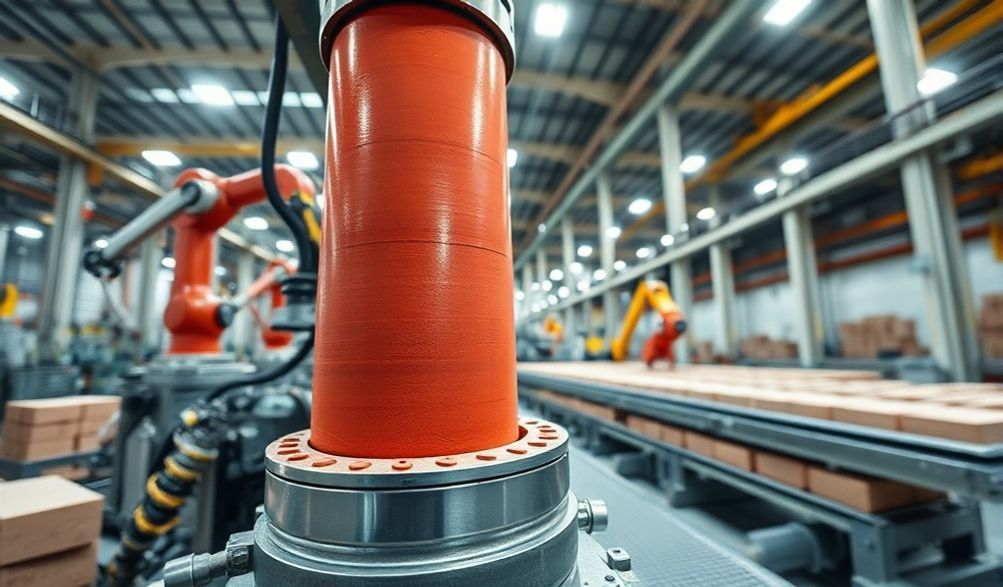
The Ultimate Guide to Clay Bricks Manufacturing Machines: Inside the FUDA Block Making Factory
For millennia, clay bricks have formed the literal and figurative bedrock of human civilization. From the ancient walls of Babylon to the modern skylines of today, their durability, thermal mass, and timeless aesthetic have made them an irreplaceable construction material. However, the art of brickmaking has undergone a profound revolution. Gone are the days when production was solely defined by back-breaking labor and unpredictable results. Today, the industry is powered by sophisticated, automated clay bricks manufacturing machines that guarantee precision, efficiency, and scale. This transformation solves the persistent challenges of traditional methods: inconsistent quality, high waste, and unsustainable labor demands.
This comprehensive guide delves into the heart of modern brick production. Drawing on industry expertise and factory insights, we will explore the advanced technology, streamlined processes, and undeniable advantages of automated manufacturing systems. Our journey will include a focused case study on the production standards of the Pabrika ng paggawa ng bloke ng FUDA, a name synonymous with reliability in brick-making machinery. Whether you are a construction business owner, a project developer, or an investor in building materials, this authoritative resource is designed to equip you with the knowledge needed to make a truly informed decision.
Understanding Modern Clay Brick Manufacturing Technology
The leap from manual molding to automated production represents a complete re-engineering of the brick-making process. Modern plants are integrated systems where raw clay is transformed into high-quality bricks with minimal human intervention, ensuring each unit meets exacting specifications.
From Raw Clay to Finished Brick: The Automated Process
The journey inside an automated factory is a marvel of continuous, synchronized engineering. It follows a precise sequence:
- Feeding & Crushing: Raw clay is fed into a primary crusher, which breaks down large clumps into a uniform, manageable size.
- Paghahalo at Pagtimpla: The crushed clay moves to a mixer, often a pug mill, where water and other additives are blended in. This “tempering” process achieves the perfect plasticity for extrusion.
- Extruding & De-Airing: The prepared clay is then forced through a powerful extruder. A critical feature here is the de-airing chamber, which removes air pockets under vacuum. This step is crucial for increasing the brick’s density, strength, and resistance to frost and cracking.
- Pagpuputol: The continuous clay column exiting the extruder is cleanly cut into individual brick blanks by an automatic wire or knife cutter, set to precise lengths.
- Pagpapatuyo: The wet “green” bricks are carefully transferred to a drying chamber. Here, controlled temperature and humidity gradually remove moisture without causing warping or cracks—a process that once took weeks in the sun.
- Pagpapaputok: Finally, the dried bricks are fired in a kiln (tunnel or chamber) at high temperatures (typically 900°C to 1200°C). This vitrifies the clay, giving the bricks their permanent hardness, strength, and color.
At every stage, machinery ensures consistency in moisture content, dimension, density, and final properties.
Core Components of a Clay Brick Making Machine
Ang pag-unawa sa mga pangunahing bahagi ay naglilinaw sa paggana ng makina:
- Pambubo/Hoper: The entry point, designed to handle and regulate the flow of raw clay into the system.
- Primary Crusher: Uses rollers or jaws to pulverize clay into a fine, homogeneous material, ensuring a smooth mixing process.
- Mixer (Pug Mill): A twin-shaft chamber that kneads clay with water. It creates a uniform, plastic mass, essential for high-quality extrusion.
- Extruder/De-Airing Unit: The heart of the machine. A screw mechanism pushes the clay through a sealed barrel. The vacuum de-airing system removes trapped air, significantly enhancing the final product’s structural integrity.
- Cutter: An automated system that slices the extruded clay column into precise brick units. Modern cutters use programmable logic controllers (PLCs) for millimeter-perfect accuracy.
- Handling Systems: Conveyors, stackers, and transfer cars that move bricks between stages (from cutter to dryer, dryer to kiln) without damage, enabling continuous flow.
Key Machine Types: From Semi-Automatic to Fully Automatic Plants
Choosing the right setup depends on your scale and investment goals.
- Semi-Automatikong Makina: Ideal for small to medium enterprises. Key processes like extrusion are mechanized, but material handling, feeding, or brick setting may require manual labor. They offer a balance of improved output and lower capital cost.
- Ganap na Awomatikong Mga Linya ng Produksyon: The pinnacle of efficiency. From raw material feeding to finished brick palletizing, the entire process is automated and controlled from a central panel. Suitable for large-scale factories aiming for output of 20,000 to 100,000+ bricks per day.
- Mobile Brick Making Plants: A versatile solution for on-site production, reducing transport costs for large projects. These are often compact, integrated units that can be moved as needed.
Why Choose an Automated Manufacturing System? The Key Benefits
Investing in an automated clay brick machine is not merely a purchase; it’s a strategic upgrade that impacts your entire operation’s bottom line and market competitiveness.
Unmatched Consistency & Superior Product Quality
- Katumpakan ng Dimensiyon: Machines produce bricks with near-identical size and shape, which simplifies bricklaying, reduces mortar use, and creates aesthetically perfect walls.
- Kontroladong Densidad at Tibay The de-airing extrusion process creates a denser, more homogeneous product. This translates to higher compressive strength, better load-bearing capacity, and improved durability against environmental stress.
- Uniform Finish & Color: Consistent raw material processing and firing in computer-controlled kilns ensure every brick has the same texture and color, elevating the final architectural appeal.
Dramatic Increases in Production Efficiency & Output
- Exponential Speed: While a skilled artisan might produce 500 bricks a day, a mid-range automatic machine can produce 5,000 to 10,000 bricks in an 8-hour shift. Large plants can multiply this figure several times over.
- 24/7 na Kakayahang Mag-operate: Unlike manual labor, machines can operate continuously with minimal breaks, dramatically increasing annual production capacity and maximizing return on investment.
- Pinababang Oras ng Ikot Integrated drying and firing technologies have slashed the traditional weeks-long production cycle down to a matter of 24 to 48 hours.
Significant Reduction in Labor Costs & Operational Waste
- Optimized Labor: The workforce shifts from large numbers of manual laborers to a smaller team of skilled machine operators, technicians, and maintenance personnel.
- Minimized na Pagkawala ng Materyal: Precise cutting and mixing ensure almost all raw clay is converted into sellable product. Automated systems have a material utilization rate exceeding 95%, compared to significant losses in manual methods.
Enhanced Worker Safety & Improved Working Conditions
- Reduced Physical Strain: Automation eliminates the most hazardous and strenuous tasks: manual clay digging, heavy lifting, and exposure to extreme heat from traditional kilns.
- Controlled Environment: Modern factories are cleaner, with better ventilation and organized workflows. This not only improves worker health and safety but also aids in attracting and retaining a skilled workforce.
Inside the FUDA Block Making Factory: A Case Study in Excellence
To understand how these principles translate into real-world manufacturing, we examine the FUDA block making factory—a benchmark for quality and reliability in brick-making machinery.
FUDA’s Manufacturing Philosophy: Innovation and Reliability
With years of dedicated experience in engineering construction machinery, FUDA has built its reputation on a foundation of robust design and continuous innovation. Their philosophy centers on creating machines that are not only technologically advanced but also durable enough to withstand the demanding, high-volume environment of brick production. Their commitment to in-house research and development ensures their solutions address the evolving needs of the global market, from energy efficiency to adapting to diverse clay types.
A Walkthrough of the FUDA Production Line for Clay Bricks
A typical FUDA automated line exemplifies integration and precision:
* Heavy-Duty Preparation: It starts with a powerful crusher and a double-shaft mixer, ensuring the clay is perfectly homogenized.
* High-Pressure Extrusion: The core of their system is a high-capacity extruder with a robust vacuum pump. This unit is engineered to handle various clay consistencies, producing a dense, air-free column of clay.
* Precision Cutting: A synchronized, programmable cutting system slices the clay column, allowing for quick changeovers between different brick sizes (e.g., standard, king, or custom dimensions).
* Integrated Handling: Automated conveyor belts and cross-transfer units seamlessly move bricks into the dryer, minimizing handling damage and labor.
Technical specifications, such as high-torque motors, PLC control panels, and custom-designed dies for hollow or perforated bricks, are tailored to client requirements, showcasing their technical expertise.
Quality Control Protocols at the FUDA Factory
Trust is earned through rigorous standards. FUDA implements a multi-layered QC system:
1. Incoming Material Check: Analysis of clay samples for composition and suitability.
2. In-Process Monitoring: Constant checks on extrusion pressure, vacuum levels, cutting dimensions, and drying temperatures.
3. Final Product Testing: Random samples from each batch undergo laboratory tests for:
* Compressive Strength (meeting or exceeding ASTM/CNS standards)
* Water Absorption Rate
* Dimensional Tolerance
* Efflorescence and color fastness
This end-to-end scrutiny guarantees that every machine they build—and every brick produced by it—delivers on its promise of quality.
Customization and Support: Tailoring Solutions to Client Needs
FUDA understands that one size does not fit all. Their service includes:
* Material Testing: They often advise on or conduct tests with the client’s local clay to recommend the optimal machine configuration.
* Line Customization: Whether a client needs to produce solid paving bricks, hollow blocks for insulation, or perforated bricks for landscaping, FUDA can customize the extruder die, cutter, and handling system accordingly.
* Comprehensive After-Sales: Their partnership extends beyond delivery, offering detailed installation guidance, on-site operator training, a clear warranty, and a reliable supply of genuine spare parts to ensure decades of productive service.
Critical Factors When Selecting Your Clay Brick Machine
Choosing the right machine is a critical investment. Here are the key factors to consider.
Assessing Your Production Requirements & Budget
- Define your target daily or annual output.
- Determine the variety of brick types and sizes you need to produce.
- Establish a realistic budget that includes not just the machine cost, but also installation, training, and initial spare parts.
Evaluating Machine Durability, After-Sales Service, and Supplier Reputation
- Tibay: Inspect the construction quality. Key components like the extruder barrel, shafts, and gears should be made from high-grade, wear-resistant steel.
- Supplier Reputation: Research the manufacturer’s history. Look for verified customer testimonials, years in business, and a physical factory you can visit. A reputable supplier like FUDA stands behind their equipment.
- Serbisyong Pagkatapos ng Benta: Confirm the availability of technical support, the warranty period, and the logistics for obtaining spare parts. Prompt service is crucial to minimizing downtime.
The Importance of Raw Material (Clay) Compatibility
Your clay’s properties (shrinkage, plasticity, sand content) directly affect machine choice. Always:
* Conduct a thorough geological test of your clay deposit.
* Share the results with the machine supplier to ensure their mixer and extruder are designed to process your specific material efficiently.
Energy Efficiency and Environmental Considerations
Modern machines should be designed for sustainability:
* Look for features like high-efficiency motors, optimized thermal systems for dryers and kilns, and systems that recycle heat.
* Automated, precise production inherently reduces raw material waste and energy consumption per brick, contributing to a greener operation.
Mga Madalas Itanong (FAQ)
Q1: What is the average production capacity of a fully automatic clay brick machine from a factory like FUDA?
Isalin ang teksto sa Filipino. I-output LAMANG ang isinalin na teksto. Capacities vary widely based on model and brick type. A standard fully automatic line from a reputable manufacturer can typically produce between 15,000 to 50,000 solid bricks per 8-hour shift. High-capacity plants can exceed 100,000. The exact output depends on brick size, clay type, and the level of automation.
Q2: How does the quality of machine-made bricks compare to handmade bricks?
Isalin ang teksto sa Filipino. I-output LAMANG ang isinalin na teksto. Machine-made bricks offer superior consistency, dimensional accuracy, and structural strength due to controlled de-airing and firing. While handmade bricks have unique aesthetic variation, machine-made bricks provide reliable performance for structural work, with lower water absorption and higher uniformity, which is critical for modern engineering standards.
Q3: What is the typical lead time and installation process for a complete production line?
Isalin ang teksto sa Filipino. I-output LAMANG ang isinalin na teksto. After order confirmation, manufacturing can take 30-90 days. Shipping varies by destination. Reputable factories like FUDA typically send engineers for installation and commissioning, which can take 2-4 weeks, including training your staff on operation and maintenance.
Q4: Can one machine produce different types and sizes of clay bricks?
Isalin ang teksto sa Filipino. I-output LAMANG ang isinalin na teksto. Yes, modern machines are highly flexible. By changing the extrusion die and adjusting the cutter’s program, a single production line can switch between producing solid, hollow, or perforated bricks of various dimensions, often with changeover times of less than an hour.
Q5: What kind of after-sales support should I expect from a reputable manufacturer?
Isalin ang teksto sa Filipino. I-output LAMANG ang isinalin na teksto. You should expect comprehensive support: detailed operation and maintenance manuals, on-site installation and training services, a clear warranty (usually 12 months on core parts), a readily available catalog of spare parts, and access to remote or on-call technical assistance for troubleshooting.
Konklusyon
The transition to automated clay brick manufacturing is a definitive step forward for the construction industry. It delivers transformative benefits in product quality, production efficiency, cost management, and workplace safety. This technology is no longer a luxury but a necessity for businesses aiming to compete and thrive.
Partnering with an established, expert manufacturer is paramount to realizing these benefits. The Pabrika ng paggawa ng bloke ng FUDA exemplifies the principles of Experience, Expertise, Authoritativeness, and Trustworthiness (E-E-A-T) through its proven engineering, rigorous quality control, and unwavering customer support. They represent more than just a supplier; they are a partner in building your production capability.
Ang Iyong Susunod na Hakbang: Begin your journey by thoroughly defining your project needs. We recommend conducting a raw material test with your local clay. Then, consult directly with reputable manufacturers. Request detailed quotations, ask for client references, and if possible, arrange a visit to their factory or an existing customer site. By taking these informed steps, you will secure a clay bricks manufacturing machine solution that lays a solid foundation for your success for years to come.
<