1. Panimula
Ang mga bloke ng ladrilyong abo—na ginawa gamit ang mga byproduct ng industriya tulad ng fly ash, coal ash, o bottom ash—ay naging pangunahing sangkap sa napapanatiling konstruksiyon, na nag-aalok ng mga benepisyong pangkalikasan, kahusayan sa gastos, at pagiging maaasahan ng istruktura. Hindi tulad ng tradisyonal na kongkreto o mga ladrilyong luwad, binabawasan ng mga ladrilyong abo ang basura sa tambakan (nagre-recycle ng 20-30% ng industriyal na abo) at pinabababa ang mga emisyon ng carbon (binabawasan ang paggamit ng semento ng 15-25%). Para sa mga distributor, wholesaler, at mamimili na nagpapatakbo sa larangan ng B2B, ang mga makina ng paggawa ng bloke ng ladrilyong abo ay kumakatawan sa isang produktong kategorya na may mataas na paglago, hinihimok ng mga pandaigdigang inisyatiba sa berdeng gusali, mga utos ng pamahalaan para sa pagpapanatili, at tumataas na gastos ng hilaw na materyales. Ang mga espesyalisadong makina na ito ay idinisenyo upang pangasiwaan ang mga natatanging katangian ng abo (pagka-gasgas, mababang kapasidad sa pagbubuklod, pagiging sensitibo sa halumigmig) sa pamamagitan ng tumpak na proseso ng paghahalo, pagpapatigas, at pagpapahinog.
2. Agham ng Materyal para sa Bricks na Yari sa Abo: Mga Pangunahing Pagsasaalang-alang sa Disenyo ng Makina
2.1 Mga Uri ng Abo na Ginagamit sa Paggawa ng Briks
Ang mga makina ng paggawa ng bloke ng abo ay dinisenyo upang iproseso ang mga tiyak na uri ng abo mula sa industriya, na bawat isa ay may natatanging katangian na nakakaimpluwensya sa pagsasaayos ng makina.
- Abu ng PaburokIsang pino at parang pulbos na produkto mula sa pagsunog ng karbon sa mga planta ng kuryente (80-90% ng kabuuang abo ng karbon). Ang Class F fly ash (siliceous-aluminous) ay ginustong gamitin sa paggawa ng mga ladrilyo dahil sa mga pozzolanic na katangian nito (umaaksiyon sa apog upang bumuo ng mga kompuwestong semento). Ang Class C fly ash (calcareous) ay may mas mataas na nilalamang kalsiyo, na nagpapabawas sa pangangailangan ng karagdagang semento. Ang sukat ng mga partikulo ng fly ash (1-100μm) ay nangangailangan ng tumpak na paghahalo upang matiyak ang pantay na distribusyon.
- Abu sa IlalimIsang magaspang at butil-butil na byproduct (10-20% ng kabuuang coal ash) na may sukat ng partikula na 1-20mm. Ginagamit bilang magaspang na agregado sa mga ash brick, nagdaragdag ng tibay at nagbabawas ng pag-urong. Ang hugis-tulis ng bottom ash ay nagpapaigting ng pagkakadugtong ngunit nangangailangan ng matitibay na bahagi ng makina upang mabata ang pagkasira dulot ng pagkikiskisan.
- Pinagsamang AboPinaghalong abo mula sa pagkasunog (fly ash) (70-80%) at abo sa ilalim (bottom ash) (20-30%), nagpapanatili ng balanse sa paggawa at lakas. Karamihan sa mga makina ng ladrilyong abo ay inihanda para sa pinagsamang abo upang mapakinabangan nang husto ang mga yaman.
- Iba pang mga AboAng abo ng ipa ng palay, abo ng kahoy, o abo ng biomass—ginagamit sa mga rehiyonal na pamilihan (hal., Asya, Aprika) kung saan bihira ang abo ng karbon. Ang mga abong ito ay may mas mataas na nilalamang karbon, na nangangailangan ng mga inayos na proporsyon ng paghahalo at oras ng pagkukuro.
2.2 Disenyo ng Pinaghalong Briks na Abo: Mahalaga para sa Pagiging Katugma ng Makina
Ang kalidad ng ladrilyong abo ay nakasalalay sa tumpak na disenyo ng timpla, na direktang nakakaimpluwensya sa mga kinakailangan ng makina (presyon ng pagpiga, oras ng paghahalo, paraan ng pagsasaayos). Dapat maunawaan ng mga stakeholder ng B2B ang mga proporsyong ito upang makapagrekomenda ng angkop na mga makina:
- Mga Batayang Sangkap:
- Abu (fly ash + bottom ash): 60-70% ng kabuuang timpla (pangunahing hilaw na materyal).
- Semento (Portland o halo): 10-15% (pang-angkop, nagbibigay ng paunang lakas).
- Buhangin/agregado: 15-20% (nagpapabuti sa pagkatrabaho at nagbabawas ng pag-urong).
- Tubig: 12-15% (mahalaga ang moisture content para sa compaction—kapag kulang, nagdudulot ng pagbitak; kapag sobra, nagdudulot ng pagguho).
- Mga Additibo:
- Apog (calcium oxide): 2-5% (pinapalakas ang pozzolanic reaction ng fly ash, pinapabuti ang lakas).
- Gipsum (kalsiyum sulfate): 1-2% (pinapabagal ang oras ng pagpapatigas, pumipigil sa maagang pamumuo).
- Plasticizers: 0.1-0.3% (reduces water content by 10-15%, improves compaction density).
- Waterproofing agents: 0.5-1% (reduces water absorption in finished bricks, critical for outdoor applications).
- Mix Consistency: Target slump value of 15-30mm (stiffer than concrete mixes) to ensure proper compaction without deformation. Ash’s low water retention requires shorter mixing times (30-45 seconds) to avoid moisture loss.
2.3 Ash Brick Properties and Machine Performance Requirements
Ash bricks have unique properties that demand specialized machine adaptations, distinguishing them from concrete or clay brick equipment:
- Compressive Strength: 10-25 N/mm² (load-bearing applications require 15-25 N/mm²), requiring compaction pressure of 20-35 MPa (higher than concrete bricks due to ash’s low binding capacity).
- Water Absorption: 15-20% (lower than clay bricks but higher than concrete), requiring controlled curing to prevent excessive moisture loss.
- Density: 1600-1800 kg/m³ (lighter than concrete bricks), reducing transportation costs but requiring precise compaction to avoid porosity.
- Abrasion Resistance: Lower than concrete bricks, requiring wear-resistant machine components (molds, mixer paddles) to handle abrasive ash particles.
- Setting Time: 24-48 hours (longer than concrete due to pozzolanic reaction), requiring extended curing or steam curing to accelerate strength gain.
3. Ash Brick Block Making Machine Technology: Key Adaptations for Ash
3.1 Core Machine Components and Ash-Specific Design
Ash brick block making machines feature specialized components to address ash’s unique challenges (abrasion, low binding, moisture sensitivity). B2B stakeholders should evaluate these components when sourcing equipment:
- Mixing System:
- Dual-Shaft Mixers: Preferred over single-shaft designs for ash mixes, ensuring uniform distribution of fine fly ash and coarse bottom ash. Equipped with wear-resistant paddles (stainless steel or carbide-tipped) to withstand ash abrasion.
- Moisture Sensors: Real-time moisture monitoring (12-15% target) adjusts water flow to prevent over- or under-mixing. Ash’s low water retention requires precise moisture control to avoid dry mixes that crack during compaction.
- Compaction System:
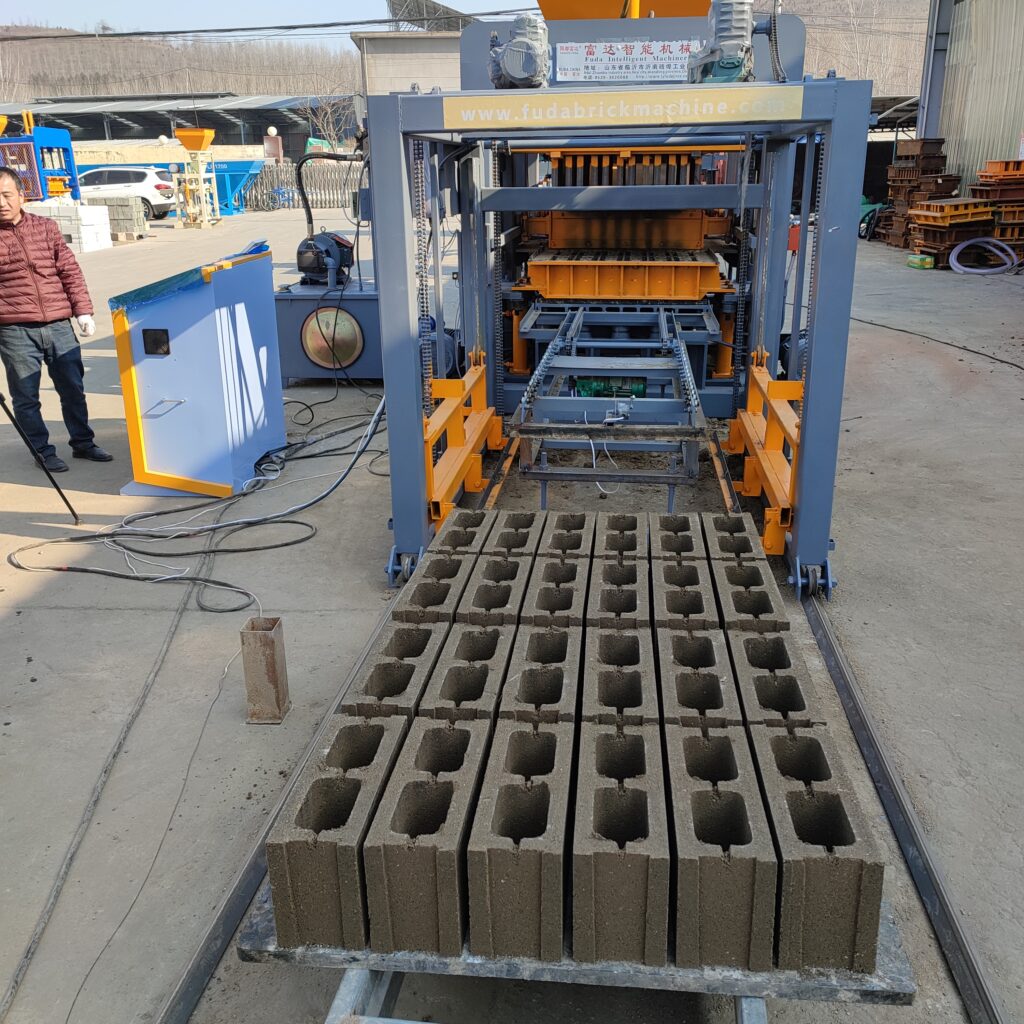
- Hydraulic Compaction: Most common for ash bricks, delivering 20-35 MPa of adjustable pressure. Hydraulic systems provide gradual, uniform force—critical for consolidating ash particles without creating internal voids.
- Vibro-Compaction: Combined vibration (50-80 Hz) and pressure to improve ash particle interlock. Used for high-strength ash bricks (20-25 N/mm²) or mixes with high bottom ash content.
- Extended Hold Time: 3-5 seconds of pressure hold (longer than concrete brick machines) to ensure ash-cement adhesion.
- Molds:
- Hardened Steel Molds: Thicker liners (6-8mm) and reinforced edges to resist ash abrasion. Precision-machined (tolerance ±0.3mm) to ensure brick dimensional accuracy.
- Non-Stick Coatings: Teflon or ceramic coatings on mold surfaces to prevent ash adhesion—reducing demolding issues and mold wear.
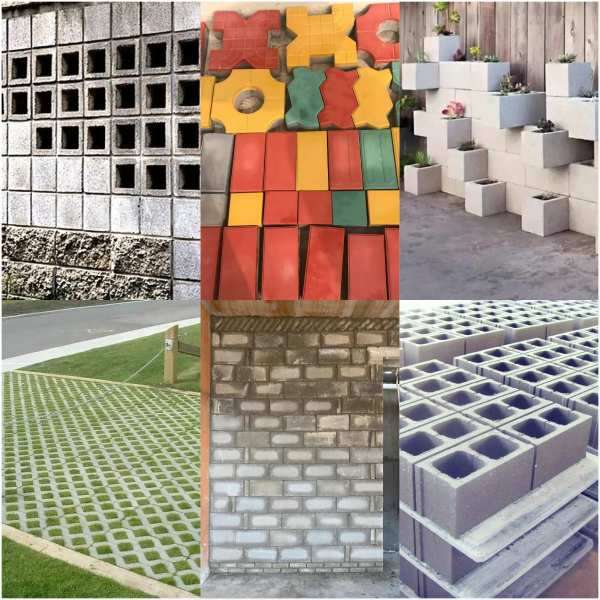
- Interchangeable Cavities: 1-4 cavity molds for different brick sizes (390×190×190mm hollow, 240×115×57mm solid, 200×100×60mm pavers).
- Curing Integration:
- Steam Curing Chambers: Integrated into large-scale machines to accelerate strength gain (24-48 hours at 40-60°C, 80-90% humidity). Critical for ash bricks, as ambient curing takes 7-14 days.
- Insulated Mold Bases: Retain heat during compaction, initiating early curing and reducing cracking.
- Material Handling:
- Closed-Loop Conveyors: Prevent ash dust contamination (hazardous and wasteful) with enclosed belts or screw conveyors. Ash’s fine particle size creates dust, requiring dust collection systems for worker safety.
- Wear-Resistant Liners: Conveyor and hopper liners (rubber or polyurethane) to withstand bottom ash abrasion.
3.2 Machine Types by Automation and Production Scale
Ash brick block making machines are segmented by automation level and production capacity, allowing B2B stakeholders to match client needs:
3.2.1 Manual Ash Brick Block Making Machines
- Kapasidad sa Produksyon: 500-1,500 bricks/day (8-hour shift).
- Key Features: Manual feeding, lever-operated hydraulic compaction (20-25 MPa), basic molds, no power requirements (ideal for rural areas).
- Price Range: $2,000-$6,000 (wholesale).
- Target Clients: Small-scale rural entrepreneurs, community projects, low-income housing initiatives.
- Pros: Low upfront cost, portability, simple operation.
- Cons: Low efficiency, high labor requirements, inconsistent quality (dependent on operator skill).
3.2.2 Semi-Automatic Ash Brick Block Making Machines
- Kapasidad sa Produksyon: 1,500-6,000 bricks/day.
- Key Features: Automated hydraulic compaction (25-30 MPa), vibratory feeding, basic PLC control (moisture monitoring, pressure adjustment), electric or diesel power (5-15 HP).
- Price Range: $8,000-$30,000 (wholesale).
- Target Clients: Regional brick suppliers, small construction firms, sustainable building projects.
- Pros: Balanced efficiency and cost, reduced labor (1-2 operators/shift), improved quality consistency.
- Cons: Limited production scale, manual mold change.
3.2.3 Fully Automatic Ash Brick Block Making Machines
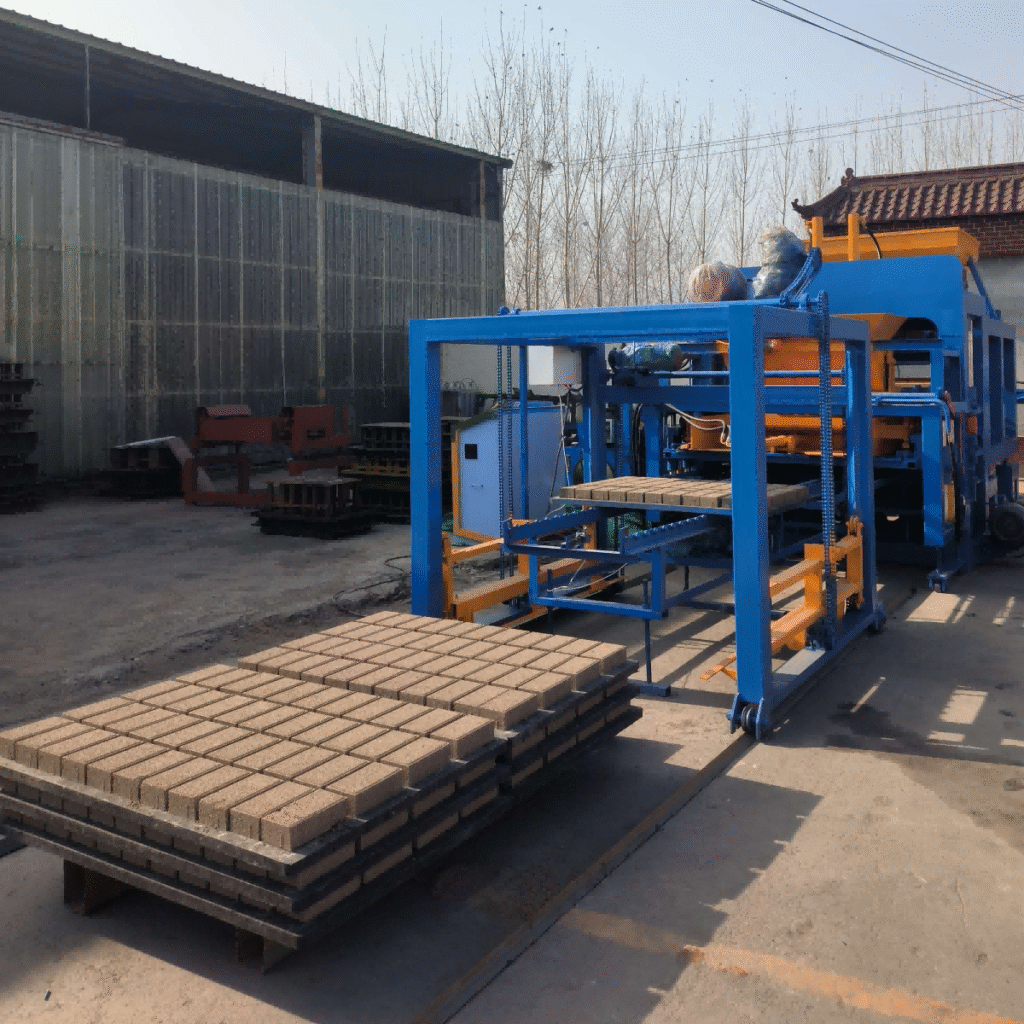
- Kapasidad sa Produksyon: 6,000-20,000+ bricks/day.
- Key Features: Full automation (batching, mixing, feeding, compaction, curing, stacking), servo-hydraulic compaction (30-35 MPa), advanced PLC with IoT (remote monitoring, data analytics), integrated steam curing.
- Price Range: $40,000-$300,000+ (wholesale).
- Target Clients: Industrial brick manufacturers, large infrastructure projects, green building developers.
- Pros: High production efficiency, minimal labor (3-5 operators/shift), consistent quality, 24/7 operation, sustainability compliance.
- Cons: High upfront cost, complex maintenance, requires skilled operators.
3.2.4 Mobile Ash Brick Block Making Machines
- Kapasidad sa Produksyon: 1,000-3,000 bricks/day.
- Key Features: Trailer-mounted design, diesel or dual-power (electric + diesel), semi-automatic operation, compact mixing and compaction systems.
- Price Range: $12,000-$40,000 (wholesale).
- Target Clients: On-site construction projects, remote areas, mobile brick yards.
- Pros: Eliminates ash brick transportation costs (ash is often sourced locally near power plants), adaptable to job sites.
- Cons: Lower production capacity than stationary automatic machines.
3.3 Production Process Optimization for Ash Bricks
B2B stakeholders should educate purchasers on optimizing production processes to maximize ash brick quality and machine efficiency:
- Pre-Mixing Preparation:
- Dry mix ash, sand, and cement for 10-15 seconds before adding water to ensure uniform distribution.
- Screen fly ash to remove large particles (>1mm) that cause compaction issues.
- Compaction Parameters:
- Adjust pressure based on ash type: 20-25 MPa for Class F fly ash, 25-30 MPa for Class C fly ash, 30-35 MPa for high bottom ash mixes.
- Use vibration (50-60 Hz) for mixes with >20% bottom ash to improve particle flow.
- Curing Best Practices:
- Steam cure for 24-48 hours (70-80% of final strength) followed by 3-5 days of ambient curing.
- Avoid rapid drying (e.g., direct sunlight, wind) which causes shrinkage cracks—common in ash bricks due to high ash content.
- Mold Maintenance:
- Clean molds after each cycle to remove ash buildup—use compressed air or soft brushes (avoid abrasive cleaners that damage non-stick coatings).
- Apply release agent (vegetable oil or commercial concrete release agent) for sticky ash mixes.
4. Global Market Dynamics and Regional Adaptation
4.1 Key Market Drivers for Ash Brick Block Making Machines
The global ash brick machine market is growing at a CAGR of 9-11%, fueled by four core trends that create sustained opportunities for B2B stakeholders:
- Sustainability Mandates: Governments worldwide have implemented policies to reduce carbon emissions and industrial waste. For example:
- India’s National Green Tribunal (NGT) mandates 20-30% fly ash usage in construction materials.
- China’s “Dual Carbon” goal (peak carbon by 2030, carbon neutrality by 2060) promotes ash bricks as a low-carbon alternative to clay bricks.
- EU’s Green Deal requires 50% reduction in construction sector emissions by 2030, driving demand for recycled material-based bricks.
- Cost Efficiency: Ash is a low-cost or free raw material (power plants often pay to dispose of ash), reducing brick production costs by 15-25% compared to concrete or clay bricks. This appeals to price-sensitive markets (Africa, Southeast Asia).
- Pagpapaunlad ng Imprastraktura: Large-scale infrastructure projects (roads, bridges, affordable housing) in emerging economies (India, Nigeria, Brazil) require high-volume, low-cost bricks—ash bricks meet both criteria.
- Waste Reduction: Global coal ash production exceeds 1 billion tons annually, with only 30-40% recycled. Ash brick machines address this waste crisis, making them attractive to environmentally conscious purchasers and government tenders.
4.2 Regional Market Adaptation Strategies
Ash brick machine requirements vary by region, reflecting ash availability, construction standards, and sustainability policies. B2B stakeholders must tailor their offerings:
4.2.1 Asia-Pacific (Key Markets: India, China, Vietnam, Indonesia)
- Ash Availability: Abundant coal ash (India and China produce 500+ million tons annually).
- Demand Drivers: Affordable housing, infrastructure development, sustainability mandates.
- Machine Adaptations:
- High-capacity automatic machines (10,000-20,000 bricks/day) for industrial production.
- Dual-power (electric + diesel) systems to handle power outages (common in India, Vietnam).
- Molds for local brick sizes (India: 230×115×75mm, China: 240×115×53mm).
- Pricing Strategy: Mid-range semi-automatic ($10,000-$25,000) and automatic ($50,000-$200,000) machines to balance cost and efficiency.
4.2.2 Africa (Key Markets: Nigeria, South Africa, Kenya, Ethiopia)
- Ash Availability: Limited coal ash (concentrated near power plants in South Africa, Nigeria) → machines adapted for biomass ash (rice husk, wood ash).
- Demand Drivers: Rural housing, low-cost construction, government waste reduction initiatives.
- Machine Adaptations:
- Low-cost manual ($2,000-$5,000) and semi-automatic ($8,000-$15,000) machines.
- Diesel-only power (unreliable electricity in rural areas).
- Durable designs to withstand dust and harsh operating conditions.
- Pricing Strategy: Budget-focused options with flexible payment plans (microfinance partnerships).
4.2.3 Europe and North America (Key Markets: Germany, UK, US, Canada)
- Ash Availability: Coal ash production declining → machines adapted for recycled concrete ash, biomass ash.
- Demand Drivers: Green building certifications (LEED, BREEAM), infrastructure renewal, decorative ash bricks.
- Machine Adaptations:
- Energy-efficient automatic machines with IoT integration.
- Recycled material compatibility (up to 50% recycled aggregates).
- Molds for decorative and interlocking ash bricks (high demand for residential projects).
- Pricing Strategy: Premium pricing ($100,000-$300,000+) for high-end, sustainable machines.
4.2.4 Middle East and North Africa (MENA) (Key Markets: UAE, Saudi Arabia, Egypt)
- Ash Availability: Limited local ash → machines designed for imported fly ash or blended ash mixes.
- Demand Drivers: Mega-infrastructure projects (e.g., NEOM in Saudi Arabia), sustainable construction for events (e.g., COP28).
- Machine Adaptations:
- High-strength ash brick production (20-25 N/mm²) for infrastructure.
- Heat-resistant curing systems (for high-temperature regions).
- Decorative ash brick molds (textured, colored) for luxury projects.
- Pricing Strategy: Premium pricing for specialized machines with fast delivery.
5. B2B Business Strategy for Distributors and Wholesalers
5.1 Sourcing and Supplier Evaluation
Successful B2B stakeholders partner with manufacturers that specialize in ash brick machines (not general brick equipment) to ensure ash-specific design and quality:
- Manufacturer Evaluation Criteria:
- Ash Expertise: In-house R&D team with experience in ash material science and machine design. Patents or certifications (ISO 9001, CE, ASTM) for ash brick production.
- Quality Control: Strict testing of machine components (wear resistance, compaction precision) and ash brick quality (compressive strength, water absorption).
- Customization Capabilities: Ability to adapt machines to regional ash types (coal ash, biomass ash) and local brick sizes.
- Kapasidad sa Produksyon: Ability to fulfill large orders (50+ machines) with lead times of 4-8 weeks (standard models) or 8-12 weeks (custom configurations).
- After-Sales Support: Comprehensive warranty (1-2 years for hydraulic components, 6 months for molds), global spare parts distribution, and technical training on ash mix design.
- Sourcing Options:
- Direct Import: Source from specialized manufacturers in India, China, or Europe. Lower costs but requires managing logistics and import compliance (ash-specific certifications).
- Local Assembly: Partner with local manufacturers to assemble machines using imported ash-specific components (mixers, molds). Improves regional adaptation and reduces import duties.
- Regional Suppliers: Source from manufacturers in target regions (e.g., India-based suppliers for Asia-Pacific) to reduce shipping costs and delivery times.
5.2 Pricing and Profitability
Ash brick block making machines offer attractive profit margins for B2B stakeholders, with pricing strategies tailored to machine type and region:
- Wholesale Margins:
- Manual machines: 100-150% markup (wholesale $2,000-$6,000 → retail $4,000-$15,000).
- Semi-automatic machines: 50-100% markup (wholesale $8,000-$30,000 → retail $16,000-$60,000).
- Fully automatic machines: 30-50% markup (wholesale $40,000-$300,000 → retail $56,000-$450,000).
- Mobile models: 100% markup (wholesale $12,000-$40,000 → retail $24,000-$80,000).
- Bundling Strategies:
- Machine + ash mix design consulting + spare molds + curing chamber = 15-20% premium over standalone machine.
- Machine + operator training + 1-year maintenance contract = 10-15% premium.
- Volume Discounts: 5-10% discount for 10+ machines, 10-15% for 20+ machines. Incentivizes wholesalers to stock inventory for high-demand seasons (e.g., construction booms in spring/summer).
5.3 Marketing and Sales Tactics
Effective marketing of ash brick block making machines requires emphasizing sustainability, cost savings, and compliance with regional mandates:
- Trade Shows and Expos: Participate in industry events (Bauma, Conexpo, Green Building Expo) to showcase machines and ash brick samples. Highlight sustainability credentials (carbon footprint reduction, waste recycling).
- B2B Platforms: List products on global (Alibaba, Made-in-China) and regional (TradeKey Africa, EuropeB2B) platforms. Use keywords like “sustainable ash brick machine,” “fly ash block making equipment,” and “eco-friendly brick machine” to attract environmentally conscious clients.
- Content Marketing: Publish whitepapers, case studies, and video tutorials on topics like “Ash Mix Design for High-Strength Bricks” or “Maximizing ROI with Sustainable Ash Brick Production.” Create comparison guides (ash bricks vs. concrete/clay bricks) to emphasize cost and environmental benefits.
- Government Tenders: Bid on infrastructure and housing projects by offering ash brick machines that meet sustainability mandates (e.g., India’s NGT, EU’s Green Deal). Ensure all required documentation (ash recycling certificates, carbon footprint reports) is in order.
- Partnerships: Collaborate with power plants (ash suppliers), cement companies, and green building certification bodies to cross-promote products. Offer referral bonuses for leads that convert to sales.
5.4 After-Sales Support: A Competitive Differentiator
In the ash brick machine market, after-sales support is critical due to the technical complexity of ash mix design and machine operation:
- Technical Training: Offer on-site or virtual training for operators and maintenance staff. Cover ash mix design, machine calibration, troubleshooting, and routine maintenance. Include training on sustainability reporting (e.g., tracking ash recycling volumes for government compliance).
- Spare Parts Supply: Maintain local inventory of critical spare parts (wear-resistant mixer paddles, mold liners, hydraulic seals) to ensure fast delivery (2-5 days). Partner with manufacturers to access global spare parts networks.
- Maintenance Contracts: Sell annual maintenance contracts (10-15% of machine price) that include routine servicing, spare parts replacement, and 24/7 technical support.
- Remote Monitoring: For large-scale automatic machines, offer IoT-enabled remote monitoring to track machine performance, ash mix consistency, and curing conditions. Provide data analytics to optimize production and reduce waste.
6. Conclusion
Ash brick block making machines represent a sustainable, high-growth opportunity for B2B stakeholders—driven by global green building trends, waste reduction mandates, and cost efficiency. Success in this market requires a deep understanding of ash material science, machine technology adaptations, and regional market needs. Distributors and wholesalers must source specialized, ash-specific machines, implement value-based pricing strategies that highlight sustainability and cost savings, and prioritize after-sales support to educate clients on ash mix design and machine operation. Purchasers, meanwhile, should focus on machine components (wear resistance, compaction precision, curing integration) and total cost of ownership (raw material savings, energy efficiency, maintenance) to select equipment that delivers long-term ROI and sustainability compliance. As the construction industry continues to shift toward low-carbon, circular economy practices, ash brick block making machines will remain a critical tool for reducing industrial waste and carbon emissions—offering B2B stakeholders the chance to build profitable, sustainable businesses by meeting the growing demand for eco-friendly construction materials.
7. FAQ (Frequently Asked Questions)
7.1 What types of ash can be used in ash brick block making machines?
Ash brick machines process:
- Coal Ash: Fly ash (Class F and Class C) and bottom ash (most common).
- Biomass Ash: Rice husk ash, wood ash, or sugarcane bagasse ash (regional markets).
- Recycled Ash: Ash from demolished concrete or brick (blended with coal ash).Machines may require adjustments (mixing time, pressure) for different ash types.
7.2 What is the compressive strength of ash bricks produced by these machines?
Ash bricks typically have a compressive strength of 10-25 N/mm²:
- Non-load-bearing: 10-15 N/mm².
- Load-bearing (residential/commercial): 15-20 N/mm².
- High-strength (infrastructure): 20-25 N/mm².Strength depends on ash type (Class C fly ash > Class F), compaction pressure (20-35 MPa), and curing method (steam curing > ambient curing).
7.3 How does ash brick production reduce carbon emissions?
Ash bricks reduce carbon emissions by:
- Replacing 15-25% of cement (a high-carbon material) with fly ash (a waste byproduct).
- Avoiding clay brick production (which requires kiln firing, emitting CO₂).
- Recycling industrial waste (reducing landfill methane emissions).A typical ash brick machine producing 10,000 bricks/day reduces CO₂ emissions by 5-10 tons/year.
7.4 What is the production capacity of ash brick block making machines?
Production capacity varies by machine type:
- Manual: 500-1,500 bricks/day.
- Semi-automatic: 1,500-6,000 bricks/day.
- Fully automatic: 6,000-20,000+ bricks/day.
- Mobile: 1,000-3,000 bricks/day.
7.5 How long does it take to cure ash bricks?
- Steam Curing: 24-48 hours (70-80% of final strength) → ideal for industrial production.
- Ambient Curing: 7-14 days (100% of final strength) → low-cost for small-scale operations.
- Combined Curing: 24 hours steam + 3-5 days ambient → balances speed and cost.
7.6 What maintenance is required for ash brick block making machines?
Routine maintenance includes:
- Daily: Clean molds, check moisture levels, inspect for ash buildup.
- Weekly: Replace hydraulic oil filter, lubricate moving parts, test compaction pressure.
- Monthly: Inspect mixer paddles for wear, calibrate moisture sensors, tighten loose bolts.
- Annual: Replace mold liners, drain and replace hydraulic oil, overhaul mixing system.
7.7 Can ash brick machines produce different brick sizes and types?
Yes. Ash brick machines with interchangeable molds produce:
- Solid bricks (240×115×57mm, 230×115×75mm).
- Hollow blocks (390×190×190mm, 390×90×190mm).
- Interlocking pavers (200×100×60mm, 250×250×80mm).
- Decorative bricks (textured, colored with pigments).
7.8 Are there financing options for ash brick block making machines?
Yes. B2B financing options include:
- Manufacturer Financing: Low-interest loans (5-10% APR) with 2-5 year repayment terms.
- Leasing: Monthly payments (e.g., $300-$2,000/month) with option to buy at the end of the lease.
- Microfinance: Available in emerging markets for small-scale purchasers (loan amounts $2,000-$10,000).
- Government Grants: Some countries (India, China, EU) offer grants for sustainable construction equipment (ash brick machines qualify due to waste reduction benefits).