
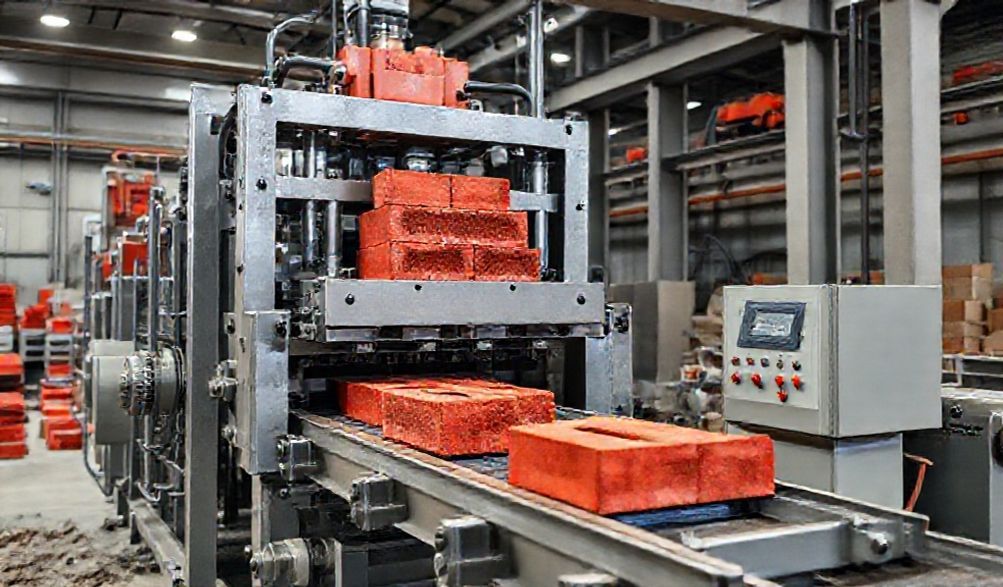
Brick Manufacturing Machine Price: A Complete 2024 Buyer’s Guide
Panimula
From the foundations of homes to the facades of skyscrapers, bricks remain a cornerstone of global construction. But behind every durable wall is a story of manufacturing evolution. Today, automated brick manufacturing machines are the engines of this industry, enabling efficiency, consistency, and scale that manual methods simply cannot match. For entrepreneurs, construction companies, and industrialists, investing in this equipment is a pivotal step toward growth and profitability.
Yet, the journey begins with a critical and often confusing question: What is the real brick manufacturing machine price? A quick online search reveals figures ranging from a few thousand to several hundred thousand dollars. This dizzying range can paralyze decision-making. Is the cheapest option a bargain or a liability? Does the most expensive machine guarantee success?
This guide is designed to cut through that noise. Built on industry analysis and a deep understanding of the manufacturing landscape, our purpose is to provide a trustworthy, expert resource. We won’t just list prices; we’ll dissect what drives them, reveal what to expect in 2024, and equip you with the knowledge to evaluate true value. Your goal shouldn’t be to find the lowest price, but the smartest investment for your specific needs. Let’s break down the factors, compare options, and provide the actionable insights you need to make a confident, informed financial decision.
Understanding What Drives Brick Machine Pricing
The price tag on a brick manufacturing machine is not arbitrary. It’s a direct reflection of engineering, materials, capability, and automation. Understanding these core variables is the first step to making an intelligent purchase. Think of it as buying a vehicle—a compact car, a heavy-duty truck, and a fully-loaded semi-truck serve different purposes and carry vastly different costs for good reason.
Uri ng Pangunahing Makina at Antas ng Automasyon
The degree of automation is the single most significant cost driver. It dictates labor requirements, output speed, and operational complexity.
- Manual na Makina: These are the most basic, often hand-operated or lever-powered presses. They require significant physical labor for mixing, feeding, molding, and curing.
- Epekto sa Presyo:Pinakamababang paunang gastos.
- Pagpapalit: Very low output, high labor intensity, and inconsistent product quality.
- Semi-Automatikong Makina: This category blends human effort with mechanical assistance. Typically, an operator feeds material, but the machine handles compaction (via vibration or hydraulics) and ejects the brick. Some may include a simple conveyor.
- Epekto sa Presyo: Moderate investment. Offers a balance between cost and productivity.
- Pagpapalit: Still requires multiple operators but significantly boosts output over manual methods.
- Ganap na Awtomatikong Makina: These are integrated production systems. They automate the entire process: raw material feeding, precise mixing, high-pressure compaction, brick ejection, stacking, and sometimes even palletizing. Controlled via PLC (Programmable Logic Controller) panels.
- Epekto sa Presyo: Highest upfront investment.
- Pagpapalit: Delivers the highest output with minimal labor, superior consistency, and better overall efficiency, leading to a faster return on investment (ROI) at scale.
Production Capacity & Output (Bricks Per Hour/Day)
Capacity is king in manufacturing. A machine’s price is intrinsically linked to how many bricks it can produce in an 8-hour shift or a 24-hour cycle.
- Small-Scale Machines: (e.g., 1,000 – 4,000 bricks per day). Ideal for startups, community projects, or supplementing existing supply.
- Medium-Scale Machines: (e.g., 5,000 – 15,000 bricks per day). Suited for growing businesses supplying local construction markets.
- Large Industrial Plants: (e.g., 20,000 – 100,000+ bricks per day). These are complete production lines for regional or national supply.
The jump from one tier to the next involves heavier-duty components, more powerful motors, and more sophisticated systems, which is directly reflected in the brick manufacturing machine price.
Brick Type & Mold Complexity
Not all bricks are created equal, and neither are the machines that make them. The mold defines the final product.
- Standard Products: Machines for common solid blocks or hollow blocks are generally more affordable. The molds are standard and the production process is well-optimized.
- Specialty & Architectural Products: Producing interlocking pavers, fly ash bricks, curb stones, or textured facade bricks requires more complex mold designs and sometimes different compaction techniques.
- Pasadyang Molde: If you need a unique shape, size, or design, custom mold fabrication adds a significant one-time cost. Furthermore, the machine must be capable of handling the specific material flow and pressure requirements of that design.
Mga Pangunahing Bahagi at Kalidad ng Pagkakagawa
This is where “you get what you pay for” becomes critically true. Two machines with similar output specs can have wildly different price points based on their guts.
- Sistema ng Haydroliko: The heart of an automatic machine. High-quality, reliable pumps, valves, and cylinders from reputable brands (e.g., Bosch Rexroth, Kawasaki) cost more but ensure consistent pressure, fewer leaks, and longer life.
- Sistema ng Pagyanig: Crucial for compacting concrete. Durable, balanced vibration motors housed in a robust table are essential for dense, strong bricks and machine longevity.
- Structural Steel: The machine’s frame must withstand constant, heavy vibration. Thicker, high-grade steel resists fatigue and deformation.
- Control Panel at Elektronika: A well-sealed, user-friendly PLC panel with clear diagnostics is a sign of a quality machine. Cheap electronics fail quickly in dusty, humid factory environments.
- Mga Piyesa na Isinusuot: The quality of liners, mixer blades, and mold components determines how often they need replacement. Cheaper, softer metals wear out fast, increasing downtime and long-term costs.
2024 Price Ranges for Different Brick Machines
The following price ranges are estimates based on current market analysis for new equipment from global manufacturers. They are intended to provide a realistic framework for budgeting. Remember, these are typically FOB (Free On Board) prices and do not include shipping, duties, or installation.
Manwal at Semi-Awtomatikong Makina ng Briks
- Saklaw ng Presyo: $1,000 – $15,000 USD.
- Angkop Para Sa: Entrepreneurs testing the market, very small-scale construction projects, NGOs in developing regions, or producing bricks for personal use.
- What You Get: In this range, you’ll find simple manual presses, small vibrating table machines, and basic semi-automatic models that may produce 500-2,000 bricks per 8-hour shift with a crew of 3-5 people. They are often electrically powered and may include one or two standard molds.
Ganap na Awtomatikong Makina sa Paggawa ng Bloke sa Istasyon
- Saklaw ng Presyo: $15,000 – $50,000+ USD.
- Angkop Para Sa: Established small to medium-sized businesses (SMEs) looking to scale, block yards supplying local contractors, and industrial operations requiring consistent, high-quality output.
- What You Get: This is the core workhorse category. Machines here are fully automatic, often featuring:
- Automatic material feeding and mixing.
- PLC control systems.
- Outputs from 4,000 to 12,000+ bricks per 8-hour shift.
- Options for automatic brick stacking and pallet transfer.
- The ability to produce a wide variety of block and paver types.
High-Capacity Automatic Brick Making Plants
- Saklaw ng Presyo: $50,000 – $250,000+ USD.
- Angkop Para Sa: Large-scale industrial production, government infrastructure projects, and manufacturers aiming to dominate regional supply chains.
- What You Get: This isn’t just a machine; it’s a complete, synchronized plant. The price includes integrated systems:
- High-speed, multi-cavity block makers.
- Automated conveyor belt systems.
- Pallet feeders and circulation systems.
- Robotic stackers and palletizers.
- Sophisticated, centralized control rooms.
- Production capacities can exceed 20,000 bricks per shift with minimal human intervention.
Mobile Brick Machines
- Saklaw ng Presyo: $10,000 – $30,000 USD.
- Angkop Para Sa: Construction companies that move between large job sites, disaster relief housing projects, or operations where transporting finished bricks is more costly than moving the machine and manufacturing on-site.
- What You Get: These are typically mounted on a trailer chassis. They offer a unique trade-off: significant flexibility and savings on transport logistics, but often at the expense of the ultimate production speed and automation level of a high-end stationary plant. They are usually semi- or fully-automatic but with a smaller daily output.
Beyond the Sticker Price: The Total Cost of Ownership
Focusing solely on the machine’s purchase price is the most common—and costly—mistake a buyer can make. The true brick manufacturing machine price is its Total Cost of Ownership (TCO) over 5-10 years.
Shipping, Installation, and Commissioning
The machine’s quoted price often ends at the factory gate. You must budget for:
* Freight Charges: Sea freight for containers, air freight for urgent parts, or land transportation.
* Import Duties & Taxes: Vary drastically by country. Consult a local customs broker.
* Pagkakabit at Pagkakomisyon: Factor in costs for a technician from the supplier to travel, install, calibrate, and train your staff. This is non-negotiable for automatic systems.
Raw Material Processing Costs
A brick machine doesn’t work in isolation. To feed it, you may need:
* A pan mixer or planetary mixer.
* A crusher or sieve for processing aggregate.
* A feeder or conveyor to transport material to the machine hopper.
These ancillary equipment costs can add 20-50% to your initial capital outlay.
Operational Costs: Power, Labor, and Maintenance
This is where your monthly expenses live.
* Konsumo ng Kuryente: Fully automatic hydraulic machines have significant power demands. Calculate your local electricity costs against the machine’s kW rating.
* Paggawa: Even automatic plants need supervisors, maintenance personnel, and logistics handlers. Semi-automatic machines require more operators.
* Maintenance & Spare Parts: This is critical. A reliable after-sales service network and ready availability of spare parts (like molds, hydraulic seals, mixer blades) prevent catastrophic downtime. The cheapest machine often has the most expensive, hard-to-find parts.
The Hidden Cost of Downtime
If your machine breaks down and you wait two weeks for a technician or a spare part to arrive, you’re not just paying for the repair. You’re losing:
* Daily production revenue.
* Wages for idle workers.
* Potential penalties for delayed client orders.
* Damage to your business reputation.
Machine reliability, backed by strong supplier support, is an invaluable asset that pays for itself.
How to Get the Best Value for Your Investment
Armed with knowledge of costs and prices, you can now strategize to maximize value.
Define Your Needs Clearly Before Shopping
Create a specification sheet. Answer these questions:
* Primary Brick Type: Hollow block? Solid block? Paving stone?
* Required Daily Output: Based on firm market demand, not optimistic guesses.
* Available Space & Infrastructure: Do you have a shed, a factory floor, three-phase power?
* Available Budget: Include a 25-30% buffer for ancillary equipment, shipping, and installation.
* Mga Magagamit na Hilaw na Materyales: What is locally abundant (cement, sand, fly ash, stone dust)?
Research and Compare Reputable Manufacturers
Don’t just shop on Alibaba or a single website.
* Vet Suppliers: Look for manufacturers with at least 10-15 years of history. Ask for a client portfolio and contact references.
* Check Certifications: ISO, CE, or other international quality and safety standards are good indicators.
* Request a Factory Tour: If travel isn’t possible, insist on a detailed, live video tour of their production facility and working machines.
Request a Detailed Quotation & Scrutinize It
A professional quote should be transparent. It must include:
* Detailed machine specifications and model number.
* Clear price terms (FOB, CIF, etc.).
* Warranty period and coverage details.
* List of included and recommended spare parts.
* Delivery timeline.
* Scope of installation and training services offered (and their cost).
Prioritize After-Sales Service Over the Lowest Bid
When comparing two similar quotes, the deciding factor should be service.
* Choose the supplier that offers comprehensive training, a clear warranty, and has a proven track record of providing timely technical support and spare parts.
* The “value” of a machine includes the peace of mind that comes with a reliable partnership. The lowest bidder often disappears after the sale is complete.
Frequently Asked Questions (FAQ)
Q1: What is the cheapest brick making machine available?
A: Small, manual hand-press machines can be found for as low as $1,000. However, it’s crucial to understand the trade-offs: extremely low output (a few hundred bricks per day), high physical labor requirements, and inconsistent quality. They are only suitable for the most basic, non-commercial applications.
Q2: Can I get a good automatic brick machine under $20,000?
A: Yes, but with managed expectations. In this range, you can find solid, basic fully automatic single-station machines or well-equipped semi-automatic models from reputable manufacturers. They will likely produce 3,000-6,000 bricks per shift. You will likely not get features like automatic stacking or palletizing at this price point for a true automatic.
Q3: How much does it cost to run a brick making machine per day?
A: There’s no single figure, as it depends on scale and location. You must calculate your variable costs: Energy (machine kW x hours x electricity rate), Labor (wages for operators), and Raw Materials (cost of cement, aggregate, etc., per brick). For a medium automatic machine, daily running costs could range from $100 to $500+, excluding raw materials.
Q4: Are used brick manufacturing machines a good option to save money?
A: They can be, but caution is paramount. Potential savings of 30-50% off new list price are possible. The risks include hidden wear and tear, obsolete technology, lack of warranty, and difficulty sourcing spare parts. Only consider used equipment if you can have it thoroughly inspected by a qualified technician and if the manufacturer still supports that model.
Q5: Does the price include molds and training?
A: This varies significantly by supplier. Always confirm. A standard quote often includes 1-2 basic molds. Custom or additional molds are always extra. Training may be included in the installation package or quoted separately. Never assume—get every detail in writing on the quotation.
Conclusion
Navigating the brick manufacturing machine price landscape is less about hunting for a bargain and more about engineering a sound investment. As we’ve explored, the sticker price is merely the entry point. True value is determined by how well the machine’s capabilities align with your specific production goals, its reliability over years of service, and the total cost of owning and operating it.
The most successful investors are those who spend as much time planning as they do purchasing. Define your needs with precision, research manufacturers with diligence, and evaluate quotes with a focus on long-term partnership and support. The right brick making machine is not an expense; it’s a foundational asset that will drive your business growth and profitability for years to come.
Your Next Step: Use the factors outlined in this guide to create your own detailed project specification sheet. Then, approach suppliers not as a novice asking for a price, but as an informed buyer ready to discuss a solution. This preparation is the ultimate key to securing the best possible value for your investment.
<