
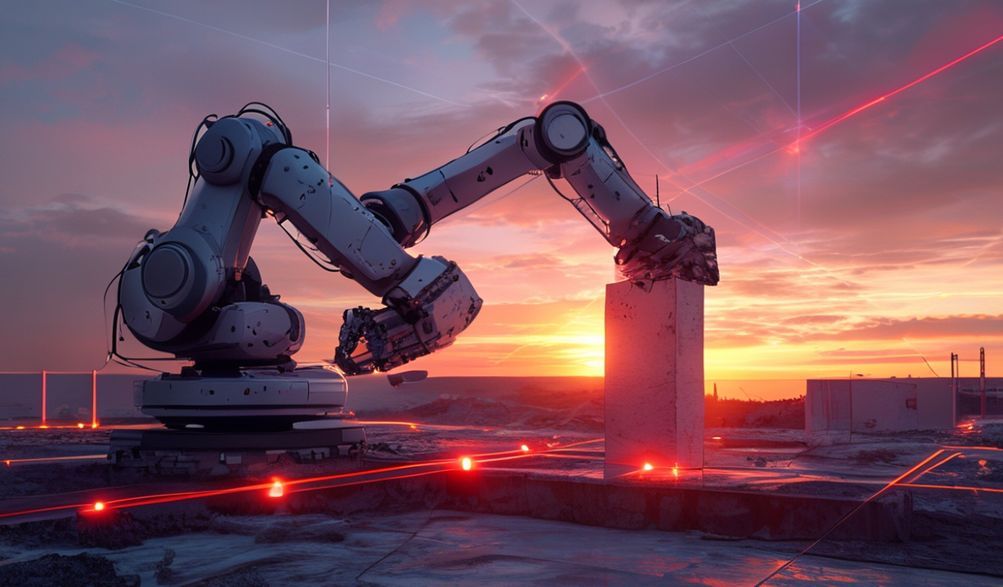
Paano Nagtatayo ng Bahay ang Makina ng Paglalagay ng Bricks: Rebolusyon sa Modernong Konstruksyon
Isipin ang isang makina, gumagalaw nang walang patid na presisyon, naglalagay ng sunud-sunod na ladrilyo nang higit sa 200 bloke bawat oras. Ang mga pader ay tumataas hindi sa loob ng mga linggo, kundi sa loob ng mga araw, na may katumpakang gabay ng laser na nag-aalis ng pagkakamali ng tao. Ito ay hindi kathang-isip lamang; ito ang kasalukuyang realidad ng awtomatikong pagmamason. Para sa sinumang naghahanap ng "brick laying machine builds house," malinaw ang pangitain: isang hinaharap kung saan ang pundasyon ng pagtatayo ng bahay ay lubos na binabago ng robotika.
Ang artikulong ito ang iyong komprehensibo at dalubhasang gabay sa transformatibong teknolohiyang ito. Bubusisiin natin kung paano gumagana ang mga makinaryang ito, ang prosesong hakbang-hakbang sa pagtatayo ng bahay gamit ang mga ito, at ang mga tunay na benepisyong humuhubog muli sa industriya. Batay sa mga teknikal na spesipikasyon, modelo ng ekonomiya, at tunay na aplikasyon sa mundo, nagbibigay kami ng awtoritatibong mga pananaw na mahalaga para sa mga potensyal na homeowner, progresibong tagapagtayo, at mga entusiasta ng konstruksiyon. Matututuhan mo hindi lamang ang "paano," kundi pati ang "bakit," habang inaalam ang mga malalim na pakinabang, kasalukuyang limitasyon, at ang hindi maiiwasang kinabukasan ng awtomatikong konstruksiyon.
Pag-unawa sa Teknolohiya: Ano ang Brick Laying Machine?
Sa kaibuturan nito, ang isang makina ng paglalagay ng ladrilyo ay isang sistemang robotiko na idinisenyo upang i-automate ang paulit-ulit at pisikal na mapaghamong gawain ng masonry. Isinasalin nito ang mga digital na plano ng arkitektura sa pisikal na mga estruktura sa pamamagitan ng tumpak na pagpili, paglalagay ng mortar, at paglalagay ng mga ladrilyo o espesyal na mga bloke na may higit sa tao na pagkakapare-pareho at bilis.
Mula sa Ideya Tungo sa Katotohanan: Isang Maikling Kasaysayan ng Automatiko o Kusang Paglalagay ng Ladrilyo
Ang pagsisikap na gawing mekanikal ang paglalagay ng ladrilyo ay mahigit isang siglo nang umiiral. Ang mga pagtatangkang ginawa noong unang bahagi ng ika-20 siglo ay nakalikha ng mga semi-awtomatikong kasangkapan na tumulong sa pagpapahid ng mortar o paghawak ng bloke, ngunit nanatiling mahirap abutin ang tunay na awtomasyon. Binago ng rebolusyong digital ang lahat. Sa nakalipas na dalawang dekada, ang mga pagsulong sa robotics, computer-aided design (CAD), at teknolohiyang dynamic stabilization ay nagtagpo upang lumikha ng mga mabisang sistema. Ang mga nangungunang kumpanya tulad ng FBR (Fastbrick Robotics) ng Australia kasama ang robot nitong Hadrian X ay nagdala ng teknolohiya mula sa prototype tungo sa komersyal na katotohanan, na nagpapatunay na ang ganap na awtonomong, on-site na paglalagay ng ladrilyo ay hindi lamang posible kundi praktikal.
Mga Pangunahing Bahagi ng Isang Modernong Robot na Tagapaglatag ng Bricks
Ang isang modernong sistema ay isang orkestra ng mga pinagsamang bahagi:
* Brasong Robotiko:Ang pangunahing bahagi, na kalimitang nakakabit sa isang trak o sasakyang may mga lagari para sa pagiging madaling ilipat. Mayroon itong maraming aksis ng paggalaw para sa tumpak na pagpoposisyon sa tatlong-dimensyonal na espasyo.
* Sistema ng Paglalagay ng Mortar:Isang sistemang may presyon na naglalapat ng adhesive o tradisyonal na mortar na may tumpak na kontrol ng dami sa bawat bloke.
* Brick Feeder/Storage: Tagapagpakain/Tagaimbak ng BrikIsang magasin o sistema ng conveyor na naglalaman at naghahatid ng tuloy-tuloy na daloy ng mga bloke sa robotic arm.
* Laser Guidance & GPS: These systems provide real-time spatial awareness. Lasers ensure each brick is placed within a millimeter of its intended position, while GPS aligns the entire structure to the site plan.
* Control Software: The “brain” of the operation. It interprets 3D CAD models, calculates the laying sequence, and controls every movement of the arm and mortar system.
Types of Brick Laying Machines in the Market
Not all automated masonry solutions are the same. The market features a spectrum:
* Fully Autonomous Systems: Machines like the Hadrian X can build entire structural shells from a fixed position. They are fed specialized blocks and operate with minimal human intervention, guided entirely by digital plans.
* Semi-Automatic Assistive Machines: These include mobile robotic arms that require an operator to guide placement or handle complex corners, augmenting the mason’s productivity rather than replacing them.
* On-Site Robotic Printers: A related technology, contour crafting, uses a giant gantry to extrude a cementitious material layer by layer. While not “brick laying” in the traditional sense, it serves a similar purpose in automated wall construction.
The Step-by-Step Process: How the Machine Builds the House
The process of building a house with a robot is a fascinating blend of digital precision and physical execution. It reorders traditional construction workflows, placing immense importance on pre-construction planning.
Phase 1: Digital Foundation – CAD Models and Machine Programming
Long before the machine arrives on site, the house is built in a digital environment. The architect’s drawings are converted into a detailed 3D CAD model. This model is then processed by the machine’s proprietary software, which:
* Slices the model into individual courses of bricks.
* Generates the optimal laying path and sequence for the robotic arm.
* Calculates the exact quantity of blocks and mortar required.
* Creates the final instruction set (code) that will drive the machine’s every action.
Phase 2: Site and Machine Setup
On-site, traditional foundation work is completed by human crews. Once the slab or footing is ready:
1. The robotic system is transported and positioned. For large static systems, this means stabilizing the carrier vehicle.
2. The machine is calibrated using its laser and GPS systems to align perfectly with the site survey and digital plan.
3. Pallets of specialized blocks and mortar/adhesive are positioned within the machine’s reach for efficient feeding.
Phase 3: The Automated Construction Cycle
With the push of a button, the cycle begins. The machine executes a continuous, repetitive loop:
1. Pumili: The robotic arm retrieves a block from the feeder.
2. Apply: The integrated nozzle applies a precise bead of adhesive to the necessary surfaces of the block.
3. Place: The arm moves to the programmed coordinate and places the block with millimeter accuracy.
4. Align & Bed: A mechanism often taps the block into its final position, ensuring perfect bed joint alignment.
5. The process repeats, course by course, with the machine constantly checking its work against the laser guidance system.
Phase 4: Human-Machine Collaboration: Where Workers Step In
The “fully automated” build is a misconception. Human workers are essential partners:
* Setup & Supervision: Skilled technicians oversee the machine’s operation, monitor material supply, and perform quality checks.
* Utility Integration: Openings for electrical, plumbing, and HVAC are pre-programmed. Workers follow behind the robot to install conduits and boxes in these chases.
* Finishes & Complexities: The machine builds the structural shell. Humans take over to install lintels, build complex corners not suited to the block format, and apply all finishing trades like roofing, interior walls, and painting.
Advantages of Using a Brick Laying Machine to Build Your House
The adoption of this technology is driven by compelling, quantifiable benefits that address chronic industry challenges.
Unmatched Speed and Efficiency
This is the most staggering advantage. Where a highly skilled human crew might lay 300-500 bricks in a day, a machine like the Hadrian X can lay over 200 bricks per hour, working continuously. This can translate to completing the enclosed shell of a standard single-family home in 1-3 days, a task that traditionally takes weeks. This speed dramatically reduces overall project timelines.
Enhanced Precision and Consistent Quality
The robot does not get tired, distracted, or vary its technique. Every brick is placed with laser-guided precision, resulting in:
* Perfectly plumb and level walls.
* Consistent mortar joint thickness and alignment.
* Superior structural integrity due to uniform distribution of adhesive.
* A significant reduction in rework and material waste from errors.
Addressing Labor Shortages and Improving Safety
The construction industry faces a critical shortage of skilled masons. Automation provides a scalable solution, allowing fewer workers to manage greater output. Furthermore, it dramatically improves site safety by:
* Removing workers from the repetitive strain injuries associated with heavy lifting and constant bending.
* Reducing on-site accidents related to manual handling and fatigue.
Long-Term Cost Considerations and Waste Reduction
While the upfront investment is high, the total cost model is shifting.
* Labor Cost Savings: Significant reduction in on-site labor hours for masonry.
* Kahusayan sa Materyales: Precision placement means less wasted mortar and fewer damaged blocks. Some systems use adhesive instead of mortar, eliminating mixing and cleanup.
* Schedule Certainty: Faster build times reduce financing costs, overhead, and weather-related risks, providing more predictable project economics.
Important Considerations and Current Limitations
Despite its promise, automated bricklaying is not a magic bullet. Understanding its limitations is crucial for realistic adoption.
Upfront Investment and Economic Viability
The capital cost for these machines is in the hundreds of thousands of dollars. This makes them currently most viable for:
* High-volume home builders constructing repetitive designs in large developments.
* Commercial and multi-family housing projects.
* Companies offering it as a specialized service via leasing or contract work.
Design Flexibility and Architectural Complexity
Current technology excels at rectilinear designs using standardized blocks. Limitations include:
* Difficulty with complex curves, intricate arches, and non-standard angles.
* A reliance on larger-format blocks (often 3-6 times the size of a standard brick) which are bonded for automated handling. This can limit aesthetic choices.
* The need for highly detailed digital models; “sketch” concepts are insufficient.
Technical and Logistical Challenges
- Specialized Materials: The machine requires specific, consistently sized blocks, which may not be available from all suppliers.
- Site Access: Large robotic systems need clear, level access and significant space to operate.
- Suportang Teknikal: Operation requires personnel trained in robotics programming and maintenance, a new skillset for traditional construction firms.
The Evolving Role of the Construction Workforce
Automation does not mean elimination; it means evolution. The demand is shifting from manual bricklayers to:
* Robotics Operators & Technicians
* CAD/CAM Programmers for construction
* Masonry Supervisors with tech literacy
The role becomes more supervisory, technical, and focused on quality control and complex detailing.
The Future of Automated Home Construction
Brick laying robots are just one piece of a much larger digital transformation sweeping through construction.
Integration with Broader Construction Tech (BIM, Drones)
The future site will see bricklaying robots receiving data directly from Building Information Modeling (BIM) systems, with drones performing automated progress surveys to update the model in real-time. This creates a closed-loop, highly efficient digital construction ecosystem.
Advancements in AI and Machine Learning
Next-generation machines will use AI to:
* Adapt to minor material variations in real-time.
* Perform self-diagnostics and predictive maintenance.
* Potentially handle more complex laying patterns and integrate different materials (e.g., brick and block) in a single pass.
Potential for Sustainable and Customizable Housing
Precision and efficiency open doors to sustainability:
* Enabling the use of innovative, eco-friendly blocks that are difficult to lay by hand.
* Drastically reducing construction waste sent to landfills.
* Improving thermal efficiency through perfect wall construction.
Furthermore, as software becomes more sophisticated, mass customization could become economical—allowing for more personalized home designs to be executed with machine-like efficiency.
FAQ Section
Q: How fast can a brick laying machine build a house?
A: Speed depends on the machine and house design. A fully autonomous system can lay the structural shell (outer walls) of a standard 3-bedroom home in 1-3 days of continuous operation, compared to several weeks for a traditional crew. This equates to laying thousands of bricks per day.
Q: Is a machine-built brick house as strong as a hand-built one?
A: Yes, and often stronger. The machine’s precision ensures consistent mortar application, perfect alignment, and uniform compaction—key factors in wall strength. The structures are engineered to meet or exceed all relevant building codes and standards.
Q: Can these machines use any type of brick?
A: Generally, no. Most systems require specially designed, larger-format blocks. These blocks are precisely sized for automated handling and often feature interlocking profiles or are bonded for stability during transport by the robot. Traditional, small clay bricks are not typically compatible.
Q: How much does it cost to use a brick laying machine?
A: It’s project-specific. Costs include machine rental/purchase, specialized blocks, CAD programming, and technical operation. While daily output is high, the technology currently carries a premium. It becomes cost-competitive on projects where speed, scale, or labor savings offset the initial investment, particularly in markets with high labor costs.
Q: Will bricklaying robots replace human masons entirely?
A: No. They will transform the masonry trade. Robots will handle the repetitive, bulk laying of wall sections. Human skill will remain irreplaceable for site setup, machine oversight, complex detailing, finishing work, and the nuanced judgment required for renovations and non-standard projects. The future is collaborative.
Konklusyon
The advent of the brick laying machine represents a profound shift in how we build our homes. It offers a compelling solution to the industry’s trilemma of speed, quality, and cost, delivering structures with unprecedented precision and efficiency. While it is not a universal replacement for the artisanal skill of a master mason, it is an immensely powerful tool for specific, scalable applications.
As an authoritative insight into construction’s future, this technology signals a move towards a more digital, integrated, and safer industry. For homeowners, it promises faster project completion and potentially higher-quality builds. For builders, it represents an opportunity to overcome labor constraints and improve operational predictability. The key is to view the brick laying machine not as a replacement for human ingenuity, but as its most powerful amplification yet. As the technology matures and becomes more accessible, it will undoubtedly reshape skylines and redefine what is possible in residential construction.
Call to Action: Interested in how this could apply to your next project? Begin by researching leading technology providers, consult with construction firms specializing in modern methods, and stay informed on the rapid developments in automated building technology.
<