I. Pagtuklas sa Saklaw ng Presyo ng Block Machine: Mga Pangunahing Salik sa Paunang Puhunan
Ang paunang halaga ng pagbili ng isang makina ng paggawa ng ladrilyo ay maaaring mag-iba mula sa ilang libo hanggang sa ilang daang libong dolyar. Ang malaking agwat na ito ay pinamamahalaan ng ilang magkakaugnay na salik.
A. Kapasidad sa Produksiyon at Sukat ng Output
Ang kapasidad ng output, karaniwang sinusukat sa mga yunit bawat oras o bawat 8-oras na shift, ay isa sa pinakadirektang tagapagpabago ng gastos. Ang ugnayan sa pagitan ng dami at presyo ay hindi tuwiran kundi eksponensyal habang ang mga sistema ay nagiging mas kumplikado.
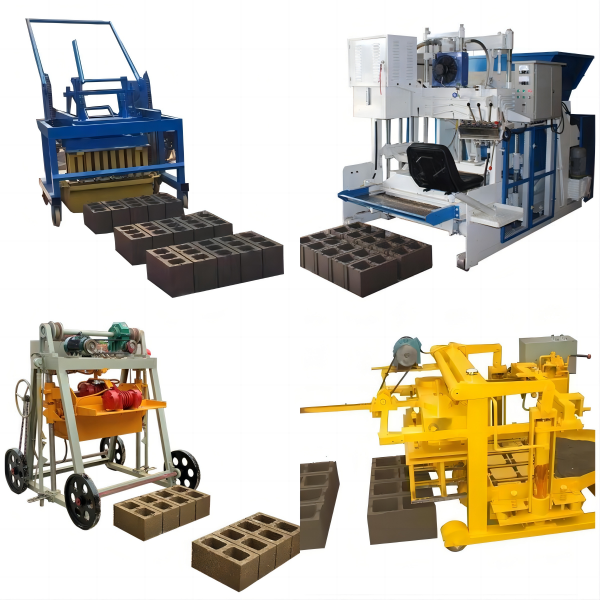
- Mababang-Kapasidad na Makina (300-1,000 bloke/bawat oras ng trabaho):Kadalasan ay manual o simpleng mga modelo na semi-awtomatiko. Ang mga ito ay may presyong pangpasok sa merkado, na ang mga gastos ay pangunahing nakatali sa mga pangunahing mekanikal na bahagi at isang single-cavity mold.
- Mga Makina na May Katamtamang Kapasidad (1,000-5,000 bloke/bawat paglilipat):Saklaw ng hanay na ito ang matatag na mga sistemang semi-awtomatiko at mga pang-antas-pasukan na ganap na awtomatikong sistema. Ang pagtaas ng presyo dito ay dahil sa mas malakas na mga sistemang haydroliko, mas malalaking vibrating table, at mga pangunahing kontrol na elektroniko.
- Mataas na Kapasidad na Pang-industriyang Halaman (5,000-20,000+ bloke/bawat turno):Ang mga ito ay ganap na pinagsama-samang, kontrolado ng kompyuter na mga linya ng produksyon. Ang presyo ay sumasalamin hindi lamang sa makina ng paggawa ng bloke mismo, kundi sa pinagsama-samang sistema ng paghawak ng materyales, sopistikadong PLCs, awtomatikong sirkulasyon ng pallet, at mga istrukturang balangkas na mataas ang tibay na idinisenyo para sa tuloy-tuloy at mabigat na operasyon.
B. Antas ng Automasyon at Integrasyon ng Teknolohiya
Ang antas ng awtomasyon ay isang pangunahing tagapagpabukod sa kapwa kakayahan at gastos.
- Manual na Makina:Ang pinakamababang punto ng presyo. Ang gastos ay limitado sa frame, isang simpleng mekanismo ng makinang mekanikal o maliit na haydrolikong pindutan, at isang molde. Ang paggawa ang pangunahing "gastos" sa pagpapatakbo.
- Semi-Automatikong Makina:Kumakatawan sa isang malaking pagtaas sa presyo dahil sa pagsasama ng mga awtomatikong kontrol ng ikot, mas advanced na mga sistemang haydroliko, at kadalasan ay isang sinynchronize na mekanismo ng panginginig. Kasangkot pa rin ang operator sa pagpapakain ng materyal at paghawak ng produkto.
- Ganap na Awtomatikong Makina:Mag-utos ng pinakamataas na premium sa presyo. Saklaw ng pamumuhunan ang gastos ng sopistikadong automation hardware (PLCs, sensors, servo-motors), espesyalisadong software para sa operasyon at pagsusuri, at ang inhenyeriya na kinakailangan upang maayos na pagsamahin ang pagpapakain, pagpiga, paghawak ng curing rack, at pag-stack/pagpaletisa sa isang magkakatugmang proseso.
C. Machine Type and Process Technology
The fundamental technology pathway dictates a distinct base price architecture.
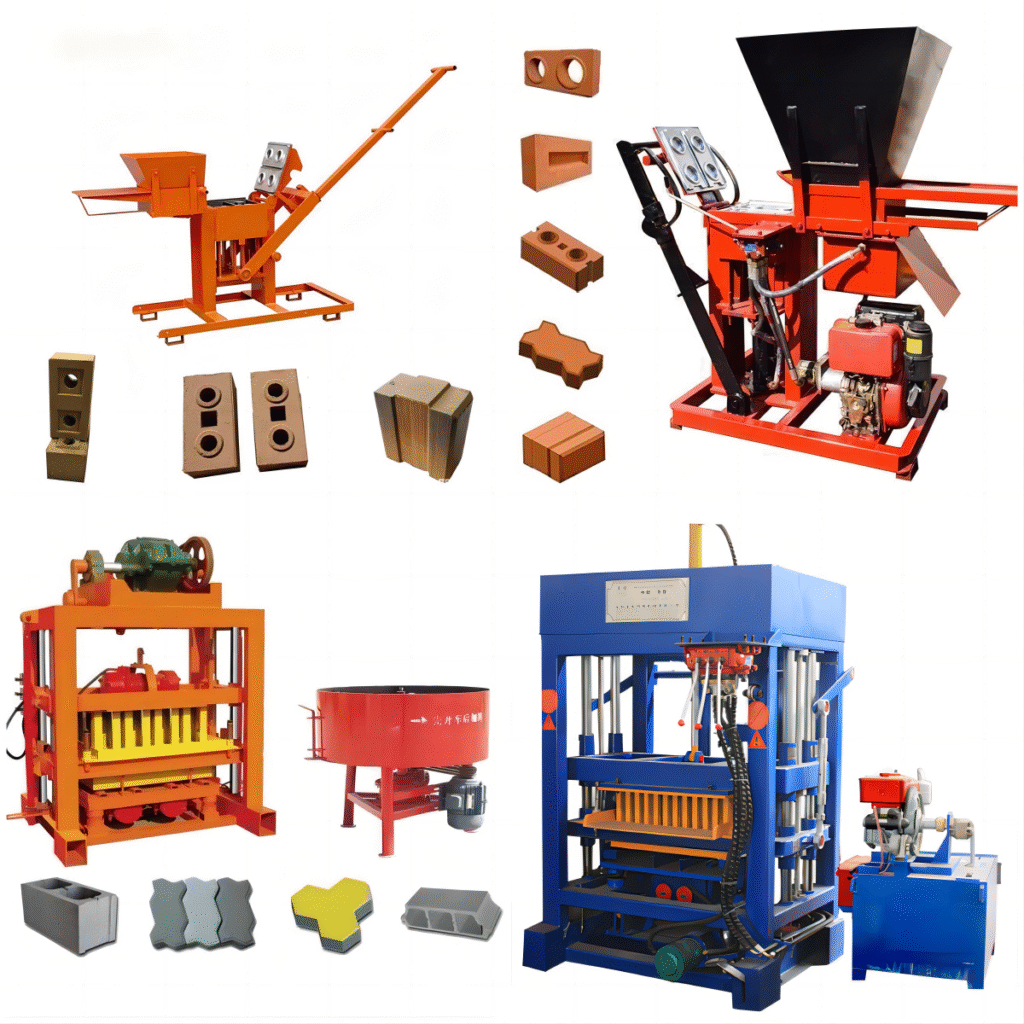
- Compressed Earth Block (CEB) Machines: Often occupy the lower to mid-range of the spectrum. Simpler mechanical/hydraulic pressing systems for stabilized soil, while specialized interlocking models with high compaction pressure can be more costly.
- Concrete Block Machines (Static/Hydraulic Press): Cover the widest price range. From small mobile “egg-laying” machines to massive stationary plants. Price scales with pressure capability (tonnage), mold sophistication (e.g., for producing insulated blocks), and auxiliary systems like automatic mixers and conveyors.
- Clay Brick Extrusion Plants: Generally represent a major capital investment. The cost structure includes not just the extruder and cutter, but also essential upstream (clay preparation, vacuum chamber) and downstream (dryer and tunnel kiln) systems. The complete plant is a significant industrial installation.
D. Build Quality, Components, and Origin of Manufacture
The intrinsic quality of components and geographic origin are critical, often non-negotiable factors influencing price and long-term value.
- Hierarkiya ng mga Bahagi: A machine equipped with globally recognized, premium-grade hydraulic pumps, PLCs, precision-engineered molds from hardened steel, and heavy-duty structural steel will command a higher price than one using generic or lower-specification components. This directly impacts durability, maintenance intervals, and product consistency.
- Manufacturing Origin and Standards: Compliance with international engineering and safety standards (e.g., CE, ISO) involves rigorous testing and quality control, which is reflected in the price. Machines built to such standards typically offer greater reliability, better documentation, and safer operation, justifying a higher initial outlay.
II. Beyond the Price Tag: The Total Cost of Ownership (TCO) Framework
For the astute B2B professional, the conversation must shift from mere purchase price to Total Cost of Ownership—a holistic view of all costs incurred over the machine’s operational lifespan.
A. Shipping, Logistics, and Installation
- Freight Costs: Vary dramatically based on machine size, weight, and destination port. A full container load (FCL) for a semi-automatic machine differs vastly from the bulk shipment required for a complete plant. Insurance and import duties must be factored in.
- Pagkakabit at Pagkakomisyon: Simple machines may require only basic assembly. Complex plants necessitate supervised installation by factory technicians, involving costs for travel, labor, and potentially local civil works (foundations, electrical hookups).
B. Operational and Maintenance Expenditures
These ongoing costs determine daily profitability for the end-user.
- Pagkonsumo ng Enerhiya: A fully automatic line with multiple motors, hydraulics, and conveyors will have a higher continuous power draw than a small semi-automatic unit. Calculating kW/hour consumption is essential.
- Raw Material Efficiency: The precision of the feeding and compaction system affects waste. A well-calibrated machine minimizes overfilling and produces consistent, high-strength blocks from the optimal mix ratio.
- Routine Maintenance: Costs include lubricants, hydraulic filters, and wear parts like mold liners and vibration motor bearings. Machines with easier service access and locally available generic parts reduce downtime and maintenance costs.
- Paggawa: While a fully automatic plant may require only 2-3 skilled operators, a bank of semi-automatic machines might need more laborers for handling, increasing long-term payroll expenses.
C. The Critical Role of After-Sales Support
The cost and quality of support are intangible yet vital components of TCO.
- Spare Parts Availability & Pricing: A low-purchase-price machine can become a liability if spare parts are expensive, proprietary, or have long lead times. Distributors must evaluate the manufacturer’s parts supply chain.
- Technical Support and Training: Availability of remote diagnostics, comprehensive operator/maintenance manuals (in the local language), and training programs for the client’s staff are value-added services that prevent costly operational errors and prolong machine life.
- Warranty Scope and Duration: A longer, comprehensive warranty covering both parts and labor for critical components reduces financial risk for the end-user and reflects the manufacturer’s confidence in their product.
III. Strategic Procurement and Value Proposition Development
A. Conducting a Comparative Value Analysis
Procurement must look beyond the unit price on a spec sheet. A structured comparison should include:
- Output per Currency Unit: Calculate the cost per block produced per hour, factoring in the machine’s rated capacity and price.
- Estimated Maintenance Cost per Year: Request typical maintenance schedules and parts price lists from manufacturers.
- Energy Efficiency Metrics: Compare the total connected load (in kW) of competing systems for similar output.
- Residual Value and Durability: Assess the machine’s expected service life and potential resale value based on build quality and brand reputation in the market.
B. Aligning Machine Cost with Client Business Models
Distributors must act as consultants, mapping machine options to client profiles:
- The Start-Up Entrepreneur: Prioritizes low initial outlay. A manual or basic semi-automatic machine is appropriate. The value proposition is affordability and simplicity.
- The Growing SME: Needs to scale reliably. A durable semi-automatic or entry-level automatic system with good TCO is key. The value proposition is productivity and return on investment.
- The Large-Scale Industrial Producer: Focuses on output consistency, minimal labor dependency, and uptime. A high-capacity automatic plant, despite its high price, delivers value through unparalleled efficiency, low per-unit cost, and production certainty.
C. Financing and ROI Considerations
Facilitating the purchase often involves discussing financials.
- Financing Options: Understanding if the manufacturer or third parties offer leasing, financing, or loan programs can make a higher-value machine accessible.
- Return on Investment (ROI) Calculation: A crucial tool. Help clients build a simple model: [(Daily Output × Selling Price per Block) – (Daily Costs of Raw Material, Labor, Energy)] × Operating Days per Year. Compare this annual gross profit to the machine’s TCO to project payback period. A more expensive but more efficient machine often shows a faster and greater ROI.
Conclusion
Ultimately, the question “How much does a brick making machine cost?” unveils a layered financial and operational landscape. For distributors and procurement experts, the answer is not a single number but a nuanced analysis that spans from the initial capital expenditure through the entire lifecycle of the equipment. The most strategic approach moves decisively from focusing solely on purchase price to advocating for an understanding of halaga sa buong buhay.
Success in this market hinges on the ability to educate clients on the Total Cost of Ownership, demonstrating how factors like build quality, energy efficiency, and after-sales support critically influence long-term profitability. By positioning oneself as an advisor who provides comprehensive cost-benefit analyses and aligns machinery with specific business objectives—whether for a fledgling block yard or a major precast facility—a B2B professional transitions from a simple vendor to an indispensable strategic partner. In doing so, they empower their clients to make investments that are not just expenditures, but calculated steps toward sustainable growth and market competitiveness.
Frequently Asked Questions (FAQ)
Q1: What is a realistic price range for a brick making machine suitable for a small to medium business?
A: For a business targeting a production of 2,000 to 5,000 standard blocks per 8-hour shift, a robust semi-automatic concrete block machine typically falls within a range of approximately $7,000 to $30,000. This range accounts for variations in automation features, component quality, and mold configurations. Mobile “egg-laying” machines for on-site production may start lower, while pallet-based systems with more automation will be at the higher end.
Q2: Are used brick making machines a worthwhile consideration to reduce cost?
A: Used machines can offer significant upfront savings but carry higher risk. A thorough technical inspection by a qualified engineer is essential to assess wear on critical components like the hydraulic system, mainframe, and vibration units. Consider the availability of spare parts for older models and potential higher maintenance costs. For a client with in-house technical expertise, a used machine can be viable; for others, the reliability of a new machine with a warranty may provide better long-term value.
Q3: What hidden costs should a first-time buyer be most aware of?
A: Key often-overlooked costs include:
- Shipping, Insurance, and Import Duties: These can add 15-40% to the ex-factory price.
- Installation & Foundation: Industrial machines require a proper concrete foundation, which is an added civil works cost.
- Initial Spare Parts Kit: Purchasing a recommended set of wear parts (seals, filters, spare liners) upfront avoids immediate downtime.
- Electrical Installation: Ensuring the factory has the correct power supply (e.g., three-phase) may require an electrician’s services.
- Operator Training: Budgeting for proper training is crucial to avoid costly mistakes and optimize production from day one.
Q4: How does the cost of a concrete block machine compare to a clay brick making plant?
A: They are fundamentally different investments. A complete concrete block production line for medium-scale output is often a standalone machine or a short line. A complete clay brick plant is a much larger industrial facility encompassing clay processing, extruding, cutting, drying, and high-temperature firing (kiln). Therefore, for similar output capacities, the initial capital investment for a clay brick plant is typically an order of magnitude higher than for a concrete block production setup.
Q5: Can I get a precise quote without providing detailed information?
A: No. Reputable manufacturers and distributors cannot provide an accurate quote without specific details. To generate a meaningful proposal, you must provide:
- Desired output capacity and product types (e.g., hollow block, solid brick, paver).
- Specification of available raw materials (type of aggregate, cement, soil properties).
- Available power supply on site (voltage, phase).
- Level of automation required.
- Target budget range.
This information allows for a recommendation that aligns technical specifications with commercial expectations.