
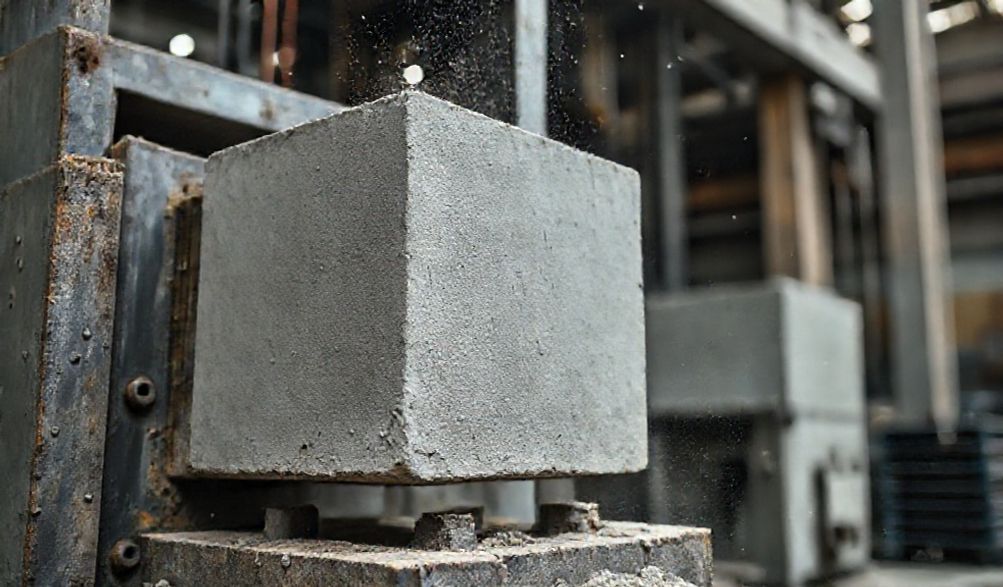
How to Make Cement Blocks: A Step-by-Step Guide from FUDA Block Making Factory
Panimula
Cement blocks, often called concrete blocks or masonry units, are the unsung heroes of modern construction. From the foundations of skyscrapers to the walls of family homes, these modular, durable building components form the literal backbone of our infrastructure. But what transforms a pile of sand, stone, and powder into a load-bearing block of immense strength?
This comprehensive guide demystifies that exact process. Drawing directly from the industrial-scale expertise and rigorous quality standards of the FUDA Block Making Factory, we will take you behind the scenes. Whether you’re a DIY enthusiast curious about the basics, a construction student, or an industry professional seeking deeper insight, this article serves as your authoritative resource. We’ll cover everything from raw material science and precise manufacturing steps to stringent quality control protocols. At FUDA, our processes are engineered to meet international standards like ASTM and ISO, ensuring every block delivers consistent performance and durability. Let’s build that knowledge from the ground up.
Pag-unawa sa mga Semento Block: Mga Uri at Aplikasyon
Bago sumisid sapaano they’re made, it’s crucial to understand Ano cement blocks are and why they’re so widely used.
What Are Cement Blocks? (Solid vs. Hollow, Lightweight vs. Dense)
At their core, cement blocks are precast building materials made from a mixture of Portland cement, aggregates (like sand or gravel), and water. They are molded into standardized shapes and cured to gain strength.
* Solid vs. Hollow: Hollow blocks have one or more large holes (cores) which reduce weight, improve insulation, and allow for reinforcing steel and concrete grout. Solid blocks are denser and used where maximum strength or mass is needed.
* Lightweight vs. Dense: Weight is determined by the aggregate. Lightweight blocks use aggregates like expanded clay or shale, offering better thermal and acoustic insulation. Dense blocks use natural sand and crushed stone, providing higher compressive strength and better soundproofing.
Common Types of Blocks and Their Uses
- Standard na Hollow Blocks The most common type, used for exterior and interior load-bearing walls in houses and commercial buildings.
- Masinsing Bloke: Used for paving, retaining walls, and applications requiring high durability and impact resistance.
- Pambalot sa Daan: Dense, solid blocks designed for driveways, walkways, and patios, prized for their aesthetic appeal and strength.
- Interlocking na mga Bloke: Engineered to fit together without mortar, ideal for quick assembly in retaining walls and some structural applications.
Key Advantages of Using Quality Cement Blocks
- Tibay: Resists weathering, rot, and pest damage for decades.
- Pagiging Matibay sa Apoy: Concrete is inherently non-combustible, providing excellent fire protection.
- Insulasyong Pang-init at Pang-tunog: Especially hollow and lightweight blocks, which create air pockets that insulate against heat and sound.
- Pagiging Epektibo sa Gastos: The combination of material efficiency, speed of construction, and low maintenance makes them an economical choice.
Essential Raw Materials for Block Making
The quality of a block is irrevocably tied to the quality of its ingredients. In our factory floor process, sourcing and testing raw materials is the first critical step.
Cement: Types and Specifications
Cement is the binder that holds everything together.
* OPC (Ordinary Portland Cement): The most common type, known for its high early strength. Grade 43 and Grade 53 are typically specified for block making, with the number indicating the compressive strength in MPa after 28 days.
* PPC (Portland Pozzolana Cement): Contains pozzolanic materials (like fly ash), which offer better long-term strength, improved workability, and reduced environmental impact. It’s an excellent choice for durable blocks.
Aggregates: Sand, Crushed Stone, and Fly Ash
Aggregates give the block its body and volume.
* Buhangin Must be clean, well-graded (a mix of particle sizes), and free of organic impurities. River sand can be used if properly washed, but manufactured sand (crushed stone dust) often provides a better mechanical interlock.
* Crushed Stone: For dense blocks, a fine, hard stone aggregate is used. Its angular shape enhances compaction and strength.
* Abu ng Pugon: A by-product from coal plants, used as a partial cement replacement and fine aggregate. It improves workability, reduces water demand, and enhances final strength.
The Critical Role of Water
Water initiates the chemical reaction (hydration) that hardens cement. The water-to-cement ratio is paramount:
* Too much water weakens the final block, causing shrinkage cracks.
* Too little water leads to poor compaction and a weak, crumbly block.
* In our automated systems, water is measured with precision to ensure optimal hydration and workability.
Optional Additives
- Plasticizers: Increase workability of the mix without adding extra water, leading to higher strength.
- Pigmento: Iron oxides are added to produce colored blocks for architectural appeal.
- Accelerators: Speed up the setting time, useful in cold weather conditions.
The Professional Block Making Process at FUDA Factory
This is where raw materials are transformed. Our industrial process is a symphony of precision engineering and controlled chemistry.
Step 1: Precise Batching and Material Weighing
Consistency begins here. Automated batching systems with digital load cells weigh each raw material—cement, aggregates, water, additives—to exact pre-determined formulas. This eliminates human error and guarantees that every batch of mix is identical, which is the foundation of uniform block quality.
Step 2: Intensive Mixing for Uniformity
The weighed materials are fed into high-capacity pan mixers or planetary mixers. These machines ensure a completely homogeneous blend, coating every aggregate particle with cement paste. A uniform mix is non-negotiable for achieving consistent strength and texture across all blocks.
Step 3: Molding: The Heart of the Operation
The mixed concrete is fed into the block making machine. At FUDA, we primarily use advanced hydraulic vibration press machines. Here’s what happens:
1. The mix is poured into a mold box with the desired block shape.
2. Simultaneously, a hydraulic press applies high pressure from above while the mold vibrates intensely.
3. This dual action of pressure and vibration compacts the mix, removing air voids and densely packing the material—the key to a strong, dense block.
4. The freshly molded block is then ejected onto a steel pallet.
Step 4: Curing: Building Ultimate Strength
Curing is not just drying; it’s the controlled process of maintaining moisture and temperature to allow hydration to complete. We use steam curing chambers for efficiency and superior strength:
* Blocks on pallets are rolled into sealed chambers.
* Temperature and humidity are carefully raised and maintained according to a specific cycle (often reaching 60-80°C).
* This accelerated curing allows blocks to achieve over 70% of their design strength in just 24-48 hours, compared to weeks with traditional methods.
Step 5: Cubing and Palletizing for Storage & Shipping
Once cured and cooled, the hardened blocks are automatically stacked into a cube (e.g., 10 blocks high). The cube is then strapped with steel or plastic bands, creating a stable, transportable unit ready for storage or direct shipping to construction sites.
Quality Control: Ensuring Every Block Meets Standard
Our quality control team routinely conducts checks at every stage. Trust is built on verifiable quality.
In-Process Checks
- Daily calibration of batching scales.
- Visual and tactile checks of mix consistency (slump tests).
- Regular inspection of molds for wear to ensure dimensional accuracy.
Testing Compressive Strength
Based on years of production data, we know testing is vital. Sample blocks from each production run are tested in our onsite lab using a compression testing machine. This verifies they meet or exceed the specified strength grade (e.g., 4MPa, 7MPa).
Dimensional Tolerance and Absorption Tests
- Blocks are measured to ensure they are within the strict tolerances allowed by standards.
- Water absorption tests determine the block’s porosity, which affects durability and weather resistance.
FUDA’s Commitment to Certification and Standards
Our entire production protocol is designed to comply with international standards like ASTM C90 (Standard Specification for Loadbearing Concrete Masonry Units). This third-party verifiable commitment is our promise of reliability.
How to Make Cement Blocks on a Small Scale (DIY/Small Business)
For small projects or startups, the principles remain the same, but the scale and tools differ.
Manual vs. Semi-Automatic Machine Options
- Manual na Makina: Require significant physical labor to compress the mix via a lever. Output is low.
- Semi-Automatikong Makina: Use a mechanical or hydraulic press, often with vibration motor assistance. They offer a good balance of output, quality, and affordability for small businesses.
Simplified Process Overview for Small Operations
- Manual Batching: Use buckets or a small mixer to combine materials in the correct ratio (e.g., 1 part cement to 6 parts aggregate mix).
- Paghahalo: A portable drum or pan mixer is ideal.
- Paghuhulma: Fill the machine mold, activate vibration/pressure, and eject the block.
- Pagpapagaling: Keep blocks moist for at least 7 days by covering them with plastic sheeting and sprinkling with water daily. Full strength develops over 28 days.
Key Differences from Industrial Production and Managing Expectations
- Strength Consistency: It’s harder to achieve the same uniform strength without automated batching and controlled curing.
- Output: A small manual machine may produce 200-500 blocks per day, versus thousands in a factory.
- Labor Intensity: The process is heavily reliant on manual effort.
Common Mistakes to Avoid in Small-Scale Production
- Inconsistent Ratios: “Eyeballing” material amounts leads to weak batches.
- Insufficient Compaction: Not packing the mix firmly enough into the mold.
- Poor Curing: Letting blocks dry out too quickly, which stops hydration and ruins strength.
Choosing the Right Block Making Machine
Selecting equipment depends entirely on your goals and capacity.
Factors to Consider: Output Capacity, Automation Level, Budget
- Define your target daily production.
- Assess available labor and technical skill.
- Set a realistic budget including machine, pallets, and space.
Overview of Machine Types
- Manwal: Lowest cost, high labor, suitable for very small-scale/DIY.
- Semi-Awomatiko: Moderate cost and output. Good for small businesses. Requires some operator involvement.
- Ganap na Awomatiko: High capital cost, minimal labor, very high and consistent output. The choice for industrial plants like FUDA.
Maintenance Tips for Longevity and Consistent Output
- Clean the machine thoroughly after each use to prevent concrete buildup.
- Regularly check and tighten bolts and vibrator mounts.
- Lubricate all moving parts as per the manufacturer’s manual.
- Inspect and replace worn mold liners promptly to maintain block dimensions.
Mga Madalas Itanong (FAQ)
Q1: What is the ideal cement-to-sand ratio for making strong blocks?
A: For non-load bearing blocks, a common range is 1 part cement to 6-8 parts combined aggregate (sand + stone). For load-bearing blocks, a richer mix like 1:4 to 1:6 is used. The “ideal” ratio depends on aggregate type and desired strength, and is best determined through professional mix design.
Q2: How long do cement blocks need to cure before use?
A: In industrial steam curing, blocks are ready for handling and shipping in 24-48 hours. Using traditional moist curing methods, blocks should be kept wet for at least 7 days and will gain sufficient strength for use in 14-28 days.
Q3: Can I use river sand for block making?
A: Yes, but it must be clean, washed, and free of silt or clay. Often, crushed stone sand (manufactured sand) is preferred as its angular particles create a stronger mechanical bond than the rounded grains of river sand.
Q4: What causes blocks to break or crack easily?
A: The main culprits are: 1) Excessive water in the mix, 2) Insufficient compaction during molding, 3) Improper or inadequate curing (drying too fast), and 4) Using low-quality or contaminated materials.
Q5: How does FUDA Factory ensure consistent block quality?
A: Through a multi-stage protocol: automated precision batching, controlled high-pressure vibration molding, accelerated steam curing under strict parameters, and a rigorous final QC check including compressive strength, dimensional, and absorption testing.
Konklusyon
The journey from raw, loose materials to a precise, high-strength cement block is a remarkable feat of engineering and process control. It demands precision in batching, intensity in compaction, and science in curing. Understanding this process not only demystifies a fundamental construction material but also empowers you to select the right blocks for your project, appreciating the quality behind them.
For large-scale construction projects—housing developments, commercial complexes, and infrastructure—that require certified, consistent, and high-performance cement blocks, partnering with a professional manufacturer is essential. It ensures structural integrity, speed, and long-term value.
For specifications, technical data sheets, or quotations on bulk supply of industrial-grade blocks, contact the experts at FUDA Block Making Factory. For the DIYers and entrepreneurs, we hope this guide provides a solid foundation for your own building endeavors. Share this knowledge and build with confidence.
<