
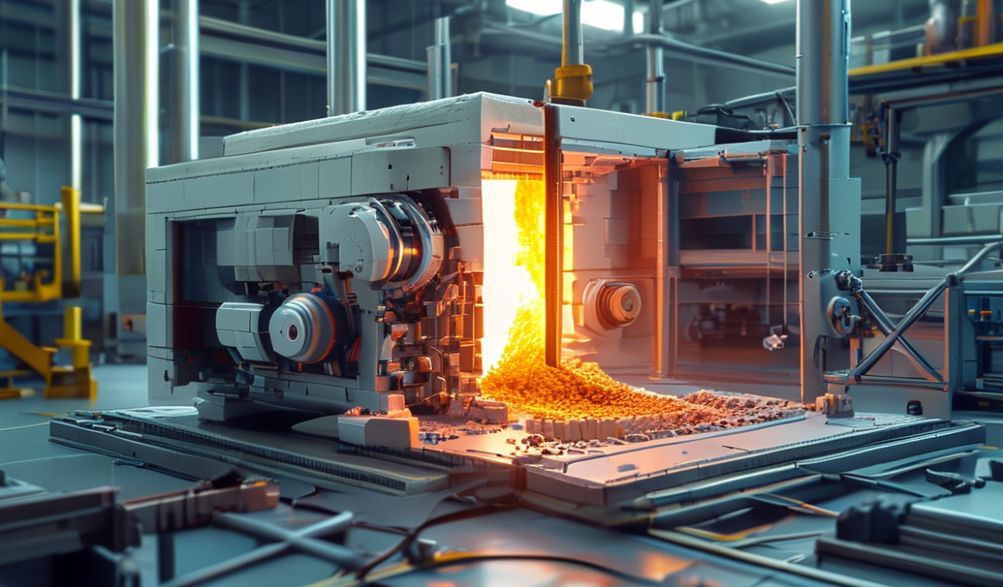
Inside the LEGO Brick Molding Machine: A Deep Dive into the FUDA Block Making Factory
Panimula
Think of the iconic LEGO brick. That satisfying i-click as two pieces connect, the unwavering grip—known as clutch power—that holds a towering castle together, and the flawless consistency that means a brick from 1970 fits perfectly with one made yesterday. This isn’t just child’s play; it’s a pinnacle of precision manufacturing. The unsung hero behind this global phenomenon is a masterpiece of engineering: the specialized LEGO brick molding machine.
This same foundational principle—transforming raw material into a perfect, repeatable unit under immense pressure and precision—is the beating heart of industrial construction. Factories worldwide utilize advanced block making machines to produce the concrete blocks that build our homes, pave our streets, and shape our cities. Among the prominent names in this vital sector is the FUDA block making factory, a manufacturer embodying the marriage of scale, durability, and technological sophistication.
This article will dissect the intricate technology behind the legendary LEGO brick molding machine, using it as a lens to understand the advanced capabilities, engineering expertise, and rigorous quality standards exemplified by industrial manufacturers like FUDA. We will connect the dots between the micro-precision of toy manufacturing and the macro-power of industrial construction equipment, providing authoritative insight for industry professionals, engineers, procurement specialists, and the intellectually curious.
The Engineering Marvel: How a LEGO Brick Molding Machine Works
To appreciate the industrial might of a concrete block plant, one must first understand the microscopic precision achieved in toy manufacturing. The LEGO molding process is a symphony of engineering, where tolerances are razor-thin and consistency is king.
Precision is Everything: Tolerances Measured in Microns
The magic of LEGO lies in its clutch power. This requires an astonishing level of precision.
- Mold Perfection: A LEGO mold cavity is machined to tolerances as tight as 0.005 millimeters (5 microns). For scale, a human hair is about 70 microns thick.
- Material Flow: The molten plastic must fill this cavity perfectly every time, with no voids or weak spots, to ensure uniform strength and the precise internal tubes that create the iconic “clutch.”
- Cooling Control: The cooling process must be perfectly even to prevent warping or shrinkage that would compromise the brick’s dimensions. This level of control is what makes every brick, anywhere in the world, interoperable.
The Molding Cycle: From Granules to Iconic Brick
The process is a high-speed, fully automated cycle measured in seconds.
- Pagpapakain: Granules of ABS plastic are fed from a hopper into the molding machine.
- Melting & Injection: The granules are heated until molten and then injected under high pressure (reportedly over 150 tons of force) into the precision mold.
- Pagpapalamig: The mold is cooled with water, solidifying the plastic almost instantly.
- Pag-eject: Pins push the newly formed bricks out of the mold. A single mold can produce multiple bricks simultaneously.
- Handling & Packaging: Robots or conveyor systems carry the bricks away for decoration, packaging, and distribution. LEGO factories produce millions of bricks per day.
Beyond ABS Plastic: Materials and Durability
LEGO’s choice of material is as deliberate as its mold design.
* ABS (Acrylonitrile Butadiene Styrene): This specific polymer is chosen for its strength, rigidity, colorfastness, and excellent molding properties. It’s the gold standard for the application.
* Industrial Contrast: This is a key differentiator. While LEGO uses engineered polymers, industrial block making machines from factories like FUDA are built to handle abrasive, heavy-duty materials like:
* Concrete
* Cement
* Fly Ash (an eco-friendly by-product)
* Slag
* Various aggregates
From Toys to Construction: Scaling the Technology
The leap from a 2-gram plastic brick to a 20-kilogram concrete block is vast, but the core engineering principles are directly transferable. This is where the analogy becomes powerful for understanding industrial manufacturing.
Core Similarities: Mold Design, Pressure, and Automation
The fundamental DNA is shared:
* Mold-Centric Production: Both processes are entirely dependent on the design and quality of the mold (or “mould” in industrial terms). The mold defines the final product’s shape, texture, and dimensional accuracy.
* Application of Force: Both use significant force to form the product—injection pressure for plastic, and vibration combined with compaction pressure for concrete.
* Automation for Consistency: Human hands cannot achieve the repeatability required. Both industries rely on fully automated cycles controlled by computers to ensure every single unit meets specification.
Key Differences: Scale, Materials, and Force
The scaling introduces profound changes in the machinery:
* Force & Scale: A LEGO machine applies precise, high pressure. An industrial block machine must combine immense compaction force (often hundreds of tons) with high-frequency vibration to remove air bubbles and solidify the concrete mix.
* Paghawak ng Materyal: Instead of plastic granules, industrial machines manage tons of sand, stone, cement, and water. The batching and mixing systems are major components.
* Curing vs. Cooling: Plastic cools in seconds. Concrete gains strength through a chemical curing process that takes hours or days. Industrial plants include curing chambers or racks, making the production line a continuous flow of setting and hardening.
The Role of Advanced Control Systems
This is the great equalizer. Whether in Billund (LEGO’s HQ) or a FUDA factory floor, modern manufacturing is digital.
* PLCs (Programmable Logic Controllers) are the brains, executing the precise sequence of the molding cycle.
* Sensors monitor pressure, temperature, vibration frequency, and material levels, making micro-adjustments in real-time.
* Human-Machine Interfaces (HMIs) allow operators to control, monitor, and troubleshoot the entire process from a central panel, ensuring consistent quality and efficient operation.
Spotlight on Industrial Manufacturing: The FUDA Block Making Factory
Let’s translate these principles to a real-world industrial context. Manufacturers like the FUDA block making factory exemplify how precision molding technology is adapted for heavy-duty, high-output construction material production.
Who is FUDA? A Profile in Manufacturing Expertise
FUDA is an established manufacturer specializing in the design and production of concrete block making machinery. They represent the industrial counterpart to the precision found in toy manufacturing, providing the equipment needed to build infrastructure on a global scale. Their typical product portfolio caters to a range of production needs, from semi-automatic machines for smaller yards to fully automated turnkey production lines for large-scale factories.
FUDA Machine Capabilities: Translating Precision to Industry
A modern industrial block making plant, like those equipped by FUDA, is defined by key performance metrics that mirror the priorities of the LEGO process: output, consistency, and flexibility.
- Mataas na Output ng Produksyon: Machines are rated by blocks per hour (e.g., producing thousands of standard hollow blocks in an 8-hour shift).
- Advanced Automation: Features include automatic pallet feeders, concrete distributors, and robotic stackers that move cured blocks to storage, minimizing manual labor.
- Quick Mold Change Systems: Similar to LEGO’s need for different brick types, industrial plants must switch between producing hollow blocks, solid blocks, pavers, and curbstones. Efficient mold changeover systems maximize uptime.
- Panginginig at Pagpapatigas: The core of the machine uses powerful, synchronized vibration motors and hydraulic pressure to achieve optimal block density and strength right out of the mold.
Quality and Innovation in Block Production
The end goal is a product that meets or exceeds construction standards (like ASTM or ISO). Manufacturers achieve this through:
- Mahigpit na Kontrol sa Kalidad: This includes regular dimensional checks of produced blocks and performing compression tests on sample blocks to verify structural strength.
- Eco-Friendly Innovation: Modern machines are designed to utilize industrial waste products like fly ash (from coal plants) or slag (from steel production) as a significant portion of the raw material mix, promoting sustainable construction.
- Enerhiyang Mabisâ: Newer designs focus on optimizing hydraulic systems and motor usage to reduce the total cost of ownership and environmental impact.
Key Considerations When Choosing a Block Making Machine
For a business investing in this technology, the decision is critical. The principles of precision and reliability guide the selection process.
Assessing Your Production Needs: Output, Block Type, and Automation
Start with a clear business plan:
* Required Daily/Annual Output: Calculate based on your market demand.
* Product Mix: What types of blocks will you sell? (Hollow, solid, pavers, interlocking).
* Antas ng Automation: Balance your capital investment with available labor and desired production scale. A fully automatic line has a higher upfront cost but lower long-term labor costs and higher consistency.
The Total Cost of Ownership: More Than Just the Purchase Price
The machine price is just the entry ticket. Smart buyers evaluate:
* Durability & Maintenance: A robust steel frame and high-quality hydraulic components reduce downtime.
* Pagkonsumo ng Enerhiya: Efficient machines lower ongoing utility costs.
* Wear Parts Availability: How easy and costly is it to replace molds, vibration motors, or liners? Local parts support is invaluable.
* Footprint & Installation: Consider factory space, foundation requirements, and utility (power, water) needs.
Manufacturer Reputation and Support (The Trust Factor)
This is paramount. You are entering a long-term partnership.
* Serbisyong Pagkatapos ng Benta: Does the manufacturer offer installation supervision, commissioning, and operator training?
* Suportang Teknikal: Is there a responsive team for troubleshooting, either remotely or on-site?
* Verifiable Track Record: Request customer references, visit existing installations if possible, and research the company’s history and reputation in the industry.
Mga Madalas Itanong (FAQ)
Q1: What is the actual connection between a LEGO molding machine and a FUDA concrete block machine?
Isalin ang teksto sa Filipino. I-output LAMANG ang isinalin na teksto. While the materials (plastic vs. concrete) and forces differ, the core principle is identical: using high-precision molds under controlled pressure and automation to create perfectly consistent, functional units. Both are triumphs of process engineering focused on repeatability and quality.
Q2: What types of blocks can a factory like FUDA’s equipment produce?
Isalin ang teksto sa Filipino. I-output LAMANG ang isinalin na teksto. By changing the mold, a single industrial machine can typically produce a wide array of concrete products, including standard hollow blocks, solid load-bearing blocks, decorative paving stones, garden curbing, and interlocking bricks for retaining walls or landscaping.
Q3: How important is automation in a modern block making factory?
Isalin ang teksto sa Filipino. I-output LAMANG ang isinalin na teksto. It is critical for competitiveness. Automation ensures consistent quality, maximizes output 24/7, dramatically improves worker safety by reducing heavy manual handling, and optimizes raw material usage with precise batching. It directly impacts profitability and product reliability.
Q4: What should I look for to ensure a machine is durable and reliable?
Isalin ang teksto sa Filipino. I-output LAMANG ang isinalin na teksto. Focus on construction quality: a heavy-duty welded frame, reputable brand hydraulic pumps and valves, protected and robust vibration motors, and easy access for maintenance. The manufacturer’s longevity in the market and the availability of a local service network are the best indicators of long-term reliability.
Q5: Can these machines use eco-friendly materials?
Isalin ang teksto sa Filipino. I-output LAMANG ang isinalin na teksto. Absolutely. This is a major trend. Many modern block making machines are specifically designed to efficiently use industrial by-products like fly ash or slag, sometimes constituting over 50% of the mix. This reduces cement consumption, lowers costs, and creates a more sustainable building product.
Konklusyon
The incredible, micron-level precision of a LEGO brick molding machine is far more than a novelty; it is a brilliant demonstration of the molding technology that forms the backbone of heavy industry. Companies like the FUDA block making factory scale and adapt these core principles—precision engineering, robust automation, and unwavering quality control—to produce the essential building materials of our modern world.
Whether the output is a child’s creative toy or the foundation of a skyscraper, the path to success is the same. For professionals in the construction materials sector, investing in a deep understanding of this technology and partnering with reputable, experienced manufacturers is not just an operational decision, but a strategic one. Prioritize total value and proven support over the lowest initial price. Conduct thorough due diligence: request detailed specifications, seek out factory visits, and engage directly with technical teams to find the machinery that will reliably build your business for years to come.
<