
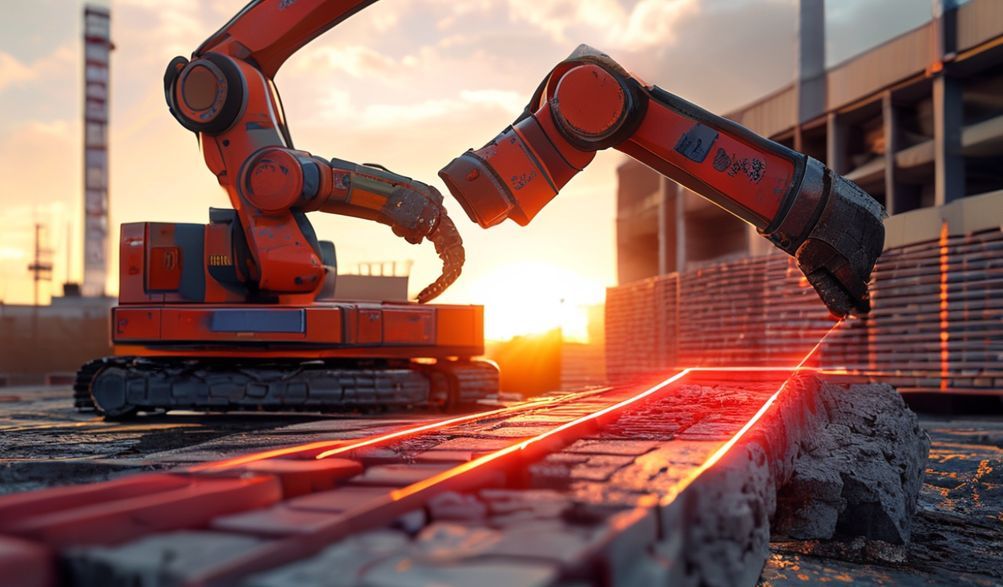
Revolutionizing Construction: A Deep Dive into Brick Laying Machines from FUDA Brick Making Factory
Panimula
Imagine a construction site. The rhythmic sound of a trowel tapping bricks into place is a familiar soundtrack, but it’s also the sound of a critical bottleneck. Traditional bricklaying, while skilled, is labor-intensive, slow, and vulnerable to human error and market shortages. What if you could deploy a solution that lays thousands of bricks per hour with unwavering, laser-guided precision? This isn’t a futuristic fantasy; it’s the current reality powered by automated brick laying machines.
The construction industry is undergoing a seismic shift towards automation, driven by the relentless pursuit of efficiency, quality, and cost control. At the heart of this transformation lies advanced machinery, not just for laying bricks but for manufacturing them with the consistency that automation demands. Leading this charge are specialized manufacturers who understand that the future is built on integrated systems.
Among these, FUDA Brick Making Factory has established itself as a significant force. With a foundation in robust manufacturing and an eye on innovative automation, FUDA represents the synergy between reliable brick production and the advanced technology that places those bricks. This guide is built on an analysis of technical specifications, operational data, and industry trends, designed to be a comprehensive resource. Our goal is to provide factual, balanced insights to help contractors, builders, and procurement managers make informed, strategic decisions.
This article will explore the core technology behind modern brick laying machines, examine the tangible benefits they deliver, highlight the manufacturing expertise of factories like FUDA, and outline the critical factors to consider before making this transformative investment.
Understanding Brick Laying and Making Machines: Core Technologies
What is a Brick Laying Machine? Defining Automation on Site
A brick laying machine is a programmable, automated system designed to perform the tasks of a bricklaying crew with superior speed and accuracy. Its primary function is to pick up bricks or blocks, apply mortar (if required), and place them in a predetermined position according to a digital layout.
- Semi-Automatikong Sistema: These machines often assist with lifting, holding, and positioning, but may require more manual input for alignment or mortar application. They are a significant productivity booster and reduce physical strain.
- Ganap na Awomatikong Sistema: These represent the pinnacle of automation. Equipped with robotic arms or gantry systems, they autonomously handle the entire process—from material pickup to final placement—guided by sophisticated software. They are ideal for large-scale, repetitive projects.
The Symbiosis: How Brick Making Machines Feed Laying Systems
An automated bricklayer is only as good as the bricks it lays. This is where the critical link between gumagawaatlaying comes into focus. For a laying machine to operate at peak efficiency, it requires a consistent, reliable supply of bricks with near-identical dimensions and structural integrity.
This is the output of a high-quality brick making machine. The integrated workflow is key:
1. A brick making machine (like those from FUDA) produces uniform bricks or blocks.
2. These are then automatically palletized and transported via conveyor systems.
3. The brick laying machine accesses this seamless stream of material, picking and placing without interruption.
This symbiosis eliminates variability, ensuring the laying machine never struggles with a misshapen or oversized brick, maximizing uptime and output.
Key Mechanical and Software Components
The efficiency of these machines stems from the integration of heavy-duty mechanics and intelligent software:
- Sistema ng Robotic na Braso/Gantry: The core mechanical component responsible for movement and placement. It offers multiple axes of motion for precise positioning.
- Mortar Applicator: A specialized head that extrudes mortar beads with consistent thickness and placement, often adjustable for different joint specifications.
- Laser Leveling & Guidance System: Ensures every course is perfectly level and aligned with the digital plan, eliminating cumulative errors.
- Programmable Logic Controller (PLC): The machine’s “brain.” It executes the programmed laying pattern and coordinates all mechanical actions.
- User Interface (HMI): The touchscreen panel where operators input design parameters, monitor progress, and control the machine.
- CAD/G-Code Integration: Advanced systems can import digital building designs (CAD files), which are then converted into machine instructions (G-code) to execute complex layouts, including openings for doors and windows.
Why Consider a Brick Laying Machine? The Tangible Benefits
Unmatched Productivity and Speed
The numbers speak for themselves. A skilled human bricklayer might lay 300-500 bricks in an 8-hour day, depending on complexity. A fully automatic brick laying machine can place 800 to 2,000+ bricks per hour. This isn’t just an incremental improvement; it’s a fundamental re-scaling of project timelines. What takes a crew weeks can be accomplished by a machine in days, allowing for faster project completion and quicker return on investment.
Precision Engineering for Superior Build Quality
Machines eliminate human variability. Every mortar joint is identical in thickness. Every brick is placed with millimeter precision according to the digital model. This leads to:
* Structurally sounder walls with even load distribution.
* Drastically reduced material waste from errors and rework.
* Aesthetically perfect, uniform finishes that are difficult to achieve manually.
* Improved thermal and acoustic performance due to consistent jointing.
Addressing Labor Shortages and Reducing Project Costs
The global construction industry faces a persistent skilled labor shortage. Automated bricklaying mitigates this risk by reducing dependency on large crews. While the initial capital outlay is significant, the long-term ROI is compelling:
* Reduced Direct Labor Costs: Lower ongoing payroll and associated expenses.
* Predictable Scheduling: Less vulnerability to crew availability or weather delays (machines can often operate in a wider range of conditions).
* Competitive Bidding Advantage: The ability to promise faster, more cost-effective builds.
* Lower Rework Costs: Precision building means less money spent fixing mistakes.
Enhanced Worker Safety
Construction is a high-risk industry. Brick laying machines enhance site safety by:
* Removing workers from repetitive strain injuries associated with troweling and lifting.
* Reducing heavy manual handling of materials.
* Minimizing time workers need to spend on scaffolding at height.
* Creating a more controlled and predictable worksite environment.
Spotlight on FUDA Brick Making Factory: Expertise in Machinery
FUDA’s Manufacturing Philosophy: Durability Meets Innovation
FUDA’s approach is grounded in building machinery for the real world. Their philosophy centers on creating equipment that withstands the rigors of continuous production. This is evident in their use of high-grade steel for frames, specially hardened alloys for high-wear components like molds and vibrators, and a design focus on accessibility for maintenance. They balance this rugged durability with user-centric innovation, continually refining control systems and automation interfaces to make their machines more efficient and easier to operate.
Product Range Overview: From Making to Laying
FUDA’s strength lies in providing the essential machinery that forms the first half of the automated construction equation. Their comprehensive range includes:
- Brick Making Machines:
- Concrete Block Machines: For producing solid, hollow, and interlocking blocks.
- Clay Brick Machines: For manufacturing traditional fired clay bricks.
- Interlocking Paver Machines: For producing paving stones used in landscaping and hardscaping.
- Auxiliary Systems: To create a complete production line, FUDA supplies mixers, belt conveyors, pallet feeders, and brick stackers. This ensures a smooth flow from raw material to finished, palletized product.
- Automation & Integration: While primarily a brick making specialist, FUDA’s equipment is engineered for integration. The consistent, high-tolerance bricks their machines produce are the ideal feedstock for automated laying systems. They understand the specifications required for automation and design their making machines accordingly.
The FUDA Advantage: Support and Service
Investing in heavy machinery is about more than the purchase; it’s about the partnership. FUDA builds trust through a strong support framework:
* Komprehensibong Pagsasanay: Providing hands-on training for operators and maintenance staff to ensure optimal machine performance from day one.
* Kagamitan sa Pagkukumpuni: Maintaining a robust inventory of critical spare parts to minimize potential downtime.
* Technical Support Network: Offering accessible support via multiple channels to troubleshoot issues promptly.
* Customization Options: Willingness to adapt standard machine models to specific client needs or local material requirements.
Critical Factors Before Investing in a Brick Laying System
Project Scope and Machine Specification Alignment
Not every machine is right for every job. Start by conducting a thorough analysis:
* Sukat ng Proyekto Is this for a single large project or ongoing commercial work? High-volume, repetitive projects justify higher levels of automation.
* Brick/Block Type: Specify the exact size, weight, and material of the units you will be using. The machine must be compatible.
* Wall Complexity: Will you primarily build straight, linear walls, or do you require capabilities for curves, intricate corners, and complex architectural features?
Site Logistics and Preparation
The machine must fit your site, both physically and operationally.
* Space Requirements: Ensure adequate clear space for the machine’s footprint, its range of motion, and material staging areas.
* Source ng Kuryente: Determine if you need three-phase electric, hydraulic power packs, or diesel generators.
* Foundation & Stability: Some machines require a leveled, compacted, or even concreted base for stable operation.
* Material Flow: Plan how bricks and mortar will be delivered to the machine’s pickup point efficiently to avoid stoppages.
Pagsusuri ng Kabuuang Gastos sa Pagmamay-ari
Look beyond the sticker price. A true financial assessment includes:
* Purchase Price & Import Duties
* Installation & Commissioning Fees
* Operator & Maintenance Training
* Annual Maintenance Contracts & Spare Parts
* Energy/Fuel Consumption
* Potential Gains: Factor in the value of reduced labor costs, shorter project timelines, and less material waste over the machine’s lifespan.
Operator Training and Workflow Integration
The most advanced machine is ineffective without a skilled operator. Investing in certified training is non-negotiable. Furthermore, you must adapt your existing site workflows. How will the machine interface with other trades? Success depends on viewing the machine not as a standalone tool, but as the centerpiece of a redesigned, more efficient construction process.
Frequently Asked Questions (FAQ)
Q: What is the typical output range of a fully automatic brick laying machine?
A: Output varies significantly based on the model, brick type, and wall complexity. A typical range is between 800 and 2,500 bricks per hour. Simpler, straight-wall projects with large-format blocks will be at the higher end, while complex designs with standard bricks will be lower. Always consult the manufacturer’s specifications for a given model under defined conditions.
Q: Can FUDA brick making machines produce bricks compatible with automated laying systems?
A: Absolutely. In fact, this is one of their key design considerations. FUDA machines are engineered to produce bricks and blocks with extremely consistent dimensions and tight tolerances. This uniformity is not a bonus—it is a fundamental requirement for the reliable operation of any subsequent automated laying system. Without it, the laying machine would constantly jam or fault.
Q: How does the cost of a brick laying machine justify itself for a medium-sized construction firm?
A: The justification comes from the Return on Investment (ROI) across multiple projects. For a medium-sized firm, it allows you to:
* Take on larger projects or more projects per year with the same labor overhead.
* Bid more competitively with lower and more predictable cost estimates.
* Build a reputation for speed and quality, attracting more clients.
* Reduce physical wear on your skilled workforce, retaining talent longer. The machine pays for itself by increasing your firm’s capacity and profitability.
Q: What kind of after-sales support should I expect from a manufacturer like FUDA?
A: You should expect a full-service partnership. This includes detailed installation guidance (or supervision), comprehensive operator and maintenance training (often with manuals and videos), a clear and readily available spare parts catalog, and access to responsive technical support via phone, email, or remote diagnostics. A reliable manufacturer stands behind their equipment for its entire operational life.
Q: Are these machines suitable for complex architectural designs or only straight walls?
A: Modern machines are increasingly versatile. While they excel at and are most efficient for long, straight runs, advanced models with sophisticated software can handle curves, corners, pilasters, and programmed openings for doors and windows. For highly unique or intricate architectural designs, it is crucial to consult directly with the manufacturer. They can analyze your specific CAD files and determine if their machine’s software can execute the design or if specialized programming is needed.
Conclusion
The integration of brick laying machines into the construction workflow represents a fundamental leap forward. The benefits—radically improved productivity, engineering-grade precision, cost predictability, and enhanced safety—are too significant for forward-thinking firms to ignore. This automation relies on a foundation of consistency, provided by expert manufacturers like FUDA Brick Making Factory, whose machinery ensures a perfect, reliable feedstock.
Looking ahead, we can expect even greater integration of AI for adaptive planning, IoT sensors for predictive maintenance, and systems optimized for sustainable materials. In this evolving landscape, the importance of partnering with experienced, authoritative, and trustworthy manufacturers cannot be overstated. The right partner provides more than a machine; they offer the expertise, support, and reliability that turns a capital investment into a long-term competitive advantage.
We encourage you to conduct thorough due diligence. Request detailed specifications, ask for case studies or project references, and, if possible, arrange to see the machinery in operation at a demo site or factory showroom. Seeing the precision and pace firsthand is the most powerful step toward making an informed decision that will reshape how you build.
<