
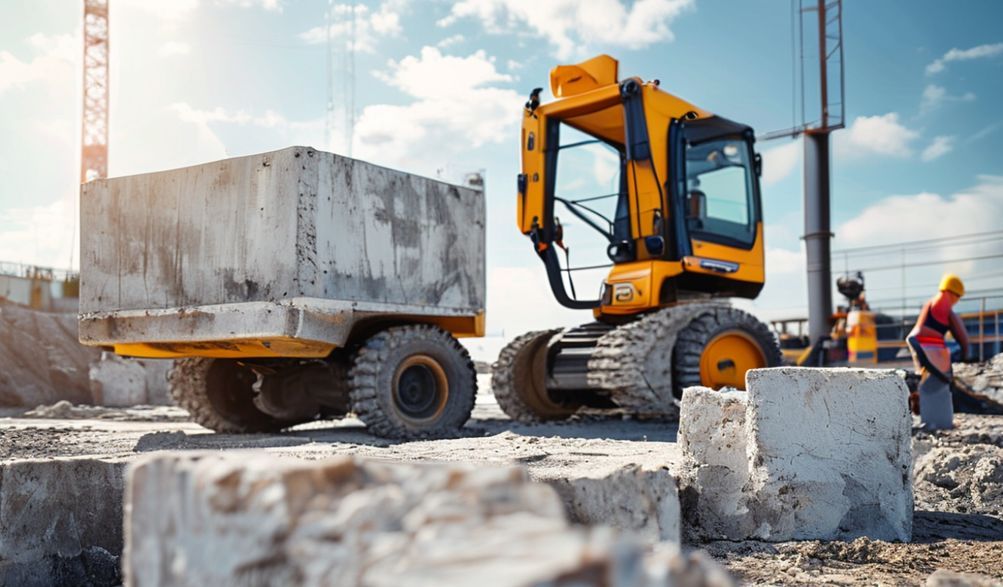
The JMQ-6A Mobile Concrete Block Making Machine: A Complete Guide for Efficiency & Profitability
For construction business owners, project managers, and savvy entrepreneurs, the quest for efficiency is never-ending. High material costs, logistical headaches, and project delays can erode profitability faster than a weak foundation. What if you could produce high-quality building blocks exactly where and when you need them? This comprehensive guide delves deep into the JMQ-6A Mobile Concrete Block Making Machine, a game-changing piece of equipment designed for modern, agile construction.
Drawing on industry experience and technical analysis, this post provides the authoritative information you need. We’ll move beyond basic specifications to explore real-world applications, operational advantages, and a clear-eyed cost-benefit analysis. Our goal is to equip you with the knowledge to make a confident, trustworthy investment decision that fuels your business growth.
What is the JMQ-6A Mobile Concrete Block Making Machine?
At its core, the JMQ-6A is a revolution in concrete block production. It’s not merely a machine; it’s a complete, self-contained manufacturing plant on wheels. Designed for mobility, it brings the factory directly to the raw materials and the point of consumption—the construction site.
Pangunahing Tungkulin at Pilosopiya ng Disenyo
The primary function of the JMQ-6A is to manufacture a variety of concrete blocks, bricks, and pavers directly at the construction site or in a temporary yard. This eliminates the traditional, linear model of centralized production, long-distance transport, and on-site storage.
Its design philosophy is integration and autonomy. The key principle is the consolidation of the entire block production process—from raw material mixing to finished block stacking—onto a single, robust mobile chassis. This integrated approach is what unlocks its most significant advantages.
Key Technical Specifications and Components
Understanding the technical specs is crucial for evaluating fit. While exact numbers can vary by manufacturer, a standard JMQ-6A typically features:
- Kapasidad sa Produksiyon: A robust output of approximately 2,000 to 3,000 standard hollow blocks (400x200x200mm) per 8-hour shift, depending on operator efficiency and block type.
- Saklaw ng Produkto: Highly versatile, capable of producing:
- Hollow blocks (of various thicknesses)
- Mga Bloke ng Solid
- Interlocking blocks (for mortar-less construction)
- Paving stones and curb stones
- Special design blocks with quick mold changes
- Pinagmumulan ng Kuryente Primarily equipped with a powerful diesel engine, ensuring complete operational independence from the electrical grid—a critical feature for remote sites.
- Key Components Breakdown:
- Sistema ng Haydroliko: Provides the high pressure for compacting the concrete mix into dense, strong blocks.
- Sistema ng Pagyanig: Works in tandem with hydraulics to remove air pockets and ensure uniform density and smooth finish.
- Pagkakabit ng Molde Interchangeable molds allow for quick product switching, maximizing machine utility.
- Integrated Control Panel: User-friendly interface for controlling the production cycle, vibration time, and pressure.
- Sistema ng Conveyor: Automatically transports finished blocks to the stacking area, minimizing manual handling.
Core Advantages of the JMQ-6A Mobile Block Maker
The technical specs translate into tangible, bottom-line benefits. Here’s where the JMQ-6A truly proves its worth.
Unmatched Mobility and On-Site Production
This is the cornerstone advantage. By producing blocks on-site, you:
* Tanggalin ang mga Gastos sa Transportasyon: The single largest saving. No more paying for trucks to haul heavy blocks from a distant plant.
* Virtually Eliminate Breakage: Transport is the leading cause of block damage and waste. On-site production means blocks are moved only once, from the machine to the wall.
* Sakupin ang mga Proyektong Malalayo: Ideal for rural housing developments, remote infrastructure, or mining camps where traditional supply chains are costly or non-existent.
Operational Efficiency and Cost-Effectiveness
Time is money, and the JMQ-6A saves both.
* Rapid Deployment: Can be towed to a site and be producing blocks within a day, unlike stationary plants which require fixed foundations and setup.
* Reduced Labor Costs: The automated cycle—from mixing to stacking—requires fewer operators compared to manual or semi-automatic systems.
* Just-in-Time Production: Manufacture blocks as needed. This slashes inventory holding costs, reduces storage space requirements on cramped sites, and improves cash flow.
Versatility and Product Range
It’s a multi-tool for your construction needs.
* Isang Makina, Maraming Produkto: With a quick mold change, you can switch from producing wall blocks to paving stones for the driveway, adapting to the project’s phase.
* Use Local Materials: Source sand and aggregate locally, further reducing material costs and supporting the local economy.
* Sustainable Edge: Drastically cuts the carbon footprint associated with transporting heavy materials over long distances, contributing to greener construction practices.
Critical Applications and Use Cases
The JMQ-6A isn’t a niche product; it’s a strategic solution for multiple scenarios.
Large-Scale Housing and Infrastructure Projects
For developers building housing estates, schools, or commercial complexes, having an on-site block plant provides total control over the supply of the primary building material. It ensures consistent supply, avoids delays from external suppliers, and significantly lowers the cost per block, directly boosting project margins.
Disaster Relief and Rapid Construction
In the aftermath of natural disasters, the need for durable, rapid reconstruction is critical. The JMQ-6A can be rapidly deployed to disaster zones to produce the essential building blocks for shelters and permanent structures using locally available rubble or aggregate, accelerating recovery efforts.
Entrepreneurial Block Yard Business
For an entrepreneur, it’s a low-capital-entry business model. You don’t need an expensive fixed factory. You can set up a temporary production yard on leased land, produce blocks to supply local builders, and even move the entire operation to a new area as market demand shifts. It’s the ultimate flexible manufacturing business.
How to Operate and Maintain the JMQ-6A for Longevity
A machine is only as good as its care. Proper operation and maintenance are non-negotiable for longevity and consistent quality.
Step-by-Step Operational Workflow
- Site Prep: Level a firm ground area. Position the machine for easy access for raw material delivery and block collection.
- Material Feeding: Load hoppers with correctly proportioned raw materials: cement, sand, and aggregate. Consistent mix design (e.g., a standard 1:3:5 ratio) is key to block strength.
- The Production Cycle: The automated cycle begins:
- Paghahalo: Materials are mixed with water.
- Filling & Compacting: The mix is conveyed into the mold, where simultaneous vibration and high hydraulic pressure compact it.
- Pag-alis sa Molde at Pagpapatigas: The freshly formed block is ejected onto a pallet. Blocks remain on the machine or a curing rack to gain initial strength.
- Pagtitipon-tipon: Blocks are conveyed for easy collection and on-site curing.
Essential Daily and Periodic Maintenance Checklist
- Daily: Thoroughly clean the mold and vibration table after each shift. Check hydraulic oil levels and inspect hoses for leaks. Visually inspect electrical connections.
- Weekly: Grease all bearings and pivot points according to the manufacturer’s lubrication schedule. Check and tighten any loose bolts or fittings.
- Monthly/Periodically: Change hydraulic oil and filters as recommended. Inspect the mold for wear and damage. Calibrate the control system sensors.
- Troubleshooting 101:
- Poor Compaction/Weak Blocks: Check vibration motor function, hydraulic pressure, and ensure your concrete mix isn’t too dry.
- Block Sticking in Mold: Mold likely needs cleaning or a fresh application of a recommended release agent. Inspect for mold damage.
Key Considerations Before Purchasing a JMQ-6A
Making an informed purchase protects your investment.
Evaluating Your Production Needs and Budget
- Volume Match: Honestly assess your average and peak block requirements. Is the JMQ-6A’s output a match, or is it overkill/underpowered for your needs?
- Kabuuang Halaga ng Pagmamay-ari (TCO): Look beyond the sticker price. Factor in:
- Fuel consumption for the diesel engine.
- Cost of spare parts (molds, hydraulic seals, vibration motors).
- Routine maintenance costs.
- Potential costs of operator training.
Supplier Due Diligence and Support
Your supplier choice is as important as the machine itself.
* Reputation is Key: Research the manufacturer’s track record. How long have they been building these machines?
* Suporta Pagkatapos ng Benta: Verify the availability of technical support, a comprehensive parts inventory, and service engineers. A machine breakdown without support is a project-stopper.
* Do Your Homework: Always ask for and contact customer references. If feasible, visit an existing installation to see the machine in operation and speak directly to an owner.
Frequently Asked Questions (FAQ)
Q: What is the approximate production output of the JMQ-6A per 8-hour shift?
A: Under standard operating conditions, you can expect a production range of 2,000 hanggang 3,000 piraso of standard 400x200x200mm hollow blocks in an 8-hour shift. Output varies with block size, design complexity, and operator rhythm.
Q: Can it operate without a stable grid connection?
A: Absolutely. This is a defining feature. The JMQ-6A is typically powered by an integrated diesel engine, making it completely self-sufficient and ideal for off-grid or remote construction sites.
Q: What kind of training is required for operators?
A: Reputable suppliers provide comprehensive on-site training covering safe operation, daily maintenance, basic troubleshooting, and mold changing. While the controls are designed for usability, proper training is crucial for safety, optimal output, and protecting your machine from misuse.
Q: How does the finished block quality compare to those from a large stationary plant?
A: When operated correctly with a proper concrete mix and regular maintenance, the JMQ-6A produces high-density, structurally sound blocks that easily meet common construction standards (e.g., ASTM C90). The quality is in the process control: consistent materials and a well-tuned machine yield excellent blocks.
Conclusion
AngJMQ-6A Mobile Concrete Block Making Machine is more than just equipment; it’s a strategic pivot towards greater autonomy, resilience, and profitability in the construction industry. Its powerful combination of mobility, integrated efficiency, and product versatility addresses some of the sector’s most persistent challenges: logistics costs, supply chain delays, and inventory waste.
However, its success is not automatic. It hinges on a clear-eyed assessment of your project needs, a commitment to disciplined operation and maintenance, and, critically, a partnership with a reputable and supportive supplier. For businesses ready to take control of their core material supply and build a competitive edge, the JMQ-6A stands as a compelling investment. We recommend contacting multiple verified suppliers, insisting on live demonstrations, and conducting a thorough TCO analysis tailored to your specific operational landscape.
<