
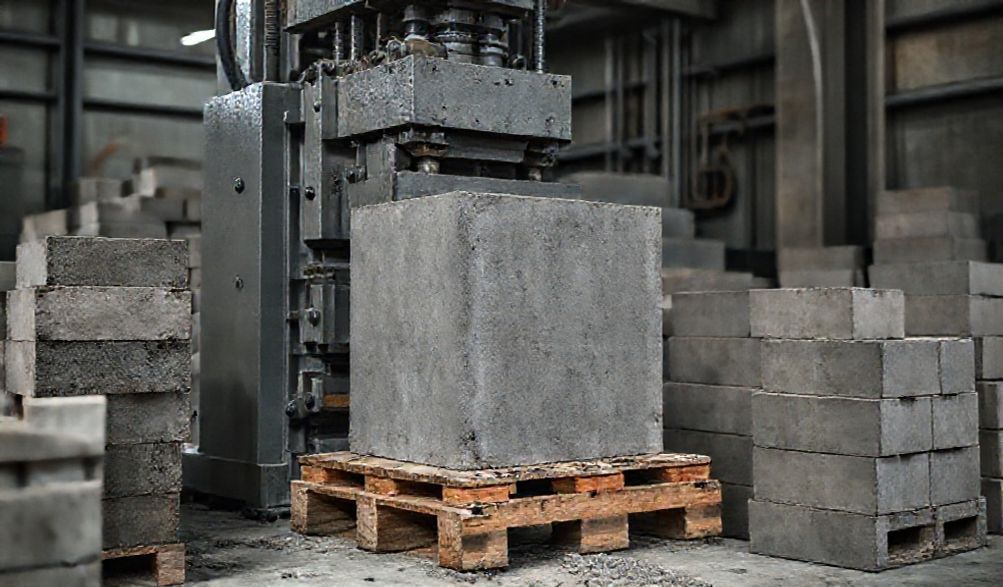
The Ultimate Guide to Block Factory Machines: Types, Costs & How to Choose
Panimula
Scaling your construction material production or starting a block manufacturing business requires the heart of the operation: a reliable block factory machine. Yet, navigating the myriad of options—from simple manual presses to sprawling automated plants—can be a daunting technical and financial maze. Making the wrong choice can lock you into inadequate production, crippling maintenance costs, or an investment that never sees a return.
This guide is designed to cut through the confusion. As a comprehensive resource built on industry specifications and operational realities, our purpose is to provide you with an unbiased, detailed overview of block production machinery. We will dissect everything from core machine types and automation levels to a transparent cost analysis and critical selection criteria. Our goal is to empower you, whether you’re a small business owner, a construction company manager, an entrepreneur, or a project manager, with the knowledge to make a confident, informed investment that aligns perfectly with your production goals and budget.
What is a Block Factory Machine? Core Function and Output
At its essence, a block factory machine is a device that automates the transformation of raw, loose materials into dense, standardized construction blocks. It replaces slow, inconsistent, and labor-intensive manual casting with a mechanized process that ensures uniformity, strength, and high-volume output.
Pagpapakahulugan sa Makina: Mula sa Hilaw na Materyal Hanggang sa Tapos na Bloke
The core process within any block machine follows a consistent sequence, though the level of automation varies:
- Paghahalo: Cement, aggregates (like sand, gravel, or crushed stone), and water are combined to form a homogeneous concrete mix.
- Paghuhulma: This wet mix is fed into a mold cavity (or “mold box”) that defines the block’s shape and dimensions.
- Compacting & Forming: The machine applies immense pressure—through vibration, hydraulic force, or a combination—to compress the mix, remove air pockets, and form a solid, cohesive block.
- Pag-eject at Pagpapahid: The newly formed, “green” block is ejected onto a pallet or the ground. It then undergoes a curing process (often steam-cured for speed or air-cured) to gain its full structural strength.
The primary outputs of these machines are the fundamental building blocks of modern construction:
* Hollow Blocks na Semento: The industry standard for walls, offering strength with reduced weight and material cost.
* Masinsing Bloke ng Kongkreto: Used for foundations, load-bearing walls, and where maximum strength is required.
* Paving Blocks (Pavers): For driveways, walkways, and patios, known for durability and aesthetic appeal.
* Interlocking na mga Bloke: Used for retaining walls and erosion control, requiring no mortar.
* Curbstones & Landscape Blocks: For road edging and decorative landscaping projects.
The Economic and Project Impact of Owning a Block Machine
Investing in a block machine is not just about buying equipment; it’s about acquiring strategic leverage. The benefits are substantial:
- Malaking Pagtitipid sa Gastos: Producing blocks in-house eliminates supplier markups and reduces material costs for your own construction projects by 30-50%.
- Complete Control: You dictate the quality of the raw mix and the final product, ensuring consistency and strength for your builds or your customers.
- Pagbuo ng Kita: It opens a direct business line. You can supply blocks to other contractors, developers, and retailers.
- Project Timeline Independence: Never be at the mercy of supplier delays or shortages. Produce exactly what you need, when you need it.
- Reduced Logistics & Waste: On-site production with a mobile machine cuts transportation costs and block damage from handling.
Types of Block Making Machines: A Detailed Breakdown
Choosing the right machine starts with understanding the categories. They are primarily classified by their operation method, mobility, and the technology used for compaction.
By Operation Method: Manual, Semi-Automatic, Fully Automatic
This is the most critical distinction, directly tied to your required output, budget, and labor availability.
-
Mga Makina ng Manual na Bloke:
- Paglalarawan: These are purely mechanical, hand-operated presses. An operator manually fills the mold, engages a lever to apply pressure, and then removes the formed block.
- Angkop Para Sa: Ultra-small scale production, startups with minimal capital, NGOs in remote locations, or very specific, low-volume custom blocks.
- Mga Kalamangan: Very low initial cost, minimal to no electricity needed, simple to maintain and repair.
- Mga Disbentahe: Extremely low output (100-500 blocks per day), labor-intensive, product consistency depends entirely on the operator’s skill, not suitable for commercial production.
-
Semi-Automatic na Makina ng Bloke:
- Paglalarawan: These machines electrify the core forming process (vibration and compaction) but require human intervention for feeding raw material and removing/palletizing finished blocks. They often feature a hydraulic system and a stationary mold.
- Angkop Para Sa: Small to medium-sized businesses (SMEs), entrepreneurs starting a block yard, and construction firms supplying their own projects. They offer the best balance of output and investment.
- Mga Kalamangan: Good production capacity (1,000 – 5,000 blocks per 8-hour shift), consistent block quality, relatively affordable, easier to operate than manual machines.
- Mga Disbentahe: Requires a small crew (2-4 people), output is limited by human feeding speed, not as efficient as fully automated lines.
-
Ganap na Awtomatikong Makina ng Bloke:
- Paglalarawan: These are complete, computerized production lines. They integrate automatic material feeders, mixers, conveyor systems, block forming units, pallet stackers, and curing systems. Human involvement is primarily for monitoring and maintenance.
- Angkop Para Sa: Large-scale commercial block manufacturing plants, industrial operations, and suppliers to major construction projects requiring massive, consistent volume.
- Mga Kalamangan: Very high output (10,000+ blocks per shift), exceptional consistency and quality, minimal labor costs per block, high efficiency.
- Mga Disbentahe: Very high initial capital investment, requires significant space and infrastructure (three-phase power), complex maintenance requiring specialized technicians.
By Block Production Process: Stationary vs. Mobile Block Machines
- Stationary Block Plant: This is a fixed installation, typically comprising a semi- or fully-automatic machine set up in a dedicated factory or yard. It’s designed for maximum output and efficiency in one location, serving a regional market.
- Mobile Block Machine: Mounted on a trailer or a movable frame, these machines can be towed directly to a large construction site (e.g., a housing development, a dam project). They produce blocks on-site, eliminating transport costs for the final product. They are almost always semi-automatic in operation.
By Pressure System: Hydraulic vs. Vibration Technology
The method of compaction defines the block’s density and final strength.
-
Teknolohiya ng Pagyanig: Uses high-frequency vibration to settle the concrete mix in the mold and remove air bubbles. Often combined with some mechanical pressure.
- Output: Good quality blocks suitable for most general construction purposes.
- Suitable For: A wide range of semi-automatic machines and products like hollow blocks and pavers.
-
Hydraulic Technology: Uses a powerful hydraulic ram to apply immense, controlled pressure (measured in tons) to the concrete mix.
- Output: Produces extremely dense, high-strength blocks with a smooth finish and very low water absorption. Ideal for premium blocks and harsh environments.
- Suitable For: Both high-end semi-automatic and fully automatic machines, especially for producing solid blocks, curbstones, and interlocking pavers.
Note: Many modern machines, especially semi- and fully-automatic ones, use a combination of vibration and hydraulic pressure to achieve optimal compaction and surface finish.
Key Features to Analyze When Choosing a Block Machine
Beyond the basic type, drill down into these specifications. They separate adequate machines from excellent, long-term investments.
Kapasidad sa Produksiyon (Mga Bloke Bawat Oras/Araw)
This is the first question to answer. Don’t just look at the manufacturer’s theoretical maximum.
* Match to Demand: Calculate your current and projected 2-year demand. Choose a machine that can meet peak demand without constant 24/7 operation, allowing for maintenance and downtime.
* Be Realistic: A machine rated for 2,000 blocks per 8-hour shift might only achieve 1,600 in real-world conditions with material feeding and pallet changes. Factor in a 15-20% buffer.
Block Size and Mold Versatility
Your product line determines your market reach.
* Palitanang Molde: Ensure the machine supports easy mold changes. Can you switch from producing 4-inch hollow blocks to 6-inch solid blocks or paving stones within an hour?
* Standard vs. Custom: Most suppliers offer a range of standard mold sizes. Confirm the cost and lead time for custom molds if you have a niche product in mind.
Mga Pangangailangan sa Kuryente at Gastos sa Pagpapatakbo
The sticker price is just the beginning.
* Pinagmumulan ng Kuryente Is it electric (3-phase or single-phase?) or diesel-powered? Diesel offers mobility but has higher fuel costs. 3-phase electric is more efficient for large stationary plants.
* Consumption: Ask for the machine’s kW or horsepower rating to estimate your electricity bill. A machine that is 20% cheaper but uses 40% more power is a poor long-term investment.
Build Quality and Durability: What to Look For
This is where supplier reputation becomes critical. Inspect or request detailed photos/videos of:
* Balangkas at Estruktura: It should be made from heavy-duty steel plate or reinforced profiles, not light-gauge metal. Welds should be clean and robust.
* Sistema ng Haydroliko: Look for reputable brand-name pumps, valves, and cylinders. Ask about the pressure rating (in tons or bar) and the quality of hydraulic hoses.
* Sistema ng Kontrol In semi- and fully-automatic models, the PLC (Programmable Logic Controller) and electrical panels should be from known manufacturers (e.g., Siemens, Allen-Bradley) and well-organized.
* The Non-Negotiable: After-Sales Service. Verify the supplier offers installation guidance, operator training, a comprehensive parts manual, and—most importantly—readily available spare parts. A machine is useless if a broken component takes 3 months to ship from overseas.
Understanding the Investment: Cost Analysis of Block Machines
Let’s demystify the financials with realistic, transparent ranges. Note: Prices vary wildly based on capacity, automation, brand, and region.
Price Range Spectrum: From Manual to Fully Automatic Systems
- Manual Block Presses: $1,000 – $5,000 USD. The price depends on build quality and whether it’s a single or multi-block mold.
- Semi-Automatikong Makina: $15,000 – $80,000+ USD. This is the broadest category. A small, basic model starts around $15k, while a large, high-capacity hydraulic machine with conveyors can approach $80k.
- Ganap na Awomatikong Mga Linya ng Produksyon: $100,000 – $500,000+ USD. The cost escalates with the level of integration (mixer, feeder, stacker, curing system). A complete turnkey plant is a major capital expenditure.
Beyond the Sticker Price: Hidden and Recurring Costs
Failing to budget for these can sink your business.
1. Land & Premises: Cost of the factory space or yard, including paving and shelter for the machine and curing blocks.
2. Mga Hilaw na Materyales: Consistent supply and storage for cement, aggregates, and water. You must have capital for initial inventory.
3. Paggawa: Wages for operators, maintenance staff, and material handlers.
4. Molds & Pallets: A set of standard molds can cost $1,000-$3,000 each. Steel or plastic pallets are a recurring cost as they wear out.
5. Pagpapanatili at Pag-aayos: Annual budget for lubricants, hydraulic fluid, and replacement parts (wear parts like mold liners, vibration motors).
6. Utilities: Electricity, water, and fuel (if diesel-powered).
Calculating ROI: A Simplified Framework
A basic Return on Investment (ROI) calculation can guide your decision:
1. Total Investment: Machine cost + setup costs (land prep, initial materials, molds).
2. Production Cost per Block: (Cost of raw materials per block) + (Labor cost per block) + (Utilities & Maintenance cost per block).
3. Selling Price per Block: Your market price.
4. Gross Profit per Block: Selling Price – Production Cost.
5. Break-Even Volume: Total Investment / Gross Profit per Block.
Halimbawa: If your total investment is $50,000 and your gross profit per block is $0.20, you need to produce and sell 250,000 blocks to break even. A machine producing 2,000 blocks/day could theoretically achieve this in about 125 working days.
Best Practices for Operating and Maintaining Your Machine
Proper care maximizes lifespan, ensures consistent quality, and prevents costly downtime.
Daily and Weekly Maintenance Checklist
- Daily: Clean the machine thoroughly at the end of each shift, removing concrete buildup. Check hydraulic fluid levels and look for leaks. Lubricate all moving parts (bearings, guide rods) as per the manual.
- Weekly: Check and tighten all bolts and nuts, especially on the mold and vibration table. Inspect hydraulic hoses for cracks or wear. Clean the filter in the hydraulic system.
Optimizing Raw Material Mix for Quality Blocks
The machine can only form what you feed it.
* Ratio is Key: A standard mix for hollow blocks might be 1 part cement, 6 parts aggregate (a blend of sand and gravel), with just enough water for a stiff, moldable consistency.
* Pagkakapare-pareho: Use a consistent aggregate size and moisture content. Fluctuations cause variations in block strength and weight.
* Test: Always conduct slump tests and, crucially, produce sample blocks to be crush-tested after curing to verify compressive strength meets standards (e.g., ASTM C90).
Troubleshooting Common Issues
- Blocks Sticking in Mold: Caused by worn mold liners, insufficient vibration/pressure, or a wet concrete mix. Check liner condition and adjust mix water content.
- Poor Compaction/Weak Blocks: Incorrect mix (too dry or wrong ratios), insufficient vibration time or hydraulic pressure, or worn-out vibration motors.
- Surface Cracks: Usually due to improper curing (drying too quickly in sun/wind). Ensure blocks are kept moist and covered for the initial curing period (at least 24-48 hours).
FAQ: Your Block Factory Machine Questions Answered
Q1: What is the average lifespan of a block making machine?
With proper maintenance and operation, a well-built semi-automatic or automatic machine can last 15 to 25 years. Critical components like hydraulic pumps or vibration motors may need overhauling or replacement during this time.
Q2: Can one machine produce different types of blocks (e.g., hollow blocks and pavers)?
Yes, absolutely. This is one of the key advantages. By purchasing and installing different, interchangeable molds, a single machine can produce a wide product range, provided the machine’s pressure and vibration systems are suited to the different block types.
Q3: How much space is required to set up a small block manufacturing plant?
For a small semi-automatic operation, you need space for: the machine itself (~10’x10′), raw material storage (cement silo or bags, aggregate piles), a mixing area, a curing area (the largest—blocks need to sit for 7-14 days), and finished product storage. A minimum of 5,000 to 10,000 square feet is a practical starting point.
Q4: Is specialized training needed to operate a semi- or fully-automatic machine?
For semi-automatic machines, basic training from the supplier (usually 3-5 days) is sufficient for operators to learn feeding, controls, and daily maintenance. For fully automatic PLC-controlled lines, more advanced technical knowledge is beneficial, and suppliers typically provide more comprehensive training.
Q5: Where can I find reliable suppliers or manufacturers of block machines?
Research is key. Look for manufacturers with a long track record, verifiable customer testimonials, and a strong after-sales network. Attend international construction equipment expos, review industry trade publications, and always request to visit an existing customer’s plant or see live video demonstrations before purchasing.
Conclusion
Selecting the right block factory machine is a pivotal decision that hinges on a clear-eyed assessment of your production scale, budget constraints, and product ambitions. There is no universal “best” machine—only the best machine for your specific situation. A manual press empowers a village cooperative, a semi-automatic machine builds a profitable SME, and a fully automatic plant supplies an entire region.
Use this guide as your foundational checklist. Remember to prioritize total cost of ownership over initial price, demand live demonstrations, and rigorously verify supplier credentials and service commitments. Your block machine is more than an expense; it’s the engine of your production. Invest the time in choosing wisely, and it will power your growth and profitability for decades to come. Consult with technical experts to finalize your plans, and take the first step toward mastering your material supply chain.
<