
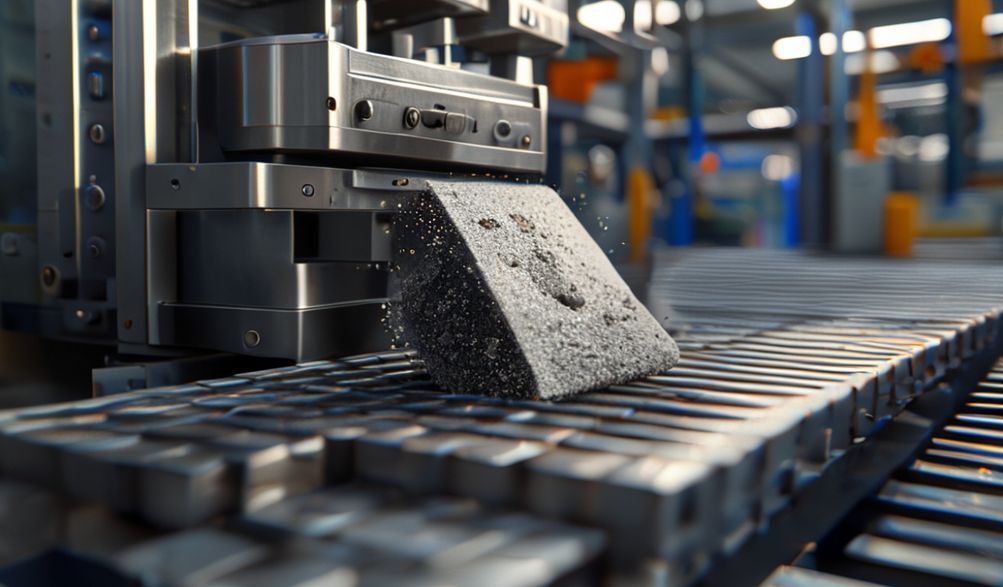
The Ultimate Guide to Block Manufacturing Machines: Types, Processes & How to Choose
Panimula
In the world of construction, the humble block is a foundational powerhouse. From residential homes to sprawling infrastructure, the demand for high-quality, uniform, and cost-effective building blocks is constant. For entrepreneurs, construction firms, and project managers, the key to meeting this demand lies not just in the materials, but in the very machine that transforms raw ingredients into reliable building components. Choosing the right block manufacturing machine is a pivotal decision that directly impacts your product quality, operational efficiency, and bottom line.
This comprehensive guide is designed to be your authoritative resource. We’ll move beyond basic sales brochures to deliver deep industry insights, clear explanations, and actionable advice. Whether you’re launching a small block-making venture or scaling up an industrial plant, understanding the intricacies of these machines is your first critical step toward building a successful, profitable operation. Our goal is to equip you with the knowledge to make an informed, confident investment based on expertise, experience, and trustworthy information.
Understanding Block Manufacturing Machines: Core Concepts
Before diving into specifications and models, it’s essential to grasp the fundamental principles of how these machines operate and what they are designed to achieve.
Ano ang isang Makina sa Paggawa ng Bloke?
A block manufacturing machine is a specialized piece of industrial equipment engineered to automate and standardize the production of construction blocks. Its primary function is to mix, mold, and compress raw materials—primarily concrete—into dense, uniform shapes of precise dimensions. By applying mechanical force and vibration, it ensures each block has the structural integrity required for load-bearing applications.
The output of these machines is diverse, catering to various construction needs:
* Hollow Blocks na Semento: The most common type, used for walls, offering good strength with reduced weight and material use.
* Masinsing Bloke ng Kongkreto: Used where maximum strength and density are required, such as in foundations or heavy-duty walls.
* Paving Stones (Pavers): For driveways, walkways, and patios, requiring high durability and aesthetic finishes.
* Interlocking na mga Bloke: Designed to fit together without mortar, ideal for retaining walls and some rapid construction systems.
Pangunahing mga Bahagi at Paano Sila Gumagana
While designs vary, most block-making machines follow a similar process flow built around core components:
- Panghalo: Where cement, aggregates, and water are combined to form a homogeneous concrete mix.
- Sistema ng Conveyor: Transports the raw mix or the freshly molded blocks between stages.
- Hopper: A holding chamber that feeds the prepared concrete mix into the molding area.
- Amag (o Hulmahan): The heart of the machine. This is a precision steel cavity that defines the block’s shape, size, and surface texture.
- Sistema ng Pagpiga:Ito ang nagbibigay ng lakas sa bloke. Karaniwang ginagamit nito ang:
- Panginginig: High-frequency vibration to consolidate the concrete and remove air pockets.
- Presyur ng Haydroliko: A hydraulic ram applies immense pressure to compress the material.
- A combination of both for optimal density.
- Control Panel: The user interface for setting parameters, automating cycles, and monitoring operations, especially in semi- and fully-automatic models.
The Basic Process Flow: Raw materials are batched and mixed → The mix is fed via conveyor or hopper into the mold → The compaction system (vibration/pressure) is activated → The newly formed block is ejected onto a pallet or conveyor → Blocks are moved to a curing area.
Raw Materials Used in Block Production
The quality of your blocks starts with the quality of your inputs. The standard concrete mix includes:
- Semento: The binding agent. Ordinary Portland Cement (OPC) is most common.
- Pinagsama-sama: These provide bulk and strength. A combination of fine (sand) and coarse (gravel or crushed stone) aggregates is used.
- Tubig: Required for the cement hydration process. The water-cement ratio is critical for strength.
- Additives & Admixtures: These enhance specific properties:
- Pigmento: For colored blocks and pavers.
- Abu ng Pugon: A sustainable industrial byproduct that can replace part of the cement.
- Plasticizers: Improve workability of the mix with less water.
- Accelerators: Speed up the curing process.
Why It Matters for Machine Choice: The recipe and quality of your mix directly affect how the machine performs. A poorly graded aggregate can cause wear on molds and conveyors. The moisture content of the mix must be consistent for proper compaction and block ejection. Your machine must be capable of handling your chosen material profile efficiently.
Types of Block Manufacturing Machines: A Detailed Breakdown
The market offers a spectrum of machines, from simple, manually-operated units to fully automated production lines. Your choice depends on scale, budget, and labor availability.
Manu-mano kumpara sa Semi-Awto kumpara sa Ganap na Awto na Makina
| Feature | Manual Machines | Semi-Automatic Machines | Fully Automatic Machines |
| :— | :— | :— | :— |
| Investment Cost | Low | Moderate | High |
| Labor Requirement | High (highly labor-intensive) | Moderate (machine-assisted) | Low (minimal supervision) |
| Kakayahang Mag-output | Low (100-500 blocks/day) | Medium (500-3000 blocks/day) | Very High (3000-20,000+ blocks/day) |
| Antas ng Automatisasyon | All major steps (filling, compaction, ejection) are manual. | Key processes like compaction and ejection are automated. Feeding may be manual. | Entire process (batching, mixing, feeding, molding, curing) is automated and synchronized. |
| Ideal Use Case | Micro-enterprises, very small-scale projects, remote locations with no power. | Small to medium businesses, growing startups, versatile project needs. | Large-scale commercial plants, high-volume contracts, 24/7 production demands. |
Mga Makina ng Paggawa ng Bloke na Nakatigil
These are heavy-duty, high-output machines installed in a fixed location, typically within a dedicated production plant or yard.
* Mga Kalamangan: Superior production capacity, robust construction for longevity, often part of an integrated production line (with automatic pallet feeders and stackers).
* Mga Disbentahe: Require significant space and permanent infrastructure. Blocks must be transported from the plant to the construction site.
* Pinakamainam Para Sa: Established block manufacturing businesses supplying a region or large construction companies with a central yard.
Mobile Block Making Machines
Mounted on a trailer or a movable frame, these machines bring production directly to the job site.
* Mga Kalamangan: Eliminate transport costs for finished blocks, ideal for decentralized projects (e.g., building a community in a remote area), reduce block damage from handling and transit.
* Mga Disbentahe: Generally have a lower output than large stationary models, require on-site organization for material supply and curing.
* Pinakamainam Para Sa: Large infrastructure projects (dams, roads), developers of large housing projects, and businesses serving multiple localized sites.
Specialized Machines for Different Block Types
While many machines are versatile with mold changes, some are optimized for specific products:
* Mga Makina sa Paggawa ng Hollow Block Engineered with precise cores in the mold to create the hollow cavities. The compaction system must ensure even strength throughout the webs and shells of the block.
* Paver Block Making Machines: Often employ higher pressure or specialized vibration patterns to produce extremely dense, durable, and aesthetically smooth pavers. They may include automatic color-feeding systems.
* Interlocking Block Making Machines: Require molds with complex, precision-engineered profiles to create the interlocking tongues and grooves. Consistent dimensional accuracy is non-negotiable.
* Solid Block Making Machines: Typically simpler in mold design but must deliver very high compaction force to achieve the necessary density for solid blocks.
The Block Manufacturing Process: Step-by-Step
Understanding the end-to-end process highlights where a quality machine adds value and ensures you’re prepared for the entire operation, not just the molding stage.
Step 1: Raw Material Batching and Mixing
Precision is paramount. Ingredients must be measured by weight (not volume) for consistency. The mixing time and sequence must be standardized to create a uniform, workable concrete mix with the correct moisture content. An inconsistent mix leads to weak blocks and machine jamming.
Step 2: Molding and Compaction
This is the machine’s core function. The mix is fed into the mold box. The machine then applies its compaction method:
* Panginginig: Settles the mix, removes entrapped air, and starts the consolidation process.
* Presyur ng Haydroliko: A ram presses down with immense force (measured in tons), compressing the particles together to form a dense matrix.
The combined effect creates a “green” block with enough strength to hold its shape when ejected onto a pallet.
Step 3: Curing and Drying
Curing is not merely drying; it’s the controlled process of maintaining moisture and temperature to allow the cement to fully hydrate and gain strength.
* Steam Curing: Blocks are placed in a curing chamber and exposed to steam heat. This accelerates strength gain, allowing blocks to be market-ready in 24 hours or less.
* Water Curing: Blocks are sprayed with water or immersed in tanks for several days.
* Natural Curing: Blocks are covered with wet hessian or plastic and left to cure for weeks. This is common for small-scale operations.
Proper curing is responsible for up to 90% of the block’s final compressive strength.
Step 4: Quality Control and Testing
Trustworthy production requires verification. Standard tests include:
* Compressive Strength Test: Crushing blocks in a press to determine their load-bearing capacity (e.g., ASTM C140).
* Water Absorption Test: Measuring how much water a block absorbs, indicating its density and durability.
* Dimensional Tolerance Check: Ensuring blocks are uniform in size for proper laying.
Adhering to local or international standards (like ASTM, IS, or EN) is crucial for credibility and compliance in professional projects.
How to Choose the Right Block Manufacturing Machine: A Buyer’s Checklist
This is the critical decision-making phase. Use this checklist to systematically evaluate your options.
Pagsusuri sa Iyong Pangangailangan sa Produksyon
Ask the hard questions first:
* What is my target daily/weekly output? Be realistic about current demand and growth projections.
* Which block types and sizes will I sell most? Don’t pay for versatility you won’t use, but ensure some flexibility for future product lines.
* What is my project scale? Are you supplying a single project or establishing an ongoing business?
* What is my available space? Account for the machine, raw material storage, curing area, and finished product yard.
Mga Pangunahing Espesipikasyon ng Makina na Dapat Suriin
Look beyond the brochure. Demand detailed specs:
* Kapasidad sa Produksiyon: Stated in blocks per hour (on a standard 8″ hollow block). Compare cycle times.
* Oras ng Ikot: The time to complete one molding cycle. Faster isn’t always better if it compromises block quality.
* Mold Versatility & Changeover: How easy is it to change molds? How many different block/payer profiles are available from the manufacturer?
* Mga Pangangailangan sa Kuryente: Does it run on standard 3-phase electricity? What is the power consumption (kW/h)? For mobile units, can it run on a generator?
* Automation Level & Control: Is the control system user-friendly? Does it allow for parameter adjustments (vibration time, pressure)?
Budget Considerations: Beyond the Initial Purchase
The machine price is just the entry ticket. Consider the Kabuuang Halaga ng Pagmamay-ari:
* Presyo ng Pagbili: The machine itself.
* Pagkakabit at Pagkakomisyon: Costs for foundation, electrical work, and initial setup.
* Paghahatid at Logistics: Especially important for imported machinery.
* Maintenance & Spare Parts: Regular costs for wear parts like mold liners, vibration motors, and hydraulic seals.
* Mga Gastos sa Pagpapatakbo: Electricity, labor, and raw materials.
* Pagsasanay: Cost for training your operators (highly recommended).
Evaluating Manufacturer Reputation and Support
This is where E-E-A-T (Experience, Expertise, Authoritativeness, Trustworthiness) becomes tangible.
* Karanasan: How long has the manufacturer been in business? Do they specialize in block machinery?
* Kadalubhasaan Can they provide detailed technical guidance and process advice?
* Client Testimonials & References: Ask for contact information for past clients in a similar region or business scale.
* Warranty Terms: What is covered, and for how long?
* Serbisyong Pagkatapos ng Benta: Is there a local service network or technician? What is the typical response time for spare parts? Do they offer operational training?
Maximizing Efficiency and ROI with Your Machine
Your investment’s success depends on how well you operate and maintain it.
Best Practices for Operation and Maintenance
- Daily: Clean the machine, especially the mold area, after each shift. Check hydraulic oil levels and for leaks.
- Weekly: Inspect molds for wear or damage. Lubricate all moving parts as per the manual.
- Monthly: Tighten bolts and check vibration motor mounts. Inspect electrical connections.
- Follow a Preventive Maintenance Schedule: Don’t wait for breakdowns. Adhere strictly to the manufacturer’s recommended service intervals.
Troubleshooting Common Issues
- Block Breakage: Often caused by incorrect mix (too dry/too wet), insufficient compaction, or improper handling during curing.
- Poor Surface Finish: Can result from worn-out mold liners, an overly wet mix, or inadequate release agent.
- Slow Production/Sticking Blocks: Check for worn molds, incorrect vibration settings, or a mix that is too sticky.
Safety Protocols for Operators
- Always wear appropriate Personal Protective Equipment (PPE): safety glasses, gloves, steel-toe boots, and hearing protection.
- Never place hands in the mold or compaction area while the machine is powered on.
- Ensure all safety guards and emergency stop buttons are functional.
- Lock out/tag out the machine during maintenance and mold changes.
The Future of Block Manufacturing: Trends and Innovations
Staying informed about industry trends ensures your business remains competitive.
Sustainable and Eco-Friendly Machines
The drive for “green” construction is shaping machinery:
* Enerhiyang Mabisâ: Machines with variable-frequency drives (VFDs) and high-efficiency motors reduce power consumption.
* Water Recycling: Closed-loop systems that recycle water from the curing process.
* Pagbabago sa Materyales: Machines are being adapted to optimally process alternative binders (like fly ash or slag) and recycled aggregates (crushed concrete).
Smart Technology and Automation
Industry 4.0 is reaching the block yard:
* IoT Sensors: Monitor machine health (vibration, temperature, pressure) in real-time, enabling predictive maintenance to avoid unplanned downtime.
* Automated Production Lines: Fully robotic systems that handle everything from raw material feeding to palletizing finished blocks, controlled by a central SCADA system.
* Data Analytics: Tracking production data to optimize cycles, reduce waste, and improve overall equipment effectiveness (OEE).
Advancements in Mold Design and Customization
Demand for architectural blocks is rising. Laser-cut and CNC-machined molds allow for intricate textures, split-face designs, and custom shapes, enabling block manufacturers to offer high-margin, premium products.
FAQ Section
What is the average cost of a block manufacturing machine?
Costs vary dramatically. A basic manual machine can start from a few thousand dollars. A semi-automatic model may range from $15,000 to $50,000. Fully automatic stationary plants can cost from $50,000 to over $500,000. It’s essential to get detailed quotes based on your specific requirements.
What is the typical payback period for an investment in this machinery?
The payback period depends on local market demand, your block pricing, operational efficiency, and scale. A well-run small-to-medium operation can often see a return on investment within 12 to 24 months, while larger, more automated plants may have a longer but more stable ROI horizon.
Can one machine produce different types and sizes of blocks?
Yes, through mold changes. Most manufacturers offer a range of interchangeable molds for hollow blocks, solid blocks, and pavers. However, changing molds takes time (from 30 minutes to a few hours), so production planning is key.
How much space is required to set up a block manufacturing plant?
As a rough guideline, you need space for: the machine itself (and its working area), raw material storage (covered), a curing area (can be open yard or chambers), and storage for finished blocks. A small operation might manage on 5,000 sq. ft., while a large automated plant may require 2 acres or more.
What are the most common maintenance requirements?
Regular cleaning of the mold and machine frame, lubrication of all moving parts, inspection and tightening of bolts, checking hydraulic fluid and filters, and monitoring wear parts like mold liners, conveyor belts, and vibration pads.
Is specialized training needed to operate these machines?
Absolutely yes. Reputable manufacturers provide operational training. Proper training ensures safety, maximizes production efficiency, minimizes waste, and extends the machine’s lifespan. Never operate a complex machine without thorough instruction.
Konklusyon
Selecting the right block manufacturing machine is a strategic decision that forms the bedrock of a successful construction materials business. It requires a careful balance between understanding the different machine types and technologies, honestly assessing your own production needs and budget, and prioritizing long-term support and quality over the lowest initial price.
We’ve explored the core concepts, the detailed breakdown of machine types, the critical production process, and a comprehensive buyer’s checklist. The path forward is clear: conduct thorough research, consult with multiple reputable manufacturers, ask for demonstrations and client references, and ground your decision in a solid business plan. The global construction industry continues to grow, and with it, the demand for efficiently produced, high-quality blocks. By making an informed investment today, you are building a foundation for your own business’s strength and longevity tomorrow.
<