
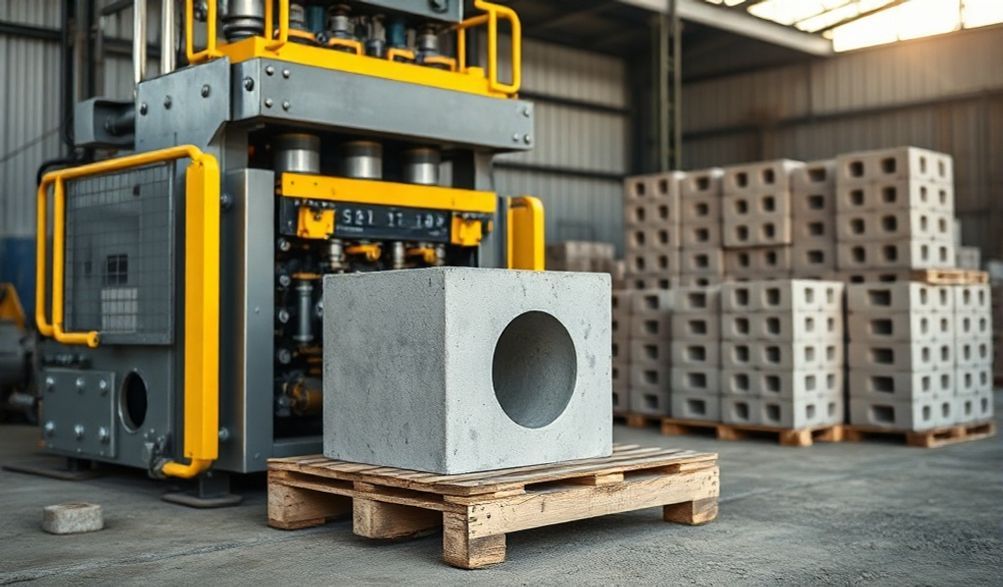
The Ultimate Guide to Block Wall Block Machines: Types, Uses & How to Choose
Panimula
Picture this: a project manager stares at the blueprints for a new 50-unit housing development. The foundation is set, the timeline is tight, and the budget is under constant scrutiny. One of the most significant line items? The thousands of concrete blocks needed for the walls. Sourcing them from a distant supplier means high transport costs, potential delays, and quality variances. Now, imagine a different scenario: a landscaping contractor has just secured a contract to build a series of decorative and retaining walls for a large municipal park. The design calls for specific interlocking blocks that are expensive and hard to source locally.
Both professionals are facing the same pivotal decision: how to reliably, efficiently, and cost-effectively source the fundamental building unit of their project—the wall block. The solution lies not in a product, but in a piece of industrial ingenuity: the Block Wall Block Machine.
This specialized equipment is the silent powerhouse behind the scenes of modern construction, transforming raw materials into the precise, durable blocks that form our homes, offices, boundaries, and infrastructure. Choosing the right machine, however, is a complex decision with significant financial and operational implications.
This guide serves as your comprehensive manual. We will demystify the different types of block wall block machines, explore their vast applications, and—most importantly—provide you with a clear, expert-backed framework for making the perfect purchasing decision. Our insights are synthesized from industry specifications, direct manufacturer data, and years of practical knowledge in construction material production, ensuring you receive authoritative and trustworthy advice.
What is a Block Wall Block Machine? Core Function & Importance
At its heart, a block wall block machine is a purpose-built piece of construction equipment designed for one critical task: to mass-produce concrete masonry units (CMUs) intended for wall construction. It automates and industrializes a process that would be incredibly labor-intensive and inconsistent if done by hand.
Basic Definition and Operational Principle
A block wall block machine is a type of concrete block making machine that molds and compresses a semi-dry mixture of cement, aggregates (like sand, gravel, or crushed stone), and water into solid, hollow, or specially shaped blocks. The core operational principle involves a cycle of feeding, compacting, molding, and ejecting.
The process typically follows these steps:
1. Pagpapakain: The prepared concrete mix is fed into a hopper.
2. Metering at Paglilipat: A measured amount of mix is transferred into the mold box or chamber.
3. Pagpapatigas: This is the crucial phase. The machine employs powerful vibration (often combined with hydraulic pressure) to densely compact the mix, removing air pockets and ensuring structural integrity.
4. Paghuhulma: The mix takes the shape of the mold cavity, which defines the block’s size, shape (e.g., hollow cores, interlocking edges).
5. Pag-e-eject at Pagpapalete The freshly formed, or “green,” block is ejected onto a pallet or conveyor belt.
6. Pagpapagaling: The blocks are then moved to a curing area, where they gain strength over time through controlled hydration.
Why It’s a Keystone of Modern Construction
The adoption of these machines revolutionized construction for several key reasons:
- Unmatched Efficiency & Scale: A single semi-automatic machine can produce in an hour what might take a team of workers days to create manually, enabling large-scale projects to be feasible and timely.
- Critical Consistency: Machines produce blocks with uniform dimensions, weight, and density. This consistency is non-negotiable for structural integrity, ensuring level courses, proper mortar joints, and predictable load-bearing capacity.
- Significant Cost-Effectiveness: For ongoing projects or block manufacturing businesses, producing on-site slashes transportation costs and middleman markups. The control over raw material quality also reduces waste.
- Versatility & Customization: With interchangeable molds, one machine can produce a variety of block types for different applications, offering tremendous flexibility.
Types of Block Wall Block Machines: Finding the Right Fit
Not all block machines are created equal. The market offers a spectrum of technology to match different scales of operation, budgets, and labor availability. Understanding these categories is the first step to a smart investment.
By Operation: Manual, Semi-Automatic, and Fully Automatic
This classification is primarily based on the level of human intervention required.
-
Mga Makina ng Manual na Bloke:
- Paglalarawan: These are the most basic type. Operators manually feed the mix into the mold, engage a lever or mechanism to compress it (often using a flywheel or simple hydraulic jack), and then manually remove the green block. They are lightweight, have no electric power requirement, and are very low cost.
- Ideyal na Kaso ng Paggamit: Very small businesses, DIY enthusiasts, community projects in remote locations with limited infrastructure, or for producing specialty blocks in very low volume.
-
Semi-Automatic na Makina ng Bloke:
- Paglalarawan: This is the most popular category for small to medium-sized enterprises. Key processes like mixing, vibration, and hydraulic compression are mechanized and powered by an electric motor. The operator typically controls the cycle initiation and may handle block transfer or pallet feeding. They offer an excellent balance between output, cost, and control.
- Ideyal na Kaso ng Paggamit: Growing block yards, contractors undertaking large projects, and businesses looking to scale production without the capital outlay for a full automation line.
-
Ganap na Awtomatikong Makina ng Bloke:
- Paglalarawan: These are industrial production lines. They integrate computerized controls with automated systems for batching, mixing, conveying, block making, curing, and even stacking. Human intervention is minimal, primarily for monitoring and maintenance.
- Ideyal na Kaso ng Paggamit: Large-scale commercial block manufacturing plants, major construction firms with continuous demand, and markets where labor costs are high and volume is paramount.
By Block Production Type
Machines are often optimized for specific block designs, though many can use different molds.
- Solid Block Machines: Engineered to produce dense, high-compression strength blocks used in load-bearing walls, foundations, and pillars.
- Mga Makina ng Hollow Block: Designed to create blocks with hollow cores. These are lighter, provide better insulation, and allow for the running of rebar and concrete grout for reinforced walls.
- Interlocking Block Machines: A specialized subset that produces blocks with designed ridges and grooves. They lock together without mortar, making them incredibly fast to install. They are the standard for many retaining wall, landscaping, and some structural wall systems.
- Paver Block Machines: While similar, these are often distinct machines optimized for the high-precision, high-frequency production of thinner paving stones, though some versatile block machines can accommodate paver molds.
By Mobility: Stationary vs. Mobile Plants
- Mga Halaman na Nakatigil: These are fixed installations, typical for a block manufacturing yard or factory. They are often more robust, can be part of a larger integrated system (like automated curing racks), and are designed for long-term, high-volume production in one location.
- Mobile Block Making Machines: These are trailer-mounted or self-contained units that can be transported directly to a large job site. The primary benefit is the elimination of block transport altogether; raw materials are brought in, and finished blocks are produced exactly where they are needed. This is a game-changer for mega-projects in remote areas.
Key Applications: Where Are These Blocks Used?
The blocks produced by these machines are the literal building blocks of our constructed environment. Their applications are vast and varied.
Residential and Commercial Construction
- Mga Pader na Nagdadala ng Bigat: The primary structural walls in houses, apartment buildings, and low-rise commercial structures.
- Non-Load-Bearing Walls: Interior partition walls, creating room layouts.
- Foundation Blocks: Used in basement and footing construction.
- Chimneys and Fireplaces.
Infrastructure and Civil Projects
- Retaining Walls: Essential for holding back earth, managing slopes, and preventing erosion. Interlocking blocks are particularly dominant here.
- Boundary & Security Walls: For perimeter fencing around properties, industrial sites, and public facilities.
- Sound Barrier Walls: The massive blocks used alongside highways and railways to mitigate noise pollution for adjacent communities.
Specialized and Decorative Uses
- Landscaping Walls: Low garden walls, raised planters, and terracing.
- Architectural Facades: Using split-face, textured, or colored blocks to create aesthetically pleasing exterior finishes.
- Gabion Fill: Smaller blocks are sometimes used to fill gabion baskets for erosion control and decorative features.
Critical Factors for Choosing Your Block Machine
This is the heart of your decision-making process. Looking beyond the sales brochure to these critical factors will protect your investment.
Assessing Your Production Needs (The Foundation)
Begin with an honest business or project analysis.
* Required Output: Calculate your average blocks per day or month. Be realistic about peak demands. Don’t buy a machine that maxes out at your average need; build in a buffer for growth.
* Mga Uri at Sukat ng Bloke: List every block type you plan to produce. Confirm with suppliers that the machine can handle the mold sizes and shapes, especially the required compaction pressure for thicker, solid blocks.
* Site Constraints: Do you have access to 3-phase electrical power (typically needed for machines over 5HP)? What is the available floor space for the machine, raw material storage, curing area, and finished block inventory?
Machine Specifications and Build Quality
This is where you evaluate engineering, not just promises.
* Sistema ng Pagyanig: This is critical for block density. Look for a system with multiple high-frequency vibrators (under the mold table and often on the head) mounted on durable springs or rubber buffers.
* Sistema ng Haydroliko: It should provide consistent, high pressure for compaction. Check the quality of pumps, valves, and cylinders. A robust system reduces cycle time and improves block quality.
* Kalidad ng Molde: Molds are consumable but should last. Hardened steel or special alloy molds resist wear far longer than mild steel. Check the ease of changing molds.
* Balangkas at Estruktura: The machine must be built from heavy-duty steel plate and profiles to withstand constant vibration without cracking or warping.
The Total Cost of Ownership (Beyond the Sticker Price)
The purchase price is just the entry ticket.
* Mga Gastos sa Pagpapatakbo: Factor in energy consumption, labor costs per block produced, and regular maintenance supplies (grease, hydraulic fluid, wear parts).
* Maintenance & Parts: How easy is it to access and service key components? Is there a local distributor or does the manufacturer provide reliable global spare parts support? Downtime is lost revenue.
* Supplier/Vendor Selection: This is paramount for pagkakatiwalaan. Choose a manufacturer with a proven track record, transparent customer reviews, and—most importantly—a strong after-sales service network. Ask for references and actually call them. Inquire about installation support, operator training, and warranty terms.
Raw Material Considerations
The machine is only as good as the mix you feed it.
* Mix Design: The machine manufacturer will provide recommended mix ratios (e.g., cement:sand:aggregate). Adhering to these is crucial.
* Aggregate Gradation: Consistent, well-graded aggregates (free of silt and organic material) are essential. Poor aggregates lead to weak blocks and can damage the machine’s mold and feed system.
Optimizing Production and Ensuring Block Quality
Owning the machine is step one. Operating it correctly is what ensures profitability and reputation.
Best Practices for Mix Design and Preparation
- Use a consistent, volumetric batching method for accuracy.
- Angwater-cement ratio is critical. Too much water weakens the block and can cause it to slump upon ejection. Too little prevents proper hydration and compaction. The mix should be semi-dry, holding its shape when squeezed in your hand.
- Mix thoroughly to ensure even distribution of cement and color pigments.
Proper Curing Techniques
Curing is not optional; it’s the process where concrete gains its strength.
* Bakit ito mahalaga: Blocks ejected from the machine may have only 20-30% of their potential strength. Proper curing allows hydration to continue, achieving 90%+ of design strength.
* Methods:
* Water Curing: Blocks are kept moist under sprinklers or in a misting chamber for 7-14 days. This is effective and low-cost.
* Steam Curing: Blocks are placed in a kiln and exposed to steam and heat. This accelerates the process, allowing blocks to reach handling strength in 24 hours or less, dramatically increasing production turnover.
Routine Maintenance for Your Machine
Preventative maintenance prevents catastrophic failure.
* Daily: Clean excess concrete from the mold, feed system, and pallets. Check for loose bolts. Lubricate all moving points as per the manual.
* Weekly/Monthly: Check hydraulic fluid levels and filters. Inspect vibrator mounts and electrical connections. Tighten any fasteners that may have shaken loose.
* Annually: Consider a full professional inspection and servicing of the hydraulic and vibration systems.
Frequently Asked Questions (FAQ)
Q: What is the average production capacity of a standard block machine?
A: Capacity varies dramatically. A manual machine might produce 200-400 blocks in an 8-hour shift. A semi-automatic machine can produce 800-2,500 blocks per shift, depending on block size and operator efficiency. A fully automatic line can produce 4,000 to 10,000+ blocks per hour.
Q: Can one machine produce different block types and sizes?
A: Yes, through interchangeable molds. This is a key feature. However, changing molds requires downtime (from 30 minutes to a few hours), and the machine settings (vibration time, pressure) may need adjustment. Planning production in batches of the same block type is most efficient.
Q: How much space is needed to set up a small block manufacturing yard?
A: A practical minimum for a semi-automatic operation is 10,000 to 20,000 square feet. This must accommodate the machine shed, raw material storage (sand, aggregate, cement silo), a curing area (the largest space requirement), and storage for finished blocks.
Q: What is the typical lead time for receiving a machine after ordering?
A: For standard models from a local dealer with stock, it could be immediate. For machines ordered directly from an international manufacturer, lead times typically range from 8 to 16 weeks, including manufacturing, testing, sea freight, and customs clearance. Always get a written delivery timeline.
Q: Are there financing options available for these machines?
A: Absolutely. Many established manufacturers offer in-house financing or leasing plans. Additionally, commercial banks and specialized equipment financing companies often provide loans for capital machinery purchases, especially if you have a solid business plan.
Conclusion
Choosing the right block wall block machine is a strategic decision that goes far beyond a simple equipment purchase. It is an investment in the efficiency, quality, and scalability of your construction project or manufacturing business. The journey begins with a clear understanding of your own production needs, followed by a diligent evaluation of machine types, specifications, and the all-important total cost of ownership.
Let this guide be your starting point, but not your endpoint. We strongly encourage you to move from online research to active engagement. Contact multiple reputable suppliers, request detailed quotations that include shipping, installation, and training costs. Ask for client references and, if feasible, visit a working plant to see the machinery in operation. There is no substitute for seeing the build quality, hearing the machine run, and speaking directly with an operator.
With thorough due diligence and the right machine powering your production, you lay a solid foundation—both literally for the structures you’ll build, and figuratively for a more efficient, controlled, and profitable future in construction.
<