
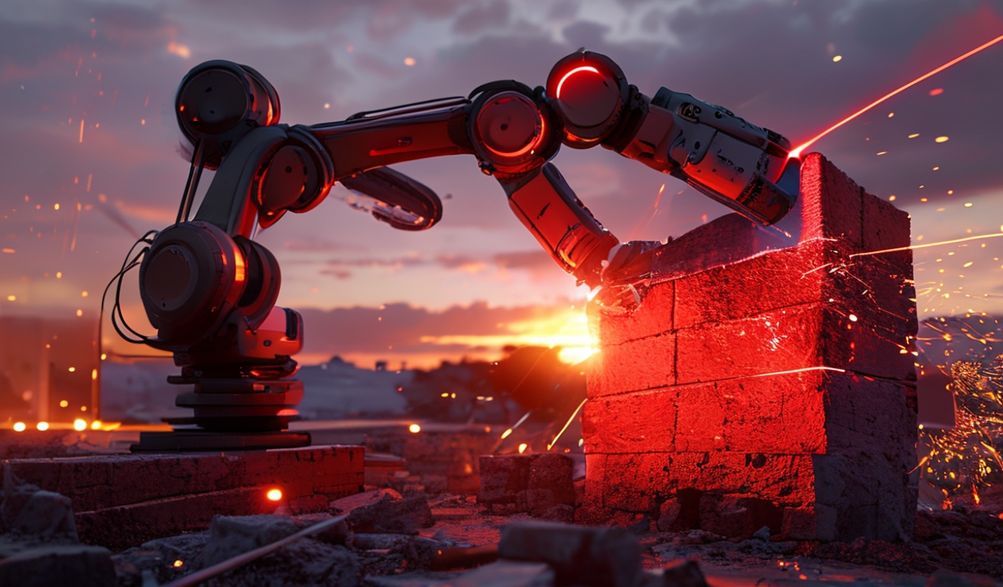
Ang Ultimate Guide sa Mga Makina ng Paggawa ng Bahay na Bato: Rebolusyon sa Konstruksiyon
Ang pandaigdigang pangangailangan sa matibay at abot-kayang pabahay ay napakalaki at walang humpay. Gayunpaman, ang industriya ng konstruksyon, isa sa pinakamalaking sektor sa mundo, ay madalas na nahihirapang makasabay sa pangangailangang ito. Ang mga proyekto ay pinahihirapan ng mga pagkaantala, paglampas sa badyet, at talamak na kakulangan ng bihasang manggagawa. Sa sentro ng hamong ito ay naroon ang isang daan-taong gulang na sining: ang paglalagay ng ladrilyo. Bagamat subok na sa panahon, ang manwal na paglalagay ng ladrilyo ay matrabaho, nakadepende sa panahon, at pisikal na nakakapagod.
Paano kung ang mismong batayan ng pagtatayo ng matibay na istruktura ay mababago? Narito ang makina para sa paggawa ng bahay na bato—isang malaking pagbabago mula sa manwal na gawain tungo sa digital na paglikha. Nangangako ang teknolohiyang ito hindi lamang ng unti-unting pag-unlad, kundi isang pangunahing pag-iisip muli kung paano tayo nagtatayo ng mga pader.
Ang gabay na ito ay itinayo sa pundasyon ng pagsusuring pang-inhinyeriya, mga case study ng industriya, at praktikal na pananaw sa automation ng konstruksiyon. Ang layunin namin ay magbigay sa mga tagapagtayo, kontratista, developer, at innovator ng isang mapagkakatiwalaan at komprehensibong sanggunian na tumatagos sa labis na pagpapalabo. Susuriin namin kung paano gumagana ang mga makinaryang ito, susukatin ang kanilang mga benepisyo, tutuklasin ang iba't ibang uri na available, at magbibigay ng malinaw na pananaw sa mga gastos at hamong kaakibat. Sa huli, ikaw ay magiging handa upang gumawa ng mga desisyong batay sa tamang kaalaman sa pagsasama ng rebolusyonaryong teknolohiyang ito sa kinabukasan ng iyong mga proyekto.
Ano ang Brick House Building Machine? (Paglalarawan ng Teknolohiya)
Sa pinakasimpleng pagsasalarawan, ang makina ng paggawa ng bahay na bato ay isang awtomatikong sistema na idinisenyo upang magtayo ng mga dingding na may masoneriya sa pamamagitan ng tumpak na paglalagay ng mga ladrilyo o bloke at paglalapat ng mortar o pandikit. Isinasalin nito ang isang digital na plano ng arkitektura sa isang pisikal na istruktura na may katumpakan ng robot, na awtomatikong ginagawa ang paulit-ulit at mabigat na mga gawain ng tradisyonal na paglalagay ng ladrilyo.
Pangunahing Tungkulin at Mekanismo
Ang pangunahing tungkulin nito ay tila simple lamang: pumili, lagyan ng mantikilya, at ilagay. Ngunit ang mekanismong nagpapatupad nito ay isang simponya ng masulong na inhenyeriya.
- Ang Proseso: It begins with a digital 3D model (CAD/BIM). The machine’s software slices this model into layer-by-layer instructions. A robotic arm or gantry system then picks a brick from a feeding system, applies a precise amount of mortar or adhesive to its bed and/or head joints, and places it in the exact programmed location on the growing wall. This cycle repeats hundreds of times per hour.
From Concept to Wall: How the Machine “Sees” and Builds
The magic lies in the machine’s “eyes” and “brain.” It doesn’t see a site; it navigates a digital coordinate system.
- Digital Blueprint (BIM/CAD): The process is driven by Building Information Modeling (BIM) or detailed CAD files. This model contains every dimensional specification.
- Guidance Systems: To translate digital coordinates to the physical world, machines use sophisticated guidance. This can include:
- Robotic Total Stations: Laser-based systems that provide real-time positioning data to the machine.
- GPS & Inertial Guidance: For large, open sites, GPS can guide the machine’s base position.
- Machine Vision: Some systems use cameras to verify brick placement and make micro-adjustments.
This integration ensures every brick is placed with millimeter precision, creating walls that are perfectly plumb, level, and square.
Key Components of a Typical Machine
Understanding the key parts demystifies the technology:
- Brasong Robotiko o Sistema ng Gantry: The “muscle.” This provides the range of motion. Gantry systems (like a large overhead frame) are common for factory settings, while articulated robotic arms offer flexibility on dynamic job sites.
- End-Effector (Gripper/Head): The “hand.” This specialized attachment grips the brick, often with vacuum or mechanical clamps, and contains the mortar nozzle for application.
- Mortar/Adhesive Application System: Includes a pump, mixer, and precision nozzle that applies a consistent bead of material—eliminating the variability of a human trowel.
- Material Handling System: A conveyor belt or automated feeder that supplies bricks and mortar to the work area, keeping the cycle continuous.
- Control Unit & Software: The “brain.” This computer runs the proprietary software that interprets the design file, controls all mechanical components, and provides the user interface for operators.
Key Benefits of Using an Automated Brick Laying Machine
The advantages of automation extend far beyond simple speed, impacting quality, safety, and the bottom line.
Unmatched Speed and Efficiency
This is the most cited benefit, and the numbers are compelling.
- Output Comparison: While a highly skilled human mason might lay 300-500 bricks in a day, an automated machine can consistently place 800 to 1,200+ bricks per hour. This doesn’t mean it works 24/7, but it dramatically compresses the wall construction phase.
- Project Timeline Reduction: By working continuously through breaks and in most weather conditions (high winds or heavy rain excepted), these machines can reduce the wall construction timeline of a standard house from weeks to days. For large-scale developments, this acceleration is transformative.
Superior Precision and Consistent Quality
Automation removes human variability.
- Perfect Alignment: Every brick is placed according to the digital model, ensuring perfect coursing, consistent joint thickness (typically 10mm), and exact wall dimensions.
- Structural & Practical Benefits: This precision leads to superior structural integrity, reduced risk of water ingress from uneven joints, and significantly less material waste. It also creates a perfectly accurate substrate for subsequent trades like plumbers and electricians, making their work faster and easier.
Addressing Labor Challenges and Enhancing Safety
The construction industry’s skilled labor shortage is a critical problem. Automation offers a strategic solution.
- Labor Mitigation: These machines perform the work of multiple masons, allowing companies to take on more projects without the impossible task of finding large, skilled crews.
- Safety Revolution: Bricklaying is physically taxing, involving heavy lifting, repetitive motion, and work at height. Automated machines:
- Reduce repetitive strain injuries.
- Minimize the need for workers on scaffolds for the core laying process.
- Create a safer, less congested site.
Long-Term Cost-Effectiveness and Waste Reduction
The high initial investment must be evaluated against total lifecycle cost.
- ROI Analysis: While capital costs are significant (see below), savings are realized through:
- Dramatically lower labor costs per brick laid.
- Faster project completion (reducing financing/overhead costs).
- Up to 30% less waste in mortar and bricks due to precision.
- Sustainable Building: Reduced waste directly contributes to a greener build. Furthermore, the precision allows for the effective use of innovative, sustainable materials that might be more challenging to lay manually.
Types of Brick Laying Machines and Their Applications
Not all automated masonry solutions are the same. The right choice depends entirely on your project scale and business model.
Fully Autonomous Robotic Systems
These are the “stars” of the category—large, self-contained systems designed to build entire house structures on-site.
- Paglalarawan: Think of a truck-mounted or tracked robotic arm with integrated material handling. Examples include FBR’s Hadrian X. These systems are highly engineered, using dynamic stabilization to counteract wind and vibration for precise placement while mobile.
- Pinakamainam Para Sa: Large-scale suburban housing developments, commercial blockwork, and projects where repetitive, high-volume wall construction is the primary task.
Semi-Automated & Collaborative Robots (Cobots)
These bring automation to smaller crews and more complex sites.
- Paglalarawan: Smaller, often mobile units that assist a human mason. The mason might guide the cobot’s arm or handle complex corners and details, while the cobot performs the heavy lifting and repetitive placement of bricks in straight runs. Examples include SAM (Semi-Automated Mason) by Construction Robotics.
- Pinakamainam Para Sa: Custom home builds, retrofit projects, sites with tricky access, or companies wanting to augment their skilled workforce rather than replace it.
Static Factory-Based Automated Masonry Systems
This approach moves the bricklaying off-site entirely.
- Paglalarawan: Large gantry systems inside a factory or prefabrication plant. They assemble brick or block walls as large panels, which are then shipped to the site and craned into position. This is a core technology in modular and panelized construction.
- Pinakamainam Para Sa: Modular home manufacturers, volumetric construction, and projects where controlled factory conditions, parallel construction (walls built while site prep happens), and rapid on-site assembly are priorities.
Choosing the Right Machine for Your Project
Selecting a system requires a clear assessment:
- Project Scale & Volume: Is it 10 houses or 100? High volume justifies larger autonomous systems.
- Budget: Capital expenditure vs. leasing/contracting options.
- Site Constraints: Do you have the space, stable ground, and power for a large robot?
- Desired Automation Level: Do you want full autonomy or a human-in-the-loop system?
Critical Considerations Before Investing
Adopting this technology is a strategic business decision, not just a equipment purchase. Due diligence is paramount.
Understanding the Total Cost of Ownership
Look beyond the sticker price. The total investment includes:
- Machine Purchase/Lease: The largest cost, ranging from ~$500,000 for a collaborative system to $2+ million for a fully autonomous on-site robot.
- Software & Licenses: Ongoing fees for updates and proprietary design software.
- Maintenance & Support: Annual service contracts and spare parts.
- Pagsasanay sa Operator Investing in upskilling your team.
- Comparison: Weigh this against traditional costs: crew wages, workers’ comp, project delays, and material overage.
Site and Logistical Requirements
Your site must be ready for the machine.
- Kosmos: Need a clear work envelope and area for material staging.
- Kapangyarihan: Most large systems require a robust, often three-phase, power supply.
- Material Calibration: The machine requires bricks or blocks with extremely consistent dimensions. Warped or irregular units will cause errors. Your supply chain must adapt.
The Human Element: Training and Workforce Integration
The workforce evolves; it isn’t eliminated.
- New Roles: You’ll need machine operators, programmers, and maintenance technicians. This shifts the labor demand from manual skill to technical and digital literacy.
- Vendor Support: Comprehensive training from the manufacturer is non-negotiable. Plan for a learning curve.
Navigating Limitations and Challenges
A balanced view is crucial. Current limitations include:
- Architectural Complexity: While excellent for straight walls, most machines struggle with complex curves, intricate arches, or highly detailed stonework without significant manual intervention.
- High Upfront Cost: A significant barrier for small and medium-sized enterprises.
- Technical Dependency: Site operations become dependent on software, stable power, and technical support.
The Future of Construction with Automation
Brick laying machines are not an endpoint; they are a gateway into a fully digitized construction ecosystem.
Integration with the Broader Digital Ecosystem
These machines are a physical node in a digital network.
- They will pull live data from cloud-based BIM models.
- IoT sensors on the machine will feed performance data into digital twin models of the project, allowing for real-time progress tracking and predictive maintenance.
- This creates a closed-loop, data-driven construction process.
Advancements in AI and Machine Learning
Future systems will be more adaptive and intelligent.
- Machine Vision AI could allow robots to identify and handle slightly irregular bricks or adjust for minor site variances in real-time.
- Generative Design & AI Planning: AI could optimize bricklaying patterns for strength or aesthetics and automatically generate the most efficient build sequence.
Sustainable Building and the Automated Machine
Precision automation enables new sustainable practices.
- It allows for the practical use of alternative, low-carbon materials like hempcrete blocks or bricks made from recycled construction waste, which can be difficult to lay consistently by hand.
- By minimizing waste and optimizing material use, it inherently supports the goals of the circular economy in construction.
Mga Madalas Itanong (FAQ)
Q1: How much does a brick house building machine cost?
Isalin ang teksto sa Filipino. I-output LAMANG ang isinalin na teksto. Costs vary dramatically. Semi-automated cobots can start in the hundreds of thousands of dollars, while fully autonomous on-site robotic systems typically range from $1 million to over $2.5 million. It’s essential to view this as a capital investment with a calculated ROI, not just an equipment expense. Leasing and “Robotics-as-a-Service” contracting models are emerging to improve accessibility.
Q2: Can these machines build an entire house from start to finish?
Isalin ang teksto sa Filipino. I-output LAMANG ang isinalin na teksto. No. Currently, they are specialists in constructing the primary load-bearing masonry walls (the shell). All other trades—foundation work, roofing, window/door installation, electrical, plumbing, interior finishing—are still required. However, by delivering a perfect, rapid shell, they dramatically streamline and accelerate the overall project timeline.
Q3: What kind of bricks or blocks can be used?
Isalin ang teksto sa Filipino. I-output LAMANG ang isinalin na teksto. Most machines are engineered for standard, modular masonry units like concrete blocks (CMUs) or clay bricks of consistent size. Some systems can be adapted with different end-effectors. The critical factor is dimensional consistency. Always consult with the machine manufacturer about approved material specifications before committing.
Q4: Is the quality of a machine-laid wall as good as a hand-laid one?
Isalin ang teksto sa Filipino. I-output LAMANG ang isinalin na teksto. From an engineering and precision standpoint, it is often superior. The joints are uniform, the walls are perfectly plumb and level, and mortar application is consistent—all contributing to potential structural and thermal performance benefits. However, for certain aesthetic styles requiring artisanal, irregular, or pointed finishes, the human craftsperson’s touch is still irreplaceable. The two methods can be complementary.
Q5: How do I become an operator or start a business with this technology?
Isalin ang teksto sa Filipino. I-output LAMANG ang isinalin na teksto. For operators, seek training in mechatronics, robotics operation, and CAD/BIM software. Technical colleges and manufacturer-certified programs are the best starting points. To start a business, you need significant capital, deep industry knowledge, and a strong business plan. A practical path is to partner with an established construction firm or engineer, or start by subcontracting as a specialized masonry service using this technology.
Konklusyon
Brick house building machines represent a profound shift in construction methodology, moving from a purely manual craft to a digitally-driven manufacturing process. The benefits—unrivaled speed, robotic precision, enhanced safety, and long-term cost savings—are compelling answers to the industry’s most persistent challenges.
It is vital, however, to adopt a balanced perspective. These machines are powerful tools, not a panacea. They excel in projects where scale, repetition, and precision align. The high initial investment and need for technical integration mean they are a strategic choice, not a casual purchase.
Embracing this technology requires foresight, planning, and a commitment to evolving your workforce and processes. It is a step into the future of construction—a future that is more efficient, safer, and resilient. The next step is yours: contact leading manufacturers for a demonstration, seek out case studies from early adopters, and begin preparing your teams with the digital literacy that will be the currency of tomorrow’s job site. The revolution in building is not coming; it is already here, one precisely placed brick at a time.
<