
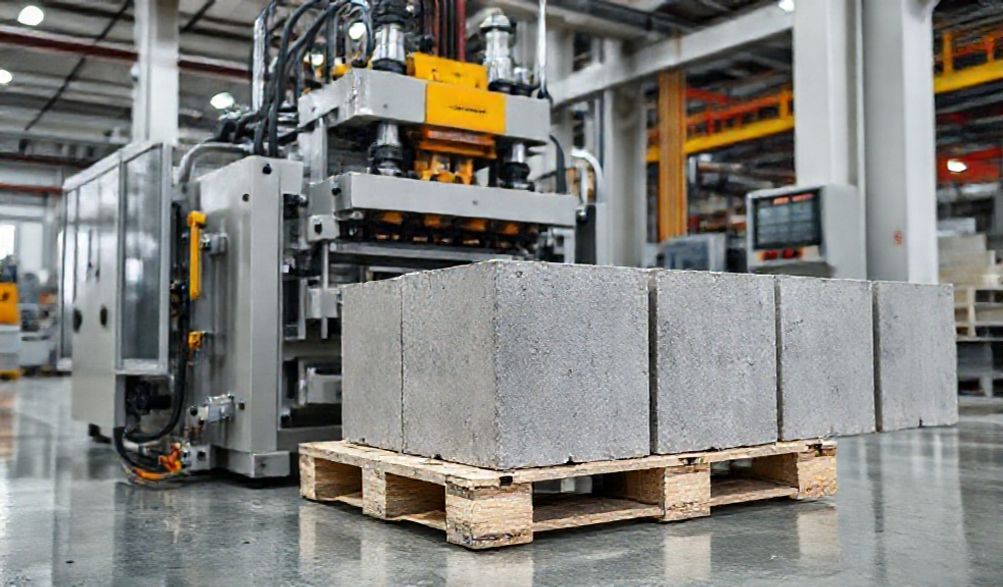
Ang Pinakamahusay na Gabay sa China Bake Free Block Machines: Teknolohiya, Mga Benepisyo at Paano Pumili
Para sa mga negosyante sa konstruksyon, inhinyero sibil, at tagapamahala ng pagkuha sa buong mundo, ang paghahanap ng maaasahan, epektibo, at napapanatiling produksyon ng mga materyales sa pagtatayo ay patuloy. Ipasok angTsina Bake Free Block Machine—isang inobasyong teknolohikal na muling humuhubog sa tanawin ng paggawa ng laryo at bloke. Ang komprehensibong gabay na ito ay dinisenyo para sa mga propesyonal na kailangang lampasan ang ingay sa marketing. Nagbibigay kami ng awtoritatibo at nakabase sa karanasang pagsusuri ng teknolohiyang ito, mga ekonomikong bentahe nito, at mga mahahalagang hakbang sa paggawa ng matalinong pamumuhunan. Ang aming layunin ay bigyan ka ng kaalaman upang makagawa ng desisyon na makabubuti sa iyong mga proyekto, sa iyong kita, at sa planeta.
Sa kaibuturan nito, ang isang Bake Free Block Machine ay gumagawa ng mga bloke ng konstruksiyon na may mataas na lakas sa pamamagitan ng proseso ng chemical curing, na inaalis ang pangangailangan para sa tradisyonal, masiglang pagpapaputok sa hurno. Pinangunahan at pinino ng mga nangungunang tagagawa, ang teknolohiyang ito ay kumakatawan sa isang malaking hakbang patungo sa eco-friendly at cost-effective na konstruksiyon. Suriin natin ang mga detalye.
Ano ang Bake Free Block Machine? Pag-unawa sa Pangunahing Teknolohiya
Hindi tulad ng daan-daang taong pamamaraan ng pagpapaputok ng luwad sa isang hurno, ang bake-free na teknolohiya ay umaasa sa mga reaksyong kemikal upang makamit ang lakas. Ito ay isang mas matalino, mas luntian, at mas mabilis na paraan upang makagawa ng matibay na mga materyales sa gusali.
Ang Agham sa Likod ng “Walang-Lutong” Pagpapatigas
Ang pangunahing pagkakaiba ay nasa proseso ng pagpapagaling.
- Tradisyonal na Pinapaputok na Mga LaryoNangangailangan ng temperatura na 900°C hanggang 1200°C sa isang hurno sa loob ng ilang araw. Ang prosesong ito ay kumukonsumo ng malalaking halaga ng fossil fuels, naglalabas ng malaking CO₂, at may mataas na gastos sa pagpapatakbo.
- Walang Lutong BlokeMakamit ang lakas sa pamamagitan ng proseso ng “hydration.” Ang mga hilaw na materyales ay hinahalo sa mga panali, siksik sa ilalim ng mataas na presyon, at pagkatapos ay pinapagaling sa temperatura ng paligid o may pagpapaandar ng singaw.
Ang mahika ay nasa halo. Kasama sa mga karaniwang panghalo ay:
* Semento: Provides initial strength and triggers the hydration reaction.
* Lime & Gypsum: Act as activators and modifiers, enhancing the properties of other materials.
* Industrial By-Products (Fly Ash, Slag): These are not just fillers. In the presence of cement and water, they undergo a “pozzolanic reaction,” creating long-term, durable bonds that often improve final strength and reduce permeability.
The result is a block that can match or exceed the compressive strength of fired clay, without the fire.
Key Components and How the Machine Operates
A standard automatic bake-free block plant is an integrated system. Understanding its components demystifies the operation:
- Raw Material Feeder & Mixer: Pre-measured aggregates (sand, stone chips), binding agents (cement, fly ash), and water are fed into a compulsory mixer for a homogeneous blend.
- Sistema ng Conveyor: The mixed material is transported to the host machine’s feed hopper.
- Block Molding Chamber: The heart of the machine. Here, a hydraulic system exerts immense pressure (often 100+ tons) on the material within a precision mold, while vibration ensures complete compaction and a smooth finish.
- Yunit ng Lakas na Haydroliko: Provides the consistent, powerful pressure required for dense, strong blocks.
- Control Panel: The brain of the operation. Modern machines feature PLC (Programmable Logic Controller) systems for automating the cycle, setting parameters, and monitoring performance.
The Simplified Process Flow: Raw Material Feeding → Precision Mixing → High-Pressure Molding → Ambient or Steam Curing → Stacking/Palletizing.
Why Source from China? Analyzing the Market Advantages
China has emerged as the undisputed global hub for construction machinery, and bake-free block machines are no exception. Sourcing from China isn’t just about lower prices; it’s about accessing a mature ecosystem of innovation and scale.
Leadership in Manufacturing Scale and Innovation
Chinese manufacturers benefit from a complete industrial supply chain. This integration fosters rapid innovation and iteration. You’ll find:
* Continuous R&D: Leading factories invest heavily in developing more energy-efficient hydraulic systems, smarter PLC controls, and more durable mold designs.
* Advanced Automation: From robotic palletizers to fully automated batching plants, Chinese suppliers offer technology levels that provide a high return on investment through labor savings and consistency.
Competitive Pricing and Cost-Effectiveness
The advantage here is structural.
* Mga Ekonomiya ng Eskala: Vast domestic and international demand allows manufacturers to produce components at a scale that reduces unit costs significantly.
* Favorable Total Cost of Ownership (TCO): While the initial price is attractive, the real value emerges when you consider lower energy costs (no kiln), readily available spare parts, and machines designed for ease of maintenance. When comparing TCO with Western counterparts, the Chinese offering often presents a compelling long-term value proposition.
Diverse Range for Every Project Need
Whether you’re a startup or a large-scale developer, there’s a machine configured for you.
* Sa pamamagitan ng Automation: Ganap na Awtomatiko (high output, minimal labor), Semi-Awomatiko (balanced cost and control), Manwal (lowest investment, highest labor).
* Ayon sa Kagamitan sa Paggalaw: Mga Halamang Nakatigil for fixed-site production, Mobile Bloke Machine for on-site manufacturing, reducing transport costs.
* By Product: These machines can produce an astonishing array: solid blocks, hollow blocks (various cavity patterns), interlocking blocks for dry-stack construction, paving slabs, kerbstones, and even decorative landscaping products.
Critical Factors to Consider When Choosing a Supplier
This is where due diligence separates a successful investment from a costly mistake. Prioritize experience and reliability over the lowest sticker price.
Verifying Manufacturer Credentials and Reputation
A legitimate supplier has nothing to hide. Your vetting process must include:
* Mga Sertipikasyon: Look for ISO 9001(Pamamahala ng Kalidad) atCE (meets EU safety, health, and environmental requirements). These are baseline indicators of a systematic approach.
* Pagsusuri sa Pabrika: Insist on a live video factory tour. Assess the workshop organization, quality of welding, and inventory of parts. A professional operation welcomes this scrutiny.
* Client Portfolio & References: Ask for contact information for previous international clients in a region similar to yours. Follow up with them.
Red Flags to Avoid:
* A company that cannot provide a clear business license or factory address.
* Vague or non-existent after-sales service terms.
* Prices drastically lower than the market average—this almost always indicates compromised quality or a scam.
* Reluctance to communicate via professional channels (e.g., only using WhatsApp with no company email).
Assessing Machine Specifications and Performance
Move beyond glossy brochures. Compare these hard specs:
* Kapasidad sa Produksiyon: Stated in blocks per hour (e.g., 2,000-5,000 pcs/h for a mid-range model). Ensure this is for the specific block size you intend to produce.
* Block Size Versatility: How quickly can molds be changed? Does the supplier offer custom mold design?
* Mga Pangangailangan sa Kuryente: Voltage (e.g., 380V/50Hz or configurable) and total installed power (kW).
* Hydraulic System & Mold Quality: These are the core of block density and finish. Ask about the brand of hydraulic components and the steel grade/heat treatment process used for molds.
The Non-Negotiables: After-Sales Service and Support
Your relationship with the supplier begins pagkatapos the machine arrives at your port.
* Garantiya: Standard is 12-18 months for the host machine. Understand exactly what is covered (parts, labor?) and what voids the warranty.
* Documentation: Demand complete technical drawings, electrical diagrams, and parts catalogs in English (or your language).
* Spare Parts Policy: Confirm the availability of a “wear parts package” and the lead time for ordering other components. A good supplier stocks critical spares.
* Training & Support: Will they provide installation guidance (onsite or remote)? Do they offer operational training videos or manuals?
Operational Insights and Best Practices for Success
Owning the machine is step one. Optimizing its operation is the path to profitability and quality.
Raw Material Preparation for Optimal Results
Consistency in input equals consistency in output.
* Mix Ratios: A common starting mix for hollow blocks is: 50-60% aggregates (sand/stone dust), 10-15% cement, 20-30% fly ash, and controlled water (typically 8-10% of total dry weight). This must be tested and adjusted for your local materials.
* Kalidad ng Materyal: Aggregates should be clean, dry, and of consistent particle size. Fly ash should be Class F or C, stored properly to prevent moisture absorption. Precise moisture control is critical to prevent block cracking.
Routine Maintenance Checklist
Preventative maintenance is cheap; breakdowns are expensive.
* Daily: Clean the machine thoroughly, especially the mold area and feed hopper. Check hydraulic oil levels and for any leaks. Lubricate all moving points as per the manual.
* Weekly: Inspect mold liners and vibration pads for wear. Tighten all bolts and electrical connections. Check the conveyor belt alignment and tension.
* Monthly: Change hydraulic oil filters. Inspect the hydraulic hoses for cracks or bulges. Calibrate the measuring system for the mixer.
Troubleshooting Common Production Issues
- Problem: Blocks are cracking during curing.
- Likely Cause: Incorrect water content (too high or too low) in the mix, or improper curing (drying too quickly in sun/wind).
- Problem: Poor surface finish or blocks breaking during ejection.
- Likely Cause: Worn mold liners, insufficient vibration time/pressure, or a lean mix (not enough binding agent).
- Problem: Low final compressive strength.
- Likely Cause: Inaccurate cement/fly ash ratio, inadequate compaction pressure, or insufficient curing time.
Mga Madalas Itanong (FAQ)
Q1: What is the typical production output of a standard automatic bake free block machine from China?
Isalin ang teksto sa Filipino. I-output LAMANG ang isinalin na teksto. Output is highly model-dependent. A robust, fully automatic machine can typically produce between 4,000 to 10,000 standard hollow blocks (400x200x200mm) in an 8-hour shift. Higher-end models with multi-layer pallet systems can exceed 15,000. Always request output data for the specific block design you plan to make.
Q2: Are the blocks produced as strong as traditional fired bricks?
Isalin ang teksto sa Filipino. I-output LAMANG ang isinalin na teksto. Absolutely. When produced with the correct mix design and proper machine operation, bake-free blocks can consistently achieve compressive strengths of 10-15 MPa or higher. This meets or exceeds the requirements for load-bearing walls in multi-story residential and commercial buildings under most national building codes.
Q3: What are the lead time and shipping logistics for importing from China?
Isalin ang teksto sa Filipino. I-output LAMANG ang isinalin na teksto. Allow 15-30 days for production after order confirmation. Sea freight shipping typically takes 20-45 days, depending on your destination port. Reputable suppliers are experienced in export procedures and will guide you through FOB, CIF, or CNF terms, handling customs documentation on the China side.
Q4: How do I handle machine breakdowns and source spare parts?
Isalin ang teksto sa Filipino. I-output LAMANG ang isinalin na teksto. This underscores the importance of your supplier choice. A reliable partner will provide a detailed parts catalog and commit to stocking key components. For urgent issues, they should offer remote video troubleshooting and be able to ship critical parts via air courier (at your cost). Establish this protocol before purchasing.
Q5: Is it profitable to start a block making business with this machine?
Isalin ang teksto sa Filipino. I-output LAMANG ang isinalin na teksto. The fundamentals are highly favorable. The model eliminates kiln fuel costs, utilizes low-cost industrial by-products (fly ash), and offers high automation. Profitability hinges on your local market demand for blocks, your operational efficiency, and your cost control. A well-researched business plan that factors in these elements often shows a strong potential for return on investment.
Konklusyon
Investing in a China bake free block machine is more than a equipment purchase; it’s a strategic decision to embrace sustainable, efficient, and profitable construction material production. The technology is proven, and the Chinese market offers unparalleled choice and value.
However, your ultimate success hinges on one critical phase: diligent supplier vetting. Look beyond the price tag and focus relentlessly on manufacturer reputation, demonstrable machine quality, and iron-clad after-sales support.
We recommend you shortlist 3-5 certified manufacturers. Request detailed quotations with full specifications, ask for unedited video demonstrations of their machines in operation, and—most importantly—contact their existing international clients for candid references. By prioritizing expertise and a long-term partnership over the lowest initial cost, you secure not just a machine, but a cornerstone for your business growth and a competitive edge for years to come.
<