
The Ultimate Guide to China’s Baking-Free Block Making Machines: Technology, Benefits & Selection
Panimula
The global construction industry is at a crossroads. As the demand for infrastructure and housing continues to surge, so does the pressure to adopt more sustainable, efficient, and cost-effective building practices. For centuries, the iconic red fired-clay brick has been a staple, but its production comes with a heavy burden: immense energy consumption, significant carbon emissions, and complex, resource-intensive processes.
Ipasok ang rebolusyonaryong alternatibo:teknolohiya ng paggawa ng bloke nang walang paghuhurno. This innovative method produces high-quality construction blocks without the need for fossil-fuel-fired kilns, aligning perfectly with the world’s green building ambitions. At the forefront of this quiet revolution is China, having evolved into the world’s leading manufacturer and technological innovator of baking-free block making machines.
This comprehensive guide is designed to be your definitive resource. Whether you are a business owner looking to invest in a block manufacturing plant, a construction company seeking sustainable materials, or an investor exploring this growing market, we will demystify China’s baking-free block making machines. We’ll explore the core technology, detail the compelling advantages, provide a critical framework for selecting the right supplier and equipment, and navigate the practicalities of international procurement. The insights herein are synthesized from industry analysis, technical specifications, and current market trends, providing you with reliable and actionable knowledge to make an informed decision.
What is a Baking-Free Block Making Machine? Core Technology Explained
At its heart, a baking-free block making machine is a sophisticated piece of industrial equipment designed to produce concrete-like blocks that gain strength through chemical curing, not thermal firing. It represents a fundamental shift from traditional methods to a modern, controlled manufacturing process.
The Principle of “Baking-Free” vs. Traditional Firing
To appreciate the innovation, one must first understand the old method.
- Pagsasagawa ng Tradisyonal na Pagpapaputok: Conventional clay brick production involves mining clay, forming it into shapes, drying it, and then firing it in a kiln at temperatures often exceeding 1000°C for several days. This process consumes vast amounts of coal or natural gas, releases substantial CO₂ and other pollutants, and requires significant time from raw material to finished product.
- The Baking-Free Process: In stark contrast, the “baking-free” (or non-fired) process relies on hydraulic or pozzolanic reactions. Raw materials are mixed with a binder (like cement or lime) and water. The machine then compresses this mix into a dense block under high pressure and vibration. Strength is developed as the binder reacts with water and other materials over time—through ambient air curing or accelerated steam curing chambers. The result is a structurally sound block created with minimal energy input and no direct emissions from firing.
Mga Pangunahing Bahagi ng Makabagong Makina
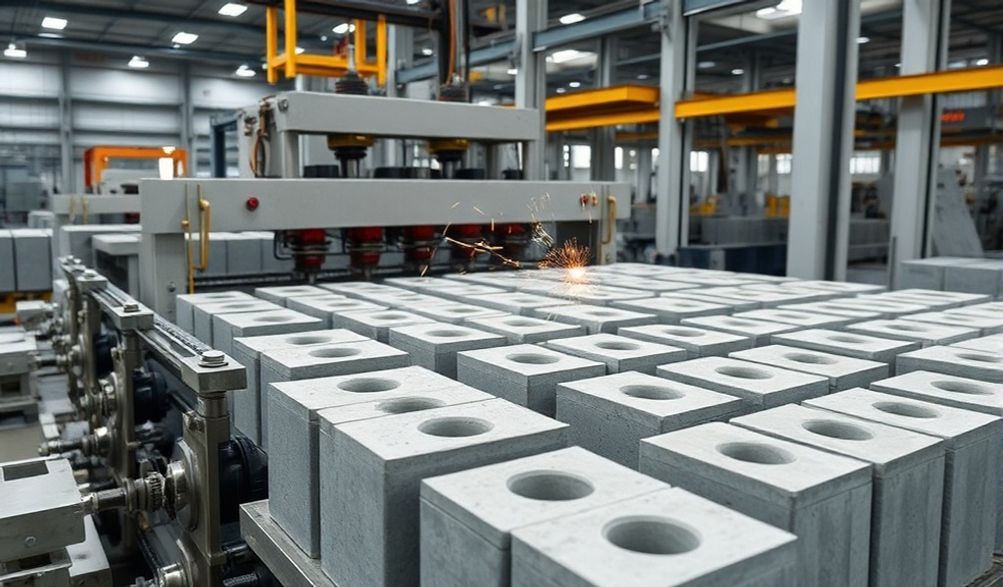
A typical, fully automatic baking-free block making machine from China is an integrated production line. Key components include:
- Sistema ng Paghahalo: A batching plant or mixer that precisely combines raw materials (sand, aggregate, cement, fly ash, water).
- Sistema ng Conveyor: Transports the mixed material to the block molding host.
- Sistema ng Paghubog ng Bloke: The core of the machine. It consists of:
- Kahon ng Molde: A robust, precision-engineered mold that defines the block’s shape (hollow, solid, paver, etc.).
- Press Head: Applies high pressure to compact the material.
- Lamesa ng Pagyanig: Provides high-frequency vibration to further densify the mix and ensure a smooth finish.
- Sistema ng Kontrol Usually a Programmable Logic Controller (PLC) with a touchscreen interface, allowing for precise control over pressure, vibration time, and cycle speed.
- Pallet Pampain at Tagapagpatong: Automatically feeds empty pallets into the machine and stacks freshly produced blocks for curing.
Mga Karaniwang Hilaw na Materyales na Ginagamit
This technology’s sustainability is deeply tied to its material flexibility. Common raw materials include:
- Mga Produktong Pang-industriya na Hindi Pangunahin: Fly ash (from coal plants), slag (from steel production), and other waste materials.
- Mga Binder: Portland cement or lime.
- Pinagsama-sama: Sand, stone chips, gravel.
- Recycled Materials: Crushed construction and demolition waste.
This ability to consume waste products reduces landfill burden and creates a valuable circular economy within the construction sector.
Why Choose a China-Made Baking-Free Block Machine? Key Advantages
China’s dominance in this machinery sector is not accidental. It is built on decades of refinement, massive industrial scale, and a relentless focus on value-driven engineering. Here are the key benefits driving global buyers to Chinese manufacturers.
Unmatched Cost-Effectiveness and ROI
The most immediate advantage is economic. Due to unparalleled manufacturing scale, mature supply chains, and competitive industrial ecosystems, Chinese manufacturers offer baking-free block making machines at a significantly lower capital cost compared to European or American counterparts. This lower initial investment translates into a faster and more attractive return on investment (ROI) for your block-making business, making the technology accessible to a wider range of entrepreneurs and companies.
Proven Technology and High Production Efficiency
Chinese manufacturers have been building and exporting this machinery for over 30 years. This long history has led to highly refined, reliable, and efficient designs. Modern machines offer impressive automation, minimizing manual labor. Production capacities are clearly defined and impressive, with standard machines ranging from 1,000 to over 10,000 blocks per 8-hour shift, depending on the model and block type. This ensures consistent output quality and high-volume production to meet project demands.
Pagpapanatili at Mga Benepisyo sa Kapaligiran
This is the core value proposition. A China baking-free block making machine enables green production:
* Energy Savings: Eliminates the energy-intensive kiln, slashing energy consumption by up to 70-80% compared to fired brick production.
* Reduced Carbon Footprint: No direct combustion emissions from firing. Furthermore, using industrial by-products like fly ash prevents their release into the environment and reduces the need for virgin cement, which is a major CO₂ contributor.
* Paggamit ng Basura: Transforms problematic waste streams (fly ash, slag, construction debris) into valuable building materials, supporting green building certifications like LEED or BREEAM.
Ang Kakayahang Umangkop sa Paggawa ng Bloke
One machine can be the foundation for a diverse product line. By simply changing the mold, a single baking-free block making machine can produce:
* Hollow blocks for walls
* Solid blocks for foundations
* Interlocking paving stones for landscaping
* Curb stones and grass pavers
* Special-shaped blocks for decorative purposes
This versatility allows manufacturers to adapt to market needs and maximize their business potential.
Critical Factors When Selecting Your Supplier and Machine
Purchasing a block making machine is a significant investment. Success depends on choosing not just a machine, but a credible partner. Here is your due diligence checklist.
Assessing Manufacturer Credibility (The Due Diligence Checklist)
- Factory Visit & Production Scale: If possible, visit the factory. Seeing the production facility, quality control processes, and scale of operations firsthand is invaluable. A reputable manufacturer will welcome this.
- Technical Expertise & R&D: Inquire about their engineering team and R&D investments. Manufacturers with in-house design capabilities and patents are more likely to offer innovative, reliable solutions and provide better technical support.
- Mga Sertipikasyon sa Kalidad: Look for international certifications like CE (for European market safety), ISO 9001 (quality management systems), and reports from independent inspection agencies like SGS. These are tangible indicators of a commitment to standards.
- After-Sales Service & Parts Supply: This is critical. Ask detailed questions: Do they provide English operation and maintenance manuals? What is the structure of their after-sales support (online, via local agent)? Is there a guaranteed supply of wear parts (molds, liners, seals) at reasonable prices? A supplier’s long-term commitment is reflected here.
Matching Machine Specifications to Your Project Needs
Avoid the one-size-fits-all trap. Your machine must match your specific context:
* Kapasidad sa Produksiyon: Honestly assess your market demand. Are you supplying a specific project or establishing a commercial plant? Choose a machine with a capacity that matches your sales projections.
* Antas ng Automatisasyon: Options range from manual and semi-automatic (lower cost, higher labor) to fully automatic and PLC-controlled lines (higher investment, lower labor, superior consistency). Your labor cost and desired operational scale will guide this choice.
* Block Type and Size: Provide the supplier with detailed drawings or specifications of the blocks you intend to produce. Ensure the machine’s mold size and pressing force are compatible.
* Pagiging Kaakma ng Hilaw na Materyal Share the properties of your locally available raw materials (gradation of sand, type of ash, etc.) with the manufacturer. A good supplier will test your mix design or recommend adjustments to ensure the machine works optimally with your inputs.
Understanding the Total Cost of Ownership
The machine’s price tag is only part of the story. Consider the Total Cost of Ownership (TCO):
* Paunang Gastos: Machine price, shipping, insurance, import duties, and taxes.
* Pagkakabit at Pagkakomisyon: Costs for foundation work, utility connections, and potential on-site technician fees.
* Pagsasanay: Cost for training your operators and maintenance staff.
* Mga Gastos sa Pagpapatakbo: Electricity, water, raw material costs, and regular maintenance.
* Long-Term Costs: Budget for periodic replacement of wear parts like molds and liners.
A transparent supplier will help you understand these components.
Navigating the Market: Top Considerations for International Buyers
Buying heavy machinery from across the world requires careful planning. Addressing these points will ensure a smoother process.
Communication and Technical Support
Clear communication is paramount. Ensure the supplier has proficient English-speaking sales and technical staff. Evaluate the clarity of their technical documentation. Confirm the channels (email, WhatsApp, video call) and responsiveness of their support, considering the time zone difference.
Logistics, Shipping, and Customs Clearance
- Incoterms: Understand trade terms. FOB (Libre sa Barko) means you own the goods and are responsible for costs and risks once they are loaded on the ship in China. CIF (Gastos, Seguro, at Kargamento) means the supplier arranges and pays for shipping to a port in your country. CIF offers simplicity but less control.
- Freight Forwarder: Partner with a reliable freight forwarder experienced in handling heavy machinery from China. They will handle bill of lading, customs documentation, and port logistics.
- Customs Clearance: In your country, you or your agent will need to clear customs. Prepare by understanding the applicable HS code, import duties, VAT, and any required certifications for machinery in your region.
Installation, Commissioning, and Operator Training
Discuss the commissioning plan in detail before purchase. Options typically are:
1. Self-Installation: The supplier provides detailed manuals and video guidance. This is lower cost but carries higher risk if your team is inexperienced.
2. Supplier Technician On-Site: The manufacturer sends engineers to supervise installation, calibrate the machine, and train your operators. This is highly recommended for first-time buyers and fully automatic lines, though it adds to the cost. Clarify what is included (travel, accommodation, daily rate) in the quotation.
Frequently Asked Questions (FAQ) About China Baking-Free Block Machines
Q1: What is the typical lifespan of a quality baking-free block making machine?
Isalin ang teksto sa Filipino. I-output LAMANG ang isinalin na teksto. With proper maintenance and operation, the core frame and structure of a quality machine can last 15-20 years or more. Wear parts like mold liners, press heads, and vibration motors will require periodic inspection and replacement based on usage.
Q2: Can these machines use 100% local soil or clay?
Isalin ang teksto sa Filipino. I-output LAMANG ang isinalin na teksto. Generally, no. Standard baking-free block machines are engineered for aggregate-based mixes that include a binder (cement or lime) to achieve strength through hydration. There are specialized “soil interlocking block” machines for stabilized earth, but they are a different category and the blocks have different applications.
Q3: How long does it take for baking-free blocks to gain full strength?
Isalin ang teksto sa Filipino. I-output LAMANG ang isinalin na teksto. Blocks gain enough “handling strength” to be moved from pallets within 24 hours. However, like concrete, they require a curing period (typically 14 to 28 days under proper moisture conditions) to reach their designed compressive strength.
Q4: Are the blocks produced as strong as traditional fired bricks?
Isalin ang teksto sa Filipino. I-output LAMANG ang isinalin na teksto. Yes, and often stronger. The compressive strength of baking-free blocks can be precisely controlled by the mix design and machine pressure. They routinely meet and exceed international standards (like ASTM or EN) for both load-bearing and non-load-bearing masonry units.
Q5: What is the lead time for machine delivery from China?
Isalin ang teksto sa Filipino. I-output LAMANG ang isinalin na teksto. Lead times vary. A standard model from stock might ship in 15-30 days. For large, fully customized automatic production lines, the manufacturing, testing, and preparation can take 60-90 days after order confirmation. Always confirm the timeline with your supplier.
Konklusyon
The shift towards baking-free block technology is more than a trend; it’s a logical evolution in sustainable construction. China has positioned itself as the global hub for manufacturing the efficient, cost-effective, and versatile machines that make this shift possible. For entrepreneurs and companies worldwide, this represents a tangible opportunity to build a profitable business while contributing to a greener built environment.
Remember, your ultimate success hinges not just on purchasing a machine, but on selecting the right long-term partner. A manufacturer that combines robust, proven technology with transparent communication, comprehensive after-sales support, and a genuine understanding of your project needs is the key to a successful investment.
Ang Iyong Susunod na Hakbang: Use this guide as a framework. Prepare a detailed project profile outlining your desired block types, production capacity, raw materials, and budget. Begin contacting shortlisted, credible Chinese manufacturers. Engage them with specific questions, request detailed quotations, and start the conversation that could launch your venture into the future of construction.
<