
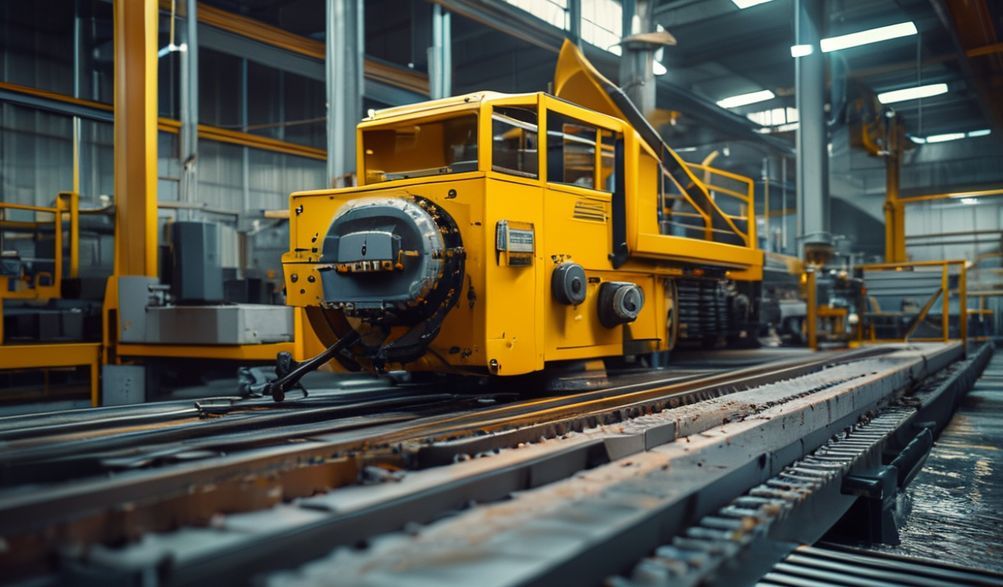
Ang Komprehensibong Gabay sa QT6-15 Block Making Machine ng FUDA Factory mula sa Tsina
Panimula
Ang pandaigdigang industriya ng konstruksiyon ay patuloy sa paglago, hinihimok ng urbanisasyon at pag-unlad ng imprastruktura. Sa sentro ng pagpapalawak na ito ay matatagpuan ang isang kritikal na pangangailangan: abot-kayang, de-kalidad, at madaling makuha na mga materyales sa paggawa. Ang pagtugon sa pangangailangang ito nang mahusay ay hindi na isang gawaing manwal. Ang kinabukasan ay pag-aari ng mga awtomatiko at matalinong makinarya na kayang gumawa ng pare-pareho at maaasahang mga bloke ng konstruksiyon nang malawakan.
Ipakilala ang QT6-15 block making machine. Ang modelong ito ay naging isang haligi sa industriya ng paggawa ng kongkretong bloke, kilala sa perpektong balanse nito sa produksyon, pagiging maaasahan, at puhunan. Ito ay kumakatawan sa pinakamainam na opsyon para sa mga negosyante at kumpanyang nagnanais magtatag o mag-upgrade ng isang panggitnang-kapasidad na planta ng pagmamanupaktura ng bloke.
Ngunit ang isang makina ay kasinghusay lamang ng pabrika sa likod nito. Ang gabay na ito ay nakatuon sa QT6-15 na ginawa ngPabrika ng Paggawa ng Brick ng FUDAisang itinatag at dalubhasang tagagawa mula sa Tsina. Ang FUDA ay nagtayo ng reputasyon hindi lamang sa pagbebenta ng makinarya, kundi sa paghahatid ng napapanatiling produktibidad at matatag na inhinyeriya.
Ang layunin ng komprehensibong gabay na ito ay para alisin ang kalituhan mula sa mga marketing na ingay. Magbibigay kami ng dalubhasa, walang kinikilingan, at detalyadong pagsusuri batay sa teknikal na mga detalye, kaalaman sa industriya, at pinakamahusay na mga pamamaraan sa pagbili. Ang aming hangarin ay bigyan ka, ang mamimili, ng lahat ng kinakailangang katotohanan upang makagawa ng isang lubos na maalam na desisyon.
Matututunan mo:
* Isang kumpletong teknikal na paglalahad ng makina ng QT6-15.
* The tangible advantages of sourcing from the FUDA factory.
* A deep dive into the operational process and raw material needs.
* Critical, actionable tips for verifying suppliers and maximizing your investment.
Magtayo tayo ng pundasyon ng kaalaman.
What is the QT6-15 Block Making Machine? An Expert Breakdown
The QT6-15 is a workhorse in the world of concrete block machinery. It’s designed for serious production, offering automation that significantly reduces labor intensity while boosting output and product consistency.
Pangunahing Tungkulin at Kapasidad sa Produksyon
At its core, the QT6-15 is a hydraulic, stationary block making machine. The “stationary” designation means the machine remains in place while a mechanical arm (the “block feeder”) moves to place the freshly pressed blocks onto a curing pallet. This design is renowned for its stability and robust construction.
- Pangunahing Tungkulin: It produces a wide array of concrete products by interchanging molds. This includes:
- Hollow blocks (4”, 5”, 6”, 8”)
- Mga Bloke ng Solid
- Paving stones / interlocking bricks
- Bordilyo
- Grass planting bricks
- Produksyon ng Output: Capacity is the key selling point.
- Mga Bloke bawat Ikot: 6 pieces of standard 400x200x200mm hollow blocks.
- Oras ng Ikot: Approximately 15-20 seconds.
- Theoretical Daily Output: Based on an 8-10 hour operational day, the QT6-15 can produce between 12,000 to 15,000 standard hollow blocks. Output varies with block type, density, and operator efficiency.
Pangunahing Mga Teknikal na Espesipikasyon
Understanding the specs is crucial for planning your plant layout and power requirements.
| Pagtukoy | Detalye |
| :— | :— |
| Model | QT6-15 |
| Kapangyarihan | ~30.5 kW (Total for host machine) |
| Forming Pressure | High Hydraulic Pressure (Typically 21 MPa+) |
| Laki ng Pallet | Standard 1100x540mm (can vary) |
| Machine Weight | Approximately 6500 kg |
| Overall Dimensions | ~6500x3300x3000mm (LxWxH) |
| Mga Opsyon sa Molde | Interchangeable for various block types |
| Sistema ng Kontrol | Programmable Logic Controller (PLC) with manual/auto modes |
Distinguishing QT6-15 from Other Models (QT4-15, QT8-15)
Choosing the right model depends entirely on your business scale and investment plan.
- QT4-15: The little sibling.
- Output: Produces 4 blocks/cycle. Ideal daily output: 8,000 – 10,000 blocks.
- Pinakamainam Para Sa: Startups, small-scale projects, or regions with lower initial demand. Lower initial investment and power consumption.
- QT6-15: The balanced champion (The focus of this guide).
- Output: Produces 6 blocks/cycle. Ideal daily output: 12,000 – 15,000 blocks.
- Pinakamainam Para Sa: Medium-scale businesses, growing enterprises, and standard block supply businesses. Offers the best balance of output, price, and operational cost.
- QT8-15: The high-output powerhouse.
- Output: Produces 8 blocks/cycle. Ideal daily output: 18,000 – 22,000 blocks.
- Pinakamainam Para Sa: Large-scale industrial production, major infrastructure suppliers, and markets with very high demand. Requires higher investment, space, and power.
Expert Advice: For most entrepreneurs aiming to supply a local or regional market, the QT6-15 presents the most sustainable and profitable middle path.
Why Choose the FUDA QT6-15? Analyzing the Manufacturer’s Edge
The “China price” is attractive, but the “China quality” narrative is varied. This is where manufacturer selection becomes paramount. Here’s why a factory like FUDA makes a critical difference.
FUDA Brick Making Factory: A Profile of Expertise
FUDA isn’t just a trading company; it’s a manufacturer with specialized expertise. This distinction is vital.
* History & Specialization: With years of focused operation, FUDA has honed its craft specifically in concrete block machinery. This specialization translates to deeper R&D and practical problem-solving knowledge.
* Standards & Certifications: A credible manufacturer like FUDA will adhere to international standards. Look for CE certification (indicating compliance with EU health, safety, and environmental standards) and often ISO quality management system certification. This builds Awtoridad.
* Saklaw sa Buong Mundo: Experience in exporting means they understand international logistics, documentation, and the technical support needs of overseas clients.
Engineering and Build Quality for Longevity
The true cost of a machine is measured over a decade, not just at purchase. FUDA’s engineering focus is on total lifecycle value.
* De-Kalidad na Materyal: The use of reinforced steel plates and hardened components for high-wear areas (like mold liners and pressing heads) resists deformation.
* Precision Hydraulics: A robust, well-sealed hydraulic system is the heart of the machine. Quality here ensures consistent forming pressure, minimal oil leaks, and reliable cycling for years.
* Resulta: This build philosophy directly reduces unplanned downtime, ensures the dimensional accuracy of every block produced, and delivers a return on investment through years of uninterrupted service.
Cost-Effectiveness and ROI Potential
The FUDA QT6-15 is an exercise in smart capital allocation.
* Initial vs. Long-Term Cost: While the upfront price (including shipping) is competitive, the real savings emerge in operations. Low failure rates mean lower maintenance costs and fewer production stoppages.
* Automation = Efficiency: One operator can manage the core production process, drastically reducing labor costs and human error compared to manual or semi-automatic systems.
* Quality = Market Price: Consistently producing high-density, precise blocks allows you to command a better price in the market, as your product is trusted for structural integrity.
Operational Deep Dive: From Setup to Production
A machine is part of a system. Understanding the entire production ecosystem is key to success.
Raw Material Requirements and Mix Design
The machine can only form what you feed it. A proper mix is 50% of the quality equation.
* Semento: Ordinary Portland Cement (OPC) 42.5 or higher grade is standard.
* Pinagsama-sama: A well-graded mix is essential.
* Buhangin Clean, coarse river sand or crushed stone sand.
* Gravel/Crushed Stone: 3-10mm size is typical for hollow blocks.
* Eco-Friendly Options: The QT6-15 excels at using industrial by-products.
* Abu ng Pugon: Can replace 20-30% of cement, reducing cost and creating a smoother block finish.
* Slag, Stone Powder: Can be incorporated as partial aggregate substitutes.
* Sample Mix Ratio (for standard hollow block):
* Cement: 1 part
* Sand: 3 parts
* Gravel (3-5mm): 2 parts
* Water: Adjusted for a semi-dry, moldable consistency (low slump).
Step-by-Step Production Process
- Material Feeding & Mixing: Aggregates, cement, and water are precisely batched and mixed in a planetary or pan mixer until homogeneous.
- Molding & High-Pressure Compaction: The mixed concrete is fed into the machine’s hopper. The PLC-controlled system automatically feeds material into the mold, where multi-sided hydraulic pressure compacts it to high density.
- Pagpapagaling at Pag-aalis sa Molde: The newly formed block is pushed onto a wooden or steel pallet. The block feeder then transfers the pallet (with block) to a curing rack. Blocks cure here for 24+ hours before being strong enough for demolding and stacking.
- Block Stacking & Pallet Return: Once cured, blocks are removed and stacked. The empty pallet is returned to the machine via a conveyor system, creating a continuous cycle.
Essential Auxiliary Equipment
To run efficiently, the QT6-15 is the centerpiece of a small plant. Key auxiliary equipment includes:
* Konkreto na Panghalo: A JS500 or JS750 compulsory mixer is commonly paired.
* Belt Conveyor: Transfers mixed concrete from the mixer to the machine hopper.
* Block Curing Rack: A multi-tier steel rack for storing pallets of fresh blocks.
* Pallets: Hundreds of wooden or steel pallets are needed for the curing cycle.
* Cement Silo: For bulk cement storage (optional but highly recommended for efficiency).
Maximizing Your Investment: Tips for Buyers
This is the most critical section. Protecting your investment starts with due diligence.
How to Verify a Supplier’s Credibility (E-E-A-T Focus)
Use the E-E-A-T framework (Experience, Expertise, Authoritativeness, Trustworthiness) to evaluate any supplier, including FUDA.
- Karanasan: Don’t just take their word for it. Ask for: Client references (with contact info if possible), videos of their machines running in real customer factories, and a list of countries they export to.
- Kadalubhasaan Gauge their technical depth. Request: Detailed engineering drawings, electrical schematics, and a comprehensive parts list. Their ability to explain technical details is telling.
- Awtoridad: Verify their legal and professional standing. Check for: A valid business license, official factory audit reports from third parties like SGS or BV, and physical factory ownership (request a live video tour).
- Pagkakatiwalaan: Assess their business ethics. Look for: Transparent, detailed quotations with no hidden fees, clear warranty terms in writing, and a responsive, professional communication style before you pay.
Key Questions to Ask Before Purchasing
Have this list ready during negotiations:
1. “What is the exact FOB price vs. CIF price? What is included/excluded (e.g., spare parts, tools)?”
2. “What is the warranty period (typically 12-18 months)? What components are covered/not covered?”
3. “Do you provide installation guidance (manual, videos), operational trainingatEnglish manuals?”
4. “What is your spare parts policy? Can you provide a recommended spare parts kit for the first two years?”
5. “Can you share the technical data sheetatproduct certification documents?”
Understanding Logistics, Installation, and After-Sales
- Logistics: Sea freight is standard for full machines. Clarify Incoterms (FOB, CIF, etc.)—this defines who handles shipping and insurance. You will likely need a local agent for customs clearance.
- Installation: While FUDA can provide remote guidance, budget for a local engineer or technician for physical installation and calibration. Some suppliers offer send-an-engineer services for an extra fee.
- After-Sales: The standard is remote support via video call (WhatsApp, Zoom). Ensure you have access to technical diagrams and a dedicated contact. The quality of their response pagkatapos the sale is the ultimate test.
Mga Madalas Itanong (FAQ)
Q1: What is the exact output of the QT6-15 machine per day?
Isalin ang teksto sa Filipino. I-output LAMANG ang isinalin na teksto. Under optimal conditions (good mix, efficient operation), you can expect a realistic output of 12,000 to 15,000 standard 400x200x200mm hollow blocks in an 8-hour shift. Output decreases for thicker, solid products.
Q2: Can this machine use fly ash or other waste materials?
A: Absolutely. The QT6-15 is excellent for producing eco-friendly blocks. Fly ash can constitute 20-35% of the cementitious material, reducing cost and improving workability.
Q3: What is the lead time for production and delivery from FUDA?
Isalin ang teksto sa Filipino. I-output LAMANG ang isinalin na teksto. Generally, allow 20-30 days for machine production after order confirmation and deposit. Sea shipping then takes an additional 30-45 days to most global ports, depending on the destination.
Q4: Does the price include molds? How many molds are supplied?
Isalin ang teksto sa Filipino. I-output LAMANG ang isinalin na teksto. Molds are usually quoted separately, as needs vary. A standard offer might include 1 or 2 popular mold types (e.g., 4″ hollow block and paving stone). Always confirm this in your quotation.
Q5: What kind of after-sales service can I expect from a factory in China?
Isalin ang teksto sa Filipino. I-output LAMANG ang isinalin na teksto. Reputable factories like FUDA provide: 1) Detailed operation and maintenance manuals, 2) Remote troubleshooting via video call, 3) A warranty on defective parts, and 4) Lifelong supply of spare parts and technical consultation.
Konklusyon
The China QT6-15 block making machine stands as a proven, robust, and highly cost-effective solution for establishing a medium-scale block production business. Its design prioritizes productivity and durability, offering a clear path to a strong return on investment.
However, this guide’s core message extends beyond the machine’s specifications. Your success hinges not just on purchasing a quality machine, but on partnering with a credible and knowledgeable manufacturer. FUDA Brick Making Factory represents the type of specialized, experienced partner that can make this complex international procurement a success.
We encourage you to use the detailed questions and verification steps outlined here as your procurement checklist. Move beyond price comparisons and engage in deep technical discussions. Request evidence of their work and clarity on their support promises.
Your logical next step: Reach out to the FUDA factory directly with your specific project requirements, location, and target products. Use the insights from this guide to ask informed questions and request a comprehensive, tailored proposal. Make your investment with confidence, backed by expertise.
<