
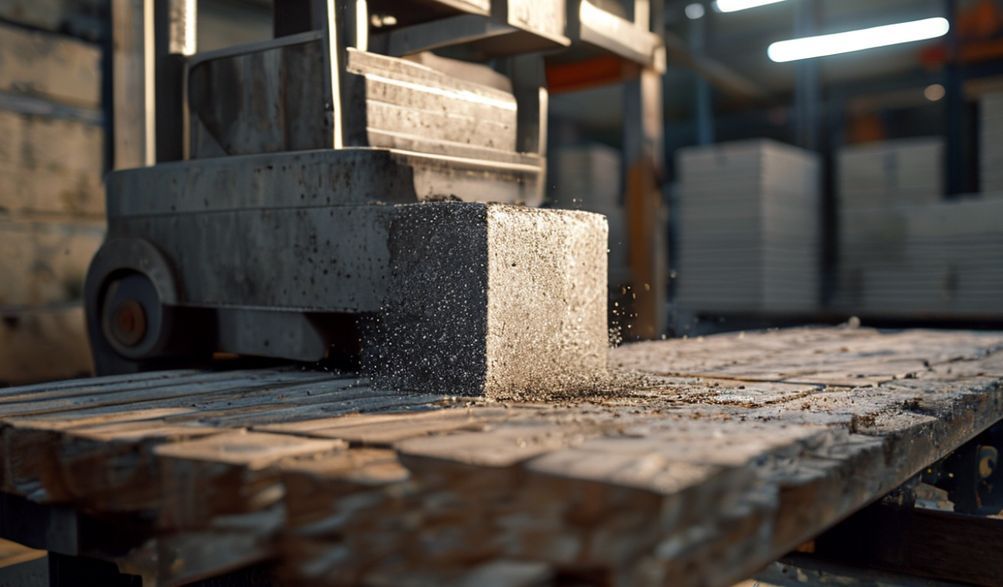
Your Complete Guide to the 400x200x200 Brick Machine: Production, Price & Process
Panimula
Walk onto any modern construction site, and you’ll see them stacked high: the ubiquitous 400x200x200mm concrete block. This standardized dimension has become a global workhorse for building strong, efficient foundations, walls, and partitions. Yet, behind this simple block lies a critical choice for contractors, builders, and entrepreneurs: the agonizingly slow, labor-intensive process of manual production or the streamlined efficiency of a dedicated brick making machine.
This guide is designed to bridge that knowledge gap. Our purpose is to serve as your comprehensive, unbiased resource, cutting through the sales jargon to deliver clear, actionable information. Built on industry specifications, operational best practices, and real-world economic analysis, this post will equip you to understand, select, and profitably operate a brick machine 400x200x200.
By the end of this guide, you will have a firm grasp on:
* The different types of konkretong blokeng makina available.
* A realistic breakdown of investment costs and profitability.
* The step-by-step hollow block production process.
* The key technical and supplier considerations to ensure a smart purchase.
Magtayo tayo ng matibay na pundasyon ng kaalaman.
Understanding the 400x200x200 Brick and Its Machine
Before investing in machinery, it’s crucial to understand the product it creates and the basic principles of its operation.
What is a 400x200x200 Block?
A 400x200x200 block is a standardized precast concrete masonry unit (CMU), typically produced as a hollow block (with two or three cores) or a solid block. The dimensions—400mm in length, 200mm in height, and 200mm in width—make it a versatile building module.
- Mga Aplikasyon: It is extensively used for both load-bearing and non-load-bearing walls in residential, commercial, and industrial construction. Its size allows for rapid wall assembly compared to smaller bricks.
- Pangunahing Mga Benepisyo:
- Bilis ng Pagtatayo: Larger size means faster laying.
- Integridad ng Estruktura: Excellent compressive strength for stability.
- Insulasyong Pang-init at Pang-tunog: The hollow cores trap air, providing natural insulation and sound dampening.
- Pagiging Epektibo sa Gastos: Efficient material use and faster building times reduce overall project costs.
How a Brick Machine for This Size Works
While designs vary, the core production process for any 400x200x200 brick making machine follows a consistent cycle of compaction and molding. Here’s a simplified breakdown:
- Paghahalo: Raw materials (cement, sand, aggregate, water) are blended into a semi-dry concrete mix.
- Pagpapakain: This mix is fed into the machine’s mold box, which is precisely shaped to form the 400x200x200 block, including its hollow cores.
- Pagpapakintab: This is the critical phase. The machine applies immense pressure to densify the concrete.
- Panginginig: High-frequency vibrations shake the mix, allowing particles to settle and eliminate air pockets.
- Presyur ng Haydroliko: A hydraulic ram presses down on the mix, often in combination with vibration, for maximum density.
- Paghubog/Pagtulak: Once compacted, the newly formed block is ejected from the mold onto a wooden or steel pallet.
- Pagpapagaling: The block on its pallet is moved to a curing area, where it gains strength over days through moisture retention (often via steam curing for faster results).
The main mechanical differentiation lies in the compaction force: high-frequency vibration systems are common and effective, while mga sistemang haydroliko offer immense pressure for ultra-dense, high-strength blocks. Many modern machines combine both.
Types of 400x200x200 Brick Making Machines
Your choice of machine dictates your production scale, labor needs, and initial investment. They fall into three broad categories.
Manual at Semi-Awtomatikong Makina
Ideal for entrepreneurs testing the market, community projects, or very low-volume needs.
- Operasyon: The mixing and feeding of concrete into the mold is done manually. A lever or small motor activates the vibration or press.
- Mga Kalamangan:
- Very low capital investment.
- Madaling gamitin at alagaan.
- Minimal electricity requirement.
- Mga Disbentahe:
- High labor intensity.
- Low output (typically 200-800 blocks per 8-hour shift).
- Inconsistent quality if operation is not meticulous.
Fully Automatic Stationary Block Machines
This is the industry standard for serious commercial production, offering the best balance of output, consistency, and labor efficiency.
- Operasyon: These are integrated production lines. A conveyor feeds raw material from a mixer, the machine automatically fills, compacts, and ejects blocks onto pallets, which are then conveyed to a curing area.
- Mga Pangunahing Tampok:
- Programmable Logic Controller (PLC) for automated cycle control.
- Pallet circulation system for continuous operation.
- Multiple mold heads for simultaneous production of different blocks.
- Kapasidad ng Output: For the 400x200x200 size, a robust automatic machine can produce between 1,500 to 5,000+ blocks in an 8-hour shiftdepende sa modelo at pagsasaayos.
Mobile Block Making Machines
A specialized solution designed for large-scale, on-site construction projects like remote housing developments or large industrial facilities.
- Operasyon: The machine is mounted on a trailer or wheels. It produces blocks directly at the construction site, using local materials, and places them immediately where needed.
- Ideyal na Kaso ng Paggamit: Eliminates the entire logistics chain and cost of transporting blocks from a factory. The savings on transport can be monumental for large, remote sites.
Key Features and Technical Specifications to Evaluate
Looking beyond the basic type, these technical details separate adequate machines from exceptional, long-lasting investments.
Core Specifications for the 400×200 Size
- Mold Compatibility & Customization: Ensure the machine is designed for or can be fitted with a mold for the 400x200x200 block. Can the supplier provide other common mold sizes (e.g., 400x150x200, solid blocks)?
- Lakas ng Motor at Sistema ng Pagyanig: A more powerful motor (e.g., 15-30 HP for automatics) drives stronger vibrations. Inquire about vibration frequency (Hz) and amplitude for optimal compaction.
- Cycle Time & Capacity: The total time to produce one block cycle determines hourly output. A 15-second cycle time equates to 240 cycles per hour.
- Sukat at Sistema ng Pallet: Pallets are a recurring consumable. Standardized, readily available pallet sizes (e.g., 1100x550mm) are preferable.
Build Quality and Durability Factors
This is where supplier reputation becomes critical.
- Balangkas at Estruktura: The main frame should be made from heavy-duty, reinforced steel to withstand constant vibration without stress fractures.
- Vibration Table & Mold Box: These are high-wear components. They must be made from high-grade, abrasion-resistant steel plates.
- Sistema ng Haydroliko: For hydraulic machines, the quality of the pump, cylinders, and valves is paramount. Reputable brand components (e.g., Bosch Rexroth, Parker) signal reliability.
- Trust-Building Advice: Always request material certifications for key steel parts. If the investment is significant, insist on visiting the manufacturing facility to inspect build quality firsthand.
Automation and Control Systems
- PLC Control Panel: This is the brain of an automatic machine. A user-friendly PLC interface allows for precise control over vibration time, pressure, and feed amounts, ensuring every block is identical.
- Safety & Maintenance: Look for safety guards on moving parts and easy access panels for routine maintenance. Good machine design considers the operator’s safety and ease of upkeep.
The Investment: Cost Analysis and ROI
A clear financial picture is essential for making a sound business decision.
Price Range Breakdown (Manual to Fully Automatic)
Prices vary dramatically based on automation, origin of manufacture, and brand. Use these brackets as a starting point for your budget planning.
- Mga Makinang Manual/Semi-Awtomatiko: $1,500 – $8,000 USD.
- Ganap na Awtomatikong Nakatigil na Makinarya: $15,000 – $50,000+ USD.
- Mobile Block Making Machines: $40,000 – $100,000+ USD.
Critical Note: These are estimates. Shipping, import duties, installation, and training can add 15-30% to the final cost. Always obtain detailed quotations from multiple suppliers.
Calculating Operational Costs & Profitability
Your machine’s price is just the entry ticket. Sustainable operation depends on managing ongoing costs.
Operational Cost Inputs:
* Mga Hilaw na Materyales: Cement, sand, aggregate (stone chips/gravel).
* Paggawa: Machine operators, mixers, curing yard attendants.
* Utilities: Electricity for the machine and mixer.
* Consumables: Pallets, mold release oil, maintenance parts.
* Overheads: Land/workshop rent, transportation.
Sample ROI Model (Simplified):
Let’s model a small automatic plant producing 400x200x200 hollow blocks.
| Item | Detail |
| :— | :— |
| Machine Output | 2,000 blocks/day (8-hour shift) |
| Monthly Production | ~44,000 blocks (22 working days) |
| Cost per Block | $0.85 (Materials: $0.70, Labor & Overhead: $0.15) |
| Selling Price per Block | $1.20 (Local market dependent) |
| Gross Profit per Block | $0.35 |
| Monthly Gross Profit | 44,000 x $0.35 = $15,400 |
| Machine Investment | $30,000 (including basic setup) |
| Simple Payback Period | ~2 Months |
This is a hypothetical, optimistic scenario. Your local material costs, block market price, and operational efficiency will directly impact your ROI. Conduct a localized feasibility study.
Operating Your Machine for Optimal Results
Buying the machine is step one. Operating it correctly is what ensures quality and profit.
Raw Material Preparation: The Ideal Mix Design
The right mix is non-negotiable. A standard mix ratio for a 400x200x200 hollow block is 1 part cement : 4-6 parts aggregate (sand/stone blend).
* Aggregate Size: Should be less than 10mm for smooth surface finish and proper compaction.
* Moisture Content: The mix should be “semi-dry”—it holds its shape when squeezed in your hand but crumbles easily. Too much water weakens the block.
Step-by-Step Production Process
- Weigh & Mix: Precisely weigh materials according to your mix design. Use a pan or forced-action mixer for a consistent, homogeneous blend.
- Feed the Hopper: Transfer the mixed concrete to the machine’s feed hopper.
- Initiate Cycle: Start the automatic cycle or engage the manual controls.
- Monitor Compaction: Ensure the vibration/pressure phase is consistent for each block.
- Eject & Handle: Carefully move the fresh (green) block on its pallet to the curing rack using a pallet jack. Never stack green blocks.
- Cure: Keep blocks moist and covered for at least 24 hours. After initial setting, they can be water-sprayed or steam-cured for 18-24 hours to achieve ~75% of their strength.
Maintenance Checklist for Longevity
- Daily: Clean the mold box, vibration table, and feed hopper. Check for loose bolts/nuts. Lubricate guide rails.
- Weekly: Inspect hydraulic lines for leaks (if applicable). Check vibration motor mounts. Tighten all electrical connections.
- Monthly: Conduct a thorough inspection of wear parts: mold liners, pallet conveyor chains, and feeder scrapers. Replace as needed.
- Common Issue – Block Sticking: Caused by worn mold liners, insufficient mold release agent, or an overly wet mix. Address the root cause.
FAQ: Your Questions About 400x200x200 Brick Machines Answered
Q1: What is the production output of a standard automatic machine for this block size per day?
A: A mid-range fully automatic machine typically produces between 2,000 to 3,500 blocks in an 8-hour shift, depending on cycle time and operational efficiency.
Q2: Can one machine produce other block sizes besides 400x200x200?
A: Yes, most quality machines are designed with interchangeable mold boxes. You can produce pavers, curbstones, and other standard block sizes (like 400x150x200) by changing the mold, often in under an hour.
Q3: What is the required curing time for blocks before they can be used in construction?
A: For safe handling, blocks need 24-48 hours of initial curing. To meet standard minimum compressive strength for construction (typically 7-14 N/mm²), they should be cured for at least 7 days. Full design strength is achieved at 28 days.
Q4: How much space (land/workshop) is needed to set up a small block yard?
A: For a small operation with one automatic machine, you need approximately 1,000-2,000 square meters. This accommodates the machine shed, raw material storage, mixing area, block curing yard (the largest section), and finished product storage.
Q5: What are the most common maintenance issues and how can I prevent them?
A: The most frequent issues are wear on mold liners/pallets, vibration motor bearing failure, and hydraulic leaks. Prevention is straightforward: follow a strict lubrication schedule, use the correct semi-dry concrete mix, and perform the daily/weekly inspections outlined above.
How to Choose the Right Supplier and Machine
Your relationship with the supplier is as important as the machine itself.
Vetting Manufacturers and Suppliers
Create a supplier checklist:
* History & Reputation: Minimum 5-10 years in business with a track record.
* Serbisyong Pagkatapos ng Benta: Do they have local technicians or a clear support protocol? What is their spare parts availability and delivery time?
* Client Portfolio: Ask for contact information of previous clients in your region and actually call them.
* Transparency: Be wary of suppliers who are vague about specifications or refuse facility visits.
Essential Questions to Ask Before Buying
- “What is the exact warranty period, and what components are covered? (e.g., frame, motors, hydraulic system, PLC)?”
- “Do your quotes include installation, commissioning, and on-site operator training?”
- “Can you provide a live video call to see a machine identical to the one I’m considering in operation at a client’s facility?”
- “What is the lead time for the most commonly worn spare parts?”
Konklusyon
Pagpili ng tamang400x200x200 brick making machine is a strategic decision that hinges on a clear understanding of your production scale, budget constraints, and long-term business objectives. From the manual starter models to the fully automated production lines, each machine serves a specific purpose in the ecosystem of construction material manufacturing.
This guide has armed you with the technical knowledge to evaluate machines, the financial framework to model profitability, and the operational insights to ensure quality production. Remember, an informed decision—one based on diligent supplier vetting, hands-on inspection, and realistic financial planning—is your single greatest asset in establishing a successful and sustainable block manufacturing venture.
Use this guide as your framework. Consult with multiple suppliers, ask the hard questions, and where possible, request a material test or trial production run. Your future in efficient, profitable block production starts with the knowledge you now hold.
<