
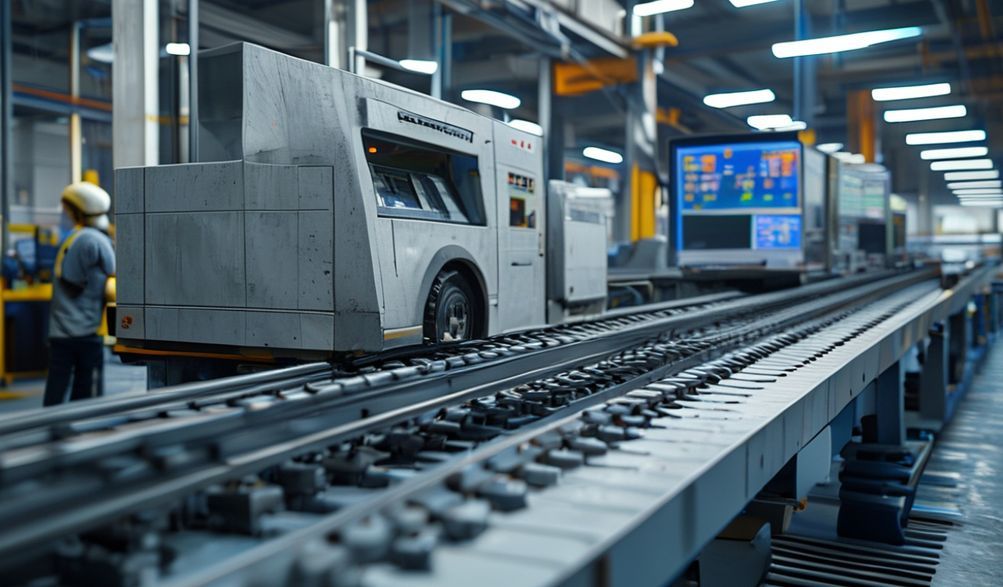
Your Ultimate Guide to Choosing a China Block Making Machine Manufacturer
Panimula
The global construction industry runs on concrete. From affordable housing projects to towering commercial developments, the humble concrete block remains a fundamental building block of modern infrastructure. To meet this relentless demand, manufacturers worldwide turn to one primary source for the machinery that produces these essential components: China.
As the undisputed global hub for manufacturing, China powers a significant portion of the world’s block production through its vast network of machinery suppliers. However, this abundance of choice presents a formidable challenge. How do you sift through thousands of online listings to find a manufacturer that is reliable, technically proficient, and capable of supporting your business for years to come? The risks are real—substandard machines, hidden costs, and a complete lack of after-sales support can turn what seemed like a great deal into a costly, non-operational nightmare.
This guide is your strategic resource. Drawing from over a decade of direct experience in the construction machinery sector and established partnerships with leading factories, we will demystify the process. We move beyond simple price comparison to provide you with a comprehensive, step-by-step framework for vetting, selecting, and successfully partnering with a top-tier China block making machine manufacturer. Consider this your roadmap to a smart, low-risk investment.
Why China is the Global Leader in Block Making Machinery
China’s dominance in this sector isn’t accidental. It’s the result of decades of industrial development, creating an ecosystem that is difficult for any other region to match.
Sukat at Kakayahan sa Industriya
The sheer scale of China’s manufacturing is its primary advantage. Entire industrial cities are dedicated to machinery production, creating concentrated supply chains for components like hydraulic cylinders, PLCs, and steel frames. This aggregation leads to:
* Unbeatable Economies of Scale: Mass production of both machines and parts drives down unit costs significantly.
* Complete Supply Chain Integration: Manufacturers often have direct access to component suppliers, streamlining production and reducing lead times.
* Vast Production Volumes: The ability to handle large, recurring orders makes Chinese factories the go-to for both startups and established block plants worldwide.
Evolution from Copying to Innovation
The outdated perception of Chinese manufacturing as purely imitative no longer holds true for industry leaders. While copycat models exist, the top-tier manufacturers are now innovation powerhouses.
* Heavy R&D Investment: Leading companies employ dedicated engineering teams focused on improving efficiency, automation, and energy consumption.
* Patented Technology: You’ll find manufacturers holding patents for unique vibration systems, hydraulic circuits, and control software that enhance block density and production speed.
* Focus on Automation and Smart Tech: The latest models integrate IoT sensors for predictive maintenance and feature user-friendly, programmable touchscreen interfaces.
Customization and Flexibility
Standard models are just the starting point. Chinese manufacturers excel at tailoring machines to specific project needs, a flexibility often lacking elsewhere.
* Model Modification: Common platforms like the QT4-15 or QMJ4-45 can be adapted for different pallet sizes, raw material mixes (e.g., using fly ash or crushed aggregate), or unique block dimensions.
* Output Customization: They can adjust cycle times and automation levels to target a specific daily output, ensuring you don’t overpay for unused capacity.
* Specialized Applications: Need a machine specifically for intricate paving stones, soil-cement interlocking blocks, or large hollow blocks? Chinese factories regularly build to these specialized specifications.
Key Factors to Evaluate a Manufacturer (Beyond Price)
While budget is crucial, fixating solely on the lowest price is the fastest route to failure. Evaluate potential partners on these critical dimensions.
Manufacturing Expertise and Technical Capability
This is the core of what you’re buying. Dig into their engineering competence.
* In-House R&D & Engineering: A manufacturer with its own design team can provide better technical support and develop custom solutions.
* Core Component Quality: The brand and origin of key parts define machine longevity. Ask about:
* Mga Sistema ng Haydroliko: Renowned brands like Rexroth, Yuken, or Huade indicate quality.
* PLCs & Electricals: Siemens, Mitsubishi, or Schneider Electric components are reliable.
* Molds & Frames: Use of high-grade steel (e.g., #45 steel) and precision CNC machining for molds is essential.
* Production Process: Look for evidence of modern manufacturing: robotic welding, standardized assembly lines, and organized workshop floors.
Product Portfolio and Machine Types
A diverse portfolio often indicates broader experience and stability.
* Nakatigil kumpara sa Gumagalaw: Understand which suits your needs. Stationary plants (like the QT series) offer higher output for fixed factories. Mobile machines (like the QMJ series) are ideal for on-site production.
* Antas ng Automation:
* Ganap na Awomatiko: For high-volume, minimal labor operations.
* Semi-Awomatiko: A balance of output and lower investment.
* Manwal: For small-scale or startup projects.
* Espesyalisasyon: Do they offer machines for your target products—hollow blocks, solid blocks, pavers, curbstones, or interlocking bricks?
Quality Control and Certifications
Certificates are not just paper; they represent a commitment to a system.
* Key Certifications: ISO 9001 (Quality Management System) is fundamental. CE Marking indicates compliance with European safety standards, which is a strong positive signal. SGS inspection reports provide third-party verification.
* Pagsusuri sa Pabrika: Inquire about their internal QC process. How do they inspect incoming raw materials? What testing is done on the hydraulic system before shipment? A documented process is a good sign.
After-Sales Service and Support
This is where reputable manufacturers separate themselves from traders.
* Garantiya: Typical terms are 12-18 months for the machine, with shorter periods for wear parts like molds. Understand exactly what is covered.
* Pag-install at Pagsasanay: Will they provide detailed installation manuals, video guides, or online support? For larger lines, can they send engineers for commissioning and operator training (often at an additional cost)?
* Parts Supply: Ask about the availability of a spare parts inventory and their typical response time for shipping critical components. A reliable partner will have a system in place.
A Step-by-Step Guide to Vetting and Selecting Your Partner
Follow this actionable process to make an informed, confident decision.
Step 1: Deep-Dive Research & Shortlisting
- On B2B Platforms (Alibaba, Made-in-China): Go beyond the “Gold Supplier” badge. Analyze their transaction history, read both positive and negative reviews, and check their response rate and time. A supplier with a long history and consistent activity is generally more reliable.
- Company Website Analysis: A professional, informative website is a positive indicator. Look for:
- Clear technical specifications and downloadable brochures.
- Detailed photo and video galleries of their factory and machines in operation.
- Genuine case studies or client testimonials, preferably with contactable references.
Step 2: Direct Communication & Technical Quotation
Initiate contact with a detailed inquiry. Clarity here prevents misunderstandings later.
* Essential Questions to Ask:
* Can you provide a detailed technical specification sheet for the [Model Name]?
* What is the ex-works price vs. FOB/CIF price to [Your Nearest Port]?
* What is the production lead time and what is your payment term structure?
* Can you share a video of this specific model running in your factory?
* Request a proforma invoice (PI) that itemizes the machine, spare parts, and shipping costs.
Step 3: Due Diligence & Verification
This step is non-negotiable for protecting your investment.
* Third-Party Pre-Shipment Inspection: Hire a reputable inspection company (like SGS, BV, or Intertek) to visit the factory before payment is finalized. They will verify machine construction, test its operation, and check packing.
* Business License Verification: Ask for their official business license and, if possible, verify it through local channels.
* Client References: Request contact information for 2-3 international clients who have purchased similar equipment. A confident manufacturer will provide these.
Step 4: Negotiation & Contract Clarity
Finalize the deal with legal and logistical precision.
* The Contract: Ensure the final, signed contract includes every agreed detail: exact machine model, technical specs, warranty terms, payment schedule (e.g., 30% deposit, 70% against copy of Bill of Lading), and after-sales service agreement.
* Understand Incoterms: Know your responsibilities. FOB (Libre sa Barko) means the supplier gets the machine to the port and loaded on the ship; you handle the rest. CIF (Gastos, Seguro, at Kargamento) includes shipping and insurance to your port, but you handle customs clearance.
Common Pitfalls and How to Avoid Them
The “Too Good to Be True” Price Trap
A quote significantly lower than the market average is a major red flag. This usually means:
* Inferior, non-branded components that will fail prematurely.
* Thin-grade steel in the frame and mold, leading to rapid wear and deformation.
* Zero meaningful after-sales service or technical support.
* Solution: Know the realistic market price range and treat extreme lows with extreme skepticism.
Communication and Cultural Barriers
Misunderstandings can lead to receiving the wrong machine.
* Tip: Use clear, simple English. Communicate all technical details using numbered lists and marked-up drawings or diagrams.
* Golden Rule: Confirm every single detail—specifications, color, packaging, shipping marks—in writing (email) and have it referenced in the contract. Avoid finalizing critical details only via instant messenger.
Overlooking Mold Quality and Compatibility
The block making machine is only as good as the mold. A poor-quality mold will produce defective blocks and wear out quickly.
* Critical Points:
* Kalidad ng Bakal Molds should be made from hardened, high-chromium alloy steel for durability.
* Precisionong Pagmakinasyon: The mold cavities must be CNC-machined to ensure dimensional accuracy and smooth block ejection.
* Compatibility: Confirm that the mold design is perfectly compatible with your machine’s vibration and hydraulic ejection system.
Mga Madalas Itanong (FAQ)
Q1: What is the typical price range for a medium-sized automatic block making machine from China?
Isalin ang teksto sa Filipino. I-output LAMANG ang isinalin na teksto. Prices vary dramatically based on specifications. A medium-sized, fully automatic machine (e.g., output of 8,000-15,000 blocks per 8 hours) can range from $25,000 to $65,000 USD FOB. Factors affecting price include the level of automation, brand of hydraulic/electrical components, output capacity, and the number of included molds.
Q2: How long does shipping and delivery usually take?
Isalin ang teksto sa Filipino. I-output LAMANG ang isinalin na teksto. Total timeline involves two parts: Production lead time (typically 20-40 days after deposit) and sea freight (30-45 days to major global ports like Rotterdam, Los Angeles, or Mombasa). Add 1-2 weeks for customs clearance at your destination. Always budget for a total of 2.5 to 4 months from order to delivery at your site.
Q3: Can I visit the factory in China before ordering? Is it recommended?
Isalin ang teksto sa Filipino. I-output LAMANG ang isinalin na teksto. It is highly recommended, especially for large orders or first-time buyers. A visit allows you to verify the factory’s scale, quality control processes, and professionalism. Reputable manufacturers welcome serious buyers. You can arrange a visit directly or through your inspection agent.
Q4: What are the payment terms usually offered by reputable manufacturers?
Isalin ang teksto sa Filipino. I-output LAMANG ang isinalin na teksto. The most common and balanced term is 30% deposit by T/T, 70% balance against copy of Bill of Lading. For larger orders, Letter of Credit (L/C) is also common. Be wary of suppliers demanding 100% payment upfront, as this removes your leverage.
Q5: Who is responsible for installation and training at my site?
Isalin ang teksto sa Filipino. I-output LAMANG ang isinalin na teksto. This must be defined in your contract. Most suppliers provide detailed installation manuals and video guides. For an additional fee, they can dispatch their engineers to your site for commissioning and operator training—a valuable service for ensuring optimal machine performance from day one.
Konklusyon
Choosing the right China block making machine manufacturer is a strategic decision that hinges on diligent research, a focus on long-term value over short-term cost savings, and the cultivation of a transparent partnership. By following the vetting steps outlined—prioritizing technical capability, verifying quality control, and securing clear service terms—you transform a complex international purchase into a confident investment in your business’s productivity and growth.
Based on our extensive industry experience, the most successful and enduring partnerships are built on this foundation of mutual respect and clear communication. Your journey doesn’t end with this guide; it begins.
Ready to take the next step with confidence? Download our comprehensive Manufacturer Evaluation Checklist to systematically compare potential suppliers, or contact our team for a curated shortlist of pre-vetted, reliable China block making machine manufacturers tailored to your specific project needs.
<