
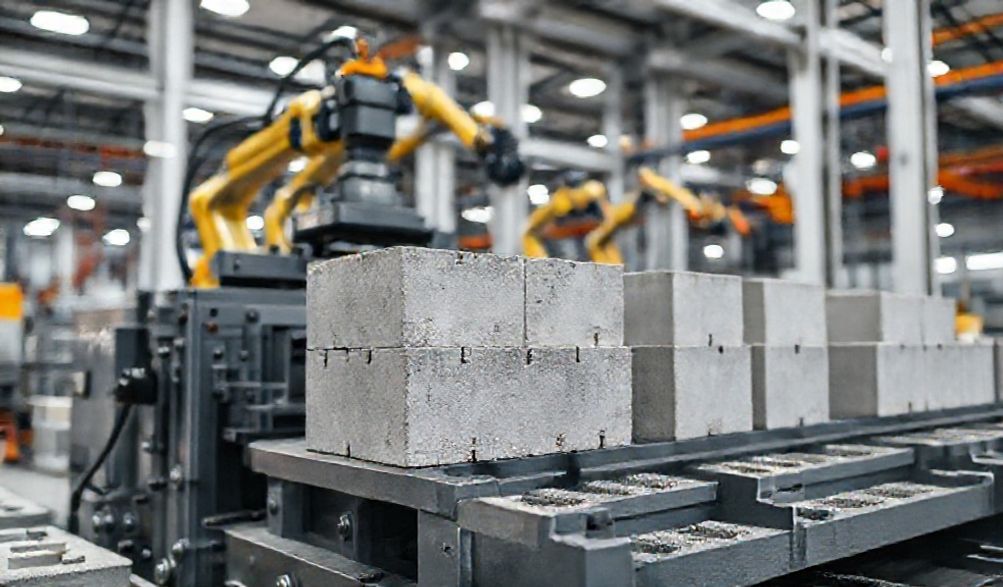
Your Ultimate Guide to Sourcing Reliable China Automatic Block Making Machine Suppliers
The global construction boom shows no signs of slowing. From affordable housing projects to massive infrastructure development, the demand for reliable, high-quality building materials is insatiable. At the heart of this supply chain is the humble concrete block—a fundamental component of modern construction. Producing these blocks efficiently, consistently, and profitably requires more than just manual labor; it demands advanced automation. This is where automatic block making machines become the cornerstone of a successful operation.
However, sourcing such significant, complex machinery internationally is fraught with challenges. How can you be sure of the quality from thousands of miles away? How do you navigate communication barriers, complex logistics, and the critical task of verifying a supplier’s true credibility? The stakes are high: a poor purchasing decision can lead to catastrophic downtime, inferior product quality, and massive financial loss.
Enter China, the undisputed global manufacturing hub for block making machinery. The country offers an unparalleled combination of scale, technological sophistication, and competitive pricing. But the key to unlocking this value lies not in finding the cheapest option, but in identifying the most reliable China automatic block making machine supplier.
This guide is your strategic resource. Built on industry analysis, direct engagement with manufacturers, and a deep understanding of the procurement landscape, it is designed to transform you from a cautious buyer into an informed partner. Our goal is to empower your expertise, providing you with the actionable knowledge needed to make a confident, low-risk investment that will power your business for years to come.
Why China Dominates the Global Block Making Machine Market
Pag-unawabakit China leads this industry is the first step in understanding paano to buy from it successfully. The dominance isn’t accidental; it’s built on a powerful foundation of industrial capability.
Sukat at Ekosistema ng Pagmamanupaktura
China’s advantage begins with sheer scale and a mature, integrated ecosystem.
* Unmatched Production Capacity: Entire industrial cities are dedicated to machinery manufacturing, creating clusters of expertise and supply. This concentration drives efficiency and specialization.
* Mga Ganap na Supply Chain: A robust network provides immediate access to all critical components—from high-tensile steel and precision hydraulics to programmable logic controllers (PLCs) and electric motors. This vertical integration reduces costs and streamlines production.
Pagsulong at Pagbabago sa Teknolohiya
Gone are the days of China being solely a source of low-tech copies. The industry has evolved dramatically.
* Rapid Tech Adoption: Leading Chinese manufacturers are at the forefront of incorporating full automation, IoT-based machine monitoring, and energy-saving vibration systems.
* Focused R&D: Significant investment is poured into developing machines that produce a wider variety of blocks (interlocking, paving, hollow blocks) and utilize new materials like fly ash or porous concrete, meeting diverse global market demands.
Competitive Pricing and Value
The combination of scale and efficient supply chains creates a compelling value proposition.
* Mga Ekonomiya ng Eskala: Large production volumes significantly reduce unit costs, savings that are passed down the chain.
* Spectrum of Options: Whether you need a simple, entry-level automatic machine or a fully robotic, computer-controlled production line, Chinese suppliers offer a model at virtually every price point and capability level, allowing for precise budget alignment.
Key Factors to Evaluate a Chinese Supplier (Beyond Price)
Fixing your gaze solely on the bottom-line price is the fastest route to failure. True evaluation requires a holistic look at the supplier’s entire operation. Here are the non-negotiable factors to assess.
Manufacturing Expertise and Experience
- Rekord sa Pagganap: How long has the company been manufacturing block machines specifically? A decade or more of focused experience is a strong positive indicator.
- Portfolio & Proof: Request detailed case studies, project lists, and—critically—videos of their machines in operation at client sites. A reputable supplier will proudly share this evidence.
Technical Capabilities and Machine Specifications
- In-House na Inhinyeriya: Does the company design and engineer its own machines, or is it merely an assembler of bought-in parts? In-house engineering capability translates to better quality control and reliable after-sales support.
- Specification Scrutiny: Go beyond the brochure. Demand clear data on:
- Cycle Time (seconds per cycle)
- Output Capacity (blocks per 8-hour shift)
- Pressure (tonnage of the vibration and press system)
- Level of Automation (manual feeding vs. automatic batching and pallet handling)
- Power Requirements (total kW consumption)
Quality Control and Certifications
- International Standards: An ISO 9001:2015 certification for quality management systems is a fundamental baseline. It indicates a structured process.
- In-House QC Processes: Ask about their specific checks for welding integrity, anti-corrosion painting, assembly precision, and final performance testing before shipment.
- Safety Compliance: For export to many regions, CE certification (or other local standards) is essential. It shows the machine is built to recognized safety and environmental directives.
After-Sales Service and Support
This is where great suppliers are separated from the mediocre. The relationship begins pagkataposang pagbebenta.
* Commissioning Support: Do they offer optional overseas installation supervision and commissioning services?
* Pagsasanay: Will they provide comprehensive training for your operators and maintenance staff, either on-site or at their factory?
* Long-Term Support: What is the warranty period (12-24 months is standard)? Do they maintain a readily available inventory of spare parts? What is their guaranteed response time for technical queries?
A Step-by-Step Sourcing and Vetting Process
A structured, phased approach removes emotion and uncertainty from the process. Follow these steps methodically.
Phase 1: Preliminary Research & Shortlisting
- Platform Strategy: Use B2B platforms like Made-in-China.com or Alibaba.com for initial discovery. Filter for “Gold Suppliers” or “Assessed Suppliers,” but treat these badges as a starting point, not a guarantee.
- Go Direct: Complement this by searching for industry-specific manufacturers using English keywords and exploring their independent websites. A professional, detailed website is a good sign.
Phase 2: Deep Due Diligence & Communication
- Request Audits: Ask for recent third-party factory audit reports from agencies like SGS, Bureau Veritas (BV), or TÜV. This is objective proof of their operational scale and conditions.
- Demand a Virtual Tour: Insist on a live video call factory tour. This allows you to see the production floor, workforce, and quality of work-in-progress machines in real-time.
- Technical Questionnaire: Send a detailed list of technical and commercial questions. A serious supplier will provide precise, thorough answers. Vague responses are a major red flag.
Phase 3: Negotiation & Contract Safeguards
- The Contract is Key: Never proceed without a formal, detailed Sales Contract or Proforma Invoice (PI). It must include:
- Exact Technical Specifications (attach as an appendix).
- Clear Payment Terms (e.g., 30% deposit by T/T, 70% against copy of Bill of Lading).
- Delivery Incoterms (FOB, CIF, etc.—define who handles shipping and insurance).
- Warranty DetailsatPenalty Clauses for significant delivery delays.
- Pre-Shipment Inspection: For high-value orders, hiring a third-party inspection company to check the machine before it leaves the factory is a wise investment for peace of mind.
Red Flags and Common Pitfalls to Avoid
Forewarned is forearmed. Be acutely aware of these warning signs.
Communication and Professionalism Warnings
- The company address is a virtual office or cannot be verified on maps.
- They are reluctant to provide direct phone numbers or use only personal email addresses (e.g., @gmail.com).
- You receive pressured, pushy sales tactics demanding an immediate deposit.
Quality and Compliance Risks
- The quoted price is inexplicably and significantly lower than all other serious bids. This almost always indicates inferior materials or hidden costs.
- An inability or refusal to provide quality certificates or detailed QC documentation.
- Their website or catalog uses generic, obviously stock photos of components or machines.
Logistics and Legal Oversights
- The quote does not clearly break down the total landed cost, omitting shipping, insurance, and estimated import duties.
- They operate based on informal emails and chats, refusing to issue a formal, legally-oriented PI or contract.
Mga Madalas Itanong (FAQ)
Q1: What is the typical lead time for an automatic block making machine from China?
Isalin ang teksto sa Filipino. I-output LAMANG ang isinalin na teksto. For standard models, expect 30 to 45 days after order confirmation. For fully customized or large production lines, lead times can extend from 60 to 90 days. Always get this confirmed in your contract.
Q2: Can I get a machine customized for my local raw materials (e.g., specific soil/ash composition)?
Isalin ang teksto sa Filipino. I-output LAMANG ang isinalin na teksto. Yes, reputable suppliers with strong R&D departments often offer material testing and machine calibration services. Providing them with samples of your local aggregates is crucial for optimal machine performance.
Q3: How do I handle machine installation if I don’t have technical expertise locally?
Isalin ang teksto sa Filipino. I-output LAMANG ang isinalin na teksto. Most established suppliers offer optional overseas installation and commissioning services for an additional fee. This is highly recommended for first-time buyers and should be a key factor in your supplier evaluation.
Q4: What is the best payment method for balancing security with trust?
Isalin ang teksto sa Filipino. I-output LAMANG ang isinalin na teksto. A secure, common structure is: 30% advance by T/T, 40% paid before shipment upon seeing photos/videos of the completed machine, and 30% after successful installation and commissioning. Letters of Credit (L/C) are also secure but involve more bank fees and complexity.
Q5: Are spare parts readily available, and how long do they take to arrive?
Isalin ang teksto sa Filipino. I-output LAMANG ang isinalin na teksto.Isang maaasahanChina automatic block making machine supplier will provide a list of recommended spare parts and often include a starter kit. Inquire about their inventory system and typical shipping times for urgent parts via air freight.
Konklusyon
Sourcing an automatic block making machine from China presents a tremendous opportunity for value, capability, and business growth. However, capitalizing on this opportunity requires shifting your focus from the initial price tag to the total lifecycle cost and the credibility of your partner.
By using the factors and step-by-step process outlined in this guide as your definitive checklist, you can systematically vet potential partners. Your goal is to identify a China automatic block making machine supplier that demonstrates genuine Karanasan, Kadalubhasaan, Awtoridad, at Pagkakatiwalaan (K-K-A-P) through transparent documentation, verifiable client success, and a commitment to long-term support.
Begin your journey by shortlisting suppliers who proactively share factory audit reports, provide detailed technical catalogs, and offer genuine client testimonials. Your ideal partner is out there—equipped with this knowledge, you are now ready to find them and build a foundation for your success that is as solid as the blocks your new machine will produce.
<