
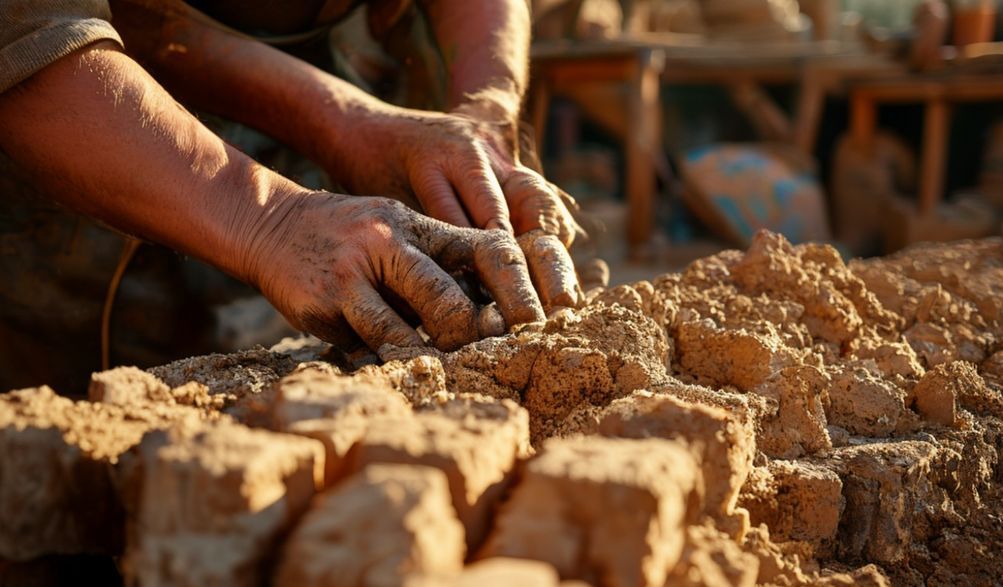
Повний посібник з ручних машин для виробництва цегли: типи, застосування та як вибрати
Вступ
Уявіть, що ви дрібний будівельник у сільській громаді, екологічно свідомий домовласник, який планує звести садову стіну, або керівник проекту некомерційної організації, що прагне побудувати громадський центр з обмеженим бюджетом. Вартість промислово випаленої цегли непомірно висока, а екологічні наслідки перевезення важких матеріалів суперечать вашим принципам. Має існувати простіший, більш природний спосіб будувати.
Ось де скромний, але могутнійручна машина для виготовлення цегливступає в гру. Ґрунтуючись на роках спостереження за проектами від сараїв на подвір'ї до малих виробничих майстерень, ми побачили, як ця проста технологія може перетворювати місцевий ґрунт на міцні будівельні блоки. Однак успіх не забезпечується лише машиною; він залежить від практичних знань та реалістичних очікувань.
Цей комплексний посібник створений саме для цього. Ми розвіємо марення, щоб надати вам неупереджений, детальний огляд. Ми розглянемо незаперечні переваги та реальні недоліки, обговоримо справжні витрати, що виходять за межі ціни покупки, та наголосимо на критично важливих практиках безпеки. Наша мета — надати вам практичні знання, необхідні для того, щоб вирішити, чи підходить вамручна машина для виготовлення цегличи підходить для вашого проекту та, якщо так, як ефективно використовувати його для виробництва міцної цегли прямо на місці без залежності від важкої техніки чи складної інфраструктури.
Цей посібник дослідить внутрішню роботу цих машин, їх ідеальні сфери застосування, чітку структуру для вибору найкращої моделі та найкращі операційні практики, які відрізняють успішні проекти від тих, що завдають розчарування.
Що таке ручна машина для виготовлення цегли? Розуміння основ
Перш ніж вкладати час та ресурси, важливо зрозуміти, з чим ви працюєте. Ручна машина для виробництва цегли — це не просто інструмент; це механічне рішення давньої будівельної проблеми.
Основне визначення та принцип роботи
У своїй основі,ручна машина для виготовлення цеглице пристрій з ручним приводом, призначений для ущільнення сирих, вологих матеріалів — найчастіше ґрунту, глини або суміші ґрунту з цементом — у щільні, однорідні цеглини або блоки. На відміну від автоматизованих електричних або гідравлічних систем, він повністю залежить від людської сили, яка зазвичай прикладається через важільну систему.
Принцип роботи простий, але ефективний:Механічна перевага. A long lever multiplies the force exerted by the operator, concentrating it onto a piston within a confined mold or compression chamber. This high-pressure compaction removes air pockets and binds the material particles together, creating a block with significant structural integrity once cured.
Ключові компоненти та їх функції
Understanding the parts demystifies the process and helps you evaluate machine quality:
- Рамка The robust, usually steel, skeleton of the machine. It must absorb immense compression forces without bending or buckling. A wobbly frame is the first sign of a poor-quality press.
- Пліснява або смерть: This is the cavity that gives the brick its shape and size. It can be a single block mold or a multi-cavity mold for smaller bricks. The interior finish determines how easily the brick ejects.
- Камера стиснення: The area where the loose material is loaded and compressed. Its design directly impacts the final brick density.
- Важіль/Пресовий механізм: The engine of the machine. This can be a single long lever (like a Cinva Ram), a dual-lever system, or a screw press. The longer and sturdier the lever, the greater the mechanical advantage and the easier the pressing.
- Система катапультування: How the finished brick is removed. Better machines have a lever-activated plate or a simple turn-handle that cleanly pushes the brick out. Poor designs require hammering or risky manual prying.
The “Manual” Aspect and Related Terminology
The“manual” designation is key. It means:
* No electricity or fuel is required, making it ideal for off-grid locations.
* Theproduction rate is directly tied to human labor—it’s physically demanding work.
* Operational costs are virtually zero after purchase.
You’ll encounter several related terms, often describing specific niches:
* Hand-operated brick press: A broader synonym.
* Soil block press: Emphasizes the primary material (earth).
* Compressed Earth Block (CEB) machine: Often refers to machines producing blocks that meet specific engineering standards for stabilized earth.
* Interlocking brick maker: Highlights a block design that allows for dry-stacking.
Types of Manual Brick Machines and Their Applications
Not all manual brick machines are created equal. The right type for you depends entirely on your project goals, available materials, and desired output.
Static/Press-Type Machines (e.g., Cinva Ram Style)
This is the classic, most common design. The operator loads material into a chamber and pulls down a long lever to compress it.
- Найкраще для: Producing high-density Compressed Stabilized Earth Blocks (CSEB) for structural walls. They excel with soil-cement mixes.
- Вихід: Solid, rectangular blocks ideal for load-bearing construction. They are the go-to for serious, small-scale building projects like homes, sheds, and community buildings.
- Розгляд: They require a stable, mounted base (often on a sturdy table or stand) during operation.
Блок-машини зі зчіпленням
These machines produce blocks with designed protrusions and indentations—like a puzzle or Lego bricks.
- Найкраще для: Speed of construction and reducing mortar use. The interlocking design provides alignment and some mechanical bond, allowing for dry-stacking or using a thin slurry mortar.
- Вихід: Blocks with complex faces. They are popular for perimeter walls, garden features, and some non-load bearing internal walls.
- Розгляд: The molds are more complex and can be harder to clean. The block design may require slightly more precise material preparation.
Mobile or Tamping Machines
These are often simpler, sometimes smaller machines that may be moved around a site. Compression might come from a tamping foot or a smaller lever.
- Найкраще для: Landscaping projects, garden paths, large pavers, and edging. They are less about structural walls and more about creating hardscape elements.
- Вихід: Often thicker, heavier units that can be decorative.
- Розгляд: They may not achieve the same extreme density as a large static press, but are perfectly suited for their purpose.
Material-Specific Considerations: Clay vs. Concrete Mix
The raw material dictates subtle but important machine features:
* For Clay/Rich Soil: Machines need to handle a more plastic, sticky material. Molds require excellent release properties, and the compression mechanism must generate very high pressure to bind the fine particles.
* For Concrete (Soil-Cement) Mix: The mix is more granular. The machine must achieve compaction to activate the cement binder. Durability and resistance to the abrasive cement mix are key for the machine’s components.
Advantages and Limitations: Is a Manual Brick Machine Right for You?
A clear-eyed view of both the benefits and the challenges is essential for making a smart decision. Let’s manage expectations.
Key Advantages (The Compelling Reasons to Choose One)
- Extreme Cost-Effectiveness: The initial investment is a fraction of the cost of an automated brick plant or even a large volume of purchased bricks. Operating costs are essentially just labor and raw materials.
- Вища стійкість: This is a major draw. It has a near-zero carbon footprint in operation, utilizes locally sourced subsoil (often from the build site itself), and drastically cuts transportation emissions.
- Empowerment & Accessibility: It democratizes construction. For remote areas, small entrepreneurs, DIY builders, and community-led projects, it provides true self-reliance. You control the production schedule, brick quality, and design.
- Операційна простота: With no engines, motors, or complex electronics, maintenance is straightforward. Basic mechanical skills are sufficient for repairs, and operation can be learned quickly.
Important Considerations and Limitations (The Reality Check)
- Production Rate is Human-Scale: Don’t expect industrial output. A single experienced operator might produce 200-500 quality bricks in an 8-hour day, depending on the machine and workflow. This is about small-batch, steady production.
- Physically Demanding Labor: Operating the lever, especially for a full day, is hard work. It requires a capable operator or a team that can rotate.
- Material Preparation is 80% of the Work: The machine just compacts. You must source, test, sieve, mix, and moisture-condition the raw materials. Poor preparation leads to weak or crumbling bricks, regardless of the machine’s quality.
- Not for Large-Scale Commercial Deadlines: If you need 10,000 bricks in a week for a commercial contract, this is not the tool. It’s designed for small-to-medium, owner-builder or local supply projects.
How to Choose the Best Manual Brick Machine: A Buyer’s Checklist
With the landscape understood, how do you select the right tool? Use this actionable checklist to guide your research and purchasing decision.
1. Assess Your Project Requirements First
Answer these questions before looking at a single machine:
* Масштаб проекту: How many bricks do you need total? What is your timeline?
* Тип та розмір цегли: Do you need standard building blocks, interlocking blocks, or pavers? What dimensions are appropriate for your design?
* Primary Raw Material: What soil type do you have access to? Is cement readily available and affordable for stabilization?
2. Evaluate Machine Specifications Critically
When comparing models, go beyond the sales photos:
* Якість збірки: Look for thick, reinforced steel frames (at least 3-5mm). Inspect welds—they should be clean, continuous, and robust. A flimsy machine will fail under stress.
* Універсальність форми: Can you purchase different mold inserts for different block sizes or styles from the manufacturer? This adds long-term value.
* Місткість тиску: While hard to measure, a longer lever and a well-designed compression chamber generally equate to higher pressure and denser bricks.
* Ergonomics & Safety: Is the lever handle comfortable? Does the machine have a secure, non-slip base? Is the ejection system safe and easy to use without pinching fingers?
3. Source Reputable Manufacturers and Suppliers
This is where due diligence builds trust and prevents future headaches.
* Research Brands: Look for companies with a documented history and specialization in this niche, not just general tool suppliers.
* Seek User Reviews & Testimonials: Search for videos, forum posts, or blog articles from actual users. Their experiences with durability and output are invaluable.
* Verify After-Sales Support: Can you get replacement parts (like a specific mold or a shear pin)? Does the supplier offer any technical guidance? A machine you can’t repair is a short-term investment.
4. Conduct a Full Cost Analysis
Budget for the entire system, not just the press:
* Ціна покупки: The machine itself.
* Material Processing Tools: Sieves/shakers, mixing tarp or concrete mixer, moisture testing tools, wheelbarrows.
* Curing Space: A covered, well-ventilated area to store bricks for 2-4 weeks.
* Праця: Your time or the cost of an operator.
Operating Your Manual Brick Machine: A Step-by-Step Guide
Owning the machine is step one. Using it correctly is what leads to success. Here’s a field-tested operational workflow.
Material Preparation: The Foundation of Quality Bricks
Skipping this step guarantees failure.
* Тестування ґрунту: Perform a simple “jar test.” Fill a clear jar 1/3 with soil, 2/3 with water, shake, and let it settle. Ideal soil will have roughly 30% clay, 70% sand/aggregate.
* Стабілізація: For structural blocks, add a stabilizer. Portland cement (5-10% by volume) is most common. Lime can also be used. Mix thoroughly in a dry state first.
* Вміст вологи: This is critical. The mix should hold its shape when squeezed in your fist but crumble when poked (the “drop test”). Too wet = blocks deform. Too dry = blocks crack and lack strength.
The Production Cycle: Filling, Pressing, and Ejection
Consistency is key.
1. Заповнити: Place the machine on a stable, level surface. Fill the mold cavity evenly with your prepared mix. Do not overfill or underfill—use a consistent scoop.
2. Преса: Apply steady, full force on the lever through its entire range of motion. Hold maximum pressure for a few seconds.
3. Викинути: Carefully engage the ejection mechanism to push the fresh, “green” brick out onto a pallet or board. Handle it gently, as it is fragile at this stage.
Curing and Storage for Maximum Strength
Curing is not drying; it’s a chemical process for strength development.
* For Cement-Stabilized Blocks: Keep them damp and under cover (with plastic sheeting) for 7 days to allow the cement to hydrate. Then, uncover and allow to air-cure in the shade for a minimum of 3-4 weeks before use.
* For Unstabilized Earth Blocks: They must be kept completely dry during curing. Protect from rain and morning dew.
* Завжди stack bricks loosely to allow air circulation and label batches with their production date.
Essential Safety Practices
Respect the forces involved.
* Lifting Technique: Use your legs, not your back, when moving mixed material or stacks of bricks.
* Secure Footing: Ensure the machine is stable and you have solid footing before applying full lever force to avoid slips or strains.
* Hand Protection: Wear sturdy gloves to protect hands from abrasion and pinching points.
* Organized Workspace: Keep the area clean to prevent tripping hazards and to maintain an efficient workflow.
Frequently Asked Questions (FAQ) About Manual Brick Machines
Q1: How many bricks can I make in a day with a manual machine?
А: A realistic range for a single, experienced operator is between 200 and 500 standard-sized bricks in an 8-hour day. This factors in time for material mixing, machine operation, and brick handling. A two-person team (one mixing, one pressing) can significantly increase output.
Q2: What is the strongest mix for manual pressed bricks?
А: Strength comes from two factors: compaction and stabilization. A well-graded soil (from the jar test) compacted at optimal moisture in a good machine provides good strength. For maximum, reliable strength for load-bearing walls, stabilizing that soil with 5-10% cement by volume is the standard. The cement chemically binds the soil particles.
Q3: Can I start a business with a manual brick machine?
А: Yes, but with clear parameters. It’s excellent for a small, local venture supplying bricks for homesteads, garden projects, or small outbuildings in your community. Your business model must account for the labor-intensive process. Scaling significantly is challenging; it’s a business built on craftsmanship and local supply, not high-volume competition.
Q4: Do the bricks require firing in a kiln?
А: No. Bricks from a manual press are cured, not fired. They gain strength through compaction and, if used, the chemical hardening of a stabilizer like cement. They are air-cured. Fired clay bricks require a kiln at extreme temperatures, which is a completely different technology.
Q5: Where can I find plans to build a DIY manual brick machine?
А: Plans can be found online from open-source hardware projects. However, building a machine that delivers consistent, high pressure and withstands repeated use requires good engineering and metalworking skills. For most users, the reliability, safety, and performance guarantee of a professionally manufactured machine from a reputable supplier is a more prudent investment for a serious project.
Висновок
Theручна машина для виготовлення цегли stands as a testament to simple, appropriate technology. It is a powerful tool that makes sustainable, affordable, and self-reliant construction a tangible reality for small-scale builders, DIY enthusiasts, and community projects worldwide. Its value lies not in automation, but in empowerment—turning locally available earth into a viable building material.
As we’ve explored, success with this technology is not automatic. It hinges on a clear-eyed understanding of its advantages and limitations, a careful selection process to match the right machine to your specific needs, and, most importantly, a committed focus on proper material preparation and operational best practices.
We encourage you to use this guide as a foundation. Thoroughly assess your project’s scope, research suppliers with a critical eye, and always start with a small test batch to refine your mix and technique. Embrace the ручна машина для виготовлення цегли for what it is: a gateway to a more hands-on, sustainable, and personally fulfilling approach to building.
<