
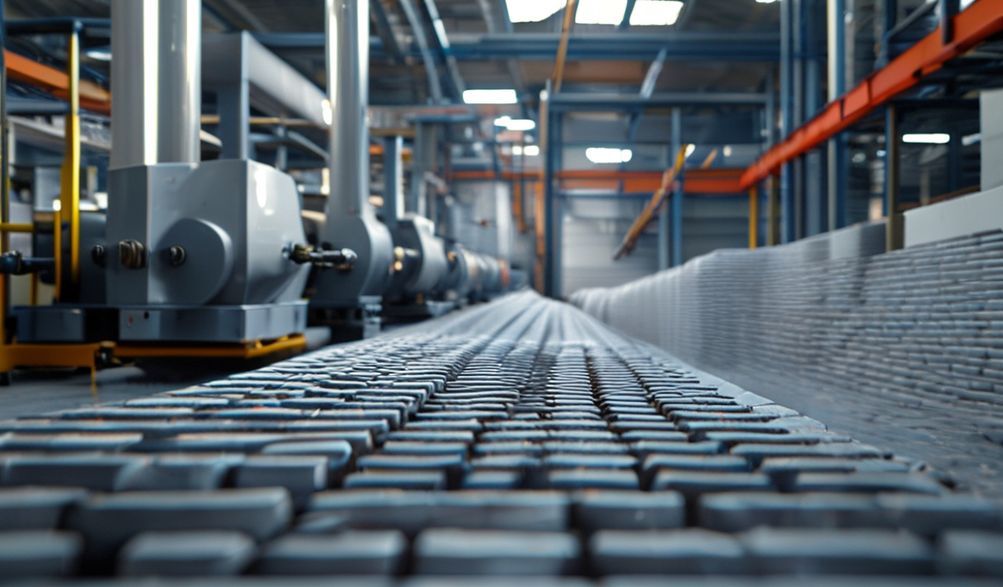
Understanding the Cost of a Fly Ash Bricks Machine from FUDA Block Making Factory
In the competitive world of construction materials, fly ash bricks have emerged as a sustainable and cost-effective alternative to traditional clay bricks. For entrepreneurs and construction businesses looking to invest in this green technology, understanding the cost of a fly ash bricks machine is the critical first step.
This comprehensive guide, focusing on the offerings from the reputable Фабрика з виробництва будівельних блоків FUDA, will break down the investment required. We’ll move beyond simple price lists to analyze the factors that influence cost, the value proposition of different machine models, and how to calculate your total project investment (TPI) for a profitable fly ash brick manufacturing unit. Our analysis is built on industry expertise and a clear understanding of the machinery landscape to help you make an informed, trustworthy financial decision.
Why Invest in a Fly Ash Brick Making Machine?
The decision to invest in brick-making machinery is significant. Understanding the “why” behind the investment is just as important as the “how much.” Here’s a look at the compelling drivers.
Market Demand & Environmental Benefits
The global shift towards sustainable construction is not a trend; it’s a new standard. Fly ash, a byproduct of coal-fired power plants, presents a brilliant solution for repurposing industrial waste.
- Eco-Friendly Mandate: Governments worldwide are promoting the use of fly ash in construction through regulations and incentives, reducing the environmental burden of landfill and clay quarrying.
- Superior Product Properties: Fly ash bricks are not just “green”; they are better. They offer:
- Higher compressive strength and durability.
- Excellent thermal insulation, reducing energy costs in buildings.
- Uniform size and shape, leading to less mortar use and faster construction.
- Lower water penetration, enhancing building longevity.
Profitability & Business Potential
Beyond environmental good, this is a sound business decision with tangible financial returns.
- Високий потенціал ROI: The raw materials (fly ash, sand, cement) are often low-cost, especially near thermal power plants. This creates a favorable margin compared to clay bricks.
- Growing Market: Rapid urbanization and infrastructure development in emerging economies drive constant demand for affordable, quality building materials.
- Lower Production Cost: The manufacturing process is less energy-intensive than firing clay bricks, reducing operational expenses.
Why Choose a Specialist Manufacturer like FUDA?
In an industry where machine downtime means lost revenue, your choice of manufacturer is paramount. FUDA Block Making Factory stands out as a specialist, not a generalist.
- Authoritativeness through Specialization: FUDA focuses specifically on block making machinery, dedicating its R&D to perfecting the technology for products like fly ash bricks.
- Proven Experience & Reliability: With years of industry presence, FUDA has refined its designs based on real-world feedback, building a reputation for robust and dependable machines.
- Trustworthiness in Support: A machine is a long-term partnership. FUDA’s commitment to after-sales service, training, and spare parts availability is a critical component of your investment’s security.
Key Factors Influencing the Cost of a Fly Ash Bricks Machine
The price tag on a fly ash brick machine isn’t arbitrary. It’s a direct reflection of its capabilities, build quality, and automation. Let’s dissect the core cost drivers.
Тип машини та рівень автоматизації
This is the most significant factor, creating a spectrum from basic to highly sophisticated systems.
- Ручні/Напівавтоматичні машини: Require more manual labor for feeding and brick removal. Lower initial cost but higher per-unit labor cost and lower output.
- Повністю автоматичні машини: Integrated systems with automatic material feeding, compaction, and brick ejection. Higher upfront cost, but delivers consistent high output with minimal labor.
- Повністю автоматизовані виробничі лінії: Computer-controlled plants with automated pallet handling, stacking, and curing. Represent the peak of efficiency and capital investment.
Виробнича потужність (випуск продукції за годину)
Capacity is typically measured in bricks per hour (BPH) or blocks per shift. Cost scales non-linearly with output.
- Small Scale (1,000 – 4,000 BPH): Ideal for local or regional suppliers. Machines are more compact and affordable.
- Medium Scale (5,000 – 10,000 BPH): Targets larger construction projects or suppliers. Requires a more substantial machine and setup.
- Large Scale (15,000+ BPH): For industrial manufacturers supplying major projects or distributors. Involves complex, custom-engineered plants.
Machine Model & Technical Specifications
The “engine under the hood” matters. Key specifications that influence price include:
- Сила тиску (тоннаж): Higher tonnage (e.g., 150 tons vs. 80 tons) produces denser, stronger bricks but requires a more powerful and costly hydraulic system.
- Mold Type & Quantity: Interchangeable molds for different brick sizes (solid, hollow, paver) add versatility and cost. Multiple mold cavities increase single-cycle output.
- Якість компонентів: The brand and origin of the hydraulic system, programmable logic controller (PLC), and electrical components significantly impact reliability, longevity, and price.
Customization & Additional Features
Off-the-shelf solutions work for many, but specific needs can add cost.
- Custom Brick Sizes/Shapes: Unique mold design and fabrication.
- Особливості: Auto-pallet feeders, integrated color mixers, robotic stackers, or in-line curing chambers transform a machine into a seamless plant, adding considerable value and cost.
Detailed Cost Breakdown: FUDA Machine Models & Pricing Guide
Disclaimer: The following price ranges are broad estimates for illustrative purposes based on industry standards. Exact pricing can only be provided by FUDA Block Making Factory upon understanding your specific requirements. Prices are subject to change and vary based on configuration, shipping terms, and market conditions.
Entry-Level Machines (Semi-Automatic)
- Ідеально підходить для: First-time entrepreneurs, small-scale startups, or businesses with limited capital looking to validate the market.
- Діапазон цін:Приблизно$8,000 – $25,000.
- Key Specs: Lower production capacity (1,000-3,000 BPH), manual material feeding and brick removal, basic hydraulic systems, single or few mold options.
- Пропозиція цінності: Low barrier to entry, simplicity of operation, and a practical way to start production.
Mid-Range Machines (Fully Automatic)
- Ідеально підходить для: Established small to medium businesses (SMBs) aiming to scale, meet consistent contract demands, and optimize labor costs.
- Діапазон цін:Приблизно$30,000 – $80,000.
- Key Specs: Good production capacity (4,000-8,000 BPH), automatic operation cycles, vibration and hydraulic compression, PLC control for consistency, options for auto-pallet feeders.
- Пропозиція цінності: The best balance of investment and automated output, offering a strong foundation for growth and profitability.
High-Capacity Production Lines (Fully Automatic Plants)
- Ідеально підходить для: Large-scale industrial manufacturers, major infrastructure project suppliers, or large corporate investments.
- Діапазон цін: Typically starting from $100,000+ and can extend significantly higher based on complexity.
- Key Specs: High output (10,000+ BPH), completely integrated system including automatic batching plant, conveyor belts, the core block making machine, robotic stackers, and central control panel.
- Пропозиція цінності: Maximum efficiency, lowest per-unit labor cost, and the ability to dominate supply for large-scale demand.
Beyond the Machine: Ancillary Equipment Costs
The block maker is the heart, but you need a full “body” to operate. Budget for:
- Панміксер: For consistent raw material mixing. ($3,000 – $15,000)
- Belt Conveyors: To move raw material and bricks. ($1,000 – $5,000+)
- Brick Pallets & Trolleys: Essential for curing and transportation. (Ongoing cost)
- Raw Material Handling Equipment: Like forklifts or front-end loaders.
Calculating Your Total Project Investment (TPI)
The machine’s price is just one line item. A realistic budget, or Total Project Investment (TPI), is crucial for planning and securing financing.
Machine Procurement Cost
The base price of your chosen FUDA machine, including its standard accessories and fittings.
Shipping, Installation & Commissioning
- Доставка: Determined by Incoterms (FOB, CIF, etc.), distance, and container size.
- Import Duties & Taxes: Vary drastically by country. Must be researched locally.
- Встановлення та навчання: Costs for sending a FUDA technician for setup, calibration, and staff training.
Civil Work & Factory Setup
- Shed/Factory Building: A covered, level space for operation.
- Machine Foundation: A strong, vibration-absorbing concrete base as per FUDA’s specs.
- Electrical Work: Heavy-duty power connection, wiring, and potential transformer costs.
- Water Supply & Drainage: For mixing and curing processes.
Working Capital & Raw Material Inventory
Funds to cover the first 1-3 months of operational expenses: fly ash, cement, sand, labor salaries, electricity, and maintenance, before revenue flows steadily.
Sample TPI Table for Different Scales
| Scale | Approx. Machine Cost | Ancillary Equipment | Setup & Commissioning | Working Capital | Estimated TPI Range |
| :— | :— | :— | :— | :— | :— |
| Маломасштабний | $15,000 | $5,000 | $8,000 | $7,000 | $35,000 – $50,000 |
| Medium-Scale | $50,000 | $15,000 | $15,000 | $20,000 | $90,000 – $150,000 |
| Large-Scale | $120,000+ | $50,000+ | $30,000+ | $50,000+ | $250,000+ |
Note: This table is a simplified illustration. Every project is unique. These figures are estimates and must be refined with detailed quotes and local cost research.
Maximizing Your Investment: Tips for Choosing the Right FUDA Machine
A smart investment is about matching the right tool to your specific goals.
Accurately Assess Your Market Demand
Don’t buy capacity you can’t sell. Conduct thorough research:
* Who are your potential customers (builders, contractors, retailers)?
* What is the local demand and competition?
* What brick sizes and types are most in demand?
Choose a machine whose output aligns with a realistic 2-3 year sales forecast.
Prioritize After-Sales Service & Support
The true test of a manufacturer’s надійність comes after the sale. With FUDA, clarify:
* Warranty period and coverage details.
* Availability and delivery time for spare parts.
* Access to technical support (phone, online, on-site).
This support network is your insurance policy against prolonged downtime.
Evaluate Energy Efficiency & Operating Costs
A slightly higher upfront cost for an energy-efficient machine (with better hydraulics and motors) can lead to substantial savings on your monthly electricity bill, improving long-term profitability.
Request a Live Demonstration & Customer References
Leverage FUDA’s experience and authoritativeness.
* Live Demo: If possible, visit the factory or a working site to see the machine in action. Assess build quality, noise, and ease of operation.
* Customer References: Speak to existing FUDA clients, especially those in a similar market. Their firsthand experience is invaluable.
Часті питання (FAQ)
Q1: What is the exact price of a FUDA fly ash brick making machine?
А: The exact price depends on the specific model, automation level, production capacity, and configuration chosen. It’s best to contact FUDA Block Making Factory directly with your requirements for a detailed and accurate quotation.
Q2: Are there any hidden costs I should be aware of?
А: Reputable manufacturers like FUDA are transparent. Ensure your quote clearly includes standard accessories. The main additional costs are usually shipping, installation, customs duties, and local civil/electrical work, which we’ve outlined in the TPI section.
Q3: What is the typical payback period for this investment?
А: The payback period can range from 1 to 3 years, depending on your machine’s capacity, local brick pricing, operational efficiency, and market demand. A well-planned business with a suitable machine model can achieve a faster ROI.
Q4: Does FUDA provide training and installation support?
А: Yes, a key advantage of working with an established factory like FUDA is their professional support. They typically provide installation guidance, machine operation training, and maintenance manuals to ensure you can run the plant effectively.
Q5: Can the machine produce other types of blocks besides fly ash bricks?
А: Many FUDA block making machines are versatile. By simply changing the mold, the same machine can often produce concrete hollow blocks, paving blocks, curb stones, and other cement-based products, enhancing your business potential.
Висновок
Investing in a fly ash bricks machine from a specialized manufacturer like Фабрика з виробництва будівельних блоків FUDA is a strategic decision that balances upfront cost with long-term profitability and sustainability. The “cost” is not merely a sticker price but a total project investment that includes the right machine for your scale, reliable support, and efficient operation.
By carefully considering the factors outlined—from automation levels and capacity to ancillary costs and after-sales service—you can make a confident investment that builds not just bricks, but a resilient and profitable business. We recommend defining your project scope clearly and engaging with FUDA’s experts to obtain a tailored solution and precise cost analysis for your specific venture.
This guide was compiled based on extensive industry research and analysis of construction equipment manufacturing. While we strive for accuracy, specifications and pricing are subject to change by the manufacturer. Readers are advised to verify all details directly with FUDA Block Making Factory or authorized dealers before making procurement decisions.
<