
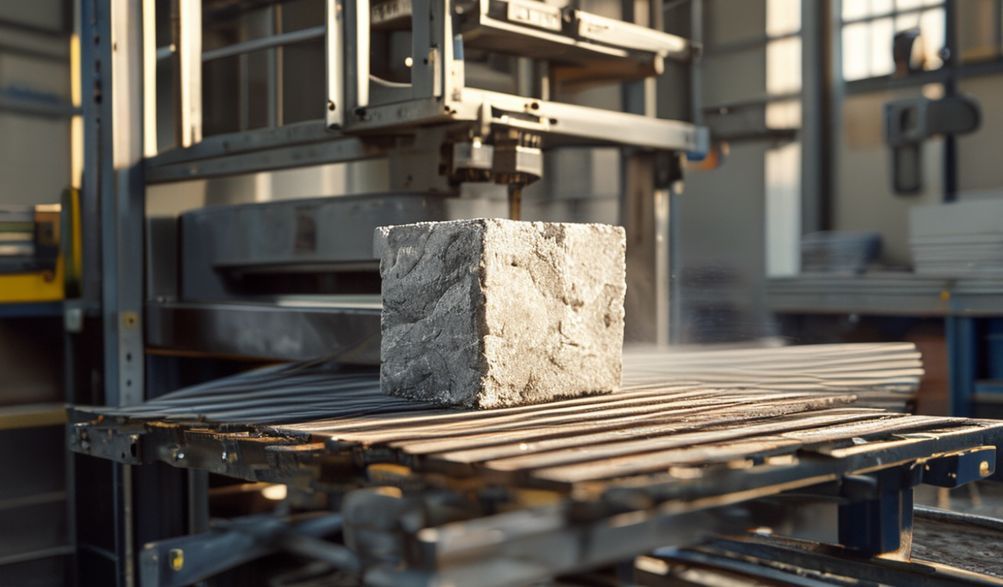
The Ultimate Guide to Hollow Block Molding Machines: Selection, Operation & Cost
Вступ
The global market for concrete blocks is projected to reach billions of units annually, driven by relentless demand in construction. Yet, a persistent pain point for builders and manufacturers remains: achieving consistent, high-quality block production without exorbitant labor costs or material waste. If you’re researching hollow block molding machines, you’re likely at a critical juncture—whether you’re a contractor aiming for on-site efficiency, an entrepreneur launching a block-making business, or a project manager sourcing reliable materials.
This comprehensive guide is engineered to be your definitive resource. Compiled from industry standards, technical manuals, and decades of collective operational best practices, it cuts through the noise to deliver actionable insights. We recognize you might be looking to buy your first machine, optimize an existing operation, or simply understand the technology. Our goal is to equip you with the knowledge to make a confident, informed decision.
A crucial trust signal: While this guide is thorough and based on expert sources, it is for educational purposes. For specific projects, large-scale investments, or structural engineering concerns, we always recommend direct consultation with certified civil engineers and reputable manufacturers.
In the following sections, we will deconstruct the hollow block machine, compare every major type, break down its technical workings, and provide a clear framework for selection, operation, and maintenance. Let’s build a solid foundation of knowledge.
What is a Hollow Block Molding Machine? Core Function & Importance
At its core, a hollow block molding machine is a purpose-built device that automates the process of compacting a semi-dry concrete mix into precise molds to form hollow concrete blocks. These blocks are a fundamental building material worldwide.
Визначення машини та її вихідних даних
The machine’s primary function is to apply a combination of vibration and mechanical pressure to a mix of cement, aggregates (like sand and crushed stone), and water. This action compacts the mix into a steel mold cavity, forming a block with one or more hollow cavities. But why are the blocks hollow?
- Легкий: Makes them easier and safer to handle and transport.
- Тепло- та звукоізоляція: The air pockets provide excellent insulation properties.
- Матеріальна ефективність: Uses less concrete than a solid block, reducing material cost and structural load without significantly compromising strength.
- Utility Conduits: The voids can be used for running electrical wiring or plumbing.
The Role in Modern Construction and Manufacturing
This machine is the engine behind scalable, quality-controlled masonry production. Its importance cannot be overstated for:
- Проекти доступного житла: Enables rapid, cost-effective construction of durable walls.
- Розвиток інфраструктури: Used for boundary walls, retaining walls, and industrial structures.
- Prefabricated Construction: Supports the growing trend of manufacturing building components off-site.
Contrast this with entirely manual methods, which are inconsistent, labor-intensive, and limited in scale. The machine brings repeatability, efficiency, and scalability to block production, ensuring every block meets the required dimensional and strength specifications.
Types of Hollow Block Making Machines: A Detailed Comparison
Choosing the right type of machine is your first and most critical decision. The choice hinges on your required output, budget, and available labor. Here’s a breakdown of the primary categories.
Ручні верстати для виготовлення порожнистих блоків
These are the simplest and most basic units, requiring significant human effort at every stage.
- Операція: Workers manually fill the mold, engage a lever to apply compaction/vibration, and then demold and transport the green (uncured) blocks.
- Переваги:
- Найнижча початкова вартість.
- No power requirement (or very minimal for a small vibrator).
- Simple mechanics, easy to understand and repair.
- Недоліки:
- Високо трудомісткий і повільний.
- Low output (typically 300-500 blocks per 8-hour shift).
- Inconsistency in block density and strength due to human variables.
- Ідеально підходить для: Very small-scale personal projects, startups testing the market in remote areas with limited electricity, or producing specialty blocks in tiny batches.
Напівавтоматичні верстати для порожнистих блоків
This category strikes a balance, automating the critical compaction process while requiring manual intervention for feeding and block handling.
- Операція: Often hydraulic or electromechanical. An operator feeds the mix into the hopper, and the machine automates the molding, vibration, and lifting of the finished block onto a pallet. The operator then moves the pallet to the curing area.
- Переваги:
- Significantly higher output than manual machines (1,000 – 2,500 blocks per 8-hour shift).
- Much better consistency in block quality.
- Moderate investment cost.
- Недоліки:
- Still requires 2-3 operators.
- Output is limited by manual pallet handling.
- Ідеально підходить для: Small-to-medium block manufacturing businesses (SMEs), contractors undertaking large housing projects, and as a reliable workhorse for consistent production.
Fully Automatic Hollow Block Machines
These are complete production lines, representing the pinnacle of efficiency for large-scale operations.
- Операція: The process is fully integrated: automatic batching and mixing of raw materials, conveyor-fed molding, high-pressure compaction, automated transfer to curing racks (like a brick elevator), and sometimes even robotic stacking. Often controlled by a PLC (Programmable Logic Controller).
- Переваги:
- Very high output (4,000 – 10,000+ blocks per 8-hour shift).
- Виняткова стабільність та контроль якості.
- Drastically reduced direct labor requirements.
- Недоліки:
- Високі капітальні інвестиції.
- Потребує значної площі та стабільного живлення високої потужності.
- Complex maintenance requiring skilled technicians.
- Ідеально підходить для: Large-scale commercial block yards, industrial construction material suppliers, and government infrastructure projects.
Stationary vs. Mobile Block Machines
- Стаціонарні верстати: These are fixed installations, typically the semi-automatic and fully automatic types. They are set up in a factory or dedicated yard where raw materials are delivered, and finished blocks are shipped out.
- Мобільні блокові машини: Mounted on a trailer or vehicle chassis. These are usually smaller, hydraulic machines designed for on-site production. The key benefit is eliminating transport costs for finished blocks, making them perfect for remote construction sites. Output is generally lower than stationary industrial machines.
Key Components and How It Works: A Technical Breakdown
Understanding the machine’s anatomy demystifies its operation and underscores what to look for in a quality build.
Major Components Explained
- Хоппер: The funnel-shaped container that holds the raw concrete mix before it enters the mold.
- Mixer (in integrated systems): A pan or twin-shaft mixer that blends cement, sand, aggregate, and water to a uniform consistency.
- Conveyor: Transports the mixed concrete to the molding chamber (in automatic systems).
- Форма / Литникова порожнина: The heart of the machine. A precision-engineered steel box that defines the block’s shape and size. Interchangeable molds allow one machine to produce different block types.
- Vibrating Table & Hydraulic Press: The mold sits on a table that transmits high-frequency vibrations to compact the concrete. A hydraulic ram then applies downward pressure (measured in tons or MPa) to achieve final density and a smooth top finish.
- Гідравлічна силова установка: Comprises the pump, motor, valves, and cylinders that generate the pressing force. The quality of these components is a primary determinant of machine durability.
- Панель керування: Houses the electrical controls for vibration motors, hydraulic pumps, and automated sequences.
- Палетний Подавач та Штабелер: Automatically feeds empty pallets (boards) under the mold and removes filled ones, stacking them for curing.
The Block Production Cycle Step-by-Step
- Подача сировини: Precise ratios of cement, sand (fine aggregate), coarse aggregate (e.g., 6mm stone), and water are measured. In practice, consistency here is 80% of achieving quality blocks.
- Змішування: Materials are blended to a “semi-dry” state—cohesive enough to hold shape when compacted but not wet or sloppy.
- Лиття та ущільнення: The mix is fed into the mold. The вібрація phase removes air pockets and settles the aggregate. The гідравлічний прес then applies high pressure, consolidating the mix and forming a dense, strong block with a smooth surface.
- Лікування: The freshly demolded “green” blocks are not yet strong. They are moved to a curing area where they are kept moist for 7-14 days. This allows the cement to fully hydrate and gain strength (often reaching 70-80% of its final strength in this period).
- Demolding and Stacking: After initial set, the machine’s ram lifts, releasing the block. It is then transferred onto a pallet and stacked for curing and eventual shipment.
Critical Factors for Choosing the Right Machine
This decision framework moves you from a theoretical understanding to a practical purchase.
Оцінка ваших виробничих потреб
Запитай себе:
* What is my target output? Blocks per hour or per day? Be realistic about current demand and growth.
* What block sizes and types will I produce? Standard 4″, 6″, 8″ hollow blocks? Also consider interlocking blocks, pavers, or solid blocks. Ensure the machine can accept different mold sizes.
* What is my available workspace? A fully automatic line needs a large shed; a mobile machine needs space to maneuver.
Power Source & Operational Costs
- Електричний: Most common for stationary plants. Clean, efficient, but requires a reliable grid connection. Calculate running costs based on motor kW rating and local electricity tariffs.
- Дизель: Essential for mobile operations or areas with unstable power. Higher fuel cost per block but offers independence.
- Гібрид: Some models offer dual power sources for flexibility.
- Key Metric: Always analyze the cost per block, factoring in energy, labor, and raw materials.
Machine Durability and After-Sales Support
A cheap machine that breaks down is the most expensive machine you can buy.
* Рамка Look for heavy-duty, welded steel construction.
* Гідравліка: Reputable brand components (e.g., Bosch Rexroth, Parker) are a good sign.
* Вібраційні двигуни: High-quality, balanced motors ensure effective compaction and long life.
* Trust Signal: Always verify the manufacturer’s reputation. Ask for customer references. What is the warranty period? Is there a local service network or technical support? Are spare parts (like mold liners, hydraulic seals) readily available? This support is non-negotiable.
Budget Analysis: Initial Investment vs. Long-Term ROI
- Cost Ranges (Approximate):
- Manual: $1,000 – $5,000
- Semi-Automatic: $10,000 – $50,000
- Fully Automatic: $50,000 – $300,000+
- ROI Factors: Calculate based on:
- Вихідна потужність: More blocks sold per day.
- Labor Savings: How many workers does it replace?
- Block Quality & Price: Consistent, high-strength blocks can command a premium.
- Простой A reliable machine has higher effective production time.
Operation, Maintenance, and Safety Best Practices
Owning the machine is one thing; operating it profitably and safely is another.
Daily Operational Checklist
- Pre-start: Inspect for loose bolts, hydraulic leaks, and worn electrical cables. Ensure the mold is clean and properly secured.
- Material Check: Verify your mix design ratios are followed precisely. An incorrect water-cement ratio is a leading cause of poor blocks.
- During Operation: Monitor for unusual noises or vibrations. Check the first few blocks of the day for dimensional accuracy and finish.
Essential Maintenance Schedule
| Frequency | Key Tasks |
| :— | :— |
| Daily | Clean excess concrete from the mold, frame, and hopper. Check hydraulic oil level and for leaks. |
| Weekly | Lubricate all moving parts (pivots, guide rods). Tighten all bolts and nuts. Inspect mold for wear. |
| Monthly | Change hydraulic oil filters. Check vibration motor mounts. Inspect electrical connections. |
| Annually | Consider a full hydraulic oil change. Comprehensive inspection by a qualified technician. |
Non-Negotiable Safety Protocols
- Засоби індивідуального захисту (ЗІЗ): Safety glasses, steel-toe boots, and hearing protection (vibration is loud) are mandatory.
- Lockout-Tagout (LOTO): Always disconnect and lock the power source before performing any maintenance or clearing a jam.
- Handling: Use proper lifting techniques or equipment for heavy molds and components. Never place hands in the mold area during machine cycles.
Maximizing Output and Block Quality
Fine-tuning these elements separates adequate production from exceptional production.
Perfecting the Concrete Mix Design
A standard starting mix ratio is 1 part cement : 3 parts sand : 5 parts coarse aggregate (by volume), with just enough water for cohesion. Strength is often specified in MPa (e.g., 7 MPa for non-load-bearing, 15+ MPa for load-bearing).
* Additives: Plasticizers can improve workability without extra water. Color pigments are used for facing blocks.
Optimizing Vibration and Pressure Settings
- Insufficient Vibration/Pressure: Results in weak, crumbly blocks with a honeycombed surface.
- Excessive Vibration: Can cause aggregate segregation, where stones settle at the bottom.
- The Goal: A uniform, dense block with sharp edges and a smooth surface. This often requires adjusting frequency, amplitude, and pressure duration based on your specific mix.
Proper Curing Techniques
Curing is not just drying; it’s controlled hydration.
* Water Curing: Blocks are kept wet under sprinklers or plastic sheeting for at least 7 days. Cost-effective but space-intensive.
* Steam Curing (Curing Chamber): Blocks are subjected to steam heat and moisture. This accelerates strength gain, allowing blocks to be sold or used in 24-48 hours. Essential for high-throughput automatic plants.
Часті питання (FAQ)
Q: What is the average production capacity of a semi-automatic machine?
А: Capacity is measured in cycles per hour. A common semi-automatic model with a 4-block mold, running at 15 cycles per hour, can produce ~500 blocks in an 8-hour shift (15 cycles x 4 blocks x 8 hrs = 480). Higher-end models can reach 2,500+ blocks per shift.
Q: Can I produce other products like pavers or solid blocks with the same machine?
А: Yes, in most cases. This is the advantage of interchangeable molds. By swapping the mold cavity, a single machine can typically produce hollow blocks, solid blocks, paving stones, kerbstones, and even interlocking blocks. Confirm this flexibility with the manufacturer.
Q: What is the typical lifespan of a hollow block machine?
А: With proper maintenance and operation, a well-built machine from a reputable manufacturer can last 10 to 20 years. Critical wear parts like mold liners, hydraulic seals, and vibration motors will need replacement during this time.
Q: How much space is required to set up a small block manufacturing plant?
А: For a semi-automatic operation, you need space for: the machine itself (~10m x 5m), raw material storage (sand, aggregate piles), a mixing area, a curing area (the largest, about 200-500 sqm for blocks curing over 2 weeks), and finished goods storage. A minimum of 1,000 to 2,000 square meters (1/4 to 1/2 acre) is a practical starting point.
Q: What are the most common problems and how can I troubleshoot them?
А:
* Blocks breaking during demolding: Usually indicates insufficient compaction (check vibration/pressure) or a too-wet mix. Reduce water content.
* Poor surface finish (rough or pitted): Often caused by a too-dry mix, insufficient lubrication of the mold, or worn mold liners. Adjust water slightly and ensure the mold is clean and lightly oiled.
* Machine not achieving full pressure: Check hydraulic oil level and for leaks. The pump or relief valve may need servicing.
Висновок
Navigating the world of hollow block molding machines is a journey from understanding fundamental principles to making nuanced financial and operational decisions. We’ve explored the spectrum from simple manual presses to sophisticated automated lines, broken down the technical magic of vibration and pressure, and outlined the critical path to selection and sustainable operation.
The final takeaway is this: success in block production is not just about buying a machine; it’s about aligning the right machine with your specific production goals, market demands, and operational capabilities. It requires a commitment to proper maintenance, quality raw materials, and safe practices.
As a final, trust-building step, we strongly encourage you to consult with multiple reputable manufacturers. Request detailed specifications, ask for customer references, and, if possible, witness a live demonstration. For those new to the industry, consider starting with a robust used model or a smaller semi-automatic unit to gain invaluable hands-on experience before scaling up.
Investing in the right hollow block molding technology is more than a purchase—it’s an investment in the quality of future construction and the growth potential of your business. Build wisely.
<