
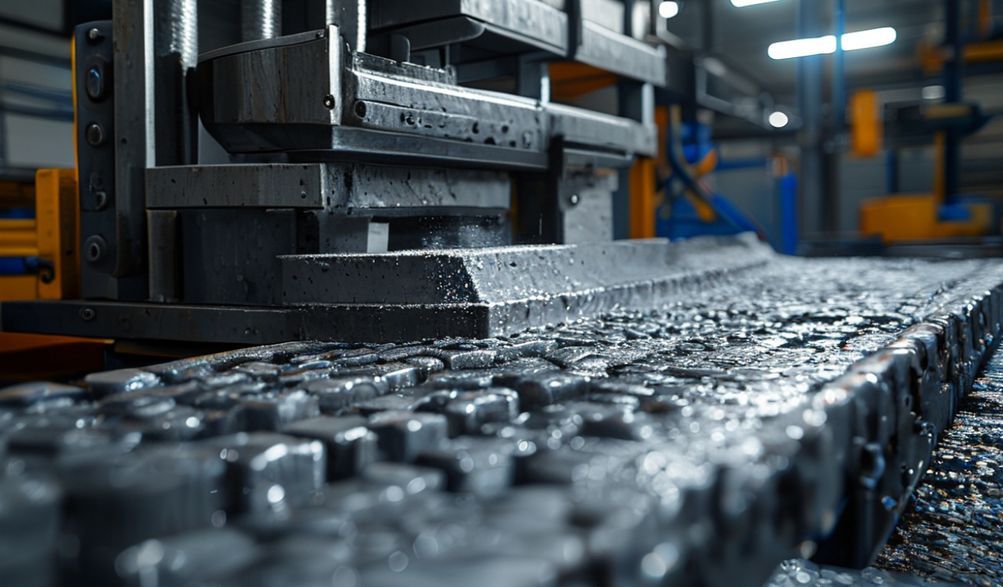
The Ultimate Guide to Choosing the Right Machine to Make Concrete Blocks
From towering skyscrapers to humble garden walls, the demand for durable, cost-effective building materials is universal. At the heart of meeting this global demand lies a critical piece of equipment: the machine to make concrete blocks. Choosing the right one isn’t just a purchase; it’s a pivotal business decision that determines your production efficiency, product quality, and long-term profitability. Whether you’re a contractor looking to produce on-site, an entrepreneur launching a manufacturing business, or a project manager sourcing equipment, navigating the myriad of options can be daunting.
This ultimate guide is built on a foundation of industry expertise and practical experience. We’ll cut through the noise to provide you with trustworthy, actionable information. You’ll learn how to navigate the different types of machines, understand key selection criteria beyond price, gain operational insights, and conduct a realistic ROI analysis. By the end, you’ll be equipped to make an informed investment in the perfect machine to make concrete blocks for your specific needs.
Розуміння машин для виробництва бетонних блоків: типи та сфери застосування
Before diving into specifications and prices, it’s essential to understand the fundamental categories of block-making machinery. The right choice hinges on aligning the machine’s capabilities with your project scale, budget, and labor resources.
Ручні верстати для виготовлення блоків
These are the most basic and entry-level machines. Operation relies entirely on human labor: manually loading the concrete mix into a mold, using a lever to apply compaction pressure, and then ejecting the formed block.
- Типовий вихід: 300 to 800 blocks per 8-hour shift, heavily dependent on crew size and stamina.
- Ідеальні сценарії використання: Very small-scale projects, DIY enthusiasts, startups in regions with very low labor costs, and production in remote locations with limited or no electricity.
- Переваги:
- Дуже низька початкова вартість інвестицій.
- Simple mechanics with minimal maintenance.
- No power requirement.
- Недоліки:
- Високо трудомісткий та фізично напружений.
- Low output and inconsistent block quality due to human variables.
- Not suitable for commercial-scale production.
Напівавтоматичні верстати для виробництва блоків
This category offers a middle ground, blending human effort with mechanical assistance. Typically, operators manually feed the mix into the machine hopper, but the processes of vibration, compaction, and block ejection are powered and automated.
- Типовий вихід: 1,000 to 4,000 blocks per 8-hour shift.
- Ідеальні сценарії використання: Small to medium-sized businesses (SMEs), contractors producing for specific projects, and operations looking to scale up from a manual process without the capital for a full automatic line.
- Переваги:
- Significantly higher and more consistent output than manual machines.
- Better block density and strength due to controlled vibration.
- Good balance between upfront cost and productivity.
- Недоліки:
- Still requires a steady labor force for feeding and handling blocks.
- Higher initial cost and maintenance than manual machines.
- Requires a reliable power source (electric or diesel).
Повністю автоматичні машини для виробництва блоків
These are high-end, computerized production lines. They feature automatic material feeding via conveyor belts, programmed vibration systems, and robotic pallet handling. The entire process from raw mix to finished block on a curing rack is automated with minimal human intervention.
- Типовий вихід: 5,000 to 20,000+ blocks per 8-hour shift.
- Ідеальні сценарії використання: Large-scale commercial block manufacturing plants, government infrastructure projects, and businesses supplying major construction markets.
- Переваги:
- Maximum production capacity and unparalleled consistency.
- Dramatically reduced labor costs and physical strain.
- Ability to produce complex block designs (like interlocking pavers) with precision.
- Недоліки:
- Very high initial capital investment.
- Complex maintenance requiring skilled technicians.
- Requires a significant, prepared space (factory setup) and stable, high-capacity utilities.
Stationary vs. Mobile Block Machines
Beyond automation, consider mobility:
* Стаціонарні верстати: These are fixed installations, typically the semi- and fully-automatic types. They are the core of a block manufacturing plant, offering stability and higher production volumes.
* Мобільні блокові машини: Often mounted on a trailer, these are designed for on-site production. They eliminate transport costs for finished blocks and are ideal for large, remote projects like road construction or rural housing developments. They are usually semi-automatic in function.
Key Factors to Consider When Choosing Your Machine
Selecting a machine goes beyond just type. This framework, drawn from field experience, will help you evaluate options based on your specific operational reality.
Виробнича потужність та вимоги до обсягів виробництва
A machine that’s too small creates bottlenecks; one that’s too large wastes capital. Be realistic.
* Calculate Your Need: Estimate your average daily block requirement. Consider current orders and projected growth for the next 2-3 years. Don’t just look at peak demand.
* Match the Machine: A manual machine might suffice for under 1,000 blocks/day. For 1,000-5,000, look at semi-automatics. For consistent demand above 5,000, a fully automatic line becomes necessary to be competitive.
Block Type, Size, and Design Capability
Not all machines make all blocks. Your product line dictates your machine choice.
* Портфель продуктів: Define what you will sell: standard hollow blocks, solid blocks, paving stones, curb stones, or interlocking landscape blocks. Each may require different mold types and machine pressures.
* Універсальність форми: Investigate how easily and affordably the machine allows for mold changes. Can you switch from producing a 6″ hollow block to a 2″ paver in under an hour? This flexibility is key for meeting diverse market demands.
Automation Level and Labor Investment
This is a critical financial trade-off.
* The Capital vs. Labor Equation: A manual machine has low capital but high ongoing labor cost. A fully automatic machine flips this. Calculate the payback period: the extra investment in automation divided by your monthly savings on labor.
* Skill Availability: Operating a fully automatic machine requires basic technical skills for setup and troubleshooting. Ensure you have or can train the necessary personnel.
Power Source and Operational Costs
Ціна покупки — це лише початок. Зрозумійте експлуатаційні витрати.
* Power Options: Electric models are cleaner and quieter but require a stable grid. Diesel models offer independence for mobile or off-grid operations but have higher fuel costs and emissions.
* Загальна вартість володіння: Factor in energy consumption, expected maintenance costs (parts, service), and the machine’s raw material efficiency (does it produce a lot of waste or broken blocks?).
The Operational Workflow: From Raw Material to Finished Block
Understanding the process helps you appreciate what a machine must do and where challenges arise.
Raw Material Preparation (Mix Design)
The machine is only as good as the mix it receives. Consistency is non-negotiable.
* Мікс: A standard block mix includes cement, fine and coarse aggregates (like sand and crushed stone), and water. Admixtures may be used for color or specific properties.
* Critical Factor: The moisture content and aggregate grading must be tightly controlled. Too wet, and blocks slump; too dry, and they won’t compact properly. In practice, operators often find that investing in a good quality pan or planetary mixer pays for itself in block consistency.
The Block Molding and Compaction Process
This is the machine’s core function.
1. Годування:Підготовлена бетонна суміш подається у завантажувальний бункер машини.
2. Метрове та наповнення: A measured amount of mix is dropped into the mold box on a pallet.
3. Ущільнення: The mold is subjected to high-frequency vibration and simultaneous hydraulic or mechanical pressure. This force removes air pockets and densely packs the material, which is critical for achieving the required compressive strength (measured in MPa, per standards like ASTM C90).
4. Викид: The freshly formed, green block is raised and ejected from the mold onto a conveyor or transfer cart.
Curing and Quality Control
The block isn’t finished when it leaves the machine. Curing is where it gains strength.
* Процес виліковування: Blocks must be kept moist and at a stable temperature for a minimum period (often 24-48 hours initial curing). This is typically done in steam curing chambers or by simply covering stacks with plastic sheeting and sprinkling with water.
* Quality Checks: Regularly test sample blocks for dimensional accuracy, weight, and ultimate compressive strength. A simple field test involves striking two blocks together; a clear, ringing sound indicates good density, while a dull thud suggests poor compaction.
Investment Analysis: Cost, ROI, and Maximizing Profitability
Let’s translate technical specs into financial sense.
Initial Investment Breakdown
| Component | Manual | Semi-Automatic | Fully Automatic |
| :— | :— | :— | :— |
| Machine Cost | $1,000 – $5,000 | $10,000 – $50,000 | $60,000 – $300,000+ |
| Essential Auxiliaries | Mixer, molds, pallets | Mixer, conveyor, molds, pallets | Batching plant, mixer, conveyor, racking, forklift |
| Infrastructure | Basic shed | Proper shed with level floor | Full factory building with utilities |
Calculating Operational Costs and Profit Margins
- Cost Per Block: Add up material cost (cement, aggregate), proportional labor cost, energy cost, and maintenance reserve. For example, a hollow block might cost $0.80 to produce.
- Modeling Revenue: If your local market price is $1.50 per block, your gross margin is $0.70. Multiply by your daily production capacity (e.g., 2,000 blocks) for a daily gross profit of $1,400.
- ROI Calculation: (Total Investment / Daily Gross Profit) = Days to recover capital, excluding fixed overheads. This simple model highlights the importance of output and market price.
Tips for Maximizing Your Return on Investment
- Preventive Maintenance: Adhere strictly to the manufacturer’s lubrication and inspection schedule. Replacing a $10 seal prevents a $1,000 hydraulic failure.
- Optimize Mix Design: Work with a material engineer to find the minimum cement content that still meets strength standards. Cement is often your largest variable cost.
- Reduce Waste & Downtime: Train operators thoroughly. Schedule production runs efficiently to minimize mold changes and machine start-stop cycles.
Essential Maintenance and Safety Best Practices
Long-term profitability depends on machine longevity and safe operation.
Routine Maintenance Checklist
- Daily: Clean the machine thoroughly of all concrete residue. Check hydraulic oil levels and for leaks. Inspect molds for wear or damage.
- Weekly: Lubricate all moving parts as per the manual. Check and tighten all bolts and vibrator mounts.
- Monthly: Inspect hydraulic hoses and electrical connections. Check the compaction plate for wear. Perform a more thorough system check.
Troubleshooting Common Issues
- Poor Block Strength: Usually caused by an incorrect mix (too much water, poor aggregate), insufficient vibration time, or worn-out molds.
- Surface Defects: “Honeycombing” (rough surface) indicates poor compaction or a dry mix. Sticking in the mold is often due to insufficient release agent or a damaged mold.
- Machine Jams: Always follow lockout/tagout procedures before clearing any jam. Common causes are oversized aggregate or foreign objects in the mix.
Operator Safety Protocols
- Mandatory PPE: Safety glasses, hearing protection (vibration is loud), steel-toe boots, and gloves.
- Safe Procedures: Never place hands in the mold area during operation. Ensure all safety guards are in place. Keep the work area clean and free of slip hazards.
FAQ Section
Q1: What is the average price range for a machine to make concrete blocks?
Prices vary dramatically. Manual machines start around $1,000. Semi-automatic machines range from $10,000 to $50,000. Fully automatic production lines begin around $60,000 and can exceed $300,000 for high-capacity models with extensive automation.
Q2: Can one machine produce different types and sizes of blocks?
Yes, through interchangeable molds. However, the ease of change varies. Manual and semi-automatic machines allow for relatively quick mold changes. On fully automatic lines, changing product types may require more extensive recalibration. Always confirm mold compatibility and changeover time with the supplier.
Q3: How much space is needed to set up a small concrete block manufacturing operation?
For a semi-automatic operation, you should plan for at least 5,000 to 10,000 square feet. This space accommodates the machine, raw material storage, mixing area, block curing area, and finished product storage. Mobile operations require less fixed space but need a clear, level site.
Q4: What is the typical lifespan of a block making machine?
With proper maintenance and reasonable usage, a quality machine can last 10 to 20 years. Critical components like hydraulic systems and vibrators may require overhaul or replacement during this time.
Q5: Is specialized training required to operate a semi- or fully-automatic machine?
Yes. While basic operation can be learned quickly, effective troubleshooting, maintenance, and mold changeovers require specific training. Reputable manufacturers and suppliers should provide this training upon installation.
Q6: Where can I find reliable suppliers or manufacturers of block making machines?
Research is key. Look for companies with a long track record, positive customer testimonials, and a strong after-sales service network. Attend international construction equipment expos, consult industry directories, and always request to visit an existing customer’s plant to see the machine in operation.
Висновок
Choosing the right machine to make concrete blocks is a journey that begins with honestly defining your needs, understanding the landscape of machinery, and conducting a clear-eyed analysis of investment and return. It’s a decision that balances immediate capabilities with long-term business growth.
Remember, the cheapest option is rarely the most profitable in the long run. Prioritize quality equipment from reliable suppliers, invest in proper training and maintenance, and commit to the consistent production of high-standard blocks. The construction industry is built on trust and reliability—your blocks, and the machine that makes them, are the foundation of your business’s reputation.
Your Next Step: Use this guide as a checklist. Contact several reputable manufacturers with your specific output and product requirements. Request detailed quotations, ask for customer references, and, if possible, arrange for a live demonstration. Taking the time to research thoroughly now will pave the way for a successful and sustainable concrete block manufacturing venture.
<