
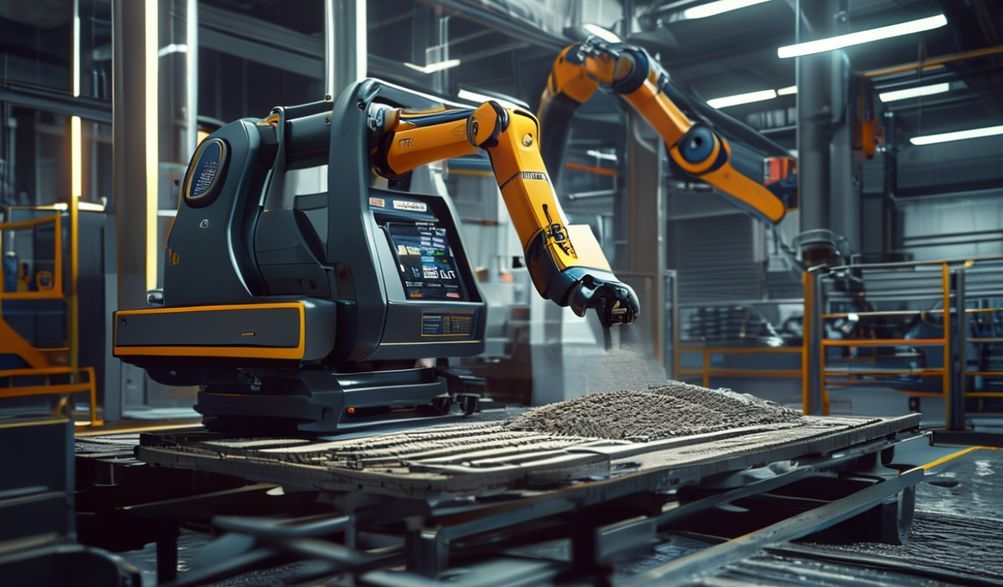
Your Ultimate Guide to Choosing a Reliable China Automatic Block Making Machine Supplier
Вступ
The global construction industry is booming, driven by urbanization, infrastructure development, and the constant need for affordable housing. At the heart of this growth lies a critical demand for efficient, cost-effective building materials production. Enter the automatic block making machine—a powerhouse of productivity that transforms raw materials like cement, fly ash, and slag into precise, durable bricks, pavers, and hollow blocks.
For businesses worldwide looking to invest in this technology, one sourcing destination consistently stands out: China. The nation has cemented its role as the world’s manufacturing hub, supplying a staggering percentage of global construction machinery. However, with this opportunity comes a significant challenge. The vast landscape of Chinese suppliers can be a labyrinth for international buyers. How do you distinguish a reputable manufacturer from a middleman? How can you assess true quality from thousands of miles away? Navigating logistics, payment terms, and after-sales support adds layers of complexity to what should be a transformative investment.
This guide is your strategic map. Built on deep industry observation, analysis of export trends, and practical insights into manufacturing clusters, we cut through the noise. We move beyond a simple price comparison to focus on value, reliability, and forging a long-term partnership. Choosing the right China automatic block making machine supplier is not just a purchase; it’s a pivotal decision for your business’s productivity and profitability for years to come. Let’s begin.
Why China Dominates the Automatic Block Machine Market
Розуміннячому China is the epicenter for this equipment is the first step in sourcing confidently. Its dominance isn’t accidental; it’s built on a formidable foundation of scale, innovation, and integrated ecosystems.
Масштаб та Експертиза у Виробництві
China’s manufacturing prowess is rooted in concentrated industrial clusters. Regions like Фуцзянь, Шаньдун і Гуандун host dense networks of factories specializing in heavy machinery, casting, and hydraulic systems. This clustering creates unparalleled efficiencies:
- Specialized Labor: Access to a skilled workforce with generational knowledge in welding, assembly, and machining.
- Cost Advantages: Bulk purchasing of raw materials and intense local competition drive down unit costs without necessarily sacrificing quality.
- Rapid Prototyping & Iteration: Proximity to component suppliers allows for faster design adjustments and production runs.
This ecosystem means Chinese suppliers can offer a wide range of models—from semi-automatic to fully automated production lines—at scales and price points difficult to match elsewhere.
Технологічний прогрес та інновації
The narrative of Chinese manufacturing as purely imitative is outdated. Today, leading suppliers are at the forefront of innovation:
- Розширені налаштування: Integration of Programmable Logic Controllers (PLC) and touch-screen HMIs for precise, user-friendly operation.
- Розумні функції: IoT-enabled machines for remote monitoring of production data, predictive maintenance alerts, and operational diagnostics.
- Energy & Material Efficiency: Designs focused on reducing hydraulic power consumption and optimizing raw material use, lowering the total cost of ownership for the end-user.
This evolution from copier to innovator means you’re not just buying a machine; you’re accessing cutting-edge technology.
Comprehensive Supply Chain
Perhaps the most significant advantage is the fully integrated supply chain. A block machine requires high-quality steel, precision hydraulics, powerful motors, and robust electrical systems. In China’s industrial zones, all these components are readily available locally. This integration:
- Reduces Lead Times: No waiting for parts to be shipped from overseas.
- Enhances Quality Control: Manufacturers can vet and select component suppliers directly.
- Facilitates Customization: Need a specific mold or a unique configuration? Local access to ancillary industries makes customization more feasible and faster.
Key Factors to Evaluate a Chinese Supplier (Beyond Price)
Fixing your gaze solely on the bottom-line price is the fastest route to a costly mistake. True value is measured across several critical dimensions. Here are the key factors to scrutinize.
Manufacturing Experience and Technical Expertise
A supplier’s history is a proxy for stability and knowledge.
- Years in Business & Specialization: Prefer suppliers with a decade or more of focused experience in block making machinery, not general equipment trading.
- Внутрішні НДДКР: Ask about their engineering team. Do they design their own machines? Can they provide CAD drawings or modify designs to your specific raw materials?
- Pro Tip (E-E-A-T): Request detailed case studies or technical white papers. A knowledgeable supplier will gladly share documentation on machine performance with different material mixes, demonstrating applied expertise.
Quality Control and Certifications
Certificates are a starting point, but processes are what guarantee quality.
- International Certifications: Look for valid ISO 9001(Управління якістю) таНі (meeting EU health, safety, and environmental standards). These indicate a structured approach to production.
- In-House QC Processes: Drill down. What are their standards for material testing (e.g., steel grade verification)? What welding techniques do they use? How is each machine tested before shipment (e.g., a no-load run test)?
- Third-Party Inspection: A reputable supplier will be transparent and accept inspection by agencies like SGS, BV, or TÜV. Willingness to undergo this is a strong trust signal.
Production Capacity and Lead Time Realism
Understanding their capability ensures they can deliver on their promises.
- Factory Audit: Assess the size of the production floor, number of assembly lines, and workforce. A video tour is a minimum requirement.
- Realistic Scheduling: Be wary of suppliers offering improbably short lead times. For a standard automatic machine, 30-60 days is common. Complex, high-capacity lines can take 90+ days. Ask for a detailed production schedule.
After-Sales Service and Support
This is where partnerships are made or broken. The machine’s lifespan is 10-15 years; your relationship with the supplier should mirror that.
- Технічна підтримка: Is there English-speaking engineering support available via phone, WhatsApp, or email? What are their response time guarantees?
- Гарантія та Запчастини: A standard warranty of 12-18 months on core components is typical. Crucially, inquire about the long-term availability and pricing of spare parts.
- Сигнал E-E-A-T: The supplier’s commitment після the sale is the ultimate test of their trustworthiness. Ask for specifics: Do they provide installation manuals, video guides, and online training? Can they dispatch an engineer for on-site commissioning (at a cost)?
A Step-by-Step Supplier Vetting Process
Turn evaluation criteria into actionable steps with this phased approach.
Phase 1: Online Research and Shortlisting
- Leverage B2B Platforms: Use AlibabaабоMade-in-China, but filter intelligently. Prioritize “Gold Suppliers,” “Assessed Suppliers,” or those with Onsite Check verification. Read transaction histories and reviews critically.
- Analyze Company Websites: A professional website is a baseline. Look for:
- Clear, high-resolution photos and videos of their factory and production process.
- Detailed, downloadable PDF catalogs with full technical specifications.
- A client portfolio showcasing international projects.
Phase 2: Direct Communication and Technical Quotation
Initial contact separates the serious from the superficial.
- Essential Questions to Ask:
- Can you provide a detailed quotation with FOB/CIF prices and clear Incoterms?
- What are the brands of key components (PLC, hydraulic pumps, motors)?
- What customization options are available (mold design, color mixer, pallet size)?
- What is your standard payment terms and process?
- Request Key Documents: A detailed catalog, factory audit report, and contactable customer references from your region.
Phase 3: Due Diligence and Verification
This is your final defense against risk.
- Factory Audit is Non-Negotiable:Анin-person visit is ideal. If not possible, insist on a comprehensive, live video tour of the entire facility—from raw material storage to the final testing area.
- Verify Business Credentials: Request a copy of their Business License. Check the registered scope of business—does it include “manufacturing”?
- E-E-A-T Checklist/Red Flags:
- Green Flags: Transparent communication, provides verifiable data, agrees to third-party inspection.
- Red Flags: No physical address, pressure for 100% upfront payment, inability to provide a live factory view, prices significantly below market average.
Understanding Costs: Investment vs. Total Cost of Ownership
Shifting your mindset from цінадовартість is crucial for long-term success.
Breakdown of Machine Pricing
The price tag is influenced by several factors:
* Рівень автоматизації: Fully automatic lines with robotic stackers cost more than semi-automatic models.
* Вихідна потужність: Machines measured in blocks per hour (e.g., 10,000 vs. 30,000).
* Component Brands: Machines using German or Japanese PLCs and hydraulics command a premium over domestic brands.
* Якість збірки: Thicker steel frames, better welding, and superior machining increase durability and price.
Hidden Costs to Inquire About
A responsible supplier will help you budget for these:
* Shipping & Insurance: Freight costs (sea or air), marine insurance.
* Import Duties & Taxes: Vary by your country; consult a local customs broker.
* Commissioning & Training: Potential costs for sending a technician to your site.
* Spare Parts Kit: The initial recommended inventory of wear parts.
The Long-Term Value Equation
A machine that is 20% cheaper but suffers 50% more downtime is a poor investment. A robust machine from a reputable supplier offers:
* Higher Uptime: Reliable performance translates to consistent production and revenue.
* Longer Lifespan: Properly built machines can operate for decades with maintenance.
* Better Resale Value: Known brands with good market reputations hold their value.
* Lower Operating Costs: Energy-efficient designs and easy access to affordable spare parts reduce running expenses.
Navigating Logistics and Successful Delivery
The final hurdle is getting your machine safely to your factory floor.
Choosing the Right Incoterm
Clarity here prevents disputes and unexpected costs.
* EXW (Франко-завод): You handle everything from the factory gate onward. Only for experienced importers.
* ФОБ (Франко борт): The supplier delivers and loads the machine onto the ship at their port. You take over shipping, insurance, and import. Offers good control and is very common.
* CIF (Вартість, Страхування та Фрахт): Supplier arranges and pays for shipping and insurance to your port. You handle import clearance. Simpler but offers less control over freight choices.
Packaging and Documentation
Expect and specify export-ready packaging:
* Упаковка: Seaworthy, steel-frame wooden crates with waterproofing and desiccant bags to prevent rust.
* Critical Documents: Ensure you receive a complete set: Commercial Invoice, Packing List, Bill of Lading, Certificate of Origin, and Equipment Manuals.
Preparing for Arrival
Plan backward from the estimated arrival date:
1. Site Preparation: Ensure your foundation is ready as per the machine layout drawings.
2. Local Customs Clearance: Hire a reliable customs broker in advance. Have all documents ready for smooth clearance.
3. Unloading & Moving: Arrange for a heavy-duty forklift or crane at the port and your site to handle the crates.
Часті питання (FAQ)
Q1: What is the typical lead time for an automatic block making machine from China?
А: Lead times vary significantly. For standard models, expect 30 to 60 days. For highly customized or large-capacity production lines, it can extend to 90 days or more. Always get a detailed, written production schedule from your supplier.
Q2: How can I verify if a supplier is a real manufacturer and not just a trading company?
А: Demand visual proof. Request a live video tour of their active production floor and ask to see specific machinery like CNC cutting beds or welding stations. A real manufacturer will also readily provide a business license showing a manufacturing scope. Trading companies often deflect these requests.
Q3: What is the standard warranty for these machines, and what does it cover?
А: A trustworthy supplier typically offers a 12 to 18-month warranty from the date of shipment or commissioning. It should cover defects in materials and workmanship for core components like the frame, hydraulic system, and PLC. Ensure all warranty terms are explicitly detailed in your sales contract.
Q4: Do suppliers provide installation guidance and training?
А: Yes, professional suppliers provide detailed installation manuals, electrical diagrams, and often video guides. Most offer remote support via video call during commissioning. On-site installation and training by a factory engineer are almost always available as a paid, add-on service.
Q5: What are the most reliable payment methods when dealing with a new supplier?
А: Balanced methods that protect both parties are standard. A common structure is 30% deposit via T/T (bank transfer) and 70% balance against copy of shipping documents. For larger orders, a Letter of Credit (L/C) is very secure. Be extremely cautious of any supplier insisting on 100% payment upfront.
Висновок
Finding the right China automatic block making machine supplier is a strategic endeavor that goes far beyond a simple online transaction. It is an investment in the very backbone of your construction materials business. The journey requires diligence, but the reward is a partnership that fuels your productivity and growth for a decade or more.
Let the principles of Досвід, Експертність, Авторитетність та Надійність (Д-Е-А-Н) be your guiding framework. Prioritize suppliers who demonstrate deep technical knowledge, transparent operations, and a genuine commitment to your long-term success through robust after-sales support. View this process as building a business relationship, not just completing a purchase.
Use this guide as your actionable checklist. Approach potential partners with informed, detailed questions, and align yourself with those whose communication and capabilities reflect the high standards your project deserves. Your ideal supplier is out there—ready to be a reliable resource as you build your future, block by block.
<