
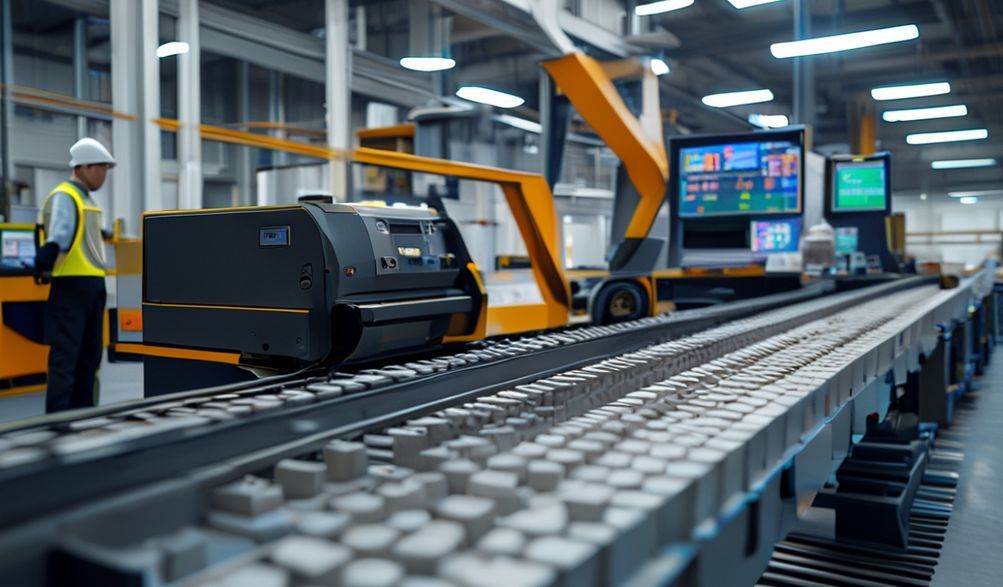
Остаточний посібник з китайських машин для виробництва блоків: якість, вартість та як вибрати
Вступ
Глобальна будівельна індустрія тримається на фундаментальній складовій: простій цеглині. Щоб задовольнити стрімко зростаючий попит на доступне житло та інфраструктуру, будівельники та підприємці по всьому світу звертаються до ключового обладнання — верстата для виробництва цегли. І коли мова заходить про постачання цієї техніки, одна країна домінує на ринку: Китай. Але орієнтуватися на цьому величезному, складному ринку може бути непросто. Як відрізнити справжню якість від маркетингового галасу? Як переконатися, що ви отримуєте реальну цінність, а не просто низьку ціну?
Цей вичерпний посібник створено на основі галузевих знань, технічного аналізу та практичного досвіду закупівель. Ми синтезували інсайти з технічних характеристик виробників, глобальних ринкових звітів та важкого досвіду міжнародних покупців. До кінця цієї статті ви отримаєте чіткий план дій, який дозволить вам впевнено орієнтуватися на китайському ринку, розуміти ключові відмінності між типами обладнання, оцінювати справжню якість і, зрештою, обрати надійного постачальника, який стане вашим партнером у досягненні успіху на довгі роки вперед.
Чому Китай є глобальним центром виробництва обладнання для виготовлення блоків та цегли
Китайська позиція як світової фабрики будівельної техніки не є випадковою. Це результат десятиліть стратегічного розвитку, що створив екосистему, яку надзвичайно складно повторити за масштабами, ефективністю та інноваційністю.
Масштаб та Експертиза у Виробництві
中国的优势始于其完全整合的工业供应链。
* From Raw Materials to Finished Goods: China is the world’s largest producer of steel, a primary component of these machines. This direct access to raw materials reduces base costs significantly.
* Component Clusters: Entire cities and regions specialize in manufacturing specific components—hydraulic parts in one area, electrical panels in another, and mold fabrication elsewhere. This clustering creates efficiency, drives down costs, and fosters competition among component suppliers.
* Skilled Labor Force: Decades of focus on manufacturing have cultivated a vast workforce with skills in welding, machining, and assembly specifically for heavy equipment.
Технологічний прогрес та інновації
The perception of Chinese manufacturing as merely producing cheap copies is outdated. The industry has evolved dramatically.
* From Imitation to Innovation: Leading Chinese manufacturers now invest heavily in R&D. They are developing smarter, more efficient machines with features like IoT connectivity for remote monitoring, advanced vibration systems for better block density, and energy-saving hydraulic circuits.
* Automation is Standard: While manual machines are still available, the focus has shifted to semi- and fully-automatic models. Programmable Logic Controller (PLC) systems, touch-screen interfaces, and automated material handling are now common, even in mid-range machines.
* Focus on Sustainability: Many manufacturers now design machines optimized for using eco-friendly materials like fly ash, slag, and recycled construction waste, aligning with global green building trends.
Market Diversity and Customization
Whether you’re a small entrepreneur in Africa or a large construction firm in South America, there’s a Chinese machine for your needs.
* A Machine for Every Scale: The range is unparalleled—from simple, manually-operated “egg-layer” machines for rural projects to colossal, fully-automatic production lines that can produce thousands of blocks per hour with a crew of just 2-3 people.
* Гнучкість продукту: A single supplier often offers machines that can produce dozens of different products—hollow blocks, solid bricks, paving stones, curbs, and interlocking blocks for dry-stack construction—simply by changing the mold.
* Tailored to Local Conditions: Reputable manufacturers will customize machine parameters (like vibration frequency and pressure) to suit the specific properties of your locally available raw materials (sand, aggregate, cement type).
Types of Block Brick Making Machines from China
Understanding the categories of machines is the first step in making an informed choice. Here’s a breakdown by operation, output, and driving system.
By Operation Method: Manual, Semi-Automatic, Fully Automatic
-
Manual & Semi-Automatic Machines (Often “Egg-layer” type):
- Як вони працюють: The machine (often on wheels) compacts the concrete mix into a mold. Once formed, the machine is moved, “laying” the fresh block directly onto the ground or a pallet. Curing happens in place.
- Найкраще для: Small-scale startups, community projects, or regions with very low labor costs. They require a higher number of operators but have a very low initial investment.
- Ключове міркування: Output is limited, and block consistency depends heavily on operator skill.
-
Повністю автоматичні стаціонарні верстати:
- Як вони працюють: These are fixed production lines. Raw materials are fed in via conveyor, blocks are formed under high pressure and vibration on a central pallet, then automatically transferred to a stacker or curing area. The entire process is controlled by a PLC.
- Найкраще для: Medium to large-scale commercial production where high, consistent output, low labor costs, and product uniformity are critical.
- Ключове міркування: Higher capital investment, but superior long-term productivity and return on investment (ROI).
By Output Product: Concrete Hollow Blocks, Solid Bricks, Pavers, Interlocking Blocks
The product you intend to make dictates the machine and mold you need.
* Пустотілі бетонні блоки: The most common product globally for walls. Machines for this require strong vibration and pressure to form the block webs and ensure clean hollow cores.
* Solid Bricks & Pavers: These require high-density compaction. Paver machines often include a special “press head” for a smooth, textured finish.
* Міжблокові з'єднання: These blocks have tongues and grooves, allowing them to be laid without mortar. The molds are more complex, and the machine must produce them with extremely precise dimensions.
By Driving System: Hydraulic, Mechanical, Vibration-Press Combination
The “heart” of the machine determines its performance and durability.
* Гідравлічні системи: Use pressurized fluid to generate immense, controllable force.
* Переваги: Powerful, smooth operation, excellent for high-density products. Pressure is easily adjustable.
* Недоліки: Can be more expensive to maintain; generates heat; requires good quality seals and pumps.
* Механічні системи: Use motors, gears, and cams to generate pressure.
* Переваги: Often faster cycle times, potentially simpler mechanics.
* Недоліки: Less controllable force, higher impact and wear on components, can be noisier.
* Vibration-Press Combination: The industry standard for block making. Uses high-frequency vibration to compact the concrete mix, combined with a hydraulic or mechanical press for final shaping and ejection.
* Переваги: Achieves the optimal balance of compaction (from vibration) and definition (from press), resulting in strong, well-formed blocks.
Key Factors When Evaluating a Chinese Machine Supplier
This is the most critical phase of your journey. Your choice of supplier will impact your business for the next decade or more.
Assessing Manufacturer Credentials & Experience
Do not skip due diligence. A professional supplier will welcome scrutiny.
* Фабрика проти Трейдера: Your goal is to deal directly with the factory. Trading companies add a markup and often lack technical expertise. Verify by requesting a live video tour of the manufacturing workshop—ask them to walk you through active production lines and show raw material storage.
* Official Documentation: Request their business license and check it via official Chinese platforms if possible. Ask for evidence of export experience: shipping documents to your region, photos of container loading, or client references.
* Інженерна спроможність: Ask about their in-house R&D team. Can they provide custom mechanical drawings? Do they design their own control systems? This separates true manufacturers from assemblers.
Quality Indicators Beyond the Brochure
Brochures show promises; component lists and construction details show reality.
* Critical Component Brands: The brands used for core components are the best predictor of reliability.
* Гідравліка: Look for recognized names like Bosch Rexroth, Kawasaki, Yuken, or Parker. Quality Chinese brands like EatonабоLinde are also good. Be wary of completely unbranded systems.
* Electrical & Controls: Siemens, Schneider, Mitsubishi, or Omron for PLCs and contactors. ABB or WEG for motors.
* Структурна цілісність: Ask about the grade and thickness of the steel plate used for the main frame and mold boxes. Thicker, high-tensile steel resists deformation under constant load. Inspect welding quality in photos or videos—look for clean, consistent, full-penetration welds.
* Request Certificates: Ask for material certificates for the steel and a formal list of all major component brands as part of your quotation.
The Importance of After-Sales Service & Support
The machine will eventually need support. The supplier’s response defines your long-term partnership.
* Pre-Shipment Support: They should provide comprehensive documentation in English: a detailed operation manual, electrical schematic diagrams, and a parts catalog.
* Warranty Terms: The warranty (typically 12 months for parts) must be clearly stated in the contract. What is covered? What is the process for claiming? How are spare parts shipped and paid for?
* Post-Installation Support: Do they offer 24/7 remote support via WhatsApp or video call? Can they guide your electrician through the installation? What are the costs and lead times for dispatching a technician to your site?
Understanding the True Cost: Price vs. Value
The cheapest machine is often the most expensive one you’ll ever buy. True cost is measured over the machine’s entire lifespan.
Breakdown of Quotation Components
A professional quote should be transparent. Understand each line item:
1. Machine Price: The base cost of the equipment.
2. Mold Cost: Often quoted separately. Specify the block type and dimensions.
3. Shipping & Logistics: Defined by Incoterms.
* ФОБ (Франко борт): You pay for the machine loaded on the ship in China. You arrange and pay for sea freight, insurance, and import clearance. Offers more control.
* CIF (Cost, Insurance & Freight): The supplier arranges and pays for shipping and insurance to your nearest port. You handle import duties and clearance. Simpler, but less control.
4. Insurance: Never ship without marine insurance.
5. Import Duties & Taxes: Vary by your country. Research this locally—it can add 10-30%+ to the landed cost.
The Hidden Costs of a “Cheap” Machine
A low upfront price can mask devastating long-term expenses:
* Хронічні простої Frequent breakdowns halt production, costing you daily revenue and missing project deadlines.
* Енергетична неефективність: Poorly designed hydraulic systems or underpowered motors can double your electricity bill.
* Високі витрати на технічне обслуговування: Inferior components fail faster. Sourcing obscure spare parts can take months.
* Poor Product Quality: Inconsistent block dimensions or low compressive strength can lead to rejected batches and damage your business reputation.
* Short Lifespan: A quality machine should last 10-15+ years with proper maintenance. A cheap one might be scrap metal in 3-5.
Calculating Return on Investment (ROI)
Look beyond purchase price. Create a simple 5-year projection:
* Revenue Side: Estimated blocks produced per day x selling price per block x working days per year.
* Cost Side: Include initial machine cost, estimated labor, energy consumption, routine maintenance, and a contingency for repairs.
* The Comparison: A $50,000 machine that produces 10,000 high-quality blocks per day with two operators is a far better investment than a $30,000 machine that produces 5,000 inconsistent blocks per day with five operators and is down for repairs every other month.
The Procurement Process: From Inquiry to Installation
A structured process minimizes risk and ensures a smooth transaction.
Step 1: Defining Your Requirements
Be specific. Write down: your target daily output, the exact block types/sizes, your local voltage and phase (e.g., 380V/3-phase/50Hz), available factory space, and your total budget including shipping.
Step 2: Supplier Shortlisting & Communication
Source 5-7 potential suppliers from B2B platforms like Made-in-China.com or through industry referrals. Send your detailed requirements to each. Filter responses based on professionalism, willingness to answer technical questions, and clarity of communication. Schedule video calls with your top 3.
Step 3: Technical Negotiation & Contract
Finalize all technical specifications in writing. The Proforma Invoice (PI) or formal contract should list every agreed detail: machine model, component brands, output capacity, warranty terms, payment schedule (e.g., 30% deposit, 70% before shipment), and Incoterms. Never proceed without this.
Step 4: Pre-Shipment Inspection & Shipping
If the order value is high, hire a third-party inspection company in China to check the machine before it leaves the factory. Upon passing, make the final payment. The supplier will then arrange shipping. Track the container and prepare your import documents.
Step 5: Installation, Commissioning, and Training
Upon arrival, carefully inspect for shipping damage. Use the provided manuals and diagrams for installation. Schedule a video commissioning call with the supplier’s engineer. Ensure they train your key operators on startup, daily operation, routine maintenance, and basic troubleshooting.
FAQ Section
Q1: What is the average price range for a China block making machine?
А: Prices vary enormously based on type and automation. A small manual egg-layer can start around $3,000 – $7,000. A robust semi-automatic stationary machine may range from 15 000 – 40 000 доларів. Large, fully automatic production lines can cost $70,000 to $200,000+. Focus on the configuration and ROI, not just the sticker price.
Q2: How can I verify if a Chinese supplier is a real factory and not a trader?
А: Insist on a live, unedited video call from the factory floor during working hours. Ask them to show specific areas: the welding shop, the assembly line for the machine you’re buying, their raw material inventory, and their testing area. Request videos of the manufacturing process of a previous order.
Q3: What are the most reliable brands of hydraulic and electrical parts to look for?
А:
* Hydraulics (Pumps, Valves): Bosch Rexroth, Kawasaki, Yuken, Parker, Eaton.
* PLCs & Electrical: Siemens, Schneider Electric, Mitsubishi, Omron.
* Motors: Siemens, ABB, WEG.
* Sensors & Switches: Siemens, Schneider, Omron, Sick.
Q4: What is the typical lead time and shipping process from China?
А: Lead time is typically 30-60 days for production, plus 30-45 days for sea shipping (depending on destination port). The process involves: production > factory inspection > loading into a container > trucking to port > customs clearance > ocean freight > arrival at your port > your local customs clearance > trucking to your site.
Q5: Do suppliers provide installation guidance? What if we face technical issues?
А: Reputable suppliers provide detailed installation manuals, electrical diagrams, and often pre-recorded installation videos. For commissioning and issues, they should offer real-time remote support via video call (e.g., Zoom, WhatsApp). For serious problems, they can dispatch a technician, but you will typically cover the travel, accommodation, and service costs, as outlined in your contract.
Висновок
Purchasing a block brick making machine from China is a significant investment that holds the potential to transform your construction business or project. The path to success lies not in finding the lowest price, but in executing thorough due diligence. Prioritize suppliers who demonstrate genuine manufacturing expertise, transparency about quality components, and a robust framework for after-sales support.
Remember, the most critical phase of your purchase happens before you sign the contract. Use the insights from this guide to create a detailed checklist for evaluating suppliers. Invest your time in the selection process, and you will invest in a machine that becomes a reliable, profitable asset for years to come. Your next step? Draft a precise specification sheet and begin conversations with 3-5 shortlisted suppliers, armed with the right questions.
<