
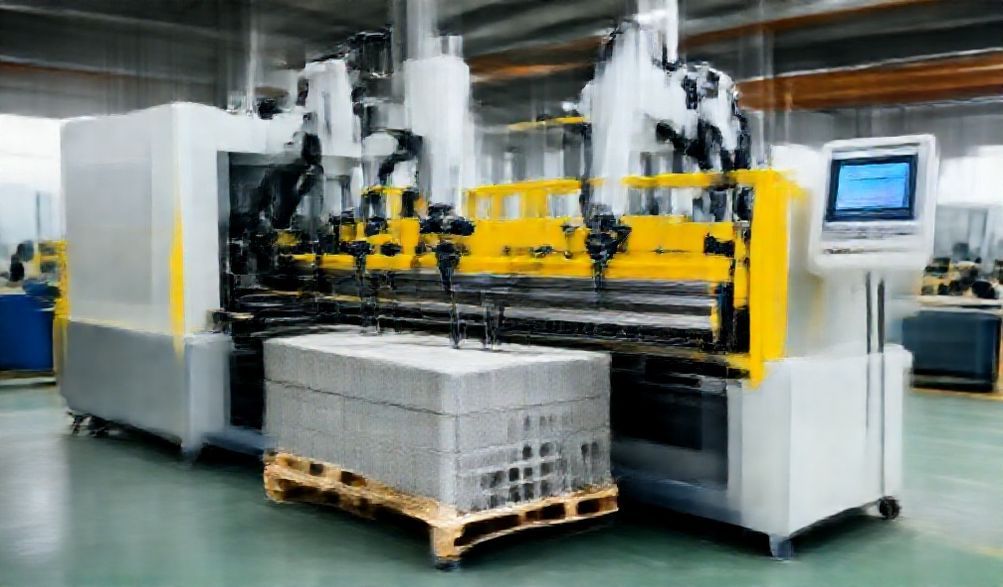
Остаточний посібник із закупівлі високоякісної машини для виробництва бетонної цегли з Китаю
Вступ
Світова будівельна галузь перебуває в постійному перегонах — будувати швидше, дешевше та з більшою довговічністю. У центрі цієї гонки лежить основний матеріал: бетонний блок. Від міських висоток до сільських житлових проєктів попит на надійні, економічно ефективні будівельні матеріали невтамовний. Цей попит каталізував тиху революцію, перенісши виробництво з трудомістких ручних методів у сферу автоматизованої точності. Для підприємців, будівельних фірм і девелоперів по всьому світу володіння верстатом для виготовлення бетонних блоків більше не є розкішшю; це стратегічний крок до самодостатності та прибутковості.
Однак шлях до придбання цього обладнання сповнений викликів. Як збалансувати початкову вартість із довгостроковою надійністю? Як бути впевненим у якості машини за тисячі кілометрів? Де знайти постачальника, який пропонує справжню післяпродажну підтримку, а не порожні обіцянки? Це критичні питання, які можуть визначити успіх чи провал ваших інвестицій.
Вступіть до Китаю – беззаперечного світового центру виробництва будівельної техніки. Для досвідченого покупця Китай пропонує переконливе рішення: доступ до безпрецедентного спектруверстати для виготовлення бетонної цегливід простих ручних пресів до повністю автоматизованих виробничих ліній — усе за надзвичайно конкурентними цінами. Однак навігація цим величезним ринком потребує знань, старанності та чіткої стратегії.
Цей вичерпний посібник створено на основі глибокого галузевого аналізу, прямих даних від виробників і міжнародних покупців, а також повного розуміння процесу закупівель. Наша мета — забезпечити вас надійними, експертними знаннями, перетворивши з обережного потенційного клієнта на впевненого покупця. Ми розкриємо весь шлях пошуку високоякісного продукту.Китайська машина для виробництва бетонних цеглин, covering everything from market advantages and technical specifications to supplier vetting and logistics mastery.
Why China Dominates the Global Brick Machine Market
China’s position as the world’s factory for construction equipment is no accident. It is the result of decades of focused industrial development, creating an ecosystem that is difficult for any other region to match. Understanding чому China leads is the first step in leveraging its market effectively.
Unbeatable Scale and Manufacturing Expertise
China’s manufacturing prowess is built on concentrated industrial clusters. Key regions like Fujian, Shandong, and Henan have evolved into specialized hubs for construction machinery. This clustering creates significant advantages:
- Mature Supply Chains: Within these regions, manufacturers have immediate access to high-quality raw materials—from specific grades of steel for frames and molds to reliable hydraulic pumps and programmable logic controller (PLC) systems. This reduces component costs and lead times dramatically.
- Кваліфікована робоча сила: Decades of focus have cultivated a deep bench of engineers, welders, and technicians specialized in heavy machinery fabrication.
- Економічна ефективність: The sheer scale of production drives down unit costs through economies of scale, a benefit passed on to international buyers.
Spectrum of Options for Every Business Scale
Whether you’re a startup in a developing market or a large construction firm looking to expand in-house production, China’s market has a machine tailored for you. The range typically falls into three categories:
- Manual/Small Semi-Automatic Machines: Ideal for small-scale businesses, community projects, or markets with low labor costs. These require more manual intervention for feeding and block removal but offer a very low entry cost.
- Повністю автоматичні стаціонарні верстати: The workhorses for medium to large-scale block yards. They integrate automatic material feeding, compaction, vibration, and block ejection, often controlled by a simple PLC. They offer an excellent balance of output, automation, and investment.
- Повністю автоматизовані виробничі лінії: These are high-output systems with automatic pallet feeders, curing racks, and stackers. They are designed for large-scale industrial production with minimal manual labor.
This spectrum ensures you can find a machine that aligns precisely with your production output goalsіinvestment capacity.
Інновації та впровадження технологій
Contrary to the outdated perception of copycat manufacturing, Chinese brick machine manufacturers are increasingly innovative. To stay competitive, they rapidly adopt and integrate new technologies:
- Розширені системи управління: Modern machines feature user-friendly PLC and touch-screen interfaces for easy operation and troubleshooting.
- Енергоефективні конструкції: Innovations in hydraulic systems and motor designs reduce power consumption, lowering the total cost of ownership.
- Multi-Functional Capability: Many models are designed to be versatile, with quick-change mold systems that allow a single machine to produce a vast array of products: hollow blocks, solid bricks, paving stones, interlocking blocks, and even curbstones.
Key Specifications to Evaluate Before You Buy
Moving from “looking” to “buying” requires a technical deep dive. Focusing on the right specifications will separate a valuable asset from a costly mistake.
Core Machine Specifications Decoded
Do not rely on marketing claims alone. Scrutinize the technical datasheet for these non-negotiable details:
- Виробнича потужність: Always ask for capacity measured in blocks per hour (or per 8-hour shift) for a specific block size (e.g., 400x200x200mm hollow block). “Theoretical” capacity is often overstated; seek realistic, verified numbers.
- Mold Size & Customization: What is the maximum mold size (LxWxH) the machine can accommodate? Can the supplier fabricate custom molds for your unique block design? Request to see CAD drawings for approval before production begins.
- Вимоги до живлення: Specify the voltage (e.g., 380V/50Hz or 440V/60Hz) and total installed power (KW). Ensure it is compatible with your local industrial power supply.
- Key Components Quality: The brand and origin of core components are critical indicators of longevity. Inquire about:
- Hydraulic pump and valve brands (e.g., Rexroth, Yuken, or reputable Chinese brands).
- Electrical components (PLC, sensors, motors).
- Grade of steel used for the frame and mold boxes.
Understanding the Total Cost of Ownership
The purchase price is just the first chapter of your financial commitment. A wise buyer evaluates the Загальна вартість володіння (TCO).
- Початкові витрати проти довгострокової цінності A machine that is 20% cheaper but uses 30% more electricity and breaks down frequently is a poor investment. Prioritize robust construction and quality components.
- Споживання енергії: A machine with an efficient hydraulic system and well-designed vibration motors will significantly reduce your monthly operating costs.
- Maintenance & Spare Parts: Before purchasing, ask for a list of recommended spare parts and their prices. Check the availability and cost of wear items like mold liners, hydraulic seals, and vibration motors. A supplier who stocks and can quickly ship spares is invaluable.
A Step-by-Step Guide to Vetting Chinese Suppliers
Finding a manufacturer is easy; finding a надійний партнер is the real challenge. This process requires systematic due diligence.
Where to Find Reliable Manufacturers
- Reputable B2B Platforms: Alibaba and Made-in-China are starting points. Use filters for “Verified Suppliers,” “Trade Assurance,” and “Assessed Suppliers.” Look for suppliers with 5+ years of gold membership and a history of transactions.
- Industry Trade Shows: Events like Bauma China (Shanghai) or the China International Construction Machinery Expo are ideal for seeing machines in person, meeting engineers, and comparing build quality directly.
- Factory Visits & Audits: If your order volume is significant, a factory visit is the single best investment you can make. It allows you to assess production capability, quality control processes, and company credibility firsthand.
Critical Due Diligence Checklist
Treat this as your pre-purchase mandate:
- Verify Business Licenses: Request a copy of their business license (in English) and check their export history.
- Contact Client References: Ask for references from clients in your region or similar markets. A credible supplier will provide them. Take the time to call or email these references.
- Analyze Communication: Gauge their professionalism. Do they answer technical questions thoroughly and promptly? Is their English (or your chosen language) competent? A responsive, knowledgeable sales engineer is a positive indicator of future after-sales support.
The Art of Effective Communication & Negotiation
- Precise Technical Inquiries: Send a detailed inquiry specifying your desired block types, sizes, daily output, local voltage, and any special requirements. This separates serious suppliers from order-takers.
- Understand Incoterms: Know the difference between FOB (Free on Board)іCIF (Вартість, страхування та фрахт). FOB gives you more control over shipping logistics and is often preferred.
- Negotiate Holistically: Negotiate not just on price, but on payment terms (e.g., 30% deposit, 70% before shipment), warranty extension, and the inclusion of essential spare parts in the deal.
Navigating Logistics, Warranty, and After-Sales Support
Securing the order is a milestone, not the finish line. Properly managing the post-order phase protects your investment.
Securing Your Investment with Clear Contracts
TheProforma Invoice (PI) and subsequent sales contract are your legal safeguards. Ensure they include:
- Detailed machine specifications (as an appendix).
- Warranty terms: Standard is 12 months for parts (excluding wear items like mold liners), clearly stating what is covered and the supplier’s response protocol.
- Payment schedule linked to milestones (deposit, pre-shipment balance).
- A firm delivery timeline from order confirmation to factory readiness.
Logistics and Customs Clearance Simplified
- Доставка: For a single machine, LCL (Less than Container Load) sea freight is common. For full lines, FCL (Full Container Load) is necessary. Your supplier or a freight forwarder can handle this.
- Key Documentation: You will need the Bill of Lading, Commercial Invoice, Packing ListіCertificate of Origin. Your supplier must provide these accurately.
Ensuring Long-Term Machine Performance
After-sales support is where partnerships are tested. Clarify upfront:
- Installation Support: Will they provide detailed installation manuals, video guides, or remote video call assistance? What are the costs for sending an engineer to your site?
- Technical Documentation: Insist on receiving complete operation manuals, electrical diagrams, and parts catalogs in English.
- Wear Parts Planning: Establish a channel for ordering routine wear parts. Good suppliers will have an online parts catalog or a dedicated after-sales contact.
Common Pitfalls and How to Avoid Them
Forewarned is forearmed. Steer clear of these frequent mistakes.
The “Too Good to Be True” Price Trap
An offer significantly lower than the market average is a major red flag. This usually indicates:
* The use of inferior, sub-standard materials.
* No meaningful warranty or after-sales service.
* Hidden costs that will appear later.
Solution: Obtain 3-5 quotes from different tier suppliers. Analyze the price in context with the specifications and component brands offered.
Overlooking Local Compliance and Standards
A machine with a Chinese CCC mark may not meet your country’s electrical or workplace safety standards.
Solution: Explicitly state your required certifications (e.g., CE, ISO are common baselines) in your contract. For critical compliance, hire a third-party inspection company (like SGS, BV) to conduct a pre-shipment inspection.
Vague Specifications and “Standard” Molds
Accepting promises of “standard molds” or vague performance guarantees leads to disappointment upon delivery.
Solution: Demand explicit, written specifications for every parameter. For custom blocks, invest in precise drawings and require the supplier to sign off on the mold design before fabrication begins.
FAQ Section
Q1: What is the average price range for a concrete brick-making machine from China?
А: Prices vary immensely based on automation and capacity. A small manual/semi-automatic machine can start from $3,000 – $10,000. A robust, fully automatic stationary machine typically ranges from $25,000 – $60,000. Large, fully automated production lines can exceed $100,000. Always request a detailed quote based on your specific needs.
Q2: How do I ensure the machine meets the quality standards for my local market?
А: First, mandate relevant international certifications (CE, ISO) in your contract. Second, engage a reputable third-party inspection service to conduct a Pre-Shipment Inspection (PSI). Finally, consult with a local mechanical or electrical engineer to review the machine’s specifications against your national standards.
Q3: Can Chinese suppliers provide molds for custom brick designs?
А: Absolutely. Most reputable manufacturers have in-house mold workshops. You will need to provide precise CAD drawings (DXF or DWG format) or a physical sample. Understand that custom mold fabrication adds to the cost and lead time, but it is a standard service.
Q4: What is the typical warranty period, and what does it cover?
А: A standard warranty is 12 months from the date of shipment for major parts and components, excluding consumable wear parts. Crucially, get the warranty terms—including how to claim support and expected response times—in writing within your sales contract.
Q5: How long does it take from order to delivery at my site?
А: Plan for a 3 to 4-month total timeline. This includes: production time (30-60 days), inland transport to the Chinese port, sea freight (30-45 days depending on destination), and customs clearance in your country. Clear communication with your supplier and freight forwarder is key to managing this process.
Висновок
Sourcing a high-quality concrete brick-making machine from China is a journey defined by diligent research and strategic partnership. It begins with understanding China’s market advantages—scale, variety, and innovation—and moves through the critical phases of technical evaluation, rigorous supplier vetting, and meticulous contract and logistics management. Remember, the goal is not to find the cheapest machine, but the one that offers the greatest long-term value and reliability for your business.
This guide has provided you with the framework and checklist to navigate this process with confidence. The pillars of success are patience, clear communication, and an unwavering focus on total cost of ownership and after-sales support. By applying this expert knowledge, you transform a complex international procurement challenge into a strategic investment that will drive productivity and profitability for years to come.
Call to Action: Use this guide as your definitive checklist. Start by defining your project’s exact requirements. Then, begin reaching out to multiple vetted suppliers with your detailed specifications in hand. Compare not just quotes, but the quality of their engagement and the clarity of their proposals. Your ideal manufacturing partner is out there—equipped with this knowledge, you are now ready to find them.
<