Demystifying the Operational Mechanics of Brick Manufacturing Machinery
The Foundational Operational Sequence: A Stage-by-Stage Breakdown
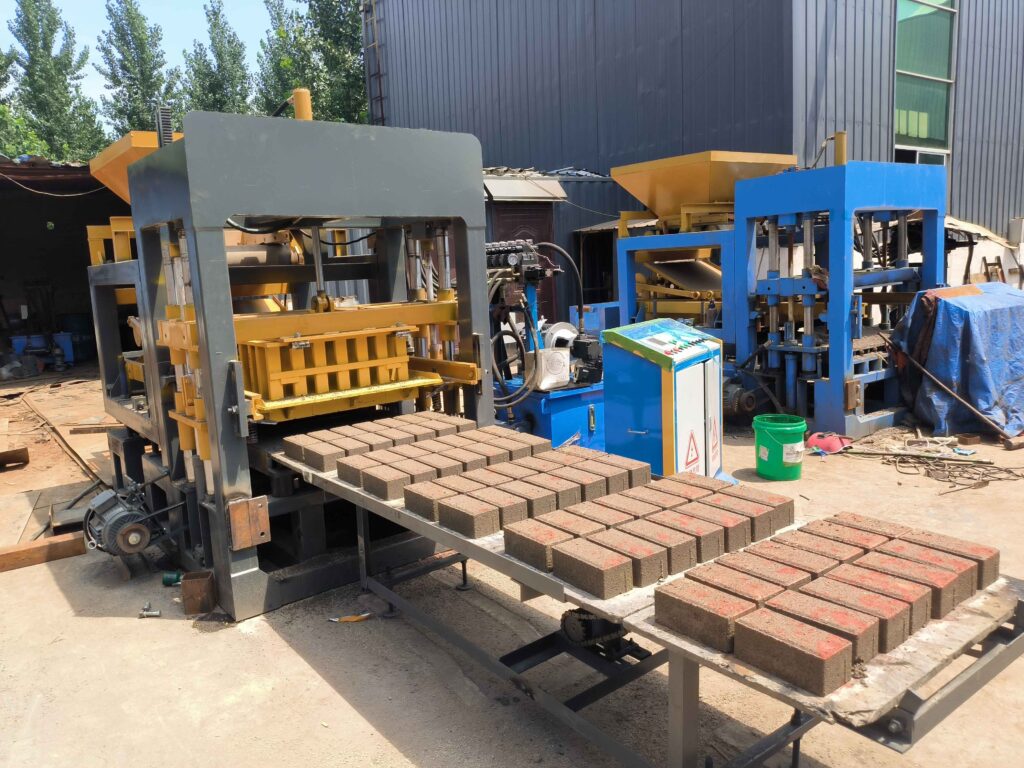
Every brick machine, regardless of its specific technology, follows a cyclical sequence to transform loose raw material into a formed unit. This cycle can be systematically broken down into four universal stages.
- Stage 1: Feeding and Metering
- This initial phase is about precision and consistency. A pre-mixed blend of aggregates (e.g., sand, gravel, crushed stone), binders (cement, lime), and potential additives (fly ash, pigments) is delivered into the machine’s feed box or hopper. The critical objective here is volumetric or weight-based metering. Advanced systems employ feed drawers, conveyors with controlled gates, or even laser-guided systems to ensure the exact amount of material required for a single brick is deposited into the mold cavity. An incorrect feed volume leads to under-filled (weak) or over-filled (dense but potentially damaging to the machine) products. Consistency in this stage is the absolute prerequisite for all subsequent quality.
- Stage 2: Compaction and Forming
- This is the heart of the operation where the machine’s core technology comes into play. The loose material in the mold is subjected to immense pressure to achieve densification and shape.
- In a Hydraulic Press: A hydraulic pump driven by an electric motor pressurizes oil, which is then directed to a hydraulic cylinder. The piston within this cylinder extends, driving the compaction head (or ram) into the mold. The pressure builds progressively, often in multiple stages, to compact the material evenly, remove air voids, and activate the binding agents. The system can hold peak pressure for a predetermined time to ensure thorough bonding.
- In a Vibration-Compaction Machine: Simultaneous actions occur. High-frequency vibrators, often mounted on the mold table or the compaction head, energize the particles. This vibration reduces internal friction, allowing the material to flow and settle densely. Concurrently, a hydraulic or mechanical press head descends to apply pressure from above, shaping the brick and further consolidating the vibrated mass.
- The mold itself, a precision-engineered steel cavity, defines the brick’s shape, whether solid, hollow, interlocking, or paving stone. The surface finish and dimensional accuracy of the final product are direct results of the mold’s quality and the effectiveness of the compaction force.
- This is the heart of the operation where the machine’s core technology comes into play. The loose material in the mold is subjected to immense pressure to achieve densification and shape.
- Stage 3: Ejection and Pallet Transfer
- Once compaction is complete, the formed but still green (uncured) brick must be removed without damage. The mold box opens or rises, and an ejection plate or pins gently push the brick upward and out of the mold cavity. In automated lines, this ejection places the brick directly onto a waiting pallet—a flat, reusable steel or wooden board. A transfer mechanism then moves the pallet, now bearing the fresh brick, out of the press zone and onto a chain conveyor or stacker system. This stage requires precise synchronization to ensure smooth transfer and avoid jarring that could deform the soft product.
- Stage 4: Reset and Cycle Continuation
- With the brick ejected and the pallet transferred, the machine resets for the next cycle. The feed mechanism returns to position, the mold closes or resets to its base state, and the compaction head retracts fully. The empty pallet feeder advances a new pallet into the pressing station. This entire sequence, from feed to reset, constitutes one machine cycle. The efficiency and speed of this reset phase are major determinants of the machine’s overall output in bricks per hour.
Deep Dive into Core Subsystems and Their Functions
Understanding the machine as an integrated assembly of specialized subsystems reveals the engineering behind reliable operation.
- The Power and Drive System: Generating the Force
- This is the machine’s powerhouse. Typically, a high-torque electric motor provides the primary rotary power. In hydraulic systems, this motor drives a hydraulic pump (gear, vane, or piston type), which converts mechanical energy into hydraulic energy by pressurizing oil. This pressurized fluid is then controlled and directed through valves to actuators (cylinders). In more mechanical systems, the motor may drive a flywheel, gears, or cams to generate the necessary linear force. The robustness and configuration of this system dictate the machine’s pressure capability and energy consumption profile.
- The Control System: The Electronic Nervous System
- Modern machines are governed by a Programmable Logic Controller (PLC). This industrial computer receives inputs from sensors throughout the machine—detecting pallet position, mold status, hydraulic pressure, and feed levels. Based on a pre-programmed logic, the PLC sends output commands to solenoid valves, motor starters, and indicators. The operator interacts via a Human-Machine Interface (HMI) touchscreen, where cycle parameters like pressure setpoints, vibration duration, and cycle speed are input and monitored. This system ensures repeatability, safety, and allows for fine-tuning the process for different material recipes.
- The Mold and Tooling System: Defining the Product
- Often considered the most critical wear part, the mold system is the literal shape-giver. It consists of a hardened steel mold box, a compaction head (upper mold), and sometimes a die shoe (lower mold). The tolerances between these components are microscopic to prevent material leakage (flashing) and ensure smooth brick release. For hollow blocks, core rods are integrated into the mold to create the cavities. The surface finish, hardness, and maintenance schedule of the mold directly impact product quality, production consistency, and long-term operational costs.
- The Material Handling and Integration Framework
- While not always part of a standalone press, the surrounding framework is essential for continuous operation. This includes feed hoppers with agitators to prevent material bridging, belt or screw conveyors for transferring mix, and pallet circulation systems. Sophisticated lines feature elevators and stacker/descenders that organize green bricks for curing and return empty pallets to the press input. The degree of automation in this framework drastically reduces labor dependency and enhances throughput.
Operational Variations Based on Product and Material Type
The machine’s operational parameters must be adjusted based on the desired final product and the raw materials used.
- Producing Solid vs. Hollow Blocks
- Manufacturing hollow blocks requires the mold to incorporate fixed or retractable core rods. The compaction force and vibration must be carefully calibrated to ensure material flows evenly around these cores to form uniform webs and shells. The ejection process for hollow blocks is more delicate to avoid cracking the thinner walls. Solid block production, while mechanically simpler, may require higher pressures to achieve the same density throughout a solid mass.
- Adapting to Different Raw Material Mixes
- A machine working with a dry-cast, zero-slump concrete mix will rely more on high-frequency vibration and substantial pressure to consolidate the semi-dry particles. In contrast, a machine processing a soil-cement mix with higher moisture content may use a slower, steady compression to avoid liquid separation (bleeding). The feed system must also adapt: sticky clay mixes require different hopper designs than free-flowing sandy mixes. Understanding these adaptations is key to preventing machine blockages and ensuring product integrity.
- The Critical Influence of Moisture Content
- Moisture acts as a lubricant and binder activator during compaction. An optimal moisture content (often between 5-10% for cement-stabilized mixes) is vital. Too little moisture leads to poor compaction, high porosity, and weak bricks. Too much moisture causes the brick to stick to the mold, deform during ejection, and shrink excessively during curing. The machine operator must constantly monitor and adjust the mix moisture, as it is a dynamic variable affected by ambient humidity and aggregate dampness.
Висновок
The operation of a brick-making machine is a meticulously choreographed interplay of mechanical force, electronic control, and material science. For the distributor, this knowledge transcends technical trivia; it forms the foundation for value-added engagement with clients. By understanding the sequential stages from feed to ejection, the critical role of subsystems like hydraulics and PLCs, and the necessary adjustments for different products and materials, you can diagnose client needs with precision, recommend solutions that optimize their production line, and provide superior after-sales support. Ultimately, the ability to explain and demystify these workings positions you as a trusted technical partner, enabling your clients to invest with confidence and maximize the productivity of their machinery in the competitive construction materials market.
Часті питання (FAQ)
Q1: What is the actual difference between “pressure” and “vibration” in the compaction process, and why do some machines use both?
А: Pressure applies a direct, concentrated force to reduce volume and push particles together. Вібрація imparts kinetic energy, causing particles to momentarily separate and rearrange into a denser packing under gravity. Using both is highly effective: vibration allows for efficient initial particle rearrangement with less force, and the subsequent pressure then locks this dense arrangement into a solid, coherent structure. This combination often yields higher densities and better surface finishes with less energy consumption than pressure alone for certain mixes.
Q2: How does the machine ensure each brick has identical weight and dimensions?
А: Consistency is achieved through multiple integrated controls. First, the metering system (volumetric or weight-based) ensures an identical amount of raw material is fed into the mold each cycle. Second, the precise stroke control of the compaction head, governed by the PLC and hydraulic valves, ensures the same degree of compression every time. Finally, the rigid, high-tolerance mold tooling guarantees the brick is formed within the same geometric cavity. Any variance typically points to an issue in feeding, material mix inconsistency, or mold wear.
Q3: What are the most common points of failure or wear in a typical brick machine cycle, and what maintenance mitigates them?
А: Key wear points include:
- Mold Liners and Core Rods: Subject to constant abrasion; require regular inspection, cleaning, and eventual re-lining or replacement.
- Hydraulic Seals and Hoses: Degrade over time due to pressure cycles and heat; preventive replacement based on operating hours is crucial to avoid leaks.
- Vibrator Mounts and Bearings: In vibration machines, these components endure high-frequency stress and need regular tightening and lubrication.
- Feed System Components: Agitators and feeder shoes wear from contact with abrasive mix.
A proactive maintenance schedule focusing on lubrication, seal inspection, and bolt tightening is essential to minimize unplanned downtime.
Q4: Can a single machine produce many different brick types and sizes efficiently?
А: Yes, but with considerations. The machine must be designed for quick mold changeovers. This involves interchangeable mold boxes, compaction heads, and core rod sets. The efficiency depends on how rapidly and easily these heavy components can be swapped (often using jibs or forklifts) and how quickly the machine’s control parameters (pressure, feed volume) can be reprogrammed for the new product. While possible, frequent changeovers on non-optimized machines significantly impact overall productivity.
Q5: How critical is the pallet quality and handling system to the machine’s operation?
А: Extremely critical. Pallets form the moving foundation on which bricks are made and transported. Warped, bent, or damaged pallets will cause misalignment in the press, leading to brick height variations, ejection problems, and even machine damage. An automated pallet return system that includes cleaning and inspection stations is not a luxury but a necessity for sustained high-volume production. It ensures only pallets in specification are recirculated, protecting both the product and the machinery.