
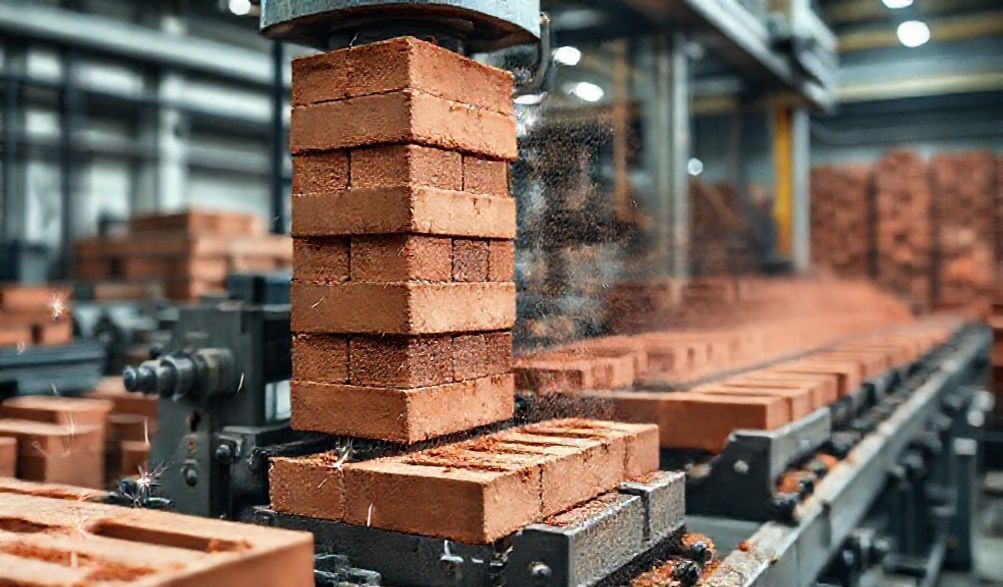
The Ultimate Guide to Clay Brick Making Machines: Types, Process & How to Choose
Вступ
Bricks are the literal building blocks of civilization. From ancient hearths to modern skyscrapers, their enduring strength and versatility have shaped our world. For centuries, brickmaking was a labor-intensive craft, reliant on skilled hands and favorable weather. Today, the industry has been transformed by mechanization. The машина для виробництва глиняної цегли stands at the heart of this revolution, enabling consistent, high-volume production that meets the relentless demands of global construction.
This comprehensive guide is designed to be your definitive resource. Whether you are an entrepreneur exploring a new manufacturing venture, a construction business looking to vertically integrate, or an industry professional seeking to upgrade your plant, we provide expert, trustworthy information. Our analysis is built on deep industry knowledge, offering clear insights into machinery, processes, and market realities.
By the end of this guide, you will have a firm understanding of:
* Різніtypes of clay brick making machines and their applications.
* The step-by-step production process, from raw clay to fired brick.
* Critical factors for selecting the right machine for your specific needs.
* Realistic insights into costs, profitability, and operational best practices.
Let’s build a solid foundation of knowledge.
Understanding Clay Brick Making: From Raw Material to Finished Product
Before delving into machinery, it’s essential to understand the core material and the fundamental shift from traditional to modern methods.
The Core Raw Material: Properties of Suitable Clay
Not all earth is fit for bricks. The quality of the final product is intrinsically linked to the quality of the clay. Suitable brick clay typically requires a balanced mix of three components:
- Alumina (20-30%): Provides plasticity, allowing the clay to be molded without cracking.
- Silica (50-60%): Prevents shrinkage and warping during drying and firing, imparting structural rigidity.
- Fluxes (like Iron Oxide & Lime, 4-8%): Lower the fusion point of silica, aiding in the vitrification process during firing which gives the brick its strength and durability.
Preparation is key: Raw clay is rarely perfect. It often undergoes:
* Weathering: Exposure to the elements to break down lumps and improve plasticity.
* Blending: Mixing different clay pits to achieve the ideal chemical composition.
* Tempering: Adding water in a pug mill to achieve a uniform, workable consistency and remove air pockets.
The Traditional vs. Modern Mechanized Process
The traditional process—hand molding, sun drying, and clamp firing—is slow, season-dependent, and yields inconsistent results. The modern mechanized process, centered on a машина для виробництва глиняної цегли, offers a compelling value proposition:
* Швидкість та масштаб: Production can run 24/7, outputting thousands of bricks per hour.
* Послідовність та якість: Machines produce bricks of uniform size, density, and strength.
* Lower Labor Dependency: Automation significantly reduces the heavy manual labor required.
* Controlled Curing & Firing: Modern kilns ensure optimal temperature profiles for superior brick strength and color.
Types of Clay Brick Making Machines: A Detailed Breakdown
Choosing the right type of machine is the most critical decision for your brick manufacturing business. Your choice will define your production capacity, product range, labor needs, and initial investment. Here’s a detailed breakdown of the primary categories.
Manual or Hand-Operated Brick Making Machines
- Опис: These are simple, mechanical lever-operated presses. Workers manually fill the mold with tempered clay and use a lever to apply pressure before ejecting the green brick.
- Найкраще для: Micro-enterprises, community-based projects, very low-budget startups, or producing specialty artistic bricks.
- Вихідна потужність: Very low (100-500 bricks per day, depending on crew size).
- Переваги:
- Extremely low capital cost.
- No requirement for electricity or diesel.
- Просто у використанні та обслуговуванні.
- Недоліки:
- Labor-intensive and slow.
- Inconsistent brick quality.
- Very limited production scale.
- Physically demanding for operators.
Напівавтоматичні верстати для виробництва цегли
- Опис: These machines mechanize the core forming process (often via a hydraulic press or extruder) but require manual intervention for tasks like feeding raw clay, removing green bricks, and stacking them for drying.
- Найкраще для: Small to medium-scale production units (SMEs) looking to balance investment with productivity.
- Вихідна потужність: Medium (1,000 to 5,000 bricks per 8-hour shift).
- Переваги:
- Significant productivity boost over manual machines.
- Good consistency in brick shape and density.
- More affordable than fully automatic systems.
- Flexible for various brick designs with mold changes.
- Недоліки:
- Still requires a sizable operational crew.
- Production pace is limited by manual handling steps.
Повністю автоматичні машини для виробництва цегли
- Опис: These are integrated production lines. They automate the entire process from feeding and mixing clay to molding, cutting, stacking, and sometimes even loading bricks into the dryer or kiln via robotic arms and conveyor systems.
- Найкраще для: Large-scale commercial plants, industrial manufacturers, and high-volume government projects.
- Вихідна потужність: High to very high (10,000 to 50,000+ bricks per shift).
- Переваги:
- Maximum output and efficiency.
- Виняткова стабільність та контроль якості.
- Dramatically reduced direct labor costs.
- Can operate continuously with minimal downtime.
- Недоліки:
- Very high initial capital investment.
- Complex installation and maintenance requiring skilled technicians.
- Significant space and infrastructure (power) requirements.
Specialized Machine Types: Extruders vs. Pressers
Beyond automation level, machines are also distinguished by their forming technology:
- Extrusion Machines: Clay is forced through a die of the desired profile (like a giant pasta maker). This is ideal for producing hollow bricks, perforated bricks, and clay pipes. The continuous column is then cut to size by a wire cutter.
- Гідравлічні пресові верстати: Clay is fed into a mold and compacted under extremely high pressure (hydraulic or mechanical). This is best for producing high-density solid bricks, pavers, and refractory bricks with sharp edges and superior compressive strength.
Key Components and How a Clay Brick Making Machine Works
Understanding the workflow and key components builds operational knowledge and helps in troubleshooting.
The Production Line Flow: A Step-by-Step Walkthrough
A modern plant is a symphony of coordinated stages:
- Clay Feeding & Primary Crushing: Raw clay is fed into a crusher to break down large lumps and stones.
- Mixing & Tempering (Pug Mill): The crushed clay moves to a pug mill, where water is added, and rotating blades mix and knead it into a homogeneous, plastic mass, expelling air.
- Molding/Forming: This is the machine’s core.
- In an extruder, the tempered clay is forced through a vacuum chamber (to remove air) and out through a die.
- In a press, the clay is filled into molds and compressed by a hydraulic ram.
- Різання: For extruders, the continuous clay column passes through an automatic wire cutter that slices it into individual brick units.
- Сушіння: Green bricks are carefully stacked and moved to a drying chamber (or natural drying yard) to remove moisture slowly and prevent cracking. Artificial dryers use controlled heat and humidity.
- Firing/Burning: The dried bricks are fired in a kiln at 900°C to 1200°C.
- Hoffman Kiln: A continuous, multi-chamber kiln where bricks move through different temperature zones.
- Tunnel Kiln: A more modern, fully continuous kiln where bricks on carts move slowly through a long, fixed-temperature tunnel.
Essential Machine Components
- Pug Mill: The “mixer” that prepares the clay body.
- Extruder/Die or Hydraulic Press: The heart of the machine that forms the brick.
- Гідравлічна система: Provides the immense pressure needed for compaction (in press machines).
- Conveyors: Transport clay and bricks between stages in automatic lines.
- Панель керування (PLC): The brain of automatic machines, programming and monitoring the entire cycle.
How to Choose the Right Clay Brick Making Machine: 8 Critical Factors
This decision requires careful self-assessment and market research. Use these eight factors as your checklist.
1. Assessing Your Production Capacity Needs
Project your current and 5-year future demand. A machine operating at 50% capacity is inefficient, while one at 110% capacity will wear out quickly. Calculate bricks needed per hour/day.
2. Brick Type and Specification
Define your product line: Solid, hollow, or perforated bricks? Standard building bricks or specialty pavers? The brick type dictates whether you need an extruder or a press.
3. Automation Level: Balancing Investment with Labor Costs
Analyze your local labor costs and availability. A higher upfront investment in automation can be justified by long-term savings in wages and increased, reliable output.
4. Power Source: Electric, Diesel, or Hybrid?
Electric motors are cleaner and quieter but require a stable grid. Diesel engines offer independence but have higher fuel costs and emissions. Choose based on your site’s infrastructure.
5. Quality of Build: Materials, Brand Reputation, and After-Sales Service
Inspect the machine’s construction—heavy-duty steel frames and quality hydraulic components last longer. Research the manufacturer’s reputation and, crucially, their after-sales service, technical support, and spare parts availability.
6. Land and Space Requirements
The machine itself needs space, but don’t forget the drying yard (which can be 10-20x the plant area for natural drying) and space for raw material storage and finished goods.
7. Budget Analysis: Total Cost of Ownership
Look beyond the sticker price. Include costs for:
* Machine purchase and import duties.
* Installation, foundation, and commissioning.
* Utilities (power/fuel) and ongoing maintenance.
* Raw material and labor.
8. Supplier Verification: Why It Matters
Always verify the supplier. Request certifications, visit their factory if possible, ask for a list of client references, and physically visit an existing plant using their equipment. A reliable supplier is a long-term partner.
The Business Case: Costs, Profitability, and Market Trends
A realistic financial picture is essential for success.
Investment Breakdown: From Machine Cost to Setup
- Machine Cost: Can range from a few thousand USD for a manual press to over $500,000 for a fully automatic line.
- Ancillary Equipment: Crusher, mixer, conveyor, forklift.
- Kiln Cost: A major expense, often rivaling the brick machine itself.
- Civil Works: Factory shed, drying sheds, foundations, utilities connection.
- Working Capital: For initial raw material, labor, and operating expenses for the first 3-6 months.
Operational Cost Factors
Key ongoing expenses include:
* Clay procurement and transport.
* Labor wages.
* Electricity or diesel fuel.
* Maintenance and spare parts.
* Packaging and logistics.
Analyzing ROI and Profit Margins
Profitability is highly location-specific, depending on local brick selling prices and input costs. A well-run, medium-scale plant can typically see a Return on Investment (ROI) within 2 to 4 years. Margins are driven by operational efficiency and scale.
Current Market Trends and Future Outlook
- Сталий розвиток: The biggest trend is towards energy-efficient kilns (like Vertical Shaft Brick Kilns – VSBKs) and using alternative fuels to reduce carbon footprint.
- Автоматизація: The drive for consistency and reduced labor dependency continues to push demand for semi- and fully-automatic machines.
- Demand Drivers: Urbanization, infrastructure development, and a shift towards durable, fire-resistant, and natural building materials continue to sustain global brick demand.
Maintenance and Safety Best Practices
Protect your investment and your workforce.
Routine Maintenance Checklist for Longevity
- Daily: Lubricate all moving parts, check hydraulic oil levels and for leaks, clean the machine of clay residue.
- Weekly: Inspect wires on cutters, check belt tensions on conveyors, tighten bolts and fittings.
- Monthly: Inspect the die/mold for wear, check the hydraulic system filters, service the motor.
Common Operational Issues and Troubleshooting Tips
- Cracking Bricks: Usually due to improper clay tempering (too dry/wet) or too-rapid drying.
- Poor Surface Finish: Worn-out die or mold, insufficient pressure during forming.
- Machine Jamming: Foreign objects in clay, over-filling, or mechanical failure.
Essential Safety Protocols for Operators
- Always use Lockout/Tagout procedures during maintenance.
- Wear appropriate PPE: safety glasses, gloves, steel-toe boots, and hearing protection.
- Never place hands near moving parts, cutters, or press rams.
- Ensure all safety guards are in place.
FAQ Section
Q: What is the price range for a clay brick making machine?
А: Prices vary enormously. Manual machines start around $2,000-$5,000. Semi-automatic machines range from $15,000 to $70,000. Fully automatic production lines begin at $100,000 and can exceed $500,000, depending on capacity and sophistication.
Q: Can one machine produce different types and sizes of bricks?
А: Yes, but with limitations. By changing the mold or die, many machines can produce different sizes and profiles (e.g., solid vs. hollow). However, switching between fundamentally different processes (e.g., extrusion to heavy pressing) typically requires a different machine.
Q: What is the difference between a clay brick machine and a fly ash brick machine?
А: The core difference is the raw material and required pressure. Fly ash bricks use fly ash, lime, and gypsum and require high-pressure hydraulic pressing (often 2000+ PSI) for chemical curing. Clay bricks use clay and water, and are formed by extrusion or lower-pressure pressing, requiring high-temperature firing.
Q: How much manpower is required to operate a semi-automatic machine?
А: Typically, a semi-automatic line requires 5-10 workers per shift for tasks like feeding clay, removing and stacking green bricks, managing the dryer, and general oversight.
Q: What is the typical lifespan of a brick making machine?
А: With proper maintenance, a well-built machine can last 15 to 25 years. Critical components like hydraulic pumps or motors may need refurbishment or replacement sooner.
Q: Is a brick making business profitable in 2024?
А: Yes, the business remains fundamentally profitable due to consistent demand in construction. Success depends on careful planning, choosing the right equipment for your market, controlling operational costs, and effective marketing of your bricks.
Висновок
Selecting the ideal машина для виробництва глиняної цегли is a strategic decision that hinges on a clear understanding of your production goals, target product specifications, and financial parameters. There is no one-size-fits-all solution; the robust manual press serves a vastly different purpose than the humming fully automatic line.
This guide has equipped you with the expert knowledge to navigate this complex landscape. We reinforce the importance of thorough due diligence: conduct detailed supplier research, insist on seeing machines in operation, and meticulously calculate your total project costs. Partnering with a reputable supplier who offers robust after-sales support is not an expense—it’s an investment in your plant’s long-term productivity and profitability.
Your next step is to move from research to action. Contact shortlisted suppliers for detailed quotations, arrange visits to operational brick plants, and request product specification sheets to make an informed, confident investment in the foundation of your business.
<