
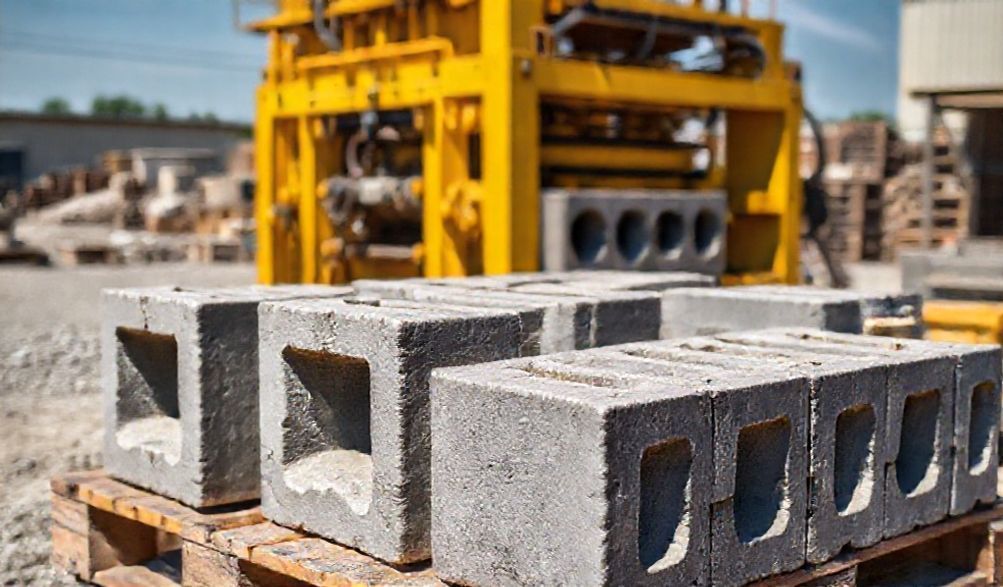
The QT18-15 Block Machine: A Comprehensive Guide to Features, Operation & Investment
Вступ
Navigating the world of concrete block manufacturing requires more than just capital; it demands reliable, in-depth knowledge to turn an equipment investment into a profitable venture. This comprehensive guide is crafted specifically for construction entrepreneurs, plant managers, and procurement specialists who are evaluating the QT18-15 block machine.
With years of hands-on experience in concrete machinery specification, plant layout design, and production optimization, our goal is to move beyond glossy brochures and generic specifications. We provide a trustworthy, expert analysis that dissects the QT18-15’s true capabilities, realistic operational outputs, and the often-overlooked aspects of total cost of ownership.
Whether you’re scaling up an existing block yard or laying the foundation for a new manufacturing business, understanding where this specific machine fits—and the ecosystem it requires to succeed—is critical to making an informed, confident investment decision.
What is the QT18-15 Block Machine? Defining Its Role in Construction
The QT18-15 is a workhorse in the realm of construction material production. To understand its value, we must first define its category and primary function within the industry.
Core Function and Product Range
At its heart, the QT18-15 is a stationary hydraulic block-making machine, often referred to as an “egg-layer” type. Unlike mobile block machines, it operates in a fixed position, producing blocks on wooden or steel pallets which are then moved to a curing area.
Its versatility is a key selling point. A standard QT18-15 can be configured with different molds to produce a wide array of concrete products, including:
* Пустотілі блоки: The industry staple, commonly in 6-inch and 8-inch sizes.
* Суцільні блоки: For applications requiring higher load-bearing capacity.
* Paving Slabs & Interlocking Bricks: For landscaping, driveways, and pedestrian pathways.
* Бордюри: For road edging and landscaping projects.
* Other Specialty Shapes: Depending on mold availability.
Decoding the Model Name
In the machinery world, model numbers are a code. While variations exist between manufacturers, the “QT18-15” typically breaks down as follows:
* “QT”: A common prefix used by many Chinese manufacturers for their block machine series (QunTui or a similar designation).
* “18”: This almost universally indicates the machine’s output per cycle—in this case, 18 pieces of a standard 400x200x200mm (or similar) hollow block.
* “15”: Often references the pressure system (e.g., 15 MPa of hydraulic pressure) or denotes a specific model iteration within the series.
A critical note: Specifications can vary. Always confirm the exact details—cycle time, mold size, pressure—with your supplier against your target product specifications.
Primary Industry Applications
The QT18-15 is engineered for medium-scale production. It’s not a small, manual starter machine, nor is it a fully automated, high-volume plant component. Its ideal applications include:
* Established Block Yards: Looking to increase output and consistency beyond smaller models like the QT10-15.
* Local Housing Project Suppliers: Providing a reliable supply for residential construction.
* Infrastructure Material Production: Manufacturing pavers and curbs for municipal or private contracts.
* The Heart of a Semi-Automatic Line: It can be integrated with a simple conveyor or forklift-based system for improved material handling.
Technical Specifications and Key Features of the QT18-15
Understanding the technical backbone of the QT18-15 is essential to gauge its durability, performance, and suitability for your environment.
Power & Performance Metrics
The machine’s performance is driven by a combination of power and precision engineering:
* Джерело живлення: Typically offered with a robust diesel engine (e.g., 20-24 HP) for sites without reliable grid power or a high-torque electric motor (e.g., 15-18.5 kW) for cleaner, quieter, and more cost-effective operation in a fixed plant.
* Вібраційна система: A key to block density and strength. It employs a high-frequency, dual-axis vibration system mounted on a sturdy table, ensuring even compaction throughout the mold.
* Гідравлічна система: The core of its operation. A reliable hydraulic unit provides the pressure (often in the 14-16 MPa range) for mold vibration, block ejection, and the “egg-laying” head movement. Look for systems with quality seals and valves.
* Час циклу: A full cycle—feeding, compaction, ejection, and head return—typically takes between 20 to 30 seconds, depending on block type and operator efficiency.
Structural Design and Durability
This is where quality manufacturers separate themselves. A machine is a long-term asset, and its construction dictates its lifespan.
* Рамка The entire structure should be built from high-grade, welded steel sections to withstand constant vibration and load without fatigue or deformation.
* Пліснява: The most critical wear part. High-quality molds are made from hardened steel or special alloys with precise machining to ensure dimensional accuracy, smooth block release, and long life before refurbishment is needed.
* Вібраційний стіл: Designed for optimal force transmission. A well-balanced, rigid table ensures every cavity in the mold receives consistent vibration for uniform block density.
Automation and Control Systems
The QT18-15 represents a step into semi-automation, reducing physical labor and improving consistency.
* Система керування: Most models feature a Програмований логічний контролер (ПЛК). This “brain” automates the sequence of operations (vibration time, pressure, ejection) for every cycle, ensuring each batch of blocks is identical.
* Система живлення: While many operations use a manual or skid-steer fed hopper, options for belt conveyors or automated batching plant feeds exist to create a more streamlined production line.
* Safety Features: Essential components include emergency stop buttons, hydraulic safety locks, and protective guards on moving parts.
Analyzing Output Capacity and Production Efficiency
Manufacturer claims provide a theoretical ceiling. Real-world output is governed by a complex set of practical factors.
Theoretical vs. Practical Daily Output
A manufacturer may claim an output of “4000-5000 blocks per 8-hour shift” for standard 6″ hollow blocks. This is derived from:
* 18 blocks per cycle.
* A 25-second average cycle time.
* Continuous operation.
In practice, a well-organized, smooth-running operation might achieve 2,800 to 3,500 blocks in an 8-hour shift. The gap is due to necessary non-production time:
* Pallet changes and positioning.
* Mixer loading and hopper refilling.
* Minor adjustments, cleaning, and scheduled breaks.
* Moving and stacking finished blocks.
Factors Influencing Production Speed
Output is a variable, not a constant. Key influencers include:
* Тип та розмір блоку: Solid blocks or thicker pavers require longer vibration time than hollow blocks. Smaller blocks might allow for more cavities per cycle.
* Raw Material Consistency: A poorly graded or inconsistent mix will lead to block defects, stoppages, and rejected batches, crippling efficiency.
* Operator Skill & Workflow: An experienced team with a choreographed workflow for material handling and pallet management is invaluable.
* Logistics: Pallets are the lifeblood. Insufficient pallets mean the machine sits idle. Inadequate curing space creates a bottleneck.
Comparison with Other Models (QT10-15, QT12-15)
Context is key. How does the QT18-15 fit within a product family?
| Feature | QT10-15 | QT12-15 | QT18-15 |
| :— | :— | :— | :— |
| Blocks/Cycle | 10 | 12 | 18 |
| Typical 8-hr Output | 1,500 – 2,200 | 2,200 – 3,000 | 2,800 – 3,800 |
| Вимоги до живлення | Lower (e.g., 12-15 kW) | Moderate | Higher (e.g., 15-18.5 kW) |
| Floor Space | Smaller | Moderate | Larger |
| Investment Level | Entry-Medium | Medium | Medium-High |
| Найкраще для | Startups, very low volume | Growing businesses, small contracts | Medium-scale yards, steady contracts* |
*Practical estimates for standard hollow blocks.
Operational Requirements and Best Practices
Purchasing the machine is just the beginning. Its success depends entirely on how it is installed, fed, and maintained.
Site and Foundation Needs
A stable foundation is non-negotiable for a machine that vibrates with significant force.
* Foundation: Requires a level, reinforced concrete pad of specified thickness (often 300-400mm). The machine must be bolted down securely.
* Космос: Plan for a footprint that includes the machine, raw material storage (sand, cement, stone), a mixing area, a production floor, and a large, organized curing area (covered and uncovered).
* Utilities: Ensure access to reliable power (for electric models), water for mixing, and possibly a compressed air line for cleaning.
Raw Material Preparation (Mix Design)
The machine can only form what you feed it. In our experience, mix consistency is more critical to profitability than pure machine speed.
* Standard Mix Ratio: A common starting point is a 1:3:5 ratio (cement:sand:gravel/stone) for hollow blocks, but this must be adapted to local material properties and required block strength (e.g., 7MPa, 10MPa).
* Aggregate Quality: Use clean, well-graded aggregates. Excessive fines or oversized stones will cause poor compaction and surface defects.
* Water-Cement Ratio: This is critical for strength. Too much water weakens the block; too little makes compaction difficult. Aim for a stiff, zero-slump mix that holds its shape when squeezed.
Routine Maintenance and Troubleshooting
Proactive maintenance prevents costly downtime.
Basic Maintenance Schedule:
* Daily: Check hydraulic oil levels, inspect for leaks, clean the mold and table, tighten any visible loose bolts.
* Weekly: Grease all lubrication points, inspect vibration motor mounts, check electrical connections.
* Monthly: Change hydraulic oil and filters as per manual, conduct a thorough inspection of wear parts (mold liners, springs, seals).
Common Operational Issues:
* Poor Compaction/Weak Blocks: Likely caused by incorrect mix (too dry/wet), low vibration time, or worn vibration motors.
* Blocks Sticking in Mold: Often due to a damaged or poorly lubricated mold, or an incorrect mix design.
* Hydraulic Issues (Slow Cycle, Weak Pressure): Check oil level and quality, inspect for leaks, and check pump and valve function.
Investment Analysis: Cost, ROI, and Supplier Selection
This is where due diligence separates successful investments from expensive mistakes.
Initial Investment Breakdown
The machine price is only one component. A realistic budget must include:
1. Machine Price: Varies by supplier, configuration, and terms (FOB, CIF).
2. Shipping & Logistics: Sea freight, insurance, and port clearance.
3. Import Duties & Taxes: Local regulations apply.
4. Foundation & Site Prep: Concrete, labor, and possibly shed construction.
5. Допоміжне обладнання: Concrete mixer, wheel loader or forklift, pallets (hundreds), water system.
6. Initial Raw Material Stock: Cement, sand, and aggregate.
Calculating Potential Return on Investment (ROI)
A simplified framework:
1. Revenue: [Realistic Daily Output] x [Selling Price per Block] x [Working Days per Month].
2. Cost of Production: (Material Cost per Block + Labor + Utilities + Maintenance + Depreciation/Amortization) x Total Blocks.
3. Gross Profit: Revenue – Cost of Production.
4. Payback Period: Total Initial Investment / Monthly Gross Profit.
Приклад: If your initial investment is $50,000 and your monthly gross profit is $5,000, your simple payback period is 10 months. In reality, factor in market fluctuations, downtime, and business development time.
How to Vet Manufacturers and Suppliers
Your relationship with the supplier lasts as long as the machine.
* Verify History: How long have they been manufacturing this model? Ask for company profiles and factory tour videos.
* Request References: Ask for contact information for past customers in a similar region. Actually call them.
* Inspect Certifications: Look for quality management certificates (ISO) and, importantly, test reports for blocks produced by their machines.
* Scrutinize Warranty & Service: What is covered (parts, labor)? For how long? What is the process for technical support? Is there a local agent or spare parts stockist?
* Spare Parts List & Cost: Request a catalog and pricing for common wear parts (molds, hydraulic seals, vibration motors). Availability is crucial.
FAQ: Your Questions on the QT18-15 Block Machine Answered
Q1: What is the exact price of a QT18-15 machine?
А: There is no single “exact” price. It varies significantly based on the manufacturer’s brand reputation, configuration (diesel vs. electric, feeder type), shipping terms (EXW, FOB, CIF), and your geographic location. As of this writing, expect a range that can vary by tens of thousands of dollars. Always get detailed, itemized quotations from 3-5 verified suppliers. Remember, the cheapest capital cost often leads to the highest operating cost.
Q2: Can one person operate the QT18-15?
А: Technically, one trained person can manage the machine’s control panel and cycle. However, for efficient and safe operation, a team of 2-3 people is standard. One person often manages the mixer and feeds the hopper, while another handles pallet placement, block removal, and initial curing stacking. Trying to operate it alone will drastically reduce output and increase operator fatigue and risk.
Q3: What after-sales support should I expect?
А: A reputable supplier should provide:
* Detailed operation and maintenance manuals (in your language).
* Installation drawings and foundation plans.
* Access to online or phone-based technical support.
* A clear warranty policy (typically 12 months for core parts).
* A readily available supply of wear parts (molds, springs, hydraulic seals).
* Ideally, training videos or the possibility of an engineer’s visit for commissioning (sometimes at an extra cost).
Q4: Is the QT18-15 suitable for starting a block making business?
А: Yes, it can be an excellent cornerstone for a medium-scale startup. Its output potential supports a viable business model. However, the machine alone does not guarantee success. A solid foundation requires:
* A comprehensive business and marketing plan.
* Thorough research into local competition, demand, and pricing.
* Understanding of local construction standards and block testing requirements.
* Sufficient capital for the total initial investment, not just the machine.
* A plan for skilled labor and operational management.
Висновок
TheQT18-15 block machine represents a strategic entry point into efficient, semi-automated concrete block production. It offers a compelling balance of output capacity, versatility, and a level of automation that reduces labor intensity and improves product consistency. However, as we’ve detailed, its success is an equation with multiple variables: meticulous site planning, unwavering commitment to raw material quality, skilled operation, and proactive maintenance.
Our final, expert recommendation is to prioritize total lifecycle value. The relationship with a reputable, service-oriented supplier who provides quality documentation and reliable spare parts access is often more valuable than a marginal saving on the initial purchase price. Use the insights in this guide as a framework for your evaluation. Your next step should be to develop a detailed project plan and begin engaging with shortlisted manufacturers for detailed, comparable quotations. With due diligence, the QT18-15 can indeed become the reliable engine that drives your construction material business forward.
<