
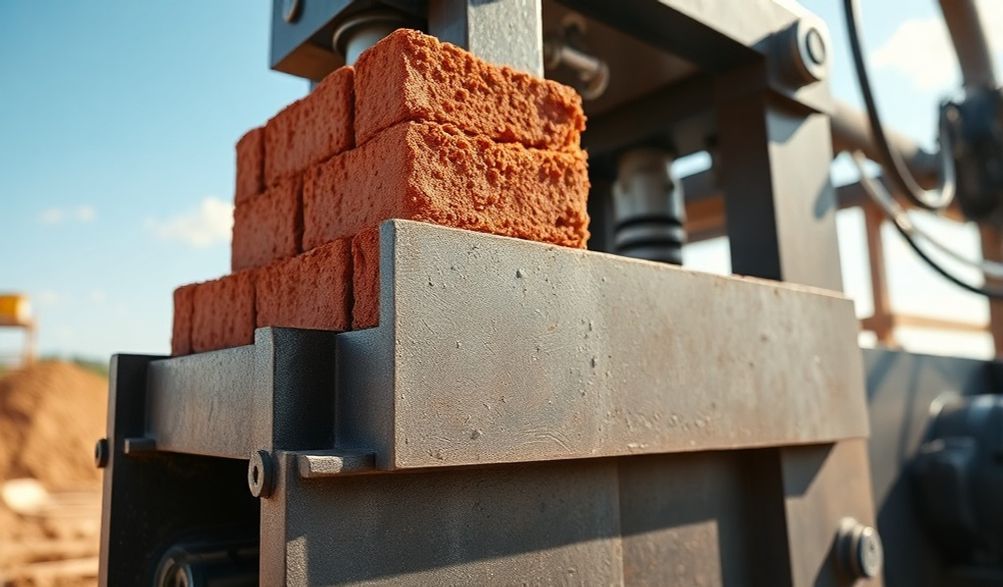
The Complete Guide to Stabilized Soil Brick Machines: Building Sustainably
The global construction industry stands at a crossroads. On one side, there’s an ever-growing demand for affordable housing and infrastructure. On the other, there’s the urgent need to reduce environmental degradation, carbon emissions, and reliance on resource-intensive materials. Traditional building methods, often dependent on fired clay bricks or concrete blocks, can be costly, energy-hungry, and out of reach for many communities. But what if the solution to building durable, low-cost structures was literally beneath our feet?
Увійтиstabilized soil brick machine—a transformative piece of technology that empowers individuals, entrepreneurs, and communities to produce their own high-quality building blocks using locally sourced soil. This isn’t about a return to primitive mud bricks; it’s about leveraging modern engineering principles to create a sustainable, cost-effective, and resilient alternative.
This definitive guide is built on a foundation of engineering expertise and practical industry knowledge. We’ll demystify how these machines work, detail their profound benefits, explore the different types available, and provide a clear roadmap for choosing and using one effectively. Whether you’re a self-builder, a social housing project manager, or an eco-entrepreneur, understanding the stabilized soil brick machine is your first step toward a more sustainable build.
What is a Stabilized Soil Brick Machine? Core Technology Explained
At its core, a stabilized soil brick (SSB) machine is a device designed to compress a specific mixture of raw materials into a dense, regular-shaped block. The result is a product that bridges the gap between traditional earth construction and modern masonry.
Defining the Machine and the Product
A stabilized soil brick machine compacts a moist mixture of soil, a small percentage of a stabilizer (like cement or lime), and water under high pressure. This process does not involve firing or baking in a kiln. The output is a Stabilized Soil Compressed Earth Block (CSEB).
- Different from Fired Clay Bricks: Unlike clay bricks, SSBs are not kiln-fired, saving massive amounts of energy and preventing deforestation for firewood.
- Different from Concrete Blocks: While concrete blocks use aggregate (gravel and sand) bound by cement, SSBs use the на місці soil as the primary aggregate, drastically reducing the cement content (often just 5-10%).
The Science of Stabilization: Why It Works
The magic isn’t just in the compression; it’s in the chemical стабілізація. Simple compressed earth can erode with water. Adding a stabilizer triggers a fundamental change.
- Позоланічна реакція: Soil contains silica and alumina. When mixed with a stabilizer like cement or lime and water, a long-term chemical reaction (the pozzolanic reaction) begins. This reaction forms stable, cementitious compounds that bind the soil particles together from the inside out.
- Результат: This process gives the brick its lasting strength and significantly improves its resistance to water absorption and erosion. It’s the stabilization, combined with compaction, that creates a durable, reliable building material.
Ключові компоненти типової машини
While designs vary, most machines share common core components:
- Mold / Die: The hollow chamber that defines the brick’s shape and size (e.g., rectangular, interlocking).
- Механізм стиснення: The system that applies pressure. This can be a long mechanical lever, a hydraulic ram powered by hand-pump or electric motor, or a pneumatic system.
- Рамка The robust metal structure (usually steel) that withstands the high compression forces.
- Хоппер: The chamber where the soil-stabilizer mix is loaded before compression.
- Система катапультування: A mechanism to push the freshly pressed brick out of the mold, which can be manual or automatic.
Key Benefits of Using a Stabilized Soil Brick Machine
Adopting this technology isn’t just a technical choice; it’s a decision with wide-ranging positive impacts.
Економічні переваги та доступність
- Радикальне зниження витрат: The primary material—soil—is often free or very low-cost, typically constituting 70-90% of the brick. This can reduce walling material costs by 30-50% compared to conventional bricks.
- Low Operational Overhead: Manual machines require only human labor. Even motorized versions are far more energy-efficient than running a brick kiln. This makes production viable in off-grid locations.
- Entrepreneurship & Job Creation: The technology is perfectly scaled for small business. One machine can create a local brick-making enterprise, generating employment and keeping capital within the community.
Environmental and Sustainability Benefits
- Zero Emissions from Firing: Eliminating the kiln saves trees and cuts a major source of CO2 and particulate pollution.
- Low Embodied Energy: Minimal processing, local sourcing, and reduced cement use give SSBs one of the lowest carbon footprints of any masonry unit.
- Circular & Low-Waste: Soil can frequently be sourced directly from the building site (e.g., from foundation excavation), minimizing transport and waste.
Construction and Performance Benefits
- Superior Thermal Comfort: Soil bricks have high thermal mass. They absorb heat during the day and release it slowly at night, naturally regulating indoor temperatures and reducing cooling/heating costs.
- Доведена довговічність: Properly made and cured SSBs have high compressive strength (often 3-10 MPa) and can last for centuries, as evidenced by ancient earth structures worldwide.
- Design & Build Efficiency: Many machines produce interlocking blocks. These can be laid dry or with minimal mortar, speeding up construction, reducing skilled labor needs, and saving on mortar costs.
Types of Stabilized Soil Brick Machines: Choosing Your Model
Selecting the right machine hinges on your project scale, budget, and context. Here’s a breakdown of the main categories.
Manual Press Machines
- Опис: These are entirely human-powered, using a long lever to generate high mechanical compression force.
- Найкраще для: Individual homebuilders, community self-help projects, NGOs, and very low-volume production (approximately 100-300 bricks per day).
- Переваги:
- Найнижча капітальна вартість.
- Completely independent of electricity or fuel.
- Simple to maintain and operate.
- Недоліки:
- Physically demanding labor.
- Lower and less consistent output.
- Brick strength can vary more with operator technique.
Semi-Automatic / Electric Machines
- Опис: These units use an electric motor to drive a hydraulic pump, which powers a ram to compress the soil. Loading and ejection may be manual.
- Найкраще для: Small to medium-scale commercial production, housing developments, and social enterprises (outputs of 500 to 2,000+ bricks per 8-hour day).
- Переваги:
- Excellent balance of output, cost, and consistency.
- Delivers uniform, high pressure for reliable brick strength.
- Less physically strenuous than manual presses.
- Недоліки:
- Requires a reliable electricity source (or generator).
- Higher initial investment than manual presses.
- More complex components require basic maintenance knowledge.
Fully Automatic Hydraulic Machines
- Опис: These are industrial-grade systems with automated processes for feeding the mix, compressing, and ejecting bricks, often onto a pallet.
- Найкраще для: Large-scale commercial brick-making plants supplying major construction projects. Output can exceed several thousand bricks per day.
- Переваги:
- Maximum production output and efficiency.
- Highest level of consistency and quality control.
- Can integrate with conveyor systems for material handling.
- Недоліки:
- Very high capital cost.
- Requires three-phase power and skilled operators.
- Not suitable for small or mobile projects.
How to Choose the Right Machine: A Buyer’s Checklist
Making an informed purchase requires careful evaluation of your needs and the machine’s specifications.
Assessing Your Project Needs & Scale
Ask yourself these questions first:
* What is the total number of bricks required for my project?
* What is my daily or weekly production target?
* What is my total budget for equipment?
* Do I have reliable grid electricity, or am I operating off-grid?
* What labor force is available (skilled/unskilled)?
Critical Technical Specifications to Evaluate
When comparing models, scrutinize these specs:
- Виробнича потужність: Don’t just look at “bricks per hour.” Consider a sustainable 8-hour day output, including loading and setup time.
- Розмір цегли та варіанти форм: Ensure the machine produces a size and shape (standard or interlocking) that fits your architectural plans. Can you purchase additional molds later?
- Pressure Output: This is critical for strength. Look for the maximum static pressure in PSI or MPa (e.g., 20 MPa). Higher pressure generally yields stronger, denser bricks.
- Power Source & Consumption: Match the motor (HP/kW) and voltage requirements to your site’s capabilities.
- Якість збірки: Inspect the frame thickness, welding quality, and cylinder type. A robust, heavy-duty steel frame is essential for longevity.
Supplier Evaluation for E-A-T (Expertise, Authoritativeness, Trustworthiness)
Your supplier is as important as the machine. Prioritize companies that demonstrate:
- Експертиза: They should understand soil mechanics and brick production, not just machinery sales. Can they advise on soil mix design?
- Авторитетність: Look for manufacturers with a long track record, patents, or industry certifications. Are they referenced by development agencies or research institutions?
- Надійність: They should offer a clear warranty, detailed operation manuals, and accessible technical support. Always ask for verifiable customer testimonials or site visit reports.
The Production Process: From Soil to Solid Brick
Owning a machine is only part of the equation. Success depends on following a meticulous production process.
Step 1: Soil Testing & Selection (The Non-Negotiable First Step)
Expertise is paramount here. Not all soil is suitable. The ideal soil has a balanced mix of sand, silt, and clay.
* Simple Field Tests: The “jar test” (settling test) gives a rough idea of composition. The “drop test” and “smear test” assess cohesion and plasticity.
* Professional Lab Testing: For large projects, a lab can provide precise percentages and recommend optimal stabilizer content. This small investment prevents costly failures.
Step 2: Proportioning & Mixing
Consistency is key. A typical mix might be:
* Soil: 85-90%
* Portland Cement: 5-10% (or hydrated lime)
* Water: 8-12% (by weight, optimal moisture is critical)
Use a mechanical mixer (e.g., a pan mixer) for best results, ensuring a homogeneous blend where every soil particle is coated with stabilizer.
Step 3: Compression & Ejection
Load the mixed material into the machine’s hopper. Apply steady, full pressure as per the machine’s instructions. Hold the pressure momentarily before ejecting the green brick. Handle the freshly pressed brick with care—it is fragile at this stage.
Step 4: Curing – The Key to Strength
This step cannot be rushed. The pozzolanic reaction needs water and time.
* Initial Curing (24-48 hrs): Keep bricks under plastic sheeting on pallets to prevent moisture loss.
* Main Curing (28 days): Stack the bricks in a shaded area and sprinkle them with water 2-3 times a day for at least two weeks. They should be kept damp and covered for a full 28 days to reach their design strength.
* Storage: After curing, bricks can be stored uncovered. They gain strength even further over several months.
Часті питання (FAQ)
Q1: What is the typical compressive strength of a stabilized soil brick?
А: With suitable soil and 5-10% cement stabilizer, compressive strengths between 3 MPa (430 PSI) and 10 MPa (1450 PSI) are readily achievable. This often surpasses the strength of traditional fired clay bricks. Always conduct compression tests on your specific production batch.
Q2: Can I use any type of soil?
А: No. Ideal soil has 10-30% clay content for binding, with the remainder being sand and silt. Pure sand lacks cohesion; pure clay can cause excessive shrinkage and cracking. Testing is essential to determine suitability and needed adjustments.
Q3: Are these bricks suitable for load-bearing walls?
А: Absolutely. When produced correctly with the right soil-stabilizer ratio and proper curing, SSBs are excellent for load-bearing walls in single and even multi-story (low-rise) construction. Always consult and comply with local building codes and standards.
Q4: How does the cost compare to conventional bricks?
А: Material costs are significantly lower, primarily due to the use of on-site soil. Overall, projects frequently report savings of 30-50% on walling material costs. The exact savings depend on local prices for conventional bricks and cement.
Q5: What maintenance does the machine require?
А: Regular maintenance is simple but crucial:
* Clean all parts thoroughly after each use to prevent hardened soil buildup.
* Check and tighten bolts and nuts regularly.
* Lubricate all moving joints and pivot points as per the manual.
* For hydraulic machines, check oil levels and watch for leaks; change hydraulic fluid as recommended.
Висновок
Thestabilized soil brick machine represents more than just a piece of equipment; it embodies a practical pathway toward sustainable, affordable, and resilient construction. It demystifies the building process, putting the power of creation back into the hands of communities and individuals.
As we’ve explored, success hinges on the triad of right technology (a well-chosen machine), right knowledge (understanding soil science and the curing process), and right practice (meticulous quality control). This guide, rooted in engineering principles and field expertise, provides the foundation for that knowledge.
Embracing this technology is a step toward reducing our environmental footprint, building climate-adaptive structures, and fostering local economic resilience. The raw material is abundant. The technology is proven. The next move is yours. Begin by researching reputable suppliers, get your soil tested, and take the first step in building a more sustainable future—literally from the ground up.
<