
Повний посібник з ручних машин для виробництва пресованих земляних блоків: Будівництво сталого майбутнього
Уявіть собі будівництво садової стіни, невеликої студії або навіть власного будинку з використанням найпоширенішого, місцевого та доступного матеріалу на вашій ділянці: самої землі. Це не фантазія про давнє будівництво; це цілком реальний, доступний і надзвичайно стійкий метод будівництва, який став можливим завдяки геніально простому інструменту — ручній машині для виробництва пресованих земляних блоків.
Традиційне будівництво, що покладається на обпалену цеглу, бетон та сталь, тягне за собою важкий тягар: високі фінансові витрати, значні викиди вуглецю від виробництва та транспортування, а також складність, яка часто відкидає будівельника-аматора на другий план. Для амбітного власника-будівельника, екологічно свідомого домовласника або громад, які шукають доступне житло, ці перешкоди можуть здаватися непереборними.
Увійдіть у світ ручного преса CEB. Цей пристрій, що працює за рахунок сили людини, демократизує стале будівництво, перетворюючи сиру землю на міцні, точні будівельні блоки. Він уособлює ідеальний союз низькотехнологічної винахідливості та високоефективних результатів. Цей посібник створений на основі глибокого досвіду практичної роботи та експертних знань у галузі відповідних технологій. Наша мета — надати надійний, всебічний ресурс, який озброїть вас фактами, практичними кроками та зваженими порадами, необхідними для оцінки та використанняручна машина для виготовлення стиснених земляних блоківУспішно. Давайте розберемося.
Що таке ручна машина для виготовлення стиснених земляних блоків? (Розуміння інструмента)
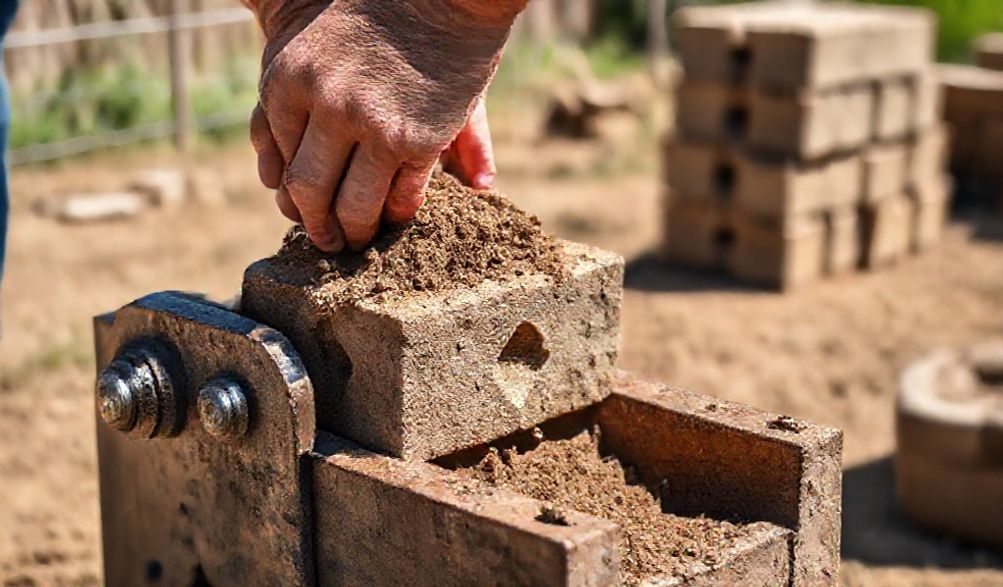
At its heart, a manual CEB machine is a mechanical press. It uses human force, amplified through a lever, to compact a prepared mix of damp soil into an incredibly dense and uniform building block. It’s the critical piece of technology that elevates earth building from the traditional, labor-intensive adobe method (which relies on sun-drying unbaked mud bricks) to a modern, efficient, and repeatable process.
The Basic Principle: Compression is Key
The magic lies in compression. While adobe blocks are simply molded and dried, CEBs are compressed under high pressure—typically between 500 to 1,000 psi. This force mechanically locks the clay, silt, and sand particles together, creating a block with far greater strength, dimensional consistency, and water resistance than its sun-dried cousin. The process requires no heat, no kiln, and no fossil fuels, just strategic force.
Основні компоненти та їх взаємодія
Understanding the machine’s parts demystifies its operation. A typical manual press consists of:
- Рамка The heavy-duty, welded steel structure that absorbs all the compressive forces. This is the machine’s backbone.
- Compression Chamber/Mold: The box where the block is formed. It defines the block’s size and shape (often rectangular or interlocking).
- Lever Arm: The long handle that provides the mechanical advantage. A longer arm means easier operation for the user.
- Tamper Plate or Press Head: This is the component attached to the lever that actually descends into the mold to compress the soil.
- Механізм викидання: A simple plate or system that pushes the finished block up and out of the mold after compression.
The Operation Cycle is a simple, rhythmic process:
1. Заповнити: The prepared soil mix is placed into the open mold cavity.
2. Стиснути: The operator pulls down the lever arm, driving the tamper plate into the soil with great force. This is often done in 1-2 strokes.
3. Викинути: Using the ejection mechanism (often a separate lever or foot pedal), the newly formed, dense block is pushed up and out of the mold, ready for curing.
Why Choose a Manual CEB Machine? Benefits and Applications
Why would you choose a hand-powered block press over a motorized one or conventional materials? The advantages are compelling and multifaceted, touching on ecology, economy, and empowerment.
Неперевершена стійкість та екологічна дружність
The environmental credentials of CEB construction are exceptional:
* Near-Zero Embodied Energy: Unlike fired bricks or concrete, CEBs require no kiln firing (a highly energy-intensive process) or chemical curing. The primary energy input is human labor.
* Hyper-Local Material Sourcing: Your main building material is literally underfoot, eliminating the carbon emissions and cost associated with transporting tons of bricks or aggregate.
* Нетоксичний та біорозкладний: At the end of its very long life, an unstabilized earth block can simply return to the earth or be reused as fill. It creates no construction waste.
Extreme Cost-Effectiveness for DIY and Small Projects
For the individual or small community, the economics are transformative:
* Низькі капітальні інвестиції: A manual press costs a fraction of a motorized CEB machine or a truckload of manufactured bricks.
* Незначні експлуатаційні витрати: There is no fuel, electricity, or complex maintenance. Once purchased, your material costs become almost zero.
* Dramatic Material Savings: By utilizing on-site soil, you eliminate the single largest cost in most small building projects.
Empowerment and Accessibility
This is perhaps the most powerful benefit. A manual CEB machine is:
* Off-Grid Ready: It requires no electricity, engine, or special infrastructure, making it ideal for remote locations and developing communities.
* Skill-Building: The technology is simple to understand, operate, and maintain, fostering true self-reliance.
* Inclusive: It enables individuals and small groups to undertake building projects that would otherwise be financially or logistically out of reach.
Common Projects You Can Build
A manual press is versatile, perfect for projects like:
* Landscaping: Garden retaining walls, raised beds, planter boxes, and outdoor ovens.
* Outbuildings: Tool sheds, garden studios, workshops, and animal shelters.
* Housing: Single-story homes, extensions, and community buildings (when designed with proper engineering principles).
* Humanitarian Solutions: Durable, dignified emergency shelters and transitional housing.
Key Considerations Before You Buy or Build
Success with a manual CEB machine isn’t guaranteed by the tool alone. It depends on careful consideration of these critical factors.
Soil Suitability: The Most Critical Factor
Not all dirt is building material. The ideal soil is a “loam” containing:
* Clay (15-30%): The binder that holds the block together.
* Silt (10-20%): Fills voids.
* Sand (50-75%): Provides compressive strength and reduces shrinkage.
Simple Field Tests:
* Jar Test: Mix soil and water in a clear jar, shake, and let settle. The layers will reveal approximate proportions of sand, silt, and clay.
* Ribbon Test: Moisten soil and try to roll it into a thin ribbon. If it holds together for 2-3 inches, clay content is likely sufficient.
* Drop Test: Make a baseball-sized ball of moist soil and drop it from waist height. If it crumbles, it’s too sandy; if it flattens without cracking, it’s too clay-rich. A ball that cracks but holds together is often just right.
Стабілізація: In wet or freeze-thaw climates, adding a small percentage (3-10%) of cement or lime to the soil mix dramatically increases durability and weather resistance.
Block Size and Shape Output
- Size: Common manual press blocks are similar to standard bricks but thicker (e.g., 300mm x 150mm x 100mm). Choose a size appropriate for your project’s scale and your physical capacity.
- Shape: Блоки, що з'єднуються have tongues and grooves that self-align, simplifying laying and increasing wall stability. Straight-sided blocks are simpler to produce but require more skilled mortar work.
Machine Build Quality and Durability
This tool must withstand immense, repeated force. Inspect:
* Materials: The frame and mold should be made from high-grade, thick steel (minimum 5mm/0.2″).
* Welding: Look for clean, continuous, and robust welds at all stress points. Poor welding is the most common point of failure.
* Weight & Stability: A heavier machine (80-150 lbs) will be more stable during operation but less portable. Ensure it has a solid base.
Ergonomics and Ease of Use
Your long-term productivity depends on this:
* Кредитне плече: A longer lever arm reduces the effort per block. Look for an ergonomic handle.
* Система катапультування: It should be smooth and require minimal secondary effort. A sticky ejection system will slow you down immensely.
* Realistic Output: A skilled, steady operator can produce 60-120 blocks in an 8-hour day. This is not for rapid, commercial production but for paced, owner-builder progress.
The Step-by-Step Process: From Soil to Wall
Turning a pile of dirt into a durable wall is a three-phase process. Rushing any step compromises the final result.
Phase 1: Material Preparation
This phase is 80% of the success. A common mistake is using soil that is too wet or poorly mixed, leading to blocks that stick in the mold or crack during curing.
1. Source & Test: Excavate soil from below the topsoil layer. Perform the jar and drop tests.
2. Sieving: Pass dry soil through a 10mm (3/8″) screen to remove stones, roots, and organic matter.
3. Змішування: Combine soil, stabilizer (if using), and water. Use a tarp and shovel, or a small rotary mixer for larger batches. Mix until completely uniform.
4. Вміст вологи: Aim for the “mud pie” consistency—moist enough to hold its shape when squeezed in your fist without dripping water, and it should crumble when poked.
Phase 2: Block Production
Set up an efficient “factory floor”:
* Mixing Area: Where soil, stabilizer, and water are combined.
* Press Station: A stable, level platform for the machine.
* Curing Yard: A flat, shaded area for drying blocks, covered with plastic or burlap.
Operating the Press: Develop a rhythm. Fill the mold uniformly, pull the lever with steady, full force, and eject the block cleanly onto a pallet. Consistency in each motion is key to consistent block quality.
Phase 3: Curing and Quality Control
Curing is not just drying; it’s when stabilized blocks gain their strength.
* Нашарування: Stack blocks on edge with gaps between them for air circulation. Keep them in the shade and cover with plastic to slow moisture loss and prevent cracking.
* Timeframe: Allow at least 2-4 weeks of curing before use. Cement-stabilized blocks continue to gain strength for months.
* Quality Test: After curing, try to break a block by hand or strike two together. A good block will have a clear “ring” and be difficult to break. If it crumbles easily, review your soil mix and compression.
Frequently Asked Questions (FAQ) About Manual CEB Machines
Q: How strong are compressed earth blocks?
А: Properly made, stabilized CEBs can achieve compressive strengths between 2 and 10 MPa (Megapascals). For comparison, a typical residential concrete block is around 7-15 MPa. This is more than adequate for single-story, load-bearing walls. The key to longevity is not just block strength, but proper detailing: a solid, raised foundation, wide roof overhangs, and a durable plaster finish.
Q: Can I use a manual CEB machine in a rainy climate?
А: Yes, but stabilization is non-negotiable. Using 5-10% Portland cement by volume is the standard method for wet climates. Furthermore, the architecture must protect the walls: think large eaves (12″+), rendered plasters (lime or cement-based), and excellent site drainage to keep water away from the base of the walls.
Q: What is the production rate for a manual machine?
А: Manage your expectations. A single, experienced operator can typically produce 50 to 150 blocks in a full day, depending on the machine design and their stamina. This makes it perfect for an owner-builder working steadily over time or a small community crew. It is not a tool for fast-track commercial construction.
Q: Where can I buy a manual CEB press?
А: They are available from specialized sustainable building suppliers, through online marketplaces focusing on appropriate technology, and sometimes directly from local fabricators or welders who can work from plans. When comparing, prioritize the build quality and material specifications over the lowest price.
Q: Are there plans available to build my own machine?
А: Yes. Reputable organizations like Open Source Ecology provide open-source, freely available plans (like the “Liberator CEB Press”). Building your own can drastically reduce cost and allow for customization. However, this path requires proficient welding skills and access to a well-equipped metal shop. A poorly fabricated press will be frustrating, unsafe, and short-lived.
Conclusion: Building a Future from the Ground Up
Theручна машина для виготовлення стиснених земляних блоків is more than just a tool; it’s a key to a more sustainable, affordable, and empowered approach to building. It connects us directly to our building site, reduces our environmental footprint to a minimum, and places the power of creation back in our hands.
This guide is rooted in the proven, timeless principle of building with earth, now enhanced by simple mechanical compression. Remember, your success hinges not on the tool alone, but on your understanding of the material—your soil—and your commitment to the process. The journey toward building with earth is one of patience, learning, and profound satisfaction.
Start small. Build a garden wall or a simple bench. Gain the feel for the soil, the rhythm of the press, and the patience of curing. Connect with natural building communities, seek out workshops for hands-on experience, and thoroughly research the needs of your local climate. Your foundation for a sustainable future starts with a single block of compressed earth.
<