
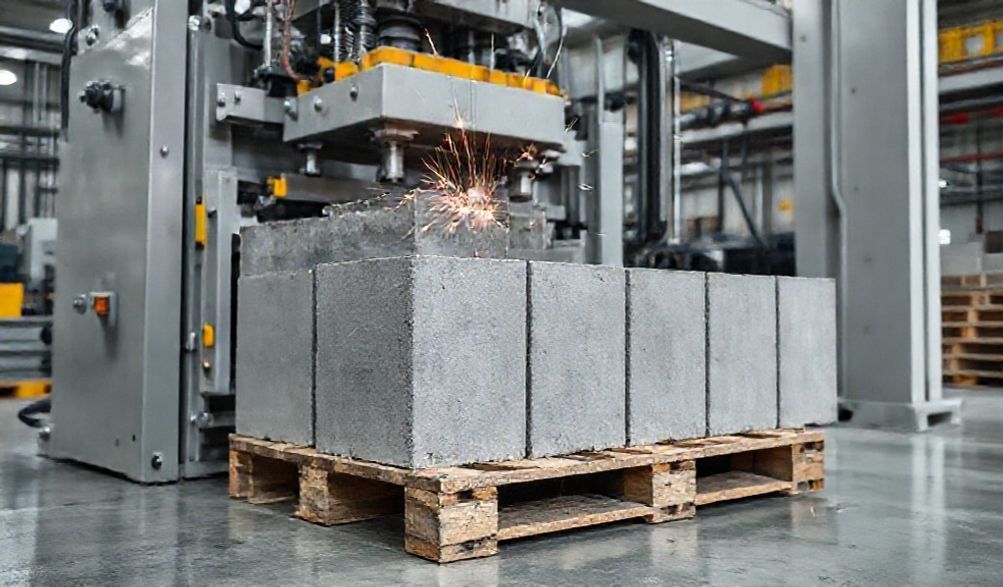
Your Complete Guide to Concrete Block Making Machines: Types, Benefits & How to Choose
Вступ
In the world of construction, the humble concrete block is a foundational powerhouse. But behind every sturdy wall and durable pavement lies a critical decision: how are those blocks produced? For entrepreneurs, construction firms, and developers, the leap from purchasing blocks to manufacturing them represents a significant opportunity for control, quality, and profit. This journey hinges on one pivotal piece of equipment—the concrete block making machine.
Gone are the days of relying solely on labor-intensive, inconsistent manual methods. Today’s block making machines are sophisticated engines of productivity, transforming raw materials into precise, high-strength building components with remarkable efficiency. However, navigating the market—from manual presses to fully automated plants—can be daunting. Choosing incorrectly can lead to costly downtime, subpar products, and stifled growth.
This guide is designed to be your definitive resource. Whether you’re a newcomer exploring a new business venture or an established player looking to upgrade, we’ll provide the expert insights you need. We’ll demystify the technology, compare your options, and outline the key factors that separate a wise investment from a costly mistake. By the end, you’ll be equipped to select a machine that not only meets your production demands but becomes a reliable driver of your productivity and long-term growth.
Розуміння машин для виробництва бетонних блоків
Before diving into types and features, it’s essential to grasp what these machines are and how they fundamentally operate.
Що таке машина для виробництва бетонних блоків?
A concrete block making machine is specialized industrial equipment designed to automate the process of molding concrete into uniform, dense blocks. It uses a combination of mechanical vibration and high pressure to compact a prepared concrete mix within a mold cavity. The result is a precisely shaped block—be it hollow, solid, paving, or interlocking—that meets specific dimensional and strength standards.
This machinery is the cornerstone of modern construction material production. It replaces variable human effort with consistent mechanical force, ensuring every block that comes off the production line is virtually identical in size, shape, and structural integrity. This consistency is non-negotiable for efficient, safe, and code-compliant construction.
Основні компоненти та принцип їх роботи
While designs vary by model and automation level, most block making machines share a common set of core components that facilitate a continuous production cycle:
- Хоппер:Вхідний пункт для необробленої бетонної суміші.
- Мікшер: (Often integrated or separate) Ensures a homogeneous blend of cement, aggregates, and water.
- Система конвеєрів:Транспортує замішаний бетон до зони формування.
- Mold or Mold Set: The heart of the machine. This is the cavity that gives the block its shape. Molds are interchangeable to produce different block types.
- Вібраційна система: High-frequency vibrations remove air pockets and compact the concrete, crucial for strength and finish.
- Hydraulic or Mechanical Press System: Applies substantial pressure (measured in tons) to further densify the concrete.
- Панель керування: Houses the electronics (from simple switches to advanced PLCs) that operate the machine’s sequence.
- Палетний Подавач та Штабелер: Handles the pallets that blocks are formed on and stacks finished products for curing.
The Basic Process Flow:
1. Партійне змішування та приготування сумішей: Raw materials are measured and mixed to a precise, semi-dry consistency.
2. Лиття: The mix is fed into the mold. Intense vibration and hydraulic pressure compact it.
3. Викид: The newly formed block is pushed out onto a wooden or steel pallet.
4. Лікування: Blocks on pallets are moved to a curing area (often a rack or chamber) where they gain strength through controlled moisture and temperature.
5. Палетування: Once cured, blocks are removed from pallets and stacked for storage or shipment.
Types of Concrete Block Making Machines
The market offers a solution for every scale and budget. Your choice will primarily depend on your required output, level of automation, and mobility needs.
За способом керування: ручний, напівавтоматичний та повністю автоматичний.
- Ручні верстати для виробництва блоків:
- Профіль: These are simple, lever-operated or small hydraulic presses. All major steps—feeding, compacting, ejecting—require direct operator effort.
- Найкраще для: Extremely small-scale projects, remote locations with no power, or very low-budget startups testing the market. Output is low and labor intensity is high.
- Напівавтоматичні верстати для виробництва блоків:
- Профіль: The sweet spot for many small to medium businesses. Key processes like vibration and pressing are automated, but the machine may require operator involvement for feeding raw material or removing finished blocks/pallets.
- Найкраще для: Businesses seeking a balance between investment cost and productivity. They offer significantly higher output than manual machines while keeping capital and operational complexity manageable.
- Повністю автоматичні машини для виробництва блоків:
- Профіль: These are complete production lines controlled by programmable logic controllers (PLCs). They automate the entire process from raw material feeding to block stacking, including pallet circulation.
- Найкраще для: High-volume commercial production (10,000+ blocks per day). They ensure maximum consistency, minimal labor costs, and seamless integration with other automated systems like batching plants and robotic palletizers.
By Production Method: Stationary vs. Mobile Block Machines
- Стаціонарні блокові заводи:
- These are fixed installations, typically with high-capacity mixers and block machines. They are designed for large-scale, centralized production in a dedicated factory setting.
- Перевага: Highest possible output and automation. Ideal for supplying a regional market.
- Мобільні блокові машини (тип «несучка»):
- These portable machines produce blocks directly on the ground or on a concrete slab. After forming a block, the machine moves forward to the next position, “laying” blocks like an egg-laying hen.
- Перевага: Eliminates transport costs for the finished blocks. Perfect for large on-site projects like housing developments, road construction, or large warehouses where producing blocks exactly where they are needed creates massive logistical and financial savings.
By Block Output: Hollow Block, Paver, Curbstone, and Interlocking Machines
While many machines are versatile, some are optimized for specific products:
* Машини для виготовлення порожнистих блоків: The most common type, designed for the high-volume production of standard hollow concrete blocks used in walls.
* Paver Block Machines: Feature specialized molds and often higher pressure to produce dense, aesthetically pleasing paving stones for driveways, walkways, and patios.
* Curbstone Machines: Produce long, linear blocks used for road edging and landscaping.
* Interlocking Block Machines: Create blocks with designed tongues and grooves that lock together without mortar, popular for retaining walls and some construction systems.
Ключове розуміння: Always verify mold interchangeability. A quality multi-purpose machine from a reputable supplier should allow you to produce these different block types simply by changing the mold set, protecting your investment and allowing you to pivot with market demand.
Key Benefits of Investing in a Quality Block Making Machine
Moving from outsourcing to in-house production with a reliable machine isn’t just an equipment purchase—it’s a strategic business decision with tangible returns.
Неперевершена продуктивність і стабільні результати
- Machines work tirelessly at a set cycle time, producing hundreds or thousands of blocks per hour.
- They enable 24/7 operation (with shifts), allowing you to meet large orders and tight deadlines that would be impossible manually.
- Every cycle is identical, guaranteeing a uniform product stream that simplifies construction planning and execution.
Superior Block Quality and Strength
- Controlled, high-frequency vibration eliminates voids, creating a denser, more durable block.
- Precise hydraulic pressure ensures consistent compaction, leading to higher compressive strength that can reliably meet or exceed international standards (ASTM, CIS, IS).
- Accurate molds guarantee dimensional tolerance, resulting in straight walls, less mortar use, and faster bricklaying.
Significant Cost Reduction and Material Efficiency
- Labor Savings: One semi-automatic machine can replace a large team of manual laborers, reducing long-term payroll costs and management complexity.
- Reduced Waste: Automated batching and mixing use raw materials with pinpoint accuracy, minimizing spillage and rejected batches.
- Production Economics: The cost-per-block when manufacturing yourself is typically far lower than purchasing from a third party, especially for large projects. This margin directly improves your project profitability or competitive pricing.
Versatility and Business Scalability
- With interchangeable molds, your machine can adapt to produce what’s in demand, allowing you to serve diverse customer segments (construction, landscaping, municipal work).
- Starting with a semi-automatic model provides a lower entry point. As your business grows, you can scale up to higher-capacity or fully automatic systems, often from the same trusted supplier.
Critical Factors for Choosing the Right Machine
This is where expert knowledge separates a good purchase from a great one. A thorough self-assessment is more important than any sales brochure.
Оцінка ваших виробничих потреб
Ask these questions first:
* Щоденний/Щотижневий випуск: How many blocks do you need to produce? Be realistic about current needs and factor in projected growth for the next 3-5 years. Buying a machine that maxes out at your current demand leaves no room for expansion.
* Block Type Mix: What percentage of your production will be hollow blocks, pavers, etc.? This dictates the necessary mold sets and machine versatility.
* Project Timeline: Is this for a single, large project with a defined end date, or for ongoing commercial production? This influences the priority on durability versus outright cost.
Understanding Machine Specifications
Decode the technical sheet:
* Час циклу: The time to produce one block or one mold of multiple blocks. Faster cycles mean higher output.
* Тиск (тоннаж): Higher pressure generally produces denser, stronger blocks, which is critical for pavers and load-bearing blocks.
* Mold Capacity: How many blocks (and of what size) are produced per cycle? A “4-block mold” for standard hollow blocks is common.
* Вимоги до живлення: Ensure your facility or site has the correct electrical supply (e.g., 3-phase power) to run the machine.
* Рівень автоматизації: Honestly assess your available labor skill and your desire to manage complex electronics versus simpler mechanical systems.
Raw Material Considerations: Cement, Aggregates & Mix Design
The machine is only as good as the mix you feed it. Ignoring this is a common first-time error.
* Mix Design: A standard mix might be 1 part cement, 3-6 parts aggregates (sand, gravel, or crushed stone), and just enough water for a semi-dry consistency. The optimal ratio depends on your desired block strength and the aggregates available locally.
* Aggregate Size & Quality: Sharp, clean, and properly graded aggregates are essential. Fines (dust) and organic material will weaken the final block. The maximum aggregate size must be suitable for your block thickness and mold design.
* Expert Tip: Reputable machine suppliers should provide tested mix designs and may even offer to test your local materials to recommend the best formula.
Supplier Evaluation: Reputation, Service, and Support
Your relationship with the supplier lasts long after the sale. Use this checklist:
* Manufacturer Experience: How long have they been building these machines? Look for established companies with a proven track record.
* Гарантія та Запчастини: What is covered and for how long? Is there a local or readily accessible spare parts inventory? Downtime is lost revenue.
* Технічна підтримка: Do they offer installation supervision, on-site operator training, and accessible after-sales support (phone, online, etc.)?
* Client References & Testimonials: Can they connect you with existing customers, preferably in your region? Seeing a machine in operation is invaluable.
Operational Best Practices and Maintenance
Protecting your investment requires a proactive approach to operation and care. Consistent maintenance is far cheaper than major repairs.
Safe Setup and Daily Operation Procedures
- Foundation: Install the machine on a strong, level concrete foundation as per the manufacturer’s specifications to absorb vibration.
- Safety First: Ensure all operators wear appropriate PPE (safety glasses, gloves, hearing protection). Never bypass safety guards or interlocks.
- Standardized Procedures: Follow a strict startup and shutdown sequence. Use calibrated tools for measuring raw materials to maintain mix consistency.
Essential Routine Maintenance Checklist
Adhere to the manufacturer’s manual, but a general schedule includes:
Daily:
* Clean the machine thoroughly at the end of each shift, especially the mold cavity, hopper, and feed system.
* Check hydraulic oil levels and look for leaks.
* Inspect mold liners and wear parts for damage.
Weekly:
* Lubricate all moving parts (bearings, guide rods) as specified.
* Check and tighten all bolts and electrical connections.
* Inspect vibration motors and mounts.
Monthly:
* Perform a more detailed inspection of hydraulic hoses and valves.
* Check the alignment of the conveyor and pallet systems.
* Test safety systems and emergency stops.
Troubleshooting Common Issues
- Blocks Sticking in Mold: Often caused by a worn mold, insufficient vibration during ejection, or an incorrect (too wet) mix design.
- Poor Surface Finish or Cracking: Can result from an improper mix (too much/too little water, poor aggregates), insufficient compaction pressure, or damage to the mold faces.
- Machine Not Reaching Full Pressure: Check hydraulic fluid level, pump function, and for any pressure relief valve issues.
Golden Rule: For any persistent or complex mechanical, hydraulic, or electrical issue, contact your supplier’s technical support. Attempting major repairs without expertise can void warranties and lead to more extensive damage.
Часті питання (FAQ)
Q1: What is the average production capacity of a standard block making machine?
A: Capacities vary widely. A semi-automatic machine may produce 800-1500 blocks per 8-hour shift, while a fully automatic plant can produce 10,000+ depending on model and block size. The key is to match capacity with your business plan.
Q2: Can one machine produce different types and sizes of blocks?
A: Yes, most quality machines are designed for mold interchangeability. You can produce hollow blocks, solid blocks, and pavers by changing the mold set. Confirm this flexibility and mold availability with your supplier.
Q3: What is the typical lead time for setting up a block production line?
A: For a standard machine, delivery can take 4-8 weeks post-order. Foundation preparation, installation, and operator training can add 1-2 weeks. Complex, fully automatic lines require more detailed planning and time.
Q4: How important is after-sales service when purchasing a machine?
A: It is critical. Reliable after-sales service—including technical support, readily available spare parts, and accessible maintenance guidance—ensures minimal downtime and protects your investment for years. Always prioritize suppliers with a proven service network.
Q5: What are the common mistakes first-time buyers make?
A: Common pitfalls include underestimating power/space requirements, choosing a machine with insufficient capacity for future growth, neglecting to plan for raw material storage and curing areas, and selecting a supplier based on price alone without considering service and reliability.
Висновок
Selecting the right concrete block making machine is a strategic decision that reverberates through your product quality, operational efficiency, and bottom-line profitability. It’s not merely about buying a piece of hardware; it’s about investing in a production partner for years to come.
By thoroughly assessing your own production needs, understanding the technical landscape, and vetting suppliers on their service and support as much as their price, you lay the groundwork for success. Use this guide as a foundational blueprint for your research.
We encourage you to engage deeply with shortlisted manufacturers. Request detailed consultations, ask for material tests with your local aggregates, and if possible, visit a factory or existing customer site. Seeing the machine in action and speaking with current owners provides irreplaceable insight.
In an era focused on sustainable, efficient construction, the ability to produce high-quality, durable building materials locally and on-demand is more valuable than ever. Your choice of block making machine is the first step in building that capability.
<