
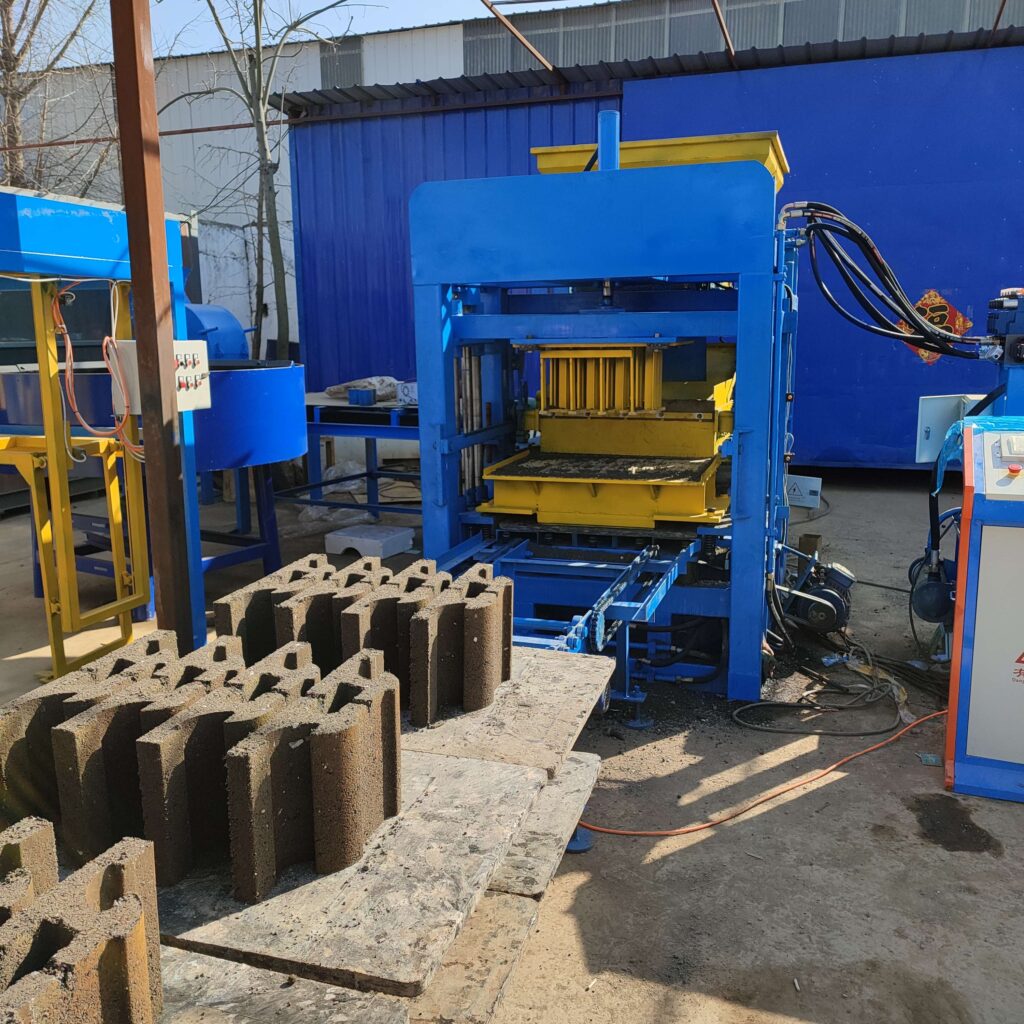
I. Основна програма: Революція у будівництві стін
Основне та найважливіше застосування блоків з замковою системою полягає у швидкому, ефективному та надійному зведенні стін. Це застосування, в свою чергу, охоплює кілька ключових напрямків.
A. Доступне та соціальне житло
Технологія замкових цеглин є наріжним каменем у вирішенні глобальної потреби у доступному та довговічному житлі.
- Економічне обґрунтування:Різке скорочення або повна відмова від використання розчину дозволяє заощадити приблизно 30-50% витрат на матеріали для зведення стін. Крім того, спрощений будівельний процес зменшує потребу у висококваліфікованих мулярах, оскільки система замкового з'єднання за своєю природою є орієнтовною, що дозволяє навчити місцеву робочу силу за короткий термін. Це поєднання значно знижує загальну вартість за квадратний метр побудованого простору.
- Модель розгортання:Машини часто впроваджуються на рівні громад або для конкретних проектів. Мобільні чи напівстаціонарні машини можуть виробляти цеглу на будівельному майданчику або поблизу нього, використовуючи місцевий ґрунт, стабілізований невеликим відсотком цементу (що дає стиснуті стабілізовані земляні блоки – ССЗБ) або звичайні бетонні суміші. Така модель мінімізує транспортування та зміцнює місцеву економіку.
B. Несучі конструкційні стіни
Поширеною помилкою є думка, що зчіпні блоки використовуються лише для заповнення або неконструктивних цілей. Інженерні системи цілеспрямовано розроблені для несучих застосувань.
- Інженерні принципи:Механізм зчеплення в поєднанні з високою міцністю на стиск машинних блоків утворює стіну, яка діє як цілісна монолітна конструкція. Вертикальне, а іноді й горизонтальне зчеплення ефективно розподіляє навантаження. При використанні цементного розчину його часто заливають у суцільні вертикальні порожнини, що утворюються внаслідок вирівнювання блоків, створюючи армовану бетонну колону всередині стіни, що додатково підвищує сейсмічну стійкість.
- Ринкове застосування:Це робить технологію придатною для одно- та багатоповерхових житлових будинків, шкільних споруд і невеликих комерційних будівель. Для дистриб'юторів це відкриває можливість співпраці з офіційними будівельними підрядниками та забудовниками, а не лише з гуманітарним сектором або сферою самобудівництва.
C. Периметральні стіни, огороджувальні стіни та охоронні стіни
The speed and simplicity of construction make interlocking bricks ideal for various enclosure walls.
- Переваги: Projects can be completed far faster than with traditional masonry. The clean, consistent appearance of the dry-stack or thin-mortared joint provides an attractive finish. For security walls, the inherent mass and density of the blocks, combined with the difficulty of removing individual units from the interlocked matrix, provide robust physical deterrence.
II. Specialized Civil and Landscape Engineering Applications
Beyond standard buildings, the unique properties of interlocking units lend themselves to specialized construction challenges.
A. Retaining Walls and Erosion Control Structures
This is a major application area, particularly for dry-stack interlocking systems.
- Functional Design: Interlocking blocks for retaining walls are specifically engineered with a mechanical lock (usually a lip or pin system) that provides resistance to soil pressure from behind. The walls are often battered (sloped) for stability.
- Ключові переваги: Rapid Installation: No curing time for mortar allows immediate backfilling. Drainage: The open joints between units facilitate natural drainage, relieving hydrostatic pressure—a critical failure point for solid walls. Гнучкість: Dry-stack walls can accommodate ground movement and settle without cracking. This makes them ideal for roadside embankments, garden terraces, and shoreline protection.
B. Pavements, Walkways, and Hard Landscaping
While distinct from walling blocks, interlocking paving units are a related product from specialized hydraulic presses.
- Заявка: Used for driveways, pedestrian walkways, parking lots, and public plazas. The interlock between individual pavers distributes load laterally, preventing movement and subsidence under traffic.
- Commercial Link: For machinery distributors, this represents a complementary product line. Clients invested in interlocking wall block machines may also have a market for pavers, or vice-versa, allowing for portfolio synergy.
III. Niche and Emerging Applications
The adaptability of the technology fosters innovation in response to specific market needs.
A. Disaster-Resilient and Emergency Shelter Construction
The combination of speed and structural resilience is critical in post-disaster scenarios.
- Rapid Deployment: Machines can be shipped to a disaster zone to produce shelter units using local soil or donated materials, avoiding long supply chains for conventional bricks.
- Seismic Performance: Properly designed interlocking systems, especially when combined with grout and rebar, have demonstrated good performance in seismic events due to their ability to flex slightly without collapsing, unlike brittle, mortar-bonded masonry.
B. Architectural and Aesthetic Features
The clean, modern look of interlocked masonry is being leveraged for aesthetic purposes.
- Feature Walls: Both interior and exterior feature walls in commercial and high-end residential projects.
- Landscape Features: Free-standing screen walls for privacy or sun shading, garden planters, and decorative columns.
C. Agricultural and Rural Infrastructure
The low-tech, durable nature of the construction is ideal for rural settings.
- Додатки: Storage buildings, animal shelters, perimeter walls for farms, and small irrigation or drainage structures. The use of stabilized earth blocks makes it particularly cost-effective and thermally efficient in rural economies.
IV. Strategic Commercial Implications for Distributors and Dealers
Selling interlocking brick machinery requires a nuanced approach that differs from conventional block machine sales.
A. Market Segmentation and Client Profiling
- Segment 1: Social Impact & Development: NGOs, government housing agencies, community cooperatives. Value drivers: Affordability, job creation, sustainability.
- Segment 2: Progressive Contractors & Developers: Forward-thinking construction firms. Value drivers: Construction speed, reduced labor skill dependency, lower project costs, modern building method.
- Segment 3: Landscape & Civil Contractors: Specialists in hardscaping and erosion control. Value drivers: Product specialization for retaining walls, technical support on engineering designs.
- Segment 4: Agricultural & Rural Enterprises: Value drivers: Durability, low maintenance, on-site production capability.
B. The “Solution Sale” vs. “Equipment Sale”
Success in this market hinges on selling a complete construction system, not just a machine.
- Essential Components of the Sale: The machine, a set of precision molds, comprehensive training on both machine operationтаconstruction techniques, and technical support for basic soil analysis and mix design.
- Building Evidence: Creating a portfolio of successful projects (case studies, testimonials) is perhaps more critical here than in any other brick machine segment, as it builds credibility for a non-traditional method.
C. Understanding the Competitive Landscape
The competition is not just other machine brands, but entrenched traditional construction methods.
- Overcoming Resistance: The distributor’s role includes educating the market on the engineering validity, code compliance (where applicable), and long-term benefits of interlocked construction. Demonstrations and pilot projects are powerful tools.
- Value Proposition Articulation: The pitch must clearly quantify benefits: “This system reduces your wall construction time by 60% and material costs by 40%,” supported by tangible project data.
Висновок
The interlocking brick machine is far more than a novel variation on standard block production equipment. It is the enabling technology for a distinct and value-driven construction methodology with applications spanning from affordable housing and infrastructure to specialized landscaping and disaster relief. Its utility is defined by the unique advantages of the blocks it produces: mortarless or minimal-mortar assembly, rapid construction, labor skill optimization, and inherent resilience in certain structural applications.
For the astute B2B professional, this represents a targeted market segment with high growth potential and the opportunity to build deep, consultative partnerships. Success requires moving beyond mechanical specifications to become a knowledgeable advocate for the interlocking construction system as a whole. By understanding and communicating its diverse applications—from the foundation of a family home to the retaining wall supporting a highway—distributors can position themselves as essential partners in building more efficient, affordable, and sustainable structures. In doing so, they do not just sell machines; they enable their clients to build solutions.
Часті питання (FAQ)
Q1: Are buildings made with interlocking bricks as strong as traditional brick-and-mortar buildings?
А: When designed and built correctly using engineered blocks, they can be equally strong or stronger. The compressive strength of the block itself is typically high due to machine compaction. For load-bearing walls, the interlocking system, often combined with grout and vertical rebar in the cavities, creates a reinforced concrete moment frame within the wall, offering excellent compressive and lateral (e.g., seismic) strength. It is a different structural philosophy that is code-approved in many countries.
Q2: Can these machines use ordinary soil, or is special material required?
А: Machines designed for Compressed Stabilized Earth Blocks (CSEBs) can use ordinary site soil, but it must be suitable. Not all soils are ideal. The soil should have a balanced mix of sand, silt, and clay. A simple soil test is recommended. Typically, 5-10% cement or lime is added as a stabilizer to ensure durability and water resistance. Concrete-based interlocking block machines use standard sand, aggregate, and cement mixes.
Q3: What is the main barrier to wider adoption of this technology?
А: The primary barrier is cultural and institutional inertia. The construction industry is conservative. Overcoming reliance on familiar mortar-based methods requires demonstration, education, and sometimes certification. Building code officials, engineers, and contractors need to be educated on the system’s engineering principles. Distribators play a key role in providing the technical data and case studies to overcome this barrier.
Q4: For a distributor, is the market for interlocking brick machines saturated?
А: Generally, no, it is far from saturated. While growing, it remains a niche compared to the conventional block market. Its growth is fueled by global trends in affordable housing, sustainable construction, and infrastructure development. There is significant white space, especially in regions with high labor costs (where speed is valuable) or low access to skilled masons (where simplicity is valuable). The competitive landscape is less about undercutting other machine sellers and more about convincing the market to adopt a new method.
Q5: How does the profitability for an end-user client compare between interlocking and traditional brick production?
А: The profitability model shifts. Traditional brick production profits from selling a commodity (the block) to a mason. Interlocking brick production often enables a more integrated business model: the producer can also be the builder, capturing value from both material supply and construction labor. The reduced construction time allows a contractor to complete more projects per year. Therefore, profitability can be higher on a per-project basis due to lower costs and faster turnaround, even if the per-block profit margin is similar.

