
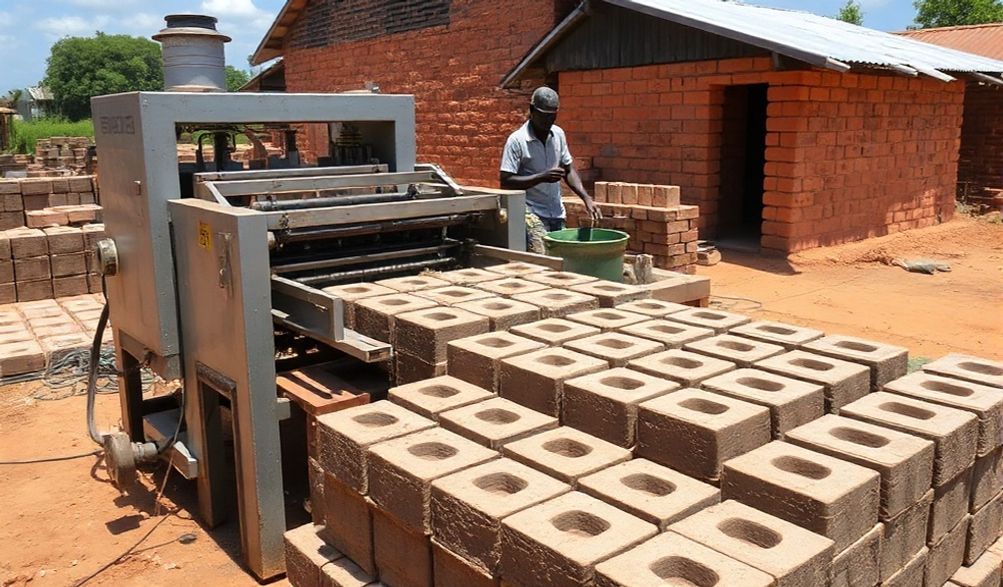
Ваш остаточний посібник з машин для виробництва цегли в Уганді (2024)
Вступ
Український горизонт змінюється. Від бурхливого розширення Кампали до нових житлових масивів, що з'являються по всіх регіонах, країна переживає значний будівельний бум. Це зростання стимулюється стрімкою урбанізацією, інфраструктурними проектами під керівництвом уряду та хвилею приватних інвестицій. В основі кожної нової будівлі лежить фундаментальна потреба: якісна та доступна цегла. Однак для багатьох традиційний метод ручного виробництва цегли — повільний, трудомісткий процес, що дає нестабільні результати — залишається основним обмеженням для прогресу та прибутку.
Ось де сучасні технології пропонують потужне рішення. Машини для виробництва цегли революціонізують ланцюг постачання будівельних матеріалів в Уганді, перетворюючи сиру місцеву сировину на точні, міцні будівельні блоки з вражаючою ефективністю. Для підприємця-початківця, зростаючої будівельної фірми чи проекту розвитку громади ці машини є чимось більшим, ніж просто обладнанням; вони є шляхом до сталості, масштабованості та значних фінансових можливостей.
Цей посібник створений як ваш надійний та вичерпний ресурс. Спираючись на аналіз ринку, технічну експертизу та інсайти, адаптовані до унікальних економічних та операційних умов Уганди, ми прагнемо надати вам необхідну чіткість. Наша мета — надати вам знання для ефективної навігації на ринку, уникнення поширених пасток та здійснення впевненого, обґрунтованого інвестування. Ми розглянемо доступні типи машин, детально розберемо ключові аспекти покупки, проаналізуємо витрати та надамо практичні кроки для створення успішного виробництва цегли в Уганді.
Розуміння ринку машин для виробництва цегли в Уганді
Щоб зробити розумну інвестицію, важливо розуміти сили, що стимулюють попит, та чіткі переваги, які механізація пропонує порівняно з традиційними методами.
Драйвери попиту: Зростання будівельної галузі Уганди
Ринок цегли ніколи не був таким міцним, завдяки кільком одночасним тенденціям:
- Урбанізація та житлові проекти:Маючи одне з найшвидше зростаючих міських населень у світі, попит на житло в містах і містечках є ненаситним. Це стимулює як масштабні забудови, так і індивідуальне житлове будівництво.
- Розвиток інфраструктури уряду:Національні проекти з будівництва доріг, шкіл, лікарень та інших громадських об'єктів потребують величезних обсягів надійних будівельних матеріалів.
- Зростання приватного комерційного нерухомого майна:Зростання торгових центрів, офісних парків, готелів та промислових об'єктів ще більше посилює потребу у великооб'ємних та стабільних поставках цегли.
Переваги використання машини порівняно з ручними методами
Перехід від ручного до машинного виробництва — це не просто модернізація, а повна трансформація ваших виробничих можливостей.
- Швидкість та гучність:Машини можуть виробляти сотні, навіть тисячі цеглин на день — рівень продуктивності, неможливий досягти лише ручною працею.
- Якість та Послідовність: Every brick is identical in size, shape, and density. This uniformity ensures structural integrity, simplifies construction, and reduces mortar use.
- Вартісна ефективність: While the initial investment is higher, the long-term savings are substantial. You drastically cut labor costs per brick and minimize material waste.
- Універсальність: Many machines can be fitted with different molds to produce various brick types—solid, hollow, paving, and most notably, interlocking blocks—allowing you to cater to diverse market needs.
- Сталий розвиток: Machines that produce Stabilized Soil Bricks (using local soil mixed with a small amount of cement) reduce the environmental damage caused by firing clay bricks (deforestation for kilns) and promote the use of locally available resources.
Types of Brick Making Machines Available in Uganda
The market offers a range of machines to suit different scales of operation and budgets. Understanding these categories is your first critical step.
Ручні машини для виробництва цегли
- Опис: These are hand-operated presses, often leveraging a lever mechanism to compress soil-cement mix into a mold. They are human-powered, portable, and have the lowest upfront cost.
- Найкраще для: Individual builders for personal projects, very small-scale startups, community-based organizations, or as a low-risk introduction to brick production.
- Переваги та недоліки:
- Переваги: Very affordable, no power required, simple to use and maintain, highly portable.
- Недоліки: Low production output (typically 300-500 bricks per day), physically demanding, quality heavily dependent on operator skill.
Напівавтоматичні верстати для виробництва цегли
- Опис: These machines use an electric or diesel engine to power a vibration and compression system. Operators manually feed the raw material, but the forming and compaction are mechanized.
- Найкраще для: Small to Medium Enterprises (SMEs), growing block yards, and contractors looking to supply local markets consistently. This is the most popular category for serious commercial ventures.
- Переваги та недоліки:
- Переваги: Excellent balance of output and cost, higher and more consistent quality than manual machines, can produce various block types, good efficiency.
- Недоліки: Requires a power source (grid or generator), higher initial investment than manual machines, requires basic operational training.
Повністю автоматичні машини для виробництва цегли
- Опис: These are industrial-grade production lines. They feature automated material feeding, mixing, molding, curing, and sometimes even palletizing. They are controlled via programmable logic controllers (PLCs).
- Найкраще для: Large-scale commercial plants, major construction companies supplying national projects, and investors targeting the high-volume market.
- Переваги та недоліки:
- Переваги: Extremely high output (thousands of bricks per hour), minimal manual labor required, pinnacle of consistency and quality.
- Недоліки: Very high capital investment, requires significant space and stable three-phase power, complex maintenance, and technical expertise to operate.
Мобільні та стаціонарні машини для виробництва цегли
- Мобільні машини: Mounted on a trailer, these can be towed directly to a construction site. Ideal for producing bricks на місці, eliminating transport costs for large projects. Most common in the manual and semi-automatic categories.
- Стаціонарні верстати: Set up in a fixed location or factory. Suited for establishing a permanent block yard that supplies a surrounding area. Necessary for fully automatic production lines.
Key Factors to Consider Before Buying in Uganda
Choosing the right machine is a strategic decision. Focus on these critical factors tailored to the Ugandan context.
Production Capacity & Scale
Don’t just buy the biggest machine you can afford. Buy the one that matches your realistic business plan.
* Розрахуйте свої потреби: Estimate your current and near-future demand. How many bricks do you need to produce per 8-hour shift? A machine that sits idle is as bad as one that can’t keep up with orders.
* Match to Your Plan: Are you supplying a single project, a local community, or a wider region? Your scale of operation dictates the machine category.
Brick Type and Raw Material Compatibility
The machine must work with the materials you have.
* Soil Testing is Crucial: The quality of your local soil is paramount. Reputable suppliers should offer or recommend soil testing to determine the right cement-to-soil ratio for strong Stabilized Soil Bricks (SSBs).
* Choose Your Output: Decide what you want to produce. Interlocking Stabilized Soil Bricks (ISSBs) are highly recommended for the Ugandan market—they build faster, use less mortar, and create very strong walls. Ensure the machine you choose has the specific mold you need.
* Матеріальна гнучкість: Some machines are designed primarily for soil-cement, while others can handle concrete. Know your primary raw material.
Power Source: Electric, Diesel, or Hybrid?
Uganda’s power reliability must influence this decision.
* Електричний: Cleaner and cheaper to run if you have a reliable grid connection. Vulnerable to outages.
* Дизель: Independent of the grid, essential for sites with no power. Higher fuel and maintenance costs, but offers uninterrupted operation.
* Гібрид: Offers the flexibility to switch between grid power and a built-in diesel engine, providing a good balance for areas with intermittent power.
Budget: Initial Investment vs. Total Cost of Ownership
The purchase price is just the beginning.
* Machine Price: Get clear quotes.
* Приховані витрати: Import duties and shipping can add 30-50%+ to the cost of an internationally sourced machine. Always factor this in.
* Total Cost: Consider installation, operator training, maintenance costs, and spare parts availability. A cheaper machine with no local service support can become a very expensive paperweight.
Finding Reliable Suppliers of Brick Machines in Uganda
Your supplier is as important as the machine itself. Strong after-sales support is non-negotiable.
Local Dealers and Distributors
- Переваги: They offer local showrooms for demonstrations, easier communication, and—most importantly—accessible after-sales service, maintenance, and spare parts.
- How to Vet Them: Visit their physical office/workshop. Insist on contacting past clients and, if possible, visit an existing installation to see a machine in operation.
Direct Import from International Manufacturers
- Переваги: Potentially lower unit cost and access to a wider range of models and brands.
- Виклики: Navigating shipping logistics, customs clearance (UBRA), and the high risk of receiving zero local technical support. Lead times for spare parts can be months.
- Procurement Tip: If importing, use a reputable freight forwarder, understand all tax implications (VAT, import duty), and budget for a container inspection.
Evaluating Supplier Credibility (E-E-A-T Focus)
Apply these principles to assess any supplier:
* Досвід: How many years have they been operating and servicing machines in Uganda?
* Експертиза: Do they provide comprehensive training? Can they advise on soil mix and brick curing? Do they have in-house technicians?
* Авторитетність: Are they authorized dealers for known brands? Do they have partnerships or certifications?
* Надійність: Do they offer a clear, written warranty? Do they have verifiable customer testimonials or case studies? Is their pricing transparent?
The Business Case: Costs and Profitability Analysis
Let’s translate this into financials. (Note: Prices are estimates and can fluctuate.)
Estimated Price Ranges for Machines in Uganda
- Ручні преси: UGX 1.5 million – UGX 4 million ($400 – $1,000).
- Напівавтоматичні верстати: UGX 8 million – UGX 40 million ($2,000 – $10,000), depending on size and features.
- Повністю автоматичні рослини: UGX 100 million+ ($25,000+), often much higher.
Calculating Your Return on Investment (ROI)
A simplified model for a semi-automatic machine:
1. Revenue: (Sale Price per Brick) x (Daily Production) x (Working Days).
* Приклад: UGX 500/brick x 800 bricks/day x 22 days/month = UGX 8.8 million monthly revenue.
2. Costs: Add up monthly costs for raw materials (soil, cement), labor, power/fuel, site rent, and machine depreciation/loan repayment.
3. Profit & Break-Even: Subtract total costs from revenue. Your break-even point is when cumulative profit covers the total initial investment. With good management, a semi-automatic machine can often pay for itself within 12-18 months.
Navigating Challenges: Practical Tips for Success
- Secure Raw Materials: Establish reliable, cost-effective sources for soil and cement. Consistency in input quality equals consistency in your bricks.
- Invest in Training: A well-trained operator who can perform basic maintenance will save you thousands in repair costs and downtime.
- Market Your Bricks: Don’t just produce. Build relationships with local builders, contractors, and hardware shops. Showcase samples and the benefits of your machine-made, especially interlocking, bricks.
Frequently Asked Questions (FAQ) About Brick Making Machines in Uganda
Q1: What is the cheapest brick making machine available in Uganda?
А: Basic manual brick presses are the most affordable, with prices starting from approximately UGX 1.5 million. However, carefully assess if its production capacity meets your needs before opting for the lowest-cost solution.
Q2: Can I get training on how to operate and maintain the machine?
А: Any reputable supplier must provide basic operational training upon installation. Inquire about the depth of training and the availability of maintenance workshops or detailed manuals in a language your operators understand.
Q3: Where can I find spare parts if my machine breaks down?
А: This is a critical question before purchase. Prioritize suppliers who stock common spare parts (like moulds, bearings, belts) locally in Uganda, ideally in Kampala or major towns, to ensure quick repairs and minimal downtime.
Q4: Are there financing options available for purchasing a machine?
А: Yes. Some established local suppliers offer installment payment plans. Additionally, explore equipment financing or SME loans from Ugandan banks like Centenary Bank, Stanbic Bank, or microfinance institutions dedicated to supporting small businesses.
Q5: Which type of brick is most marketable in Uganda right now?
А: Interlocking Stabilized Soil Bricks (ISSBs) are seeing rapidly growing demand. They are cost-effective for builders (saving on mortar and construction time), strong, and thermally efficient. Producing ISSBs is a strategically smart choice for market relevance.
Висновок
Navigating the world of brick making machines in Uganda is a journey that blends technical understanding with sharp business acumen. The opportunity is real and significant, driven by the nation’s unwavering construction growth. The key to unlocking this potential lies not in buying the biggest machine, but in choosing the правильно one—a machine that aligns with your production goals, works with your local materials, and is backed by a supplier you can trust for years to come.
Remember, this investment is a partnership. The credibility, experience, and post-sale support of your supplier will be the bedrock of your operation’s success. We have designed this guide to be that trustworthy, expert-backed resource to cut through the noise and empower your decision-making.
Your next step is to move from research to action. Refine your business plan, visit the workshops of shortlisted suppliers in Uganda, see the machines in person, and ask the hard questions about support and spare parts. Request a detailed quotation and a realistic profitability projection for your specific context. The foundation for a successful venture in Uganda’s building industry is ready to be laid—brick by precise, machine-made brick.
<