
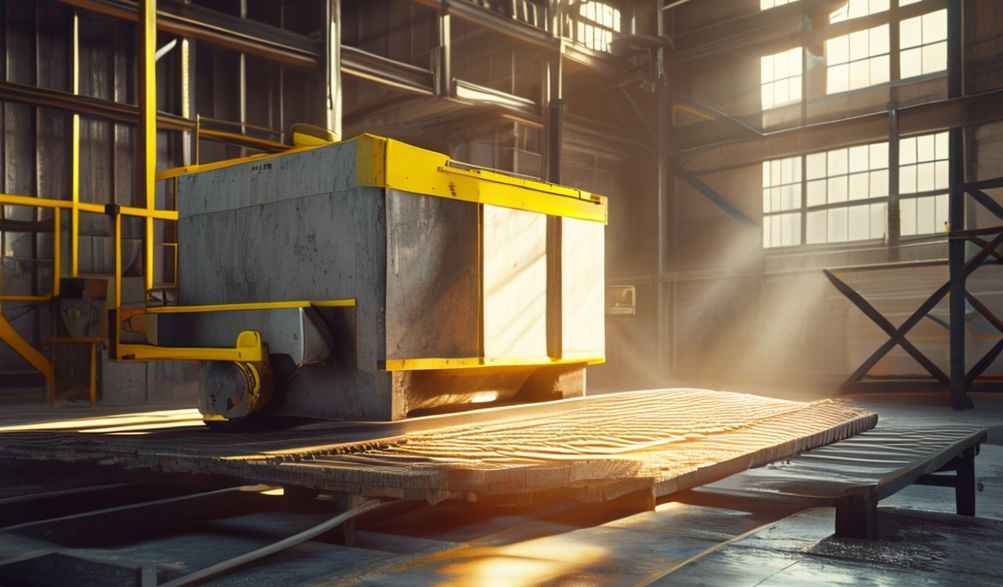
Your Ultimate Guide to Buying a Block Bricks Machine for Sale in 2026
Вступ
Did you know the global construction block market is projected to exceed $350 billion by 2026? At the heart of this massive industry is a piece of equipment that turns raw materials into profit: the block bricks machine. For contractors, real estate developers, and ambitious entrepreneurs, selecting the right machine isn’t just a purchase—it’s a pivotal investment in your business’s future.
Choosing poorly can mean crippling downtime, inconsistent product quality, and a return on investment (ROI) that never materializes. That’s why this guide exists. We’re moving beyond simple product listings to provide a comprehensive, trustworthy roadmap based on deep industry expertise and practical buying experience (E-E-A-T). You’ll learn to navigate the different types of machines, evaluate critical features, vet suppliers, and understand the operational insights that separate successful ventures from costly mistakes.
Розуміння машин для виробництва блоків: типи та сфери застосування
Before comparing prices or models, you must understand the landscape. Block machines are categorized by their level of automation, mobility, and primary output. Choosing the correct type is the first and most critical step toward a profitable operation.
Повністю автоматичні машини для виробництва блоків
These are the powerhouses of block production. Fully automatic systems integrate mixing, conveying, molding, curing, and stacking into one seamless, computer-controlled line with minimal human intervention.
- Опис та Вихідні дані: Designed for high-volume, continuous production, often in dedicated factory settings. Capable of producing thousands of blocks, pavers, or bricks per shift.
- Ідеально підходить для: Large-scale construction projects, established block manufacturing plants supplying regional markets, and businesses focused on maximizing output with a consistent labor force.
- Переваги:
- Exceptional production efficiency and output consistency.
- Dramatically reduced direct labor costs per block.
- Superior product uniformity and density due to precise control systems.
- Недоліки:
- Very high initial capital investment.
- Complex installation requiring professional setup and calibration.
- Significant space, utility (three-phase power), and foundation requirements.
Напівавтоматичні верстати для виробництва блоків
This category offers a “best of both worlds” solution for many growing businesses. While core processes like vibration and compaction are automated, tasks like feeding raw material or removing finished blocks may require manual operation.
- Опис та Вихідні дані: Balances automation with manual control. Output ranges from several hundred to over a thousand blocks per 8-hour shift, depending on model and crew.
- Ідеально підходить для: Medium-sized construction firms, entrepreneurs starting a block supply business, and contractors needing reliable on-site production.
- Переваги:
- Significantly lower investment than fully automatic lines.
- Good output capacity suitable for many business models.
- More flexibility in operation and product changeovers.
- Недоліки:
- Requires more manual labor than automatic systems.
- Output is dependent on operator speed and efficiency.
- Product consistency can vary slightly more than with full automation.
Manual or Mobile Block Making Machines
These are the most accessible entry point into block production. Often powered by a small diesel engine or even manually operated with a lever, they are highly portable and simple.
- Опис та Вихідні дані: Low-output machines perfect for small, specific jobs. Production is measured in blocks per hour, not per shift.
- Ідеально підходить для: Small builders, DIY projects, rural construction, landscaping jobs (like garden pavers), and remote sites with no grid power.
- Переваги:
- Very low purchase and operating costs.
- Extreme portability—can be towed to any job site.
- Простий дизайн означає легке обслуговування та ремонт.
- Недоліки:
- Labor-intensive and slow production.
- Not suitable for commercial-scale supply.
- Final product quality heavily relies on operator skill.
Stationary Concrete Block Machines vs. Mobile Brick Machines
This is a crucial distinction based on your primary product and business model.
- Stationary Concrete Block Machines: These are fixed installations, typically the semi- and fully-automatic types discussed. They are engineered for high-volume production of standard concrete products like hollow blocks, solid blocks, and paving stones. They require a solid concrete foundation.
- Мобільні машини для виробництва цегли: Often manual or small semi-automatic, these focus on mobility. They excel at producing solid bricks, interlocking bricks (like soil-cement stabilized bricks), and kerbstones directly at the point of use, eliminating transport costs for the final product.
Key Features to Evaluate When Buying a Block Machine
Once you’ve identified the machine type, dive into the specifications. These features directly impact your productivity, costs, and product range.
Виробнича потужність та обсяг виробництва
Never buy based on a model name alone. Scrutinize the actual output metrics.
- Циклів на годину: How many molding cycles can the machine complete in one hour under optimal conditions?
- Pieces per Cycle: How many blocks (e.g., standard 4″, 6″, 8″ hollow blocks) are produced in each cycle? Multiply these two numbers for your theoretical hourly output.
- Business Scale Alignment: A machine rated for 2000 blocks/hour is overkill for a small builder but essential for a supplier. Match the capacity to your realistic sales projections with room for growth.
Block Types, Sizes, and Mold Systems
Versatility equals opportunity. The ability to produce multiple products from one machine protects your business from market shifts.
- Асортимент продукції: Can it produce hollow blocks, solid blocks, pavers, interlocking bricks, and garden curbs? Each product opens a new revenue stream.
- Змінні форми: This is non-negotiable. A quality machine will allow you to change molds within minutes. Inquire about:
- The cost of standard and specialty molds.
- The ease of the mold-changing process.
- The availability of custom mold fabrication.
Power Source & Consumption
Your site conditions and local utility costs will dictate the best option.
- Електричні моделі: Clean, quiet, and efficient for fixed locations with reliable grid power (often requiring three-phase). Offer the lowest ongoing “fuel” cost.
- Дизельні моделі: Essential for sites without electricity. Offer high torque but come with higher per-hour fuel costs, noise, and emissions.
- Hybrid Models (Electric/Diesel): Provide flexibility to switch between power sources, ideal for sites where grid power is planned but not immediately available.
- Operational Cost: Calculate the estimated hourly energy/fuel consumption and factor it into your ROI model.
Automation Level & Control System
This is where engineering quality becomes apparent.
- Системи ПЛК (Программівних Логічних Контролерів): The “brain” of automatic machines. A quality PLC allows for precise control over vibration time, pressure, and cycle sequences, ensuring every block is identical.
- Вібраційна система: This is critical for block density and strength. Look for machines with multiple, high-frequency vibration motors mounted on the mold table and head. Avoid systems with weak or poorly placed vibrators.
- Automated Material Feeding and Pallet Handling: In fully automatic systems, these features drastically reduce labor and streamline the production flow.
Build Quality & Key Components
A machine is only as strong as its weakest part. Inspect these components:
- Каркас і структура: Must be fabricated from heavy-duty, reinforced steel to withstand constant vibration and pressure without warping.
- Гідравлічна система: Check the brand and quality of pumps, cylinders, and valves. A leaky, weak hydraulic system is a primary source of downtime.
- Вібраційні двигуни: Prefer reputable brands. They should be easily accessible for maintenance or replacement.
- Conveyor Belts (in automatic lines): Should be durable, with proper tracking systems to avoid material spillage and belt damage.
A Step-by-Step Buyer’s Checklist
Follow this experience-based process to avoid costly mistakes and build a successful partnership with your supplier.
Step 1: Assess Your Business Needs
Answer these questions honestly:
* What is my primary product (hollow block, paver, brick)?
* What is my target daily/weekly production volume?
* What is my total available budget (including machine, molds, shipping, installation)?
* What are my site conditions (space, available power, floor type)?
* What is the local availability and cost of raw materials (cement, aggregate, sand)?
Step 2: Research and Shortlist Reputable Manufacturers
Vetting the supplier is as important as vetting the machine.
* Трек-рекорд: Look for companies with 10+ years of proven experience.
* Client Portfolio: Ask for references or case studies from clients in your region.
* Сертифікати: ISO certification indicates a quality management system. CE marking is crucial for machines sold in Europe, signifying compliance with safety standards.
* Factory Visit or Virtual Tour: If possible, insist on seeing the production facility.
Step 3: Request and Compare Detailed Quotations
A professional quote should be transparent and comprehensive. It must include:
* Detailed machine specifications and output capacity.
* Clear Pricing Terms: FOB (Free on Board) price vs. CIF (Cost, Insurance, Freight) price to your port.
* Included Items: List of all standard accessories and molds.
* Warranty Terms: Duration and coverage for parts and labor. What is excluded?
* Spare Parts List: A recommended list of critical spare parts to keep on hand.
Step 4: Prioritize After-Sales Support
This is the most overlooked yet critical factor. The machine will need support.
* Монтаж та введення в експлуатацію: Will they send an engineer? Is it included in the price?
* Operator Training: Is comprehensive training provided?
* Технічна підтримка: What are the channels (phone, WhatsApp, video call)? What are the response time guarantees?
* Наявність запчастин: How quickly can you get critical spare parts? Do they have a local agent or warehouse?
Top Considerations for Operation and ROI
Your investment’s success depends on what happens after the machine is installed.
Raw Material Requirements
The machine can only produce quality blocks from quality materials.
* Mix Design: Follow the manufacturer’s recommended cement-sand-aggregate-fly ash ratios. A typical mix might be 1 part cement, 3 parts sand, and 5 parts aggregate.
* Якість матеріалу: Use clean, well-graded aggregates. Impurities or incorrect particle size distribution will affect block strength and finish, and can damage the machine.
* Послідовність: A consistent mix is vital for automatic feeders. Variations in moisture content can cause block defects.
Space, Foundation, and Utility Needs
Prepare your site before the machine arrives.
* Космос: Allow ample room for the machine, raw material storage, block curing, and finished product storage. Include space for forklift movement.
* Foundation: Stationary machines require a level, reinforced concrete foundation as per the manufacturer’s drawings to absorb vibration.
* Utilities: Ensure you have the correct electrical supply (voltage, phase, amperage), reliable water source, and proper drainage.
Labor and Skill Requirements
Plan your human resources.
* Manual Machine: 2-3 operators for mixing, feeding, and block handling.
* Напівавтоматичний: 3-5 personnel for material handling, machine operation, and quality control.
* Повністю автоматичний: 2-3 trained operators to monitor the PLC, manage the raw material hopper, and oversee the stacking system.
* Навчання: Invest in proper training. A skilled operator maximizes output and minimizes wear and tear.
Calculating Your Return on Investment (ROI)
Create a simple financial model.
1. Total Investment Cost: Machine + Molds + Shipping + Installation + Initial Spare Parts.
2. Monthly Operational Cost: Raw Materials + Labor + Energy/Fuel + Maintenance + Overheads.
3. Monthly Revenue: (Blocks Produced per Month x Market Price per Block).
4. Gross Monthly Profit: Revenue – Operational Cost.
5. Simple Payback Period: Total Investment Cost / Gross Monthly Profit = Number of months to break even.
Example: A $50,000 investment with a $2,500 monthly profit has a ~20-month payback period.
FAQ: Expert Answers to Common Buyer Questions
Q1: What is the average price range for a block bricks machine?
А: Prices vary dramatically. Manual machines start from $3,000 – $10,000. Semi-automatic models typically range from $15,000 – $50,000. Fully automatic production lines begin around $60,000 and can exceed $250,000+ for large, sophisticated systems. Always remember: the final price is a function of capacity, automation, and brand.
Q2: Can one machine produce different types of blocks and bricks?
А: Absolutely. This is achieved by changing the mold. A single press can produce hollow blocks, solid blocks, and pavers, provided you purchase the corresponding mold sets. Changing molds on a well-designed machine can take as little as 15-30 minutes.
Q3: What is the lead time for delivery and installation?
А: For standard models from international suppliers, expect 30-60 days for production plus shipping time (sea freight can add 20-40 days). Installation by a factory engineer may add 1-2 weeks. Local dealers may have machines in stock for quicker delivery. Always confirm these timelines in your contract.
Q4: How do I maintain my block making machine for longevity?
А: Follow a strict maintenance schedule:
* Daily: Clean all parts of concrete residue, check hydraulic oil levels and for leaks, inspect bolts for tightness.
* Weekly: Lubricate all moving parts (pivots, bearings, guide rails) as per the manual.
* Monthly: Check vibration motor mounts, inspect electrical connections, and replace hydraulic filters as recommended.
* Annually: Consider a full system inspection by a technician.
Q5: Where can I find reliable suppliers of block bricks machines for sale?
А:
* Industry Trade Shows: Events like bauma (Germany), CONEXPO-CON/AGG (USA), and bC India are excellent for seeing machines in action and meeting suppliers directly.
* B2B Marketplaces: Platforms like Alibaba.comіMade-in-China.com host thousands of suppliers. Exercise extreme caution: verify company certifications, insist on video calls, and use secure payment methods that offer buyer protection.
* Best Practice: Seek referrals from other block manufacturers in your region. Their hands-on experience is invaluable.
Conclusion: Making a Confident Investment
Selecting the right block bricks machine is a multifaceted decision that balances your business needs, technical specifications, and the reliability of your supplier. It’s not about finding the cheapest option, but the most valuable long-term partner for your growth.
Remember, this machine is the engine of your production. Prioritizing robust build quality, comprehensive after-sales support, and operational training will pay dividends far beyond a slight discount on the purchase price. View this as a strategic investment, not just a transaction.
Ready to take the next step?
* Download our free, printable PDF Buyer’s Checklist to systematically evaluate your options and suppliers.
* Have a specific question? Share your scenario in the comments below—our community and experts can offer tailored advice.
* Once your machine is ordered, read our follow-up guide on “Optimizing Your Block Production Line for Maximum Efficiency.”
<This guide was compiled by our industrial machinery editorial team, drawing on decades of combined experience in construction equipment manufacturing, technical consulting, and on-site operations. We maintain strict editorial independence and provide advice aimed at maximizing your investment success. Our content is regularly reviewed by industry professionals to ensure accuracy and relevance.