
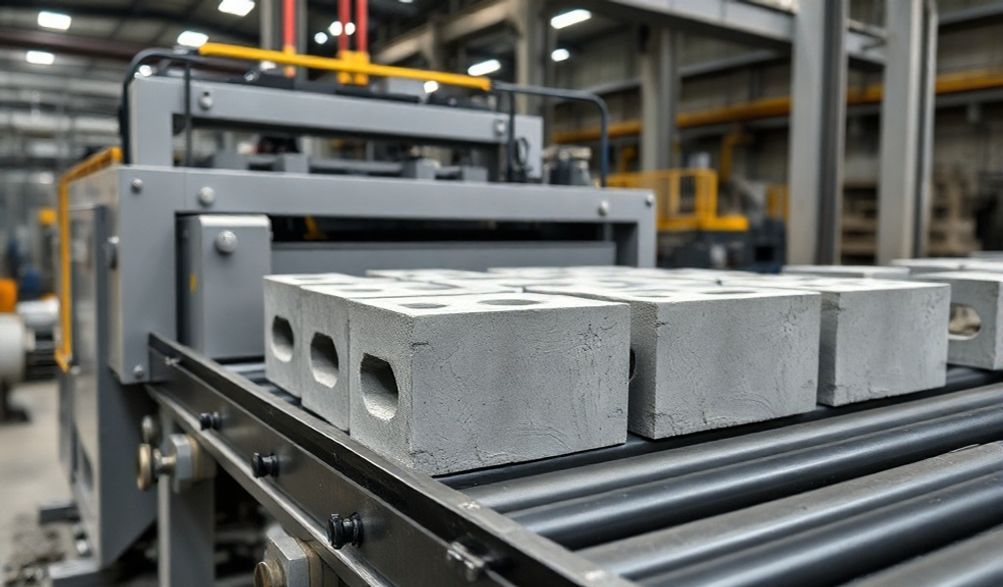
Your Ultimate Guide to Buying a Concrete Block Machine for Sale in 2024
Вступ
Imagine you’re a construction project manager, staring at another invoice for delivered concrete blocks. The costs are eating into your margins, and delivery delays are threatening your timeline. Or perhaps you’re an entrepreneur, seeing a rising demand for affordable housing and construction materials in your region, wondering if producing your own blocks could be the key to a profitable new venture.
This crossroads—the decision between outsourcing block supply and bringing production in-house—is where many successful block manufacturing businesses begin. Investing in a concrete block machine for sale isn’t just about buying equipment; it’s about seizing control over quality, cost, and scalability. The right machine can transform your operational efficiency, unlock significant long-term savings, and become the engine for substantial business growth.
Drawing on years of industry analysis, technical field experience, and countless conversations with buyers, this guide is designed to cut through the market noise. We’ll move beyond basic sales brochures to provide the practical, in-depth knowledge you need to make a confident investment. Whether you’re evaluating a small manual press or a fully automatic production line, understanding the types of machines, key specifications, total costs, and maintenance realities is crucial.
This comprehensive walkthrough will explore the different types of concrete block making machines, break down the critical factors you must consider before purchasing, navigate the complexities of the global market, and outline how to ensure your machine delivers long-term value. Let’s find the perfect equipment for your specific production needs and budget.
Розуміння машин для виробництва бетонних блоків: типи та сфери застосування
Before diving into specifications and suppliers, it’s essential to understand the fundamental categories of block-making equipment. The right type for you depends entirely on your target output, labor availability, and business model.
Ручні, напівавтоматичні та повністю автоматичні блокові машини
The level of automation is the primary differentiator in capability, cost, and labor requirement.
-
Ручні блокові машини:
- Операція: Entirely human-powered. Operators manually fill molds, engage a lever or screw mechanism to compact the mix, and then demold the blocks.
- Вихід: Low volume, typically 300-800 blocks per 8-hour shift.
- Праця: High. Requires a team for mixing, feeding, and operating.
- Ідеально підходить для: Micro-businesses, very small-scale projects, community-led initiatives, or as an entry-level proof-of-concept. They have the lowest upfront cost but the highest physical labor cost per block.
-
Напівавтоматичні блокові машини:
- Операція: Mechanizes the core compaction process (usually via a powerful vibration system and hydraulic pressure) but requires manual feeding of raw material and manual removal or stacking of finished blocks.
- Вихід: Medium volume. Can produce 1,000 to 5,000+ blocks per shift, depending on model and crew size.
- Праця: Moderate. Requires operators for feeding and handling blocks.
- Ідеально підходить для: Small to medium-sized businesses (SMBs), block yards supplying local builders, and entrepreneurs looking to scale from manual operations. They offer an excellent balance of productivity and affordability.
-
Повністю автоматичні блокові машини:
- Операція: Complete automation. From raw material feeding and mixing to compaction, curing, stacking, and palletizing, the entire process is controlled by a programmable logic controller (PLC).
- Вихід: High volume. Production lines can produce 10,000 to 30,000+ blocks per 8-hour shift.
- Праця: Low. Primarily requires supervisory and maintenance personnel.
- Ідеально підходить для: Large-scale block manufacturing plants, industrial operations supplying major construction projects, and businesses focused on maximum output with minimal manual intervention. This represents a significant capital investment.
Стаційонні блокові машини проти мобільних блокових машин
This choice revolves around where you produce versus where you need the blocks.
-
Стаціонарні верстати для виготовлення блоків:
- Налаштування: Installed on a solid, level concrete foundation in a factory or dedicated yard.
- Переваги: Designed for stability and high-volume, consistent production. They can be part of integrated systems with conveyor belts, curing racks, and automated palletizers.
- Випадок використання: Establishing a central production facility to supply a region or city.
-
Мобільні блокові машини:
- Налаштування: Mounted on a trailer or truck bed for easy transportation.
- Переваги: Eliminate transport costs for finished blocks by producing directly on the construction site. Ideal for large, remote projects like dams, road construction, or rural housing developments.
- Випадок використання: Construction companies wanting to produce bespoke blocks on-demand at the project location.
Specialized Machines for Different Block Types
Most machines use interchangeable molds, but some are optimized for specific products.
- Hollow Block Machine: The most common type, designed to produce standard hollow concrete blocks used in wall construction. Key for load-bearing and partition walls.
- Solid Block Machine: Produces dense, solid blocks for applications requiring maximum strength or ballast.
- Paving Block / Interlocking Paver Machine: Manufactures concrete pavers for driveways, walkways, and patios. Often features specialized vibration systems for high-density, wear-resistant finishes.
- Curbstone Machine: Produces long, heavy concrete curbs and gutters for road edging and landscaping.
Критичні фактори, які слід врахувати перед покупкою
Selecting a machine is a technical decision with long-term financial implications. Here are the core areas where your due diligence matters most.
Assessing Your Production Needs and Capacity
Don’t buy based on a machine’s maximum rating; buy based on your realistic, scalable needs.
* Calculate Demand: Analyze your current or projected project requirements. How many blocks do you need per day, week, or month? Add a 20-30% buffer for growth.
* Understand Cycle Time: This is the time a machine takes to produce one cycle of blocks (e.g., 4 blocks per cycle). A machine with a 20-second cycle time is vastly more productive than one with a 60-second cycle.
* Mold Configuration: How many blocks per cycle does the mold produce? A “1-up” mold makes one block at a time; a “4-up” mold makes four. More cavities mean higher output per cycle.
Power Source and Operational Costs
The power source affects where you can operate and your ongoing expenses.
* Електричні моделі: Common for stationary plants. Offer cleaner operation, lower noise, and consistent power in areas with reliable grid electricity. Operational cost is typically stable.
* Дизельні моделі: Essential for mobile units or locations without grid power. Provide high torque but come with fuel costs, emissions, and higher maintenance needs for the engine.
* Гібридні моделі: Offer flexibility to switch between power sources, providing valuable backup and site adaptability.
Key Machine Specifications and Build Quality
These technical details directly impact block quality and machine lifespan.
* Вібраційна система: The heart of the machine. High-frequency, dual-vibration (both vertical and horizontal) systems ensure optimal compaction, resulting in dense, strong blocks with sharp edges.
* Гідравлічний тиск: Measured in psi or bar. Higher pressure allows for greater compaction force, crucial for producing high-strength blocks and handling stiff concrete mixes.
* Каркас і структура: Look for heavy-duty steel frames and reinforced components. A robust build minimizes wear, reduces maintenance, and ensures alignment over years of use.
* Система керування: From simple relay panels to advanced touch-screen PLCs. Better controls improve precision, ease of use, and diagnostic capabilities.
Raw Material Compatibility and Mix Design
Your machine must work with locally available materials.
* Aggregate Size: Ensure the machine’s hopper and feeding system can handle the maximum aggregate size (e.g., crushed stone, gravel) you plan to use.
* Mix Flexibility: Can it process mixes with fly ash, slag, or recycled materials? This can reduce material costs.
* Moisture Content: The ideal mix for block making is “semi-dry” or “no-slump.” The machine must be designed to effectively compact this stiff mix, unlike wet-pour concrete equipment.
Navigating the Market: Manufacturers, Suppliers, and Costs
This is where expertise separates a savvy investment from a costly mistake.
Reputable Global and Local Manufacturers
Well-known global brands like Hess Group (Germany), Zenith (Germany), and Prensoland (Spain) are synonymous with high-quality, durable machinery, often at a premium price. However, excellent suppliers also exist in regions like Turkey, India, and China, offering competitive value.
- Imported vs. Local: Imported machines may offer advanced technology but can have longer lead times for parts. Locally manufactured or assembled machines might provide faster service and part availability.
- Verification is Key: Always verify supplier credentials. Ask for business licenses, visit their factory if possible, and insist on client references in your region. A supplier’s after-sales service network and technical support capability are as important as the machine price.
New vs. Used Concrete Block Machines: A Cost-Benefit Analysis
-
New Machines:
- Переваги: Full warranty, latest technology, energy efficiency, and reliability. Includes training and support from the supplier.
- Недоліки: Higher upfront capital expenditure (CAPEX).
-
Used Concrete Block Machines:
- Переваги: Lower initial purchase price.
- Недоліки: Higher operational risk. Potential for hidden wear, outdated technology, and no warranty. Service and parts may be difficult to source.
- Red Flags: Excessive rust or patch repairs, worn hydraulics (check for leaks), unclear service history, and sellers unwilling to allow a pre-purchase inspection by a qualified technician. An inspection is non-negotiable.
Understanding the Full Investment: Beyond the Sticker Price
The machine’s invoice is just the start. A responsible budget includes:
1. Machine Price: The base cost.
2. Shipping & Logistics: Can be substantial for heavy machinery, especially internationally.
3. Installation & Foundation: Costs for site preparation, concrete foundation, and professional installation/calibration.
4. Навчання: Budget for thorough operator and maintenance training.
5. Initial Spare Parts Kit: A recommended inventory of common wear parts (seals, springs, liners).
6. Допоміжне обладнання: Concrete mixer, conveyor belts, pallets, curing racks, and a forklift.
Ensuring Long-Term Value: Installation, Operation, and Maintenance
Your relationship with the supplier shouldn’t end at delivery. Long-term success depends on proper setup and care.
Proper Installation and Operator Training
Never attempt a DIY installation for a semi- or fully-automatic machine. Professional installation ensures:
* The machine is perfectly leveled and anchored, preventing premature wear.
* All systems (hydraulic, vibration, electrical) are calibrated correctly.
* Safety protocols are established.
Comprehensive training for all operators reduces product waste, prevents damage from misuse, and maximizes productivity from day one.
Routine Maintenance Checklist for Peak Performance
Preventative maintenance is far cheaper than major repairs.
* Daily: Clean the machine thoroughly to prevent concrete buildup. Check hydraulic fluid levels and for leaks. Inspect molds for damage.
* Weekly: Lubricate all moving parts as per the manual. Check and tighten bolts and electrical connections.
* Monthly: Perform a more detailed inspection of the vibration motors, hydraulic hoses, and wear parts. Replace filters.
Troubleshooting Common Issues
- Poor Block Compaction/Weak Blocks: Likely caused by incorrect mix design (too dry/wet), insufficient vibration time, or low hydraulic pressure. Check mix proportions and machine settings.
- Surface Cracks: Often due to rapid drying. Ensure proper curing procedures (covering blocks with plastic sheeting, light water spraying).
- Machine Jams: Usually from overfilling the hopper, oversized aggregate, or a foreign object. Always clear the hopper and feed system before shutdown.
Часті питання (FAQ)
Q1: What is the average price range for a concrete block machine?
А: Prices vary dramatically. Small manual machines can start from $3,000 to $10,000. Semi-automatic machines typically range from $15,000 to $60,000. Fully automatic production lines begin around $70,000 and can exceed $500,000 for large, high-capacity systems. The final price depends on automation level, output capacity, brand, and customization.
Q2: Can I start a block making business with a small budget?
А: Absolutely. Many successful producers began with a single manual or small semi-automatic machine. The key is to start with a solid business plan, focus on a local niche market, and reinvest profits to scale up. Prioritize mastering your product quality and production process before expanding.
Q3: What is the typical lead time from order to delivery?
А: For standard models from stock, delivery might take 4-8 weeks. For customized machines or large orders from overseas manufacturers, lead times can be 12-20 weeks or more. Always get a detailed, written delivery timeline from your supplier, including shipping and customs clearance.
Q4: How do I ensure I’m choosing a trustworthy supplier?
А: Apply the principles of E-E-A-T (Experience, Expertise, Authoritativeness, Trustworthiness):
* Досвід: How long have they been in business? Ask for project portfolios.
* Експертиза: Do they offer deep technical knowledge and answer your detailed questions?
* Авторитетність: Are they a recognized name or a certified dealer?
* Надійність: Do they provide verifiable customer references? Are their warranty terms clear and fair? Is their communication transparent?
Висновок
Investing in a concrete block machine for sale is a pivotal decision that hinges on careful planning and informed selection. The journey begins with a clear understanding of your own production needs and budget, followed by a thorough evaluation of machine types, specifications, and the total cost of ownership. Remember, the cheapest machine upfront can become the most expensive in the long run due to downtime, poor quality output, and lack of support.
This guide has armed you with the framework to navigate the market confidently. Use it to ask the right questions, scrutinize supplier claims, and prioritize partnerships with companies that demonstrate proven expertise and a commitment to your success through robust after-sales service. By focusing on quality, compatibility, and total value, you can secure a machine that will serve as a reliable, profitable cornerstone of your operations for years to come.
Ready to move forward? Download our free, detailed project planning checklist to define your requirements, or contact our industry consultants for a personalized discussion on the best machine options for your specific goals.
<