
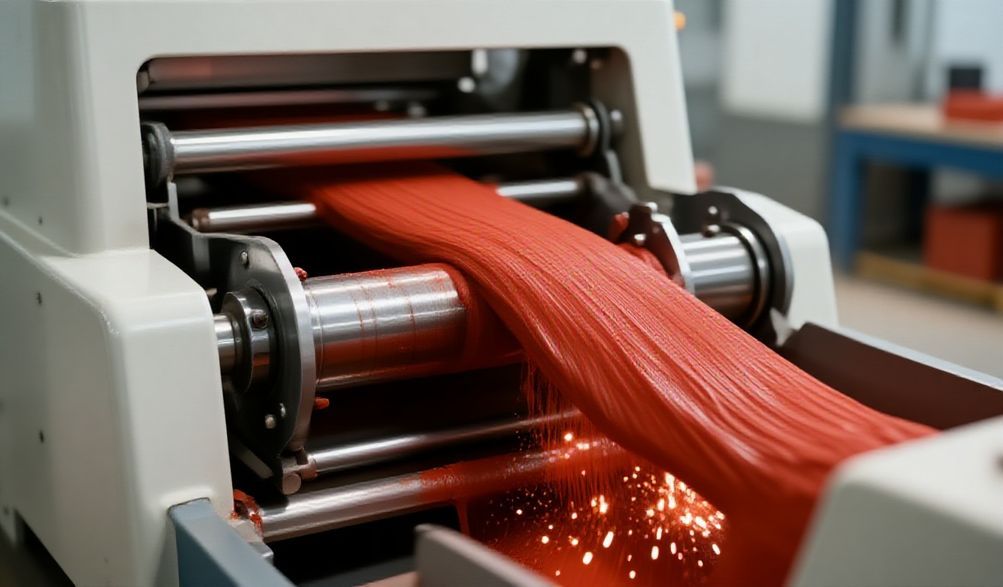
Your Ultimate Guide to Buying Clay Brick Making Machines for Sale in 2024
Вступ
Clay bricks have been the cornerstone of construction for millennia, prized for their durability, thermal mass, and timeless aesthetic. In today’s building landscape, their demand remains robust, driven by sustainable construction trends and a global need for affordable, quality housing. For entrepreneurs and businesses, this presents a significant opportunity. The key to unlocking this potential lies not just in the clay itself, but in the machinery that transforms it.
This guide serves as your comprehensive, unbiased resource for navigating the market for clay brick making machines for sale. We understand you are researching a major capital investment. The choice between a manual press and a fully automated line, or selecting a trustworthy supplier from a sea of online listings, carries substantial financial weight. Our goal is to arm you with the clear, detailed, and trustworthy information needed to make a confident decision.
We will dissect the types of machinery and core technologies, provide a practical checklist of key buying factors, analyze the true investment and ROI, and offer a strategic framework for finding reliable suppliers. Let’s build the foundation for your brick-making venture’s success.
Розуміння обладнання для виробництва глиняної цегли: типи та технології
Choosing the right equipment starts with understanding the fundamental options available. The technology you select will directly dictate your production scale, labor model, and initial investment.
Ручні, напівавтоматичні та повністю автоматичні машини
Your first major decision point is the level of automation. This choice balances output with investment and operational complexity.
- Ручні машини для виробництва цегли:
- Як вони працюють: Operated entirely by human labor for molding, filling, and ejection. Often simple lever-operated or drop hammer presses.
- Випуск продукції та праця: Very low output (a few hundred bricks per day). Requires significant manual labor.
- Investment & Ideal Use: Lowest upfront cost. Best suited for micro-enterprises, very small-scale local projects, or as a supplemental, low-volume production method.
- Напівавтоматичні верстати для виробництва цегли:
- Як вони працюють: Mechanize the core forming process (like extrusion or pressing) but require manual intervention for feeding raw material, removing finished bricks, or stacking.
- Випуск продукції та праця: Moderate to high output (1,000 to 10,000+ bricks per 8-hour shift). Reduces but does not eliminate manual labor.
- Investment & Ideal Use: Mid-range investment. The sweet spot for most small to medium-sized enterprises (SMEs) and startups looking to scale efficiently.
- Повністю автоматичні машини для виробництва цегли:
- Як вони працюють: Integrated systems with automated material feeding, forming, cutting, and stacking. Often part of a complete production line.
- Випуск продукції та праця: Very high output (15,000 to 50,000+ bricks per shift). Minimal labor required, primarily for supervision and maintenance.
- Investment & Ideal Use: Highest capital expenditure. Designed for large-scale industrial production where consistency, volume, and labor cost savings are paramount.
Core Machine Types Explained
Beyond automation, machines are defined by their core forming technology.
- Brick Extruders: This is the most common technology for producing solid, perforated, or hollow clay bricks.
- Процес: Prepared clay is forced through a die of the desired profile by a powerful auger inside a barrel. A vacuum pump often removes air bubbles, creating a denser, stronger brick column, which is then wire-cut to size.
- Types: Vacuum extruders are standard for high-quality bricks. Non-vacuum extruders are simpler and cheaper but produce less dense bricks.
- Brick Presses (Hydraulic/Mechanical):
- Процес: Clay is fed into a mold and compressed under extremely high pressure (hydraulic or mechanical). This process is ideal for producing high-density paving bricks, interlocking bricks, and refractory bricks.
- Вихід: Creates bricks with superior strength, sharp edges, and consistent dimensions.
- Повні виробничі лінії:
- The Ecosystem: For full-scale factories, a single machine is not enough. A complete line integrates several systems:
- Підготовка сировини: Crushers, rollers, and mixers to blend clay to the perfect consistency.
- Forming Unit: The core extruder or press.
- Handling Systems: Cutters, conveyors, and automatic stackers.
- Сушіння та випалювання: Tunnel dryers and kilns (often a separate but critical investment).
- The Ecosystem: For full-scale factories, a single machine is not enough. A complete line integrates several systems:
Ключові фактори, які слід врахувати перед покупкою
Moving beyond basic types, a successful purchase hinges on aligning machine specifications with your specific operational realities.
Виробничі потужності та специфікації випуску продукції
Don’t just buy a “big” machine; buy the right-sized machine.
* Цеглин на годину/день: Match the machine’s rated capacity to your realistic sales forecasts, with room for growth. Overcapacity ties up capital; undercapacity loses orders.
* Brick Size & Type Flexibility: What brick sizes (e.g., standard, modular, jumbo) and types (solid, hollow, perforated) does your market demand? Ensure the machine can accommodate these with changeable molds or dies.
* Moisture Content: Different machines require different clay moisture levels. An extruder needs plastic, wet clay (~18-25% moisture), while some presses can handle semi-dry clay (~10-12%).
Power Source & Operational Costs
The sticker price is just the beginning. Consider long-term running costs.
* Electric vs. Diesel vs. Hybrid: Electric models are cleaner and quieter, ideal for established industrial areas with stable grid power. Diesel offers independence for remote sites but has higher fuel costs and emissions. Hybrids provide flexibility.
* Споживання енергії: Request specific power ratings (kW/h) or fuel consumption rates (liters/hour) from suppliers. This is a major recurring cost.
Clay Quality & Raw Material Preparation
The best машина для виробництва глиняної цегли will fail with poor-quality raw material.
* Clay Composition: The mineral content (shale, kaolin, etc.) and plasticity of your local clay directly affect machine choice. Highly abrasive clay may wear parts faster. A reputable supplier should analyze a sample.
* Preparation Equipment: Budget for and source necessary preparatory machinery. This often includes a clay crusher to break down lumps and a mixer (like a pugmill) to homogenize moisture and texture.
After-Sales Support: The Make-or-Break Factor
This is where supplier надійність becomes non-negotiable.
* Warranty: What is covered (parts, labor)? For how long? What are the terms?
* Наявність запчастин: Are common wear parts (augers, dies, liners, seals) readily available locally or via fast shipping? Prolonged downtime is a profit killer.
* Technical Training & Documentation: Will the supplier provide comprehensive operational and maintenance manuals and on-site training for your team?
* Мережа обслуговування: Do they have technicians in your region, or will you rely on remote support and self-repair?
Navigating the Market: How to Find Reliable Suppliers
With your specifications in hand, the next challenge is finding a partner, not just a vendor.
Direct Manufacturers vs. Local Distributors
- Direct from Manufacturer:
- Переваги: Typically lower prices, access to the latest models, and direct technical knowledge.
- Недоліки: Potential language/communication barriers, time zone differences, and logistical complexity for shipping and after-sales support.
- Local/Regional Distributor:
- Переваги: Easier communication, localized support, faster parts delivery, and potentially handling of import logistics.
- Недоліки: Higher prices (they add a margin), may have limited model range or customization options.
Red Flags and Green Flags in Suppliers
Red Flags (Proceed with Extreme Caution):
* Vague or non-existent technical specifications.
* No verifiable physical address or factory location.
* Pressure to pay via irreversible methods (e.g., wire transfer) upfront.
* Prices significantly lower than the market average without explanation.
* Inability or refusal to provide client references or video of equipment running.
Green Flags (Signs of a Trustworthy Partner):
* Provides detailed brochures, CAD drawings, and performance data sheets.
* Has a professional website with clear contact information and “About Us” history.
* Offers to arrange a live video call for a factory tour or machine demonstration.
* Readily supplies contact information for previous clients in similar markets.
* Provides a clear, itemized commercial invoice and discusses shipping/incoterms openly.
The Importance of Machinery Testing & Certifications
- Сертифікати: Look for machinery that carries international safety and quality standards like Ні (for the European market) or Міжнародна організація зі стандартизації certification from the manufacturer. This indicates adherence to certain engineering and safety protocols.
- The “Test Drive”: Always, завжди request a live performance test. If an in-person visit isn’t feasible, insist on a real-time video demonstration where you can see your specific clay mix (or a similar one) being processed. Watch the machine cycle, listen to its operation, and inspect the finished brick quality.
Investment and ROI Analysis for Clay Brick Machines
Let’s translate technical specs into financial planning.
Understanding the Price Range
Prices vary wildly based on automation, capacity, and origin. Use these as very broad 2024 brackets:
* Ручні верстати: $1,000 – $10,000 USD.
* Semi-Automatic Machines / Standalone Extruders: $15,000 – $80,000 USD.
* Fully Automatic Brick Making Machines / Small Lines: $80,000 – $250,000+ USD.
* Complete Large-Scale Production Lines: $300,000 – $1,000,000+ USD.
Remember: The cheapest option often carries the highest long-term cost in repairs, downtime, and poor output quality.
Beyond the Sticker Price: Hidden and Recurring Costs
Factor these into your total project budget:
* Shipping, Insurance, and Import Duties: Can add 15-40%+ to the machine cost.
* Installation & Foundation: Requires skilled labor and specific civil works.
* Initial Spare Parts Kit: A must-have inventory.
* Mold/Die Changes: Additional molds for different brick types cost extra.
* Regular Maintenance: Lubricants, wear parts, and potential service contracts.
* Utilities & Labor: Ongoing power/fuel and operator wages.
Calculating Your Potential Return on Investment (ROI)
A simplified framework to guide your projections:
ROI = (Estimated Annual Revenue – Total Annual Costs) / Total Investment
- Estimate Annual Revenue:
- (Bricks Produced per Day) x (Operating Days per Year) x (Selling Price per Brick)
- Calculate Total Annual Costs:
- Raw Materials + Labor + Power/Fuel + Maintenance + Depreciation + Overheads.
- Determine Total Investment:
- Machine Price + Shipping + Installation + Initial Spare Parts + Foundation Costs.
Key Influencers: Your final ROI will be driven by your local brick market price, operational efficiency (minimizing waste and downtime), and the quality/consistency of your bricks, which commands premium prices.
Frequently Asked Questions (FAQ) About Clay Brick Making Machines
Q1: What is the average production capacity of a medium-sized automatic clay brick machine?
A: A medium-sized, fully automatic машина для виробництва глиняної цегли typically produces between 8,000 to 20,000 standard bricks per 8-hour shift, depending on the model and brick type.
Q2: Can one machine produce different types and sizes of bricks?
A: Yes, but this depends on the machine’s design. Most brick extruders and presses achieve this through interchangeable molds or dies. Swapping these parts allows you to produce different profiles (solid, hollow) and sizes. Ensure the supplier offers this flexibility and factor mold costs into your budget.
Q3: What is the typical lead time from order to delivery for such machinery?
A: For standard models, expect 30-60 days for production plus shipping time, which can vary from 15 days (sea freight) to 7 days (air freight, very expensive). Customized machines or complete lines can take 90-120+ days. Always get a written delivery timeline.
Q4: How much space and what kind of foundation is required for installation?
A: Space needs vary drastically. A small semi-automatic machine may need a 50-100 sqm shed. A full line requires a large factory building. The foundation is critical: it’s usually a reinforced concrete pad, often 1.5 to 2 times the machine’s weight in volume, to absorb vibrations. The supplier must provide precise foundation drawings.
Q5: Are there financing options or government subsidies available for this equipment?
A: This is highly region-specific. Options may include:
* Supplier Financing: Some large manufacturers offer installment plans.
* Bank Loans: Industrial equipment loans are common.
* Government/Development Programs: In many countries, subsidies or soft loans exist for SMEs, manufacturing startups, or green technologies (like energy-efficient kilns). Research with your local industry association or commerce department.
Висновок
Вибір правильногоclay brick making machine for sale is a strategic decision that balances production goals, technological capability, financial investment, and, above all, supplier reliability. It’s a choice that will define your operation’s efficiency and profitability for years to come.
Use this guide as a practical checklist. Prioritize the total lifecycle value—where quality, support, and operational cost savings outweigh a tempting low initial price. Your due diligence in vetting suppliers is your most powerful tool.
Your logical next steps are to: 1) Contact 3-5 shortlisted suppliers with your specific production requirements, 2) Request detailed quotations that include all ancillary and shipping costs, and 3) Arrange live demonstrations. If feasible, visiting an existing customer’s factory is invaluable.
We wish you great success in building a robust and profitable brick-making venture.
About the Author: With over 15 years of experience in industrial equipment analysis and machinery supply chain evaluation, [Author Name] has authored numerous guides and market reports on construction and manufacturing technology. Their work focuses on empowering entrepreneurs with the technical and commercial insights needed to make sound capital investment decisions in emerging markets.
<