
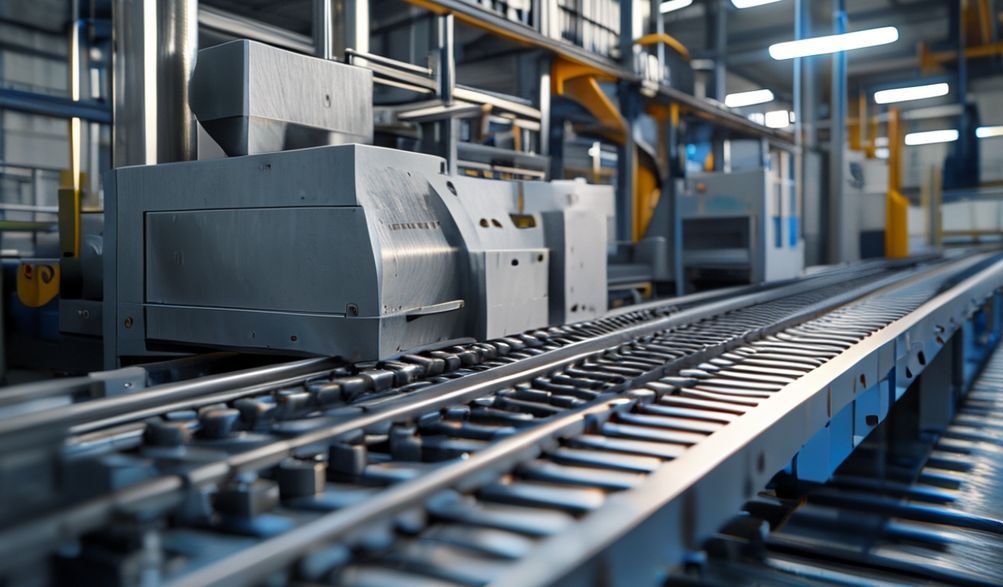
Your Ultimate Guide to China’s Cement Block Making Machine Factory: Inside FUDA Brick Making Factory
Вступ
The global construction landscape is built on a foundation of efficiency and cost-effectiveness. At the heart of this industry lies the humble yet critical cement block, a fundamental building material for everything from affordable housing to large-scale infrastructure. The machinery that produces these blocks isn’t just equipment; it’s the engine of progress. For businesses and entrepreneurs worldwide, sourcing a reliable, high-performance block making machine is a pivotal decision that impacts profitability, project timelines, and product quality.
China has firmly established itself as the world’s workshop, a dominant manufacturing hub for industrial machinery of all kinds. The market for “China cement block making machine factory” options is vast, teeming with hundreds of suppliers. This abundance presents both an opportunity and a challenge: how does one discern genuine quality, robust engineering, and reliable service from mere catalog listings and attractive price points?
Within this complex landscape, names like Фабрика з виробництва цегли FUDA emerge as potential suppliers. This guide is not a promotional brochure. Instead, its purpose is to serve as your comprehensive, objective resource. We will dissect the industry, establish clear evaluation criteria, and apply a critical lens to what a factory like FUDA represents. Compiled from industry specifications, manufacturing principles, and international procurement best practices, this analysis is designed to arm you with the knowledge needed to make a confident, informed decision, whether you engage with FUDA or any other manufacturer.
Розуміння машин для виробництва цементних блоків: типи та сфери застосування
Before evaluating any factory, you must understand the product. Cement block making machines are not one-size-fits-all. They exist on a spectrum defined by automation, output, and investment.
Основні типи машин: від ручних до повністю автоматичних
- Ручні верстати для виробництва блоків: These are the most basic, operator-intensive models. They require manual feeding of raw material (concrete mix) and manual removal of finished blocks. Ideal for very small-scale projects, community initiatives, or markets with extremely low labor costs. Output is low, but the initial investment is minimal.
- Напівавтоматичні верстати для виробництва блоків: This category strikes a balance. The core processes of compaction and vibration are mechanized (often via a hydraulic system), but the feeding of raw material and the collection/palletizing of finished blocks may still involve manual labor. They offer a significant boost in output over manual machines and are a popular choice for small to medium-sized businesses.
- Повністю автоматичні машини для виробництва блоків: These represent the pinnacle of efficiency. Integrated with PLC (Programmable Logic Controller) systems, they automate the entire process: raw material batching, mixing, conveying, molding, curing, and stacking. They require minimal human intervention, produce extremely consistent blocks at high speeds, and are designed for large-scale commercial production. The investment is substantial but justified by volume and labor savings.
- Мобільні блокові машини: A specialized type designed for on-site production. Mounted on a trailer, they can produce blocks directly at a construction location, eliminating transport costs for the finished blocks. They are typically diesel-powered and semi-automatic in operation.
Key Components and What Makes a Quality Machine
The durability and performance of a block machine hinge on its core components. When reviewing specifications, look beyond the surface.
- Frame/Structure: This is the machine’s skeleton. It must be constructed from high-strength, reinforced steel to withstand constant, intense vibration and pressure without warping. A weak frame leads to misalignment and rapid wear.
- Вібраційна система: The heart of block density and strength. High-frequency, powerful vibrators (often from reputable brands) are essential to properly compact the concrete mix and eliminate air pockets. Systems can be hydraulic, electric, or a combination.
- Гідравлічна система: The muscle of the machine. It provides the pressure for compaction. Look for known brand pumps, valves, and cylinders. A robust hydraulic system ensures consistent pressure, smooth operation, and longevity.
- Панель управління та електроніка: The brain. For automatic machines, a user-friendly PLC interface from a brand like Siemens or Mitsubishi is a mark of quality. It ensures precise control over cycles, pressure, and vibration.
- Пліснява: These define your product. High-quality molds are made from hardened, wear-resistant steel (e.g., 40Cr or special alloy steel) and machined with precision. Cheap, soft steel molds will deform quickly, ruining block dimensions.
The Output: Types of Blocks and Bricks You Can Produce
Versatility is key. A good machine, through interchangeable molds, should produce a variety of products to meet market demands:
- Пустотілі блоки: The standard for load-bearing walls, offering excellent strength-to-weight ratio and insulation.
- Суцільні блоки: Used for foundations, pavements, and areas requiring maximum structural integrity.
- Тротуарна плитка та бруківка: For driveways, walkways, and public spaces. Require high surface finish and color consistency.
- Міжблокові з'єднання: Used for retaining walls and construction without mortar.
- Бордюри, газонні плитки та фігурні елементи: Expand your market potential.
The machine’s specifications—specifically mold dimensions, vibration amplitude, and compaction pressure—directly dictate the final product’s compressive strength, dimensional accuracy, and surface finish.
Evaluating a Chinese Cement Block Machine Factory: Key Criteria
With a foundational understanding of the machinery, you can now develop a framework to assess any manufacturer critically.
Виробнича експертиза та технічні можливості
A factory is more than an assembly line. True expertise is demonstrated through:
- Внутрішні дослідження та розробки та інженерія: Do they have a dedicated team designing and improving their machines? Can they show engineering drawings or patents?
- Customization Ability: Can they modify a standard machine to suit your specific raw materials (e.g., using fly ash, different aggregate sizes) or space constraints? A “yes” indicates deeper engineering knowledge.
- Questions to Ask: “What is your design philosophy for ensuring machine longevity?” “Can you provide a calculation for the required vibration force based on my mix design?”
Quality Control Processes and Certifications
Certificates are a starting point, but processes are what matter.
- Сертифікати: ISO 9001 is a baseline for a quality management system. CE marking (for Europe) indicates the machine meets EU safety, health, and environmental requirements. These are not guarantees, but their absence is a major red flag.
- Stage Inspection: A reputable factory will have QC checkpoints at each stage: material incoming inspection, welding and machining, assembly, and final performance testing.
- Testing Protocol: Insist on a Factory Acceptance Test (FAT). The machine should be run under load with actual raw materials to verify output, block quality, and cycle time before it is disassembled for shipping.
Production Scale and Supply Chain Stability
- Масштаб: Large factories may offer cost advantages and standardized processes. Smaller, specialized factories might offer more flexibility and attention to detail. Neither is inherently better; it depends on your needs.
- Supply Chain: Inquire about their sources for critical components (hydraulic parts, PLCs, electrical motors). A stable relationship with quality sub-suppliers (e.g., using Bosch hydraulics or Schneider electrics) is a strong indicator of final product reliability and future parts availability.
Увага до цегляного заводу FUDA: Детальний огляд
Let’s apply the above criteria to a specific entity. Based on publicly available information, here is an objective analysis of FUDA as an example within the market.
Company Profile and Market Position
FUDA is typically presented as a manufacturer located within China’s major industrial machinery belt. Companies like FUDA often position themselves as integrated factories specializing in brick and block making machinery for the export market, targeting customers in Africa, Southeast Asia, the Middle East, and South America. Their stated focus is generally on providing a range of solutions from semi-automatic to fully automatic models.
Analyzing FUDA’s Machine Portfolio and Technical Specifications
A review of typical marketing materials from such factories shows a portfolio that often includes:
- Manual and Semi-Automatic Egg-Laying Type Machines: Mobile machines for on-site production.
- Stationary Semi-Automatic Machines: With hydraulic systems and manual pallet feed.
- Повністю автоматичні заводи з виробництва блоків: Featuring PLC control, automatic pallet feeders, and product stackers.
Notable features commonly highlighted are robust vibration systems, hardened steel molds, and energy-efficient designs. Stated output capacities can range from a few hundred blocks per hour for smaller models to several thousand for full production lines. It is crucial to compare these claimed outputs against industry standards and to understand that output is heavily dependent on block size, mix design, and operator skill.
Assessing FUDA’s Operational Strengths and Customer Considerations
Потенційні сильні сторони:
* Конкурентні ціни: As with many Chinese manufacturers, competitive initial cost is a primary market advantage.
* Export Experience: Likely familiarity with export documentation, packaging, and logistics.
* Асортимент продукції: Offering a spectrum of machines allows them to cater to different budget and capacity needs.
Critical Considerations for Buyers:
This is where due diligence is non-negotiable. FUDA represents a category of supplier where verification is paramount.
1. Verify All Claims: Request video evidence of machines running. Ask for material certificates for the steel used.
2. Insist on a Factory Audit: Either in-person or via a detailed live video tour. Look at the workshop, welding quality, and inventory of components.
3. Clarify “Standard” vs. “Actual”: Ensure the quoted machine includes all necessary components (e.g., is the control panel included? What about spare molds or tools?).
4. Scrutinize After-Sales Structure: This leads us to the most critical phase of all.
The Critical Phase: After-Sales Service and Support
Your relationship with the factory truly begins після the machine arrives at your port. This is where many buyers face their biggest challenges.
Why After-Sales is Your Most Important Consideration
Industrial machinery will require maintenance and will eventually experience breakdowns. A seized hydraulic pump or a failed vibration motor can halt your entire production. The speed and effectiveness of the factory’s response—across continents and time zones—will define your project’s success and ROI. The logistics and cost of sourcing a single spare part internationally can be staggering without support.
The Non-Negotiables: Warranty, Training, and Parts Supply
- Комплексна гарантія: A standard warranty should cover defects in materials and workmanship for a defined period (e.g., 12 months), excluding wear parts. It must be clearly stated what is covered, what is not, and the process for making a claim.
- Professional Training: This should include detailed electrical and hydraulic diagrams, a parts manual, and operational instructions. The best scenario is having factory engineers supervise installation and provide on-site training. Alternatively, structured video training and detailed manuals are essential.
- Efficient Parts Supply: The factory must maintain an inventory of critical spare parts (seals, sensors, vibration motors) and have a system for rapid identification and shipping. Ask for their parts catalog and typical shipping times.
How to Vet a Factory’s Service Commitment
- Request Client References: Ask for contact information for 2-3 past international clients who purchased a similar model. Actually contact them and ask about their experience with service response times and parts support.
- Get It In Writing: Before signing any contract, ensure you have a detailed, written after-sales service agreement that outlines response time commitments, parts warranty, and support channels.
- Test Remote Support: Inquire about their remote troubleshooting process. Will they provide support via WhatsApp, video call, or team viewer to diagnose issues?
Navigating the Purchase Process Successfully
A structured process protects you.
Step-by-Step Guide from Inquiry to Delivery
- Detailed Request for Quotation (RFQ): Specify your required block types, dimensions, daily output, raw materials, and voltage. The more detailed, the more accurate the quote.
- Technical Clarification: Review the proposed technical specifications line by line. Ask for explanations of any unclear terms.
- Factory Audit (Virtual/In-Person): Conduct your due diligence as outlined above.
- Contract Negotiation: Finalize Incoterms (FOB, CIF, etc.) to clarify shipping responsibilities. Agree on secure payment terms (see FAQ). Define milestones for the FAT.
- Pre-Shipment Inspection (PSI): Do not skip this. Either visit yourself or hire a third-party inspection agency (e.g., SGS, BV) to conduct the FAT and check packaging for seaworthiness.
- Shipping, Logistics, and Customs Clearance: Work with a reliable freight forwarder. Ensure all documentation (commercial invoice, packing list, bill of lading, certificate of origin) is correct.
Red Flags and Best Practices for International Buyers
Red Flags:
* Pressure to pay 100% upfront.
* Vague or incomplete contracts.
* Refusal to allow a third-party inspection or factory visit.
* Lack of clear, timely technical communication.
* Quotes that seem unrealistically low compared to the market.
Best Practices:
* Use Secure Payment Methods: A Letter of Credit (L/C) provides security for both parties. Alternatively, a staged payment plan (e.g., 30% deposit, 40% before shipment, 30% after successful FAT) is common.
* Hire an Inspection Agent: For a few hundred dollars, this can save you tens of thousands.
* Start Small: If possible, consider ordering a critical spare part or a single mold first to test their responsiveness and quality.
* Document Everything: Keep all communications, agreements, and specifications in writing.
FAQ Section
Q1: What is the typical price range for a cement block making machine from a Chinese factory like FUDA?
А: Prices vary dramatically. A small manual machine can start around $5,000 – $10,000. A robust semi-automatic model may range from $25,000 to $60,000. A full, fully automatic production line can cost anywhere from $80,000 to over $200,000. Always request a detailed, itemized quote based on your specific requirements.
Q2: How do I ensure the machine quality before shipping?
А: Insist on and personally witness (or have an agent witness) a Pre-Shipment Inspection (PSI) and Factory Acceptance Test (FAT). The machine must be assembled and run with raw materials similar to yours to verify its performance, output, and the quality of the blocks produced.
Q3: What are the standard payment terms when dealing with Chinese machinery factories?
А: Common and relatively secure terms include: 30% deposit via T/T (bank transfer), 70% balance against copy of Bill of Lading, or a 100% Irrevocable Letter of Credit at Sight. Avoid 100% upfront payments.
Q4: Can factories like FUDA provide custom molds for special block designs?
А: Yes, most reputable factories offer custom mold manufacturing. You will need to provide detailed drawings or a sample. Expect additional costs and a lead time of several weeks for mold production and testing.
Q5: Who handles the installation and commissioning of the machine in my country?
А: This must be explicitly defined in your contract. Options include: 1) The factory sends engineers (you typically cover airfare, accommodation, and a daily fee). 2) They provide comprehensive remote guidance via video call for your technicians. 3) You hire a local engineer. Clearly outline responsibilities, duration, and success criteria for commissioning.
Висновок
Choosing the right partner in a “China cement block making machine factory” is a significant technical and financial decision. It requires balancing attractive specifications with verifiable manufacturing quality, and upfront cost with the long-term value of ironclad after-sales support.
As our analysis shows, a supplier like Фабрика з виробництва цегли FUDA represents one of many options in a competitive market. Their potential strengths in pricing and range must be weighed against the universal imperative for rigorous due diligence. The ultimate choice must align perfectly with your specific production goals, local operating conditions, technical support capabilities, and total budget.
Use the criteria and step-by-step guide outlined here as your checklist. Approach every supplier, including FUDA, with the same disciplined set of questions and requirements. Prepare a detailed RFQ, demand transparency, verify claims, and never underestimate the power of a well-negotiated service agreement. By doing so, you transform from a hopeful buyer into an informed partner, paving the way for a successful investment that will build your business for years to come.
<