
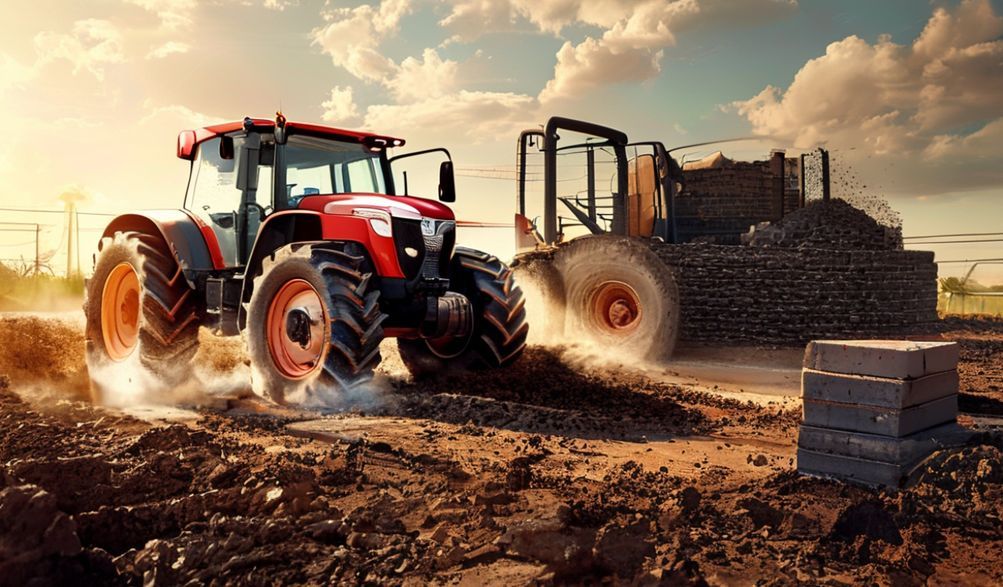
FUDA G'isht Zavodining Traktor G'isht Tayyorlash Mashinasi Bo'yicha Mukammal Qo'llanma
Kirish
Qurilish uskunalari dunyosida harakat qilish nazariyadan ko'ra amaliy tajribaga asoslangan maslahatlarni talab qiladi. Ushbu qamrovli qo'llanma g'isht ishlab chiqarish mashinalari bo'yicha 15 yildan ortiq amaliy tajribaga ega soha mutaxassislari tomonidan yozilgan. Biz sizga mashhur FUDA G'isht Zavodining innovatsion Traktor G'isht Tayyorlash Mashinasini tushunishga yordam berish uchun mutaxassis, xolis tahlilni taqdim etamiz.
Ushbu maqola sizga ushbu mashina qanday qilib qishloq xo'jaligi energiyasini sanoat ishlab chiqarishi bilan uyg'unlashtirib, joyida g'isht ishlab chiqarishda inqilob qilishini batafsil bayon etadi. Bu sizning ishonchli manbayingiz bo'ladi. Xoh kontraktorga, chekka hududlarda ishlayotgan quruvchiga yoki qishloq xo'jaligi loyihalarini boshqarayotgan menejerga aylaning, ushbu texnologiya xarajatlar tuzilmasi va logistika rejalashtirishingizni tubdan o'zgartirishi mumkin. Biz sizga ushbu transformatsion uskunaga ishonchli va asoslangan qaror qabul qilishingizda yordam berish uchun faktik va tekshiriladigan ma'lumotlarga ustuvor ahamiyat beramiz.
Tractor Brick Making Machine nima? Joyida ishlab chiqarishni inqilob qilish
Sanoat ko'pincha markazlashtirilgan ishlab chiqarish va murakkab logistikaga tayangan holda, traktor g'isht yasash mashinasi yangi yondashuvni ifodalaydi. Bu yechim zavodni to'g'ridan-to'g'ri materiallar manbaiga yoki qurilish joyiga olib keladi.
Asosiy tushuncha va mexanizm
Uning asosida, traktor g'isht yasash mashinasi standart qishloq xo'jaligi traktorining mavjud quvvatidan foydalanadigan mustahkam qo'shimcha moslama hisoblanadi. Mana u qanday ishlaydi:
- Quvvat olish (PTO) integratsiyasi:Mashina to‘g‘ridan-to‘g‘ri traktorning PTO valiga ulanadi. Bu traktorning orqa qismidagi aylanuvchi val bo‘lib, qurilmalarga mexanik quvvat beradi.
- Gidravlik yoki mexanik haydovchi:Тракторнинг двигатель кучи УЗТ (узатиш мосламаси) орқали гишт прессидаги юқори босимли компрессия тизимини ҳаракатлантириш учун узатилади.
- Siqish Jarayoni:Xom ashyo — odatda tuproq osti qatlami, loy, stabillashtirilgan tuproq (oz miqdorda sement bilan) yoki boshqa agregatlar aralashmasi — bunkerga beriladi. So‘ngra qolip bo‘shlig‘i to‘ldiriladi va katta bosim qo‘llanilib, material yuqori zichlikdagi qattiq g‘isht blokiga siqiladi.
- Ejektsiya:Yangi hosil qilingan, pishirilmagan g'isht keyin pallet yoki yerga chiqariladi, quritishga tayyor. Bu jarayon siqilgan tuproq bloklari (CEB) yoki mustahkamlangan tuproq bloklarini hosil qiladi, ular o'zining mustahkamligi va issiqlik xususiyatlari bilan tanilgan.
FUDA zavodining innovatsiyasi
Asosiy kontseptsiya kuchli bo'lsa-da, bajarish hamma narsani hal qiladi. FUDA g'isht zavodi o'zining traktorga o'rnatilgan modelini umumiy versiyalardan ajratib turadigan muhim yaxshilanishlar bilan ishlab chiqqan.
- Optimized Gearbox Design: FUDA employs a heavy-duty, purpose-built gearbox that efficiently translates the tractor’s PTO power into optimal compression force, reducing strain on the tractor and improving brick consistency.
- Reinforced Structural Frame: The machine is built on a high-tensile steel frame designed to handle the constant vibration and high loads of brick compression without warping or fatigue.
- Quick-Change Mold System: Understanding the need for versatility, FUDA often incorporates a user-friendly system to swap out mold boxes. This allows a single machine to produce different brick sizes and styles (standard rectangular, interlocking) with minimal downtime.
- Precision-Machined Components: Critical parts like the compression ram and mold liners are precision-machined and often hardened, ensuring longer life, consistent brick dimensions, and a smoother ejection process.
Ideal Use Cases and Applications
This machine isn’t for every project, but for the right ones, it’s a game-changer.
- Rural and Remote Construction: Building homes, community centers, or storage facilities in areas where transporting bricks is prohibitively expensive.
- Agricultural Estate Development: Creating sheds, boundary walls, processing units, and worker housing using on-site soil.
- Cost-Sensitive Infrastructure Projects: For pathways, drainage linings, or low-cost housing initiatives where budget is a primary constraint.
- Sustainable and Eco-Building Projects: Ideal for architects and builders specializing in earth construction, rammed earth, or other natural building techniques.
Key Features and Technical Specifications of the FUDA Tractor Brick Machine
Understanding the technical details is crucial for ensuring compatibility and setting realistic expectations for performance.
Power and Compatibility
- Required Tractor Horsepower: Most FUDA tractor brick machines are designed to operate efficiently with tractors in the 35 to 75 HP range. Always consult the specific model’s manual.
- PTO Standard: They typically require a standard 540 rpm PTO, which is common on most agricultural tractors globally.
- Hitch Compatibility: The machine is usually equipped with a standard three-point linkage (Category I or II) for easy hitching and unhitching.
Ishlab chiqarish quvvati va mahsulot hajmi
- Bricks Per Hour: Depending on the model, operator speed, and material preparation, output can range from 300 to 800 bricks per hour.
- Brick Dimensions: Common mold sizes produce bricks similar to standard fired clay bricks (e.g., 230mm x 110mm x 75mm) or larger interlocking blocks for faster wall laying.
- Raw Material Impact: Well-screened, optimally moistened material with consistent aggregate size will maximize production speed and brick quality. Poorly prepared material leads to jams and slower output.
Build Quality and Durability
- Materiallar: Primary structure uses high-grade, weather-resistant steel. Critical wear parts are often made from hardened alloy steel or feature replaceable liners.
- Korroziyadan himoya qilish: Key components are treated with anti-rust primers and paints to withstand outdoor storage and operation.
- Design for Longevity: Bearings are sealed, and grease points are easily accessible. The design minimizes points of excessive friction and stress concentration.
Operational Features
- Adjustable Brick Density: Some models allow for pressure adjustment, letting you control the final density and compressive strength of the brick based on your material and project needs.
- Safety-First Design: Includes integrated safety guards over the PTO shaft and moving parts. Clear operational manuals and warning decals are provided.
- Minimal texnik xizmat ko'rsatish: Designed for simplicity with routine maintenance limited primarily to greasing, bolt tightening, and keeping the machine clean.
Advantages of Choosing the FUDA Tractor-Powered Brick Maker
The benefits of this system extend far beyond the simple act of making bricks. They impact your project’s entire economics and logistics.
Unmatched Cost-Efficiency
- Low Capital Investment: You are not buying a dedicated engine or a self-powered mobile unit. You’re leveraging an asset (the tractor) you likely already own.
- Operatsion xarajatlarni kamaytirish: Fuel consumption is tied to your tractor’s efficient diesel engine. There are no separate fuel tanks or complex electrical systems to maintain.
- Transport xarajatlarini bartaraf etish: The single largest saving. Producing bricks on-site from on-site materials completely removes the cost of purchasing bricks from a distant yard and hauling them to your project.
Superior Mobility and Flexibility
The machine can be hitched and moved by its power source in minutes. This means you can:
* Set up production next to your best soil pit.
* Move the entire operation as the construction site progresses.
* Easily transport it between multiple job sites.
Durability and Low Maintenance
FUDA’s reputation for robust manufacturing translates directly into a machine built for the long haul. With proper basic maintenance, these machines are known to operate reliably for decades, offering an exceptional return on investment. Their simple mechanical design means fewer things can go wrong, and repairs are generally straightforward.
Environmental and Sustainability Benefits
- Low Embodied Energy: Bricks are not fired, saving massive amounts of energy compared to kiln-fired clay bricks.
- Use of Local Materials: Utilizes sub-soil, often a waste product from site excavation, turning a liability into an asset.
- Reduced Transport Emissions: Local production means zero transport-related carbon emissions for the bricks themselves.
- Termal ko‘rsatkichlar: Well-compressed earth blocks have excellent thermal mass, helping to regulate indoor temperatures naturally.
Step-by-Step: How to Operate the FUDA Tractor Brick Making Machine
Safe and efficient operation is key to success. Follow this expert guidance.
Pre-Operation Checklist and Safety
- Tractor Check: Ensure tractor fluids are full, brakes work, and the PTO shield is intact.
- Machine Inspection: Visually inspect the brick machine for loose bolts, damaged hydraulic lines (if applicable), or debris in the hopper and mold.
- Hitching: On level ground, securely hitch the machine to the tractor’s three-point linkage and connect the PTO shaft. Ensure the shaft is properly engaged and safety guard is in place.
- PPE: All operators must wear safety glasses, sturdy gloves, steel-toe boots, and hearing protection.
Material Preparation
This is the most critical step for quality bricks.
* Soil Selection: Use sub-soil, not topsoil (which contains organic matter). Clay content of 15-30% is often ideal for cohesion.
* Barqarorlashtirish: For greater strength and water resistance, mix in 5-10% Portland cement. Lime can also be used.
* Screening: Remove all stones, roots, and large debris. Material should pass through a 10mm sieve.
* Namlik miqdori: The material must be damp, not wet or dry. The “drop test” is standard: a ball of material should hold its shape when squeezed in your fist and crumble when dropped from waist height.
The Production Process
- Pozitsiyalash: Drive the tractor and hitched machine to a flat, clear production area.
- Power Up: Start the tractor, lower the machine so it sits level, and engage the PTO at low RPM.
- Oziqlantirish: Begin feeding the prepared material into the hopper at a consistent rate. Avoid overfilling.
- Cycling: The machine will automatically cycle—filling the mold, compressing, and ejecting the brick. An operator typically guides the ejected bricks onto a stacking pallet.
- Davolash: Stack bricks under shade (e.g., with plastic sheeting) and keep them moist for 7-14 days if cement-stabilized. This allows them to gain strength.
Routine Maintenance and Troubleshooting
- Daily: Clean all compacted material from the mold, hopper, and ejection path. Grease all nipples.
- Weekly: Check and tighten all bolts and nuts. Inspect the mold box and compression components for wear.
- Common Issues:
- Bricks Crumbling: Material is too dry. Adjust moisture.
- Machine Jamming: Material has stones/debris or is too wet. Clear jam, screen material better.
- Bricks Sticking in Mold: Mold surfaces may need cleaning or a light coating of non-stick agent (like diesel).
FUDA Brick Making Factory: A Legacy of Quality and Trust
Your investment is not just in a machine, but in the manufacturer standing behind it.
Company History and Manufacturing Expertise
FUDA Brick Making Factory has established itself as a focused manufacturer in the brick and block machinery sector. With years of dedicated operation, they have built a reputation for understanding the practical needs of builders and contractors, particularly in markets where durability, simplicity, and value are paramount.
Quality Control and Certifications
FUDA machines are engineered to meet rigorous performance standards.
* Material Testing: Components are sourced from certified suppliers and undergo quality checks.
* Assembly Line Checks: Each machine is assembled and often test-run before leaving the factory.
* International Standards: While specifics vary by model and destination market, FUDA designs its equipment with reference to relevant CE and other international safety and performance guidelines.
Customer Support and Service Network
- Kafolat: FUDA typically offers a clear warranty on major components and workmanship.
- Ehtiyot qismlar: A comprehensive catalog of wear parts (molds, liners, gears) is maintained, ensuring long-term machine viability.
- Texnik yordam: Documentation includes detailed manuals and parts diagrams. Support is often available through a network of authorized dealers and direct factory contact.
Tez-tez so'raladigan savollar (FAQ)
Q1: What type and horsepower of tractor are needed to operate this FUDA machine?
A: You will need a standard agricultural tractor with a functional 540 rpm PTO and a three-point hitch (typically Category I or II). The required horsepower usually falls within a 35 to 75 HP range. Always verify against the specific model’s requirements, as a larger machine producing bigger blocks may need more power.
Q2: What raw materials can I use with this machine?
A: The machine is highly versatile. Suitable materials include sub-soil with clay content, laterite soil, stabilized earth (mixed with 5-10% cement), and crusher dust. You should avoid pure sand (lacks cohesion), topsoil (contains organic matter), and materials with large stones or debris. A good mix is roughly 70-80% soil, 20-30% sand, and 5-10% cement for stabilization.
Q3: How does the brick quality compare to traditional fired bricks or concrete blocks?
A: It’s a different product with unique strengths. Compressed Stabilized Earth Blocks (CSEBs) from a FUDA machine typically have high compressive strength (often 4-10 MPa, suitable for 1-2 story buildings), excellent thermal and acoustic properties, and are fire-resistant. They are more susceptible to water erosion if unstabilized and unprotected, so they require good plastering or a roof overhang. They are not as uniformly strong as high-grade concrete blocks or as hard as fired bricks, but they offer a superb balance of cost, sustainability, and performance for many applications.
Q4: What is the expected output per day, and how many operators are required?
A: With a well-organized team, a realistic output is 2,500 to 5,000 bricks in an 8-hour day, depending on the machine model and workflow efficiency. The operation can be run efficiently by 2-3 persons: one tractor operator, one feeding the hopper, and one stacking and managing the cured bricks.
Q5: Does FUDA provide installation guidance and operational training?
A: Yes. Purchasing a FUDA machine includes detailed operation and maintenance manuals, often with diagrams and photos. Many dealers or the factory itself can provide instructional videos. For larger orders, on-site training by a technician can often be arranged to ensure your team starts off correctly and safely.
Xulosa
The FUDA Tractor Brick Making Machine represents a smart fusion of agricultural utility and industrial production, offering a profoundly practical and cost-effective solution for decentralized brick manufacturing. It empowers project owners to take control of a fundamental building material’s supply chain, turning local earth into valuable construction blocks.
Backed by FUDA’s factory expertise and a design philosophy centered on durability, simplicity, and user efficiency, it stands as a compelling choice for forward-thinking contractors, developers, and even humanitarian organizations. By understanding its robust features, straightforward operation, and the reputable manufacturer behind it, you are now equipped to evaluate if this innovative machine is the right investment to build the foundation for your next project—literally and financially.
Final Call to Action (Trust-Building): We recommend contacting authorized FUDA dealers or the factory directly for a detailed quotation tailored to your specific project needs. Always request to see the machine in operation via video or, ideally, in person. Speaking with existing customers for verified testimonials about their long-term experience with the machine and after-sales support is one of the best ways to build confidence in your investment.
<