
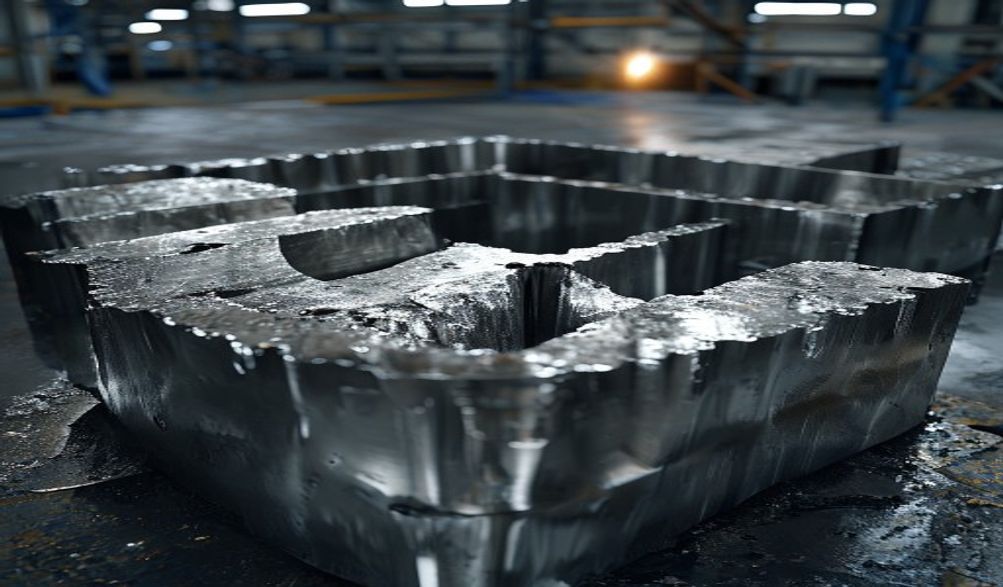
How to Choose a 10 Cavity Automatic Brick Block Making Machine: A Buyer’s Expert Guide
Kirish
Imagine unlocking the potential to produce thousands of high-quality bricks or blocks every single day. That’s the compelling promise of investing in a 10-cavity automatic brick block making machine. It represents a significant leap in productivity for growing construction businesses, block yards, and ambitious entrepreneurs. However, this promise comes with equally high stakes. Choosing the wrong machine isn’t just a minor inconvenience; it can lead to crippling downtime, inconsistent product quality, and a rapid erosion of your projected return on investment.
Selecting this major piece of industrial equipment is a complex, multi-faceted decision. It intertwines a substantial capital outlay with your specific production goals, raw material constraints, and long-term operational efficiency. There is no universal “best” machine—only the best machine for siz unique operation.
With over 15 years of engineering and consulting in the global construction machinery sector, our team has guided hundreds of clients through this critical procurement process. We’ve witnessed the triumphs of well-informed purchases and the costly lessons of overlooked details. This guide is distilled from that direct, hands-on experience.
Our promise to you is clear: by the end of this expert guide, you will have a comprehensive, step-by-step framework to navigate the market. You’ll know the right questions to ask, the critical specifications to scrutinize, and the hidden pitfalls to avoid, empowering you to make an informed and confident purchasing decision that will serve your business for years to come.
Loyihangiz Talablarini Tushunish: Tanlovingiz Asosi
An expert recommendation always starts with a deep understanding of your context. Before you look at a single machine brochure, you must clearly define your own needs. This foundational step ensures you evaluate equipment through the correct lens, preventing you from buying an overpriced machine with capabilities you’ll never use or, worse, an underpowered machine that can’t meet your demands.
Kundalik/Haftalik Ishlab Chiqarish Maqsadlaringizni Baholash
Output is often the primary driver for choosing a 10-cavity machine, but you must move beyond a simple “more is better” mindset.
- Calculate Real Required Output: Start with your project contracts or sales forecasts. How many blocks do you need per day? Per week? Add a buffer of 15-20% for growth and unexpected demand.
- Factor in Machine Cycle Time: A machine’s cycle time (the time to fill, compress, vibrate, and eject one set of blocks) is crucial. For example:
- A machine with a 20-second cycle time produces 3 sets per minute.
- 3 sets/minute * 10 cavities = 30 blocks/minute.
- 30 blocks/minute * 480 minutes (8-hour shift) = 14,400 blocks/shift.
- Consider Operational Hours: Will you run one 8-hour shift or two? Do you plan for 5-day or 7-day production weeks? Your realistic operational schedule directly impacts the annual output you can expect.
Analyzing Raw Material Composition
The machine must be a partner to your raw materials, not work against them. Incompatibility here is a leading cause of poor product quality and accelerated wear.
- Compatibility is Key: Explicitly confirm the machine is designed for your specific mix. Common mixes include:
- Cement with sand/aggregate
- Fly ash-based mixes
- Slag cement mixes
- Crushed stone or recycled aggregate
- Impact on Machine Wear: Abrasive aggregates will wear down molds and mixer blades faster. Ensure the manufacturer recommends suitable materials and hardening processes for your mix.
- Pressure Requirements: Lighter materials like some fly ash blends may require higher pressure to achieve the same compressive strength as dense concrete, influencing the required pressing force.
Defining Your End Product Specifications
You’re not just buying a machine; you’re buying a tool to create a specific product. Its design is dictated by your end goal.
- Exact Block Types and Sizes: List every product you intend to make:
- Hollow blocks (4″, 6″, 8″)
- Qattiq zich bloklar
- Pavers (interlocking, hexagonal)
- Bordür taşları
- Custom shapes
- Critical Quality Metrics:
- Zichlik: Affects weight, insulation, and structural properties.
- Siqilish kuchi: A non-negotiable metric for structural applications (e.g., 5 MPa, 7 MPa, 15 MPa). The machine must be capable of delivering the necessary pressure to achieve this consistently.
Core Machine Specifications & Technical Evaluation
With your project blueprint in hand, you can now dissect the technical offerings of different machines. This is where deep expertise separates meaningful specs from marketing fluff.
Pressing Force and Vibration System
This is the heart of the block-making process, determining the density and strength of your final product.
- Pressing Force (Tonnage): Measured in tons (e.g., 200T, 350T, 450T). Higher tonnage is needed for high-density, high-strength blocks.
- Expert Insight: For standard hollow blocks, 200-300 tons is common. For solid blocks or pavers requiring >20 MPa strength, 350+ tons is advisable. Don’t just accept the number; ask if it’s the maximum theoretical force or the stable, working pressure.
- Titrama Tizimi: This consolidates the mix, removing air pockets and ensuring a uniform, strong block.
- Turlar: Geared vibration systems are robust and powerful. Planetary vibration systems often provide more intense, evenly distributed frequency.
- Asosiy nuqta: The vibration motors should be mounted on a sturdy, synchronized table. Ask about the amplitude and frequency (RPM) of the vibrators.
Automation Level and Control System
“Automatic” can mean many things. Clarify the exact scope to avoid manual bottlenecks.
- Spectrum of Automation:
- Yarim Avtomatik: Manual pallet feeding/curing, but automatic molding.
- To'liq Avtomatik: Automated pallet feeding, stacking, and curing rack handling.
- Robotic Cell: Integrated robotic arms for precise pallet and block handling.
- The Control System (PLC): This is the machine’s brain. A high-quality, user-friendly PLC is critical.
- Look for brands like Siemens, Mitsubishi, or Allen-Bradley for reliability.
- The interface should allow easy adjustment of cycle times, vibration duration, and pressure.
- Crucial Feature: It must have clear diagnostic functions to quickly identify sensor or hydraulic faults, minimizing troubleshooting time.
Mold Quality and Design
The mold is the tool that shapes your product. Its quality dictates product consistency and your long-term maintenance costs.
- Material and Hardening: Molds should be made from high-chromium alloy steel (e.g., Cr12, Cr15) and undergo precise heat treatment (quenching and tempering) to achieve extreme surface hardness (HRC 55-60+).
- 10-Cavity Precision: Each of the 10 cavities must be machined to identical dimensions with tight tolerances. Any variance leads to blocks of different sizes, causing issues in construction.
- Interchangeability: If you plan to produce multiple products, inquire about the mold changeover system. Is it a quick-change design, or does it require hours of labor?
Power Requirements and Energy Efficiency
Operating costs accumulate daily. An energy-efficient design pays dividends.
- Total Connected Load: Get the exact figure in kW or HP. This determines your electrical supply setup and ongoing utility costs.
- Efficiency Features: Modern machines may include:
- Variable Frequency Drives (VFDs) on motors to match power to the load.
- Energy-saving hydraulic systems that reduce heat generation and pump load.
- Automatic shut-off during idle periods.
Key Components and Build Quality Inspection
Specifications on paper are one thing; the physical quality of components is another. A trustworthy supplier encourages this scrutiny.
Structural Integrity and Frame
The frame withstands immense, cyclical forces. It must be unshakable.
- Look for a frame constructed from heavy-duty, thick steel plates (minimum 20-25mm for key stress points), fully welded and reinforced at all joints. Bolted assemblies on major frames are a red flag for a machine of this size and force.
Hydraulic System and Electrical Components
These are the circulatory and nervous systems of the machine. Brand reputation matters immensely here.
- Gidravlik Tizim: Ask for the brands of the core components:
- Hydraulic Pump (e.g., Rexroth, Kawasaki, Yuken)
- Control Valves
- Seals (e.g., Parker, NOK)
- A reputable system ensures consistent pressure, less leakage, and easier sourcing of spare parts.
- Elektr komponentlari Beyond the PLC, the sensors, contactors, and wiring should be from recognized industrial brands like Schneider, Siemens, or Omron. Poor-quality electricals are a primary source of frustrating, intermittent faults.
Conveyor and Pallet Systems
This system handles the heavy, green products. Durability is non-negotiable.
- Palletlar: The platforms on which blocks are formed and cured.
- Steel Pallets: Extremely durable and stable but heavier and can rust.
- Reinforced Composite Pallets: Lighter, rust-proof, but must be high-quality to resist warping under heat and load.
- Conveyor Rollers/Belts: They should be robust, aligned, and driven by reliable gear motors. Check the thickness and construction of the conveyor frame.
Manufacturer & Supplier Due Diligence
The best machine is only as good as the company that stands behind it. Your relationship with the manufacturer is a long-term partnership.
Evaluating Manufacturer Experience and Reputation
- Specialization: How long have they been building 10-cavity automatic machines specifically? A company that primarily makes smaller manual machines may lack the engineering depth for this complex equipment.
- Verifiable Proof: Request client testimonials with contact information. Ask for case studies or videos of their machines running in a real production environment, preferably in a region with similar materials and standards to yours.
The Critical Role of After-Sales Service
This is arguably the most important differentiator between suppliers.
- Pre-Delivery Support: Do they provide detailed foundation drawings and utility requirements?
- Post-Delivery Support:
- Oʻrnatish va ishga tushirish: Will they send an engineer to supervise installation and calibrate the machine?
- Keng qamrovli o‘qitish: Is thorough, hands-on training for your operators and maintenance staff included?
- Ehtiyot qismlar: What is their spare parts inventory? What is their guaranteed response time for technical support (e.g., 24-hour email/phone support)?
- Get it in Writing: The scope of after-sales service must be explicitly detailed in the commercial contract.
Factory Visit and Machine Testing
If the investment is significant, a factory visit is not an extravagance; it is due diligence.
- See it Live: Insist on seeing a working 10-cavity machine on their factory floor, not just a video. Observe the smoothness of operation, noise levels, and build quality up close.
- Conduct a Test Run: The gold standard is to send a sample of your own raw materials to the factory and have them produce blocks for you. This tests material compatibility and lets you verify the finished product quality firsthand.
Financial Analysis: Beyond the Sticker Price
Making a decision based solely on the initial purchase price is the most common and costly mistake. You must analyze the Total Cost of Ownership (TCO).
Understanding the Total Cost of Ownership (TCO)
TCO includes all costs over the machine’s operational life:
* Boshlang'ich xarajat: Purchase price.
* Operating Costs: Energy consumption, routine lubricants, and consumables.
* Texnik xizmat koʻrsatish va taʼmirlash xarajatlari: Cost and availability of spare parts, labor for repairs.
* Downtime Cost: The lost production revenue when the machine is not running. A slightly more expensive but more reliable machine often has a far lower TCO.
Warranty Terms and What They Cover
Read the warranty document meticulously.
* Duration: Is it 1 year, 2 years, or more?
* Coverage: Does it cover all major components (hydraulics, PLC, frame, motors)? What is excluded (wear parts like molds, mixer blades, seals)?
* Conditions: Does it require you to use their approved spare parts or service to remain valid?
Logistics, Installation, and Hidden Costs
Request a detailed breakdown of all additional costs:
* FOB vs. CIF: Clarify what the quoted price includes (Freight, Insurance, Customs duties).
* Installation: Costs for local crane rental, foundation construction, and electrical hookup.
* Yashirin Xarajatlar: Import taxes, agent fees, and costs for initial raw materials for testing.
Tez-tez so'raladigan savollar (FAQ)
What is the average production output of a 10-cavity machine per day?
Output varies based on cycle time and operational hours. A typical machine with a 20-25 second cycle time can produce between 12,000 to 15,000 standard blocks in an 8-hour shift. Over a 20-hour day (two shifts), realistic output can reach 30,000+ blocks.
Can one machine produce different block sizes?
Yes, but it requires interchangeable molds. You must purchase a separate, precision-made mold for each distinct block size and shape. The changeover process can take from 30 minutes to a few hours, depending on the machine’s design.
How much space and what foundation is required for installation?
A full automatic line with conveyor and pallet return system typically requires a minimum of 1500-2000 sq. ft. (140-185 sq. m.) of clear floor space with adequate ceiling height. The foundation must be a reinforced concrete pad, often 300-400mm thick with a compressive strength of 25-30 MPa, as specified by the manufacturer’s drawings.
What is the typical lead time from order to delivery?
For a standard configuration, lead times typically range from 45 to 90 days after receiving a deposit. This can be longer for highly customized machines or during peak manufacturing periods. Sea freight transit adds another 30-45 days depending on the destination port.
What are the most common maintenance routines?
- Daily: Clean the machine, check hydraulic oil level and for leaks, inspect mold and pallets for damage.
- Weekly: Grease all bearings and moving joints, check electrical connections for tightness, inspect vibration motors.
- Monthly: Change hydraulic oil filters, thoroughly inspect the hydraulic system, check alignment of conveyors.
Xulosa
Choosing a 10-cavity automatic brick block making machine is a strategic decision that rests on five critical pillars: a clear understanding of your Project Needs, a rigorous Technical Evaluation, a hands-on assessment of Build Quality, thorough Supplier Due Diligence, and a prudent Financial Analysis of the total cost of ownership.
Our final, strongest recommendation is this: prioritize long-term reliability, comprehensive after-sales service, and a favorable Total Cost of Ownership over the allure of the lowest initial bid. This machine is not just a purchase; it is a long-term partner in the growth and stability of your business.
Your Next Step: We strongly encourage you to engage directly with technical experts. Download our detailed [Machine Comparison Checklist] to equip yourself for supplier meetings. When you’re ready, contact our engineering team for a free, no-obligation project consultation. We can help you review quotations, clarify specifications, and ensure your investment is built on a foundation of expertise and trust.
<