
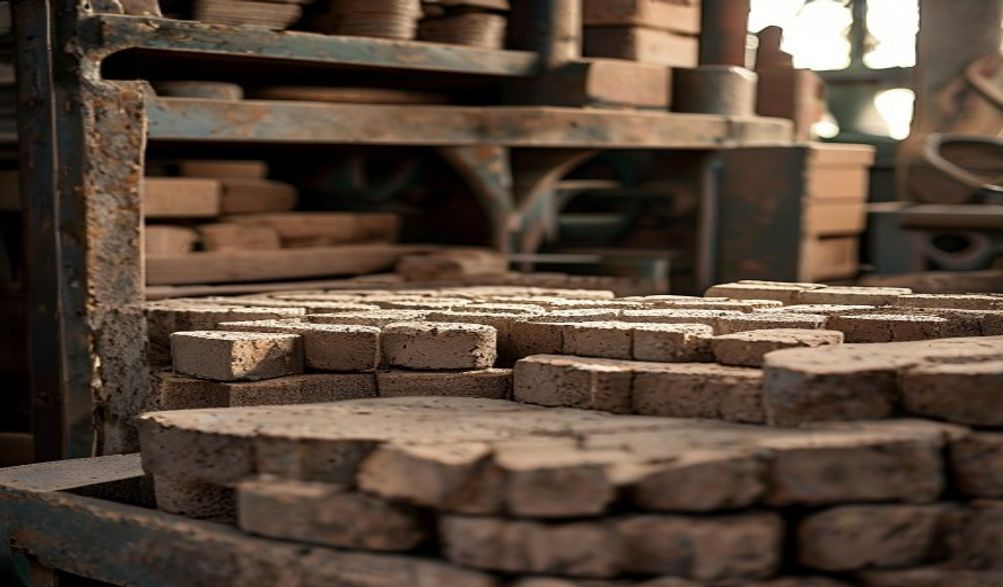
Arzon g'isht ishlab chiqarish mashinasini qanday tanlash mumkin: Aqlli xaridor uchun qo'llanma
Kirish
Siz loyiha smetasiga tikilib qoldingiz. G'isht sotib olish narxi, hovli bog'iga bir nechta devor qurish, kichik qurilish firmasini boshlash yoki jamoat uy-joy tashabbusini boshqarish bo'ladimi, byudjetingizni buzish xavfi tug'diryapti. Miyangizga bir fikr keladi: "Agar g'ishtni o'zim yasasam-chi?" Internetda g'isht qilish mashinasini qidirsangiz, bir necha yuz dollardan o'n minglab dollargacha bo'lgan ko'plab variantlar ko'zingizni qamashtiradi. Eng arzon narxning jozibasi kuchli, ammo miyangizning bir chekkasidagi ovoz ehtiyot bo'lishni pichirlaydi.
Keling, hoziroq “arzon” so‘zini qayta ta’riflaymiz. Mashinasozlik olamida, chinakamigaArzon g‘isht ishlab chiqarish mashinasi nafaqat eng past narx belgisiga ega bo‘lgan, balki tejamkor va qiymatga yo‘naltirilgan mahsulotdir.Noto‘g‘ri tanlov—faqat boshlang‘ich narxni birinchi o‘ringa qo‘yish—buzilishlar, sifatsiz g‘ishtlar va og‘ir ishdan to‘xtashlarga olib kelishi mumkin. O‘sha “arzon” tanlov sizning eng qimmat xatoingizga aylanishi mumkin.
Ushbu qo‘llanma sanoat tajribasi va ekspertizasiga asoslangan. Maqsadimiz – byudjetingizni ishonchli va samarali ishlash bilan muvozanatlashtirgan holda, ishonchli va asosli qaror qabul qilishingizga yordam berishdir. Biz sizni xarid oldidan zaruriy tayyorgarlik, turli xil mashina turlarini tushunish, xaridorlarni kutilmaganda qiyin ahvolga soladigan yashirin xarajatlarni ochib berish va ishonchli yetkazib beruvchini topish uchun bosqichma-bosqich reja bilan tanishtiramiz. Oxiriga kelib, siz uzoq yillar davomida pulingizni tejaydigan mashinaga qanday sarmoya kiritishni aniq bilib olasiz.
Sotib olishdan oldin ehtiyojlaringizni tushunish (asos)
Tajribali mutaxassislar hech qachon bu qadamni o‘tkazib yubormaydi. Ehtiyojlaringizni aniqlamasdan mashina sotib olish – chizmalaringiz bo‘lmagan holda yog‘och sotib olishga o‘xshaydi. Ushbu asosiy tayyorgarlik strategik sarmoyani qimmatbaho qog‘oz og‘irligidan ajratib turadigan narsadir.
Loyiha doirasi va g‘isht ishlab chiqarish talablari
Avval operatsiyangizning ko‘lamini so‘roq qiling. Sizning javoblaringiz to‘g‘ridan-to‘g‘ri kerakli mashinaning hajmi va turini belgilaydi.
- Sizning kunlik yoki haftalik ishlab chiqarish hajmingiz qancha?Haqiqiy bo'ling. Bitta loyiha uchun 500 ta g'isht kerakmi yoki doimiy ish uchun haftasiga 5,000 ta g'isht kerakmi?
- Bu bir martalik loyiha uchunmi yoki doimiy biznes uchunmi?Bir martalik qurilish, mashina asosiy aktiv bo‘lgan korxonadan farqli ravishda, boshqa omillarni hisobga olishga imkon beradi.
Noto‘g‘ri Qarorning Narxi Buying a machine too small for your needs means you’ll never meet demand, making your “cheap” machine ineffective. Buying one too large means you’ve over-invested capital, and the higher operational costs will eat into your margins. Both scenarios make true cost-per-brick uncompetitive.
Types of Bricks or Blocks You Need to Produce
Not all machines make all bricks. Your final product is the most critical determinant of your machine type.
- Qattiq G'ishtlar: Standard building blocks.
- Pustak G'ishtlar: Lighter, used for partitions, with better insulation.
- Pavement plitkalari (Pavement plitkalari):Haydovchilar, piyoda yo'llari va hovlilar uchun.
- O'zaro bog'langan g'ishtlar: Designed to lock together without mortar, popular for sustainable building.
A machine that excels at solid concrete blocks might not be able to produce a high-quality, detailed paving brick. The mold and the pressure system are specialized.
Mavjud xom ashyolar
This is where true expertise impacts cost. The machine must be compatible with your locally available materials.
- Beton: (Cement, sand, aggregate) The most common material for block-making machines.
- Loy Often requires a different extrusion or firing process.
- Fly Ash yoki Tuproq-Sement: Eco-friendly options for stabilized earth blocks.
Pro Cost-Saving Tip: The single biggest factor in long-term material expense is using what’s available locally. Don’t buy a machine designed for a specific material you have to import or purchase at a premium. Match the machine to your abundant, low-cost raw ingredients.
Types of “Cheap” Brick Making Machines Explained
The market breaks down into three broad categories. Understanding these is key to aligning machine capability with your budget and output goals.
Qo'lda G'isht Tayyorlash Mashinalari
These are human-powered, lever-operated devices.
- Afzalliklari:
- Eng pastki narx.
- Elektr yoki dizel yoqilg'isi talab qilinmaydi.
- Simple mechanics, easy to understand and fix.
- Kamchiliklari:
- Extremely labor-intensive. Output is limited by operator stamina.
- Slow production speed.
- Quality can vary with operator technique.
- Eng yaxshisi: Very small-scale, intermittent projects (e.g., a personal homestead, a single garden wall) where labor cost is not a factor and output needs are minimal.
Yarim Avtomatik G'isht Tayyorlash Mashinalari
This category represents the sweet spot for most value-seeking buyers. They use mechanical or hydraulic systems to apply pressure, often with a manual feed and ejection process.
- Afzalliklari:
- Excellent balance of price and output.
- Significantly reduces physical labor compared to manual machines.
- Produces more consistent, higher-quality bricks due to uniform pressure.
- Kamchiliklari:
- Requires a power source (electric or diesel).
- Higher initial investment than manual models.
- Eng yaxshisi: Small to medium-sized businesses, serious DIY builders, and community projects where a steady, reliable output of professional-grade bricks is needed.
Fully Automatic Brick Making Machines (Cost-Effective Models)
When we say “cheap” here, we refer to the entry-level of the automatic spectrum—not the industrial behemoths. These machines automate feeding, compression, and ejection, often with a conveyor belt.
- Afzalliklari:
- Highest output with minimal labor (often just 1-2 operators).
- Exceptional consistency and quality.
- Lowest labor cost per brick, making them highly efficient at scale.
- Kamchiliklari:
- Significant upfront capital investment.
- Requires reliable, three-phase power in many cases.
- Needs more sophisticated maintenance.
- Eng yaxshisi: Steady commercial production where high volume justifies the investment. The “cheap” aspect comes from the low lifetime cost per brick, not the purchase price.
Key Factors That Define True Value (Beyond the Price Tag)
This is the insider knowledge. Look beyond the marketing photos and focus on these tangible aspects that determine if a machine is a workhorse or a liability.
Build Quality & Durability (The #1 Priority)
A machine that breaks in six months is infinitely more expensive than a robust one that lasts a decade, even at double the price.
- Kadr: Look for a heavy, reinforced steel frame. A lightweight frame will flex under pressure, leading to misalignment and rapid wear.
- Moldlar: These are high-wear items. Are they made from hardened, high-chrome steel? How thick are the walls?
- Gidravlik Tizim: The heart of the machine. Reputable brand names for cylinders and pumps (even if Chinese-made versions of international brands) are a good sign.
- Quick Assessment: A machine’s total weight in the specifications is often a reliable proxy for material quality and sturdiness.
Critical Technical Specifications
These numbers tell the real story of performance.
- Pressure (MPa/Tonnage): This directly determines your brick’s compressive strength. A machine with insufficient pressure will produce weak, crumbly bricks unfit for construction. For standard blocks, you typically want a system capable of at least 10-20 MPa.
- Sikl vaqti: How long does it take to produce one brick or one pallet of bricks? From this, calculate Bricks Per Hour (BPH). This defines your real production capacity and cost-per-unit.
- Qoliplarni moslashtirish: Can you order different mold shapes? Is a standard mold included, or is it an extra cost? A versatile machine can grow with your business.
Power Source & Operational Costs
The purchase price is just the first cost.
- Electric vs. Diesel: Electric motors are quieter, cleaner, and often cheaper to run per hour if you have stable grid power. Diesel engines offer site independence and high torque but have higher fuel costs and maintenance.
- Gibrid Modellar: Some offer both options, providing flexibility.
- Do the Math: Ask the supplier for the motor’s kW rating or engine horsepower. Estimate your daily running hours and calculate the estimated daily energy/fuel cost. This is part of your true “cheap” equation.
Hidden Costs of a “Cheap” Machine (The Fine Print)
A trustworthy guide doesn’t shy away from the pitfalls. Be prepared for these often-overlooked expenses.
Shipping, Installation, and Training
- Shipping: A “cheap” machine from an international supplier can have a shipping cost that rivals the machine price. Always get CIF (Xarajat, Sug‘urta va Yuk Tashish) quotes to your nearest port, not just FOB (Erkin Bordda) factory prices.
- Installation: Does the price include an engineer to install and commission the machine on-site, or is it “ex-works” where you’re on your own?
- Training: Are operating manuals clear? Is video support or on-site training provided?
Maintenance, Repair, and Part Availability
Experience-Based Warning: The absolute cheapest machines often use proprietary or non-standard parts that are impossible to find locally.
- Key Questions:
- “What are the most common wear parts (seals, mold liners, etc.)?”
- “What is their expected lifespan and cost?”
- “Can you provide a parts list with diagrams?”
- “Do you have a local distributor, or how long does international parts shipping take?”
Warranty and After-Sales Service
A warranty is your safety net. Its length and terms reveal the manufacturer’s confidence.
- Red Flag: A warranty shorter than 1 year, or one that only covers “manufacturing defects” but not normal wear parts.
- Critical Support: Test their responsiveness before you buy. Send a technical question via email. Do they have phone support, a WhatsApp line, or video call capability? A machine is useless if you can’t get help when it stops.
Step-by-Step Buying Guide: Finding a Reputable Supplier
Turn this knowledge into action with a clear procurement checklist.
Where to Look: Marketplaces vs. Direct Manufacturers
- B2B Marketplaces (Alibaba, Indiamart, etc.):
- Afzalliklari: Vast selection, ability to compare many suppliers, trade assurance programs.
- Kamchiliklari: Can be overwhelming; quality varies wildly; middlemen may inflate prices.
- Direct from Manufacturer:
- Afzalliklari: Potentially lower prices, direct technical communication, better understanding of the factory’s capability.
- Kamchiliklari: Harder to find and verify; less buyer protection from the platform.
Vetting Suppliers: Questions You Must Ask
Create a standard email template. A reputable supplier will answer patiently and in detail.
- “Can you provide the full technical specification sheet?”
- “What is the exact warranty period and what does it cover? Can I see the warranty document?”
- “Do you offer installation and training? Is it included or an extra cost?”
- “Can you provide contact information for 2-3 previous clients in my region for a reference?”
- “How long has your company been manufacturing these machines?”
- “What is your process for supplying spare parts, and what are the lead times?”
Requesting and Evaluating Quotations
Ask at least three suppliers for a detailed, line-item quote.
- Compare: Machine price, standard accessories, spare parts kit, packaging, FOB cost, CIF cost, insurance, and payment terms.
- Major Red Flag: A quote that is 30-40% lower than all others for a similar-spec machine. This almost always indicates inferior materials, hidden costs, or a scam.
Red Flags and Common Mistakes to Avoid
Learn from the mistakes of others to protect your investment.
- Too-Good-to-Be-True Prices: If it seems unrealistically low, it is. The laws of manufacturing and materials cost apply to everyone.
- Vague Specifications and Lack of Documentation: Avoid suppliers who only use marketing language (“high efficiency,” “strong power”) instead of technical specs (kW, MPa, cycle time).
- Pressure for Immediate Payment: Legitimate manufacturers are used to standard trade procedures (e.g., 30% deposit, 70% against shipping documents). High-pressure tactics are a scam hallmark.
- Ignoring Safety Features and Certifications: Does the machine have emergency stops, protective guards, and electrical safety certifications (like CE)? Your workers’ safety is priceless.
Tez-tez so'raladigan savollar (FAQ)
Q1: What is the absolute cheapest type of brick making machine?
A: A manual brick press has the lowest purchase price, often just a few hundred dollars. However, you must factor in the very high physical labor cost and extremely low output. It’s only “cheap” if your time and labor have no cost.
Q2: Can a cheap machine produce commercial-quality bricks?
A: Yes, but only if “cheap” is defined as a value-focused semi-automatic machine with good pressure (e.g., 15+ MPa) and a solid build. A machine that is “cheap” due to cut corners on materials and pressure will not produce bricks that meet construction standards.
Q3: How much should I budget for a decent small-scale brick machine?
A: For a new, quality semi-automatic machine capable of small business production, expect a range of $3,000 to $8,000, depending on automation level and options, before shipping. See this as a capital investment, not just a purchase.
Q4: Is buying a used brick making machine a good idea to save money?
A: It can be an excellent way to get more machine for your budget, but it carries risk. Only consider it if you can inspect it in person (or via a trusted agent) while it’s running. Be wary of hidden wear in the hydraulic system and molds, and understand you will likely have no warranty.
Q5: What is the single most important feature to look for?
A: Build quality and durability. A sturdy, well-welded frame made from thick steel is non-negotiable. It dictates the machine’s lifespan, maintenance frequency, and its ability to apply consistent pressure for quality bricks. Never compromise on the frame.
Xulosa
Choosing a cheap brick making machine is a strategic exercise in maximizing umr bo'yi qiymati, not minimizing initial price. It’s about investing in a tool that lowers your cost per brick over years of reliable service, not about finding the biggest temporary discount.
Let’s recap the smart path: First, rigorously define your project needs, output, and materials. Second, understand which machine type—manual, semi-automatic, or entry-level automatic—truly fits your scenario. Third, scrutinize the true cost, looking past the price tag to evaluate build quality, operational expenses, and the often-hidden costs of shipping, parts, and service. Finally, vet your suppliers with a detailed checklist and trust your instincts when you see red flags.
By investing time in this research, you’re not just buying a machine; you’re investing in the foundation of your projects or business for years to come. Make the choice that pays off long after the purchase is forgotten.
Have a specific project in mind or need clarification on a machine type? Share your details in the comments below for tailored advice, or pass this guide along to a fellow builder or entrepreneur who could benefit from it.
<